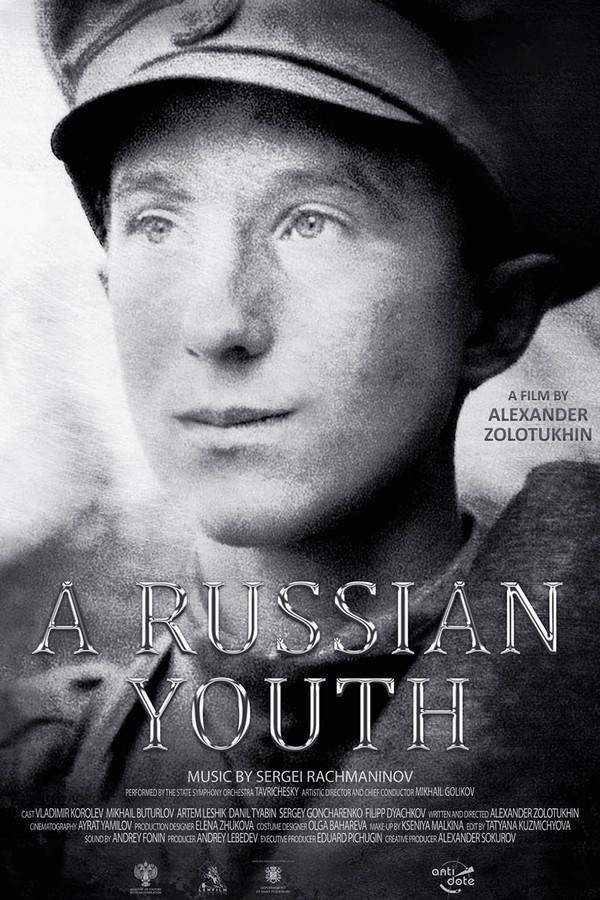
A Russian Youth 2020

Directed by

Alexander Zolotukhin
Made by

MUBI
A Russian Youth Plot Summary
Read the complete plot summary and ending explained for A Russian Youth (2020). From turning points to emotional moments, uncover what really happened and why it matters.
The First World War marked a profound tragedy that set off a series of arduous tests for the Russian populace, encompassing the revolution, civil war, famine, and political repression, leading into the Second World War. Such immense challenges undoubtedly shaped a generation. What remarkable courage and patience must those individuals have exhibited to endure the tumultuous landscape of the 20th century? What were their thoughts and feelings during these trying times? These poignant questions are the foundation upon which the film “A Russian Youth” is built.
The narrative follows a humble village boy who, driven by a naïve youthful dream of honor and glory, enlists at the frontlines of the First World War. However, his aspirations are dashed when, in his first encounter on the battlefield, he loses his sight. Forced to adapt to his new reality, he assumes the role of a listener, requiring him to attentively monitor incoming threats through large metal funnels and sound the alarm for approaching enemy aircraft.
During that era, the backbone of the Russian Empire’s military was predominantly comprised of peasants and the working class—individuals who bore distinct features and toiled intensely in their daily lives. “A Russian Youth” uniquely incorporates numerous non-professional actors, discovered on the streets, in factories, and among military school cadets. This casting choice lends an authentic touch to the film’s portrayal of the Russian experience during the war.
Accompanying this compelling tale is the stirring music of Sergei Rachmaninoff, whose compositions echo the tensions of an era rife with upheaval. His Third Piano Concerto (Op. 30), composed in 1909, resonates with a visceral energy that foreshadows the approaching chaos of the 20th century. One can discern Rachmaninoff’s ominous foresight regarding the people’s destiny in the lyrical and poignant melodies of this piece. Three decades later, as the Second World War loomed, he crafted “Symphonic Dances” (Op. 45)—an even bolder and more dynamic opus that marked the end of his creative journey.
A Russian Youth Timeline
Follow the complete movie timeline of A Russian Youth (2020) with every major event in chronological order. Great for understanding complex plots and story progression.
The Onset of the First World War
The First World War began in 1914, engulfing many nations in a conflict that would reshape the world. This war marked the start of profound tragedy for countless individuals, particularly in Russia, as it set in motion a series of upheavals that would redefine their lives.
Enlistment of the Village Boy
A humble village boy, filled with naïve dreams of honor and glory, decides to enlist in the military. This act represents not just his personal aspirations, but also the collective hope of many youth eager to serve their country.
First Battlefield Encounter
On the frontlines of the war, the village boy faces his first battle, which becomes a life-altering experience. Tragically, he loses his sight during this encounter, shattering his dreams and leaving him to confront a harsh new reality.
Adaptation to Blindness
Stripped of his vision, the boy learns to navigate his surroundings in a new way. He becomes a listener, utilizing large metal funnels to detect sounds and alert his comrades to incoming threats from enemy aircraft.
The Role of Peasants in War
The Russian military largely consisted of peasants and the working class, whose hard lives shaped the backbone of the army. This demographic diversity is crucial, as it provides insight into the struggles and sacrifices made during the war.
Casting of Non-Professional Actors
The film uniquely features non-professional actors, discovered throughout Russia—from streets to factories and military schools. This casting choice adds a layer of authenticity, representing the genuine experiences of the Russian people during wartime.
The Music of Rachmaninoff
Accompanying the film is the stirring music of Sergei Rachmaninoff, which adds emotional depth to the narrative. His compositions resonate with the tension of the era, reflecting the internal struggles of the characters and their society.
The Third Piano Concerto
Rachmaninoff's Third Piano Concerto, composed in 1909, serves as a significant musical backdrop for the film. The piece captures the essence of an era teetering on the edge of chaos, providing a poignant counterpoint to the unfolding drama.
Foreshadowing of Chaos
Rachmaninoff’s ominous melodies in his concerto embody the uncertainties and fears of the Russian populace as they faced the impending turmoil of the 20th century. His music urges audiences to reflect on the fate awaiting them amidst war and revolution.
Beyond the First World War
As the First World War concluded, Russia spiraled into further chaos with the revolution and subsequent civil war. This continuation of hardship intertwined with the narratives of countless individuals, shaping the course of history and the lives affected by these events.
Political Repression and Famine
In the aftermath of the civil war, political repression intensified and famine struck the nation, further exacerbating the struggles faced by the people. The repercussions of these events would resonate for generations, altering the fabric of Russian society.
The Looming Threat of the Second World War
By the 1930s, the shadows of the Second World War began to gather once more over Europe. The collective trauma and unresolved issues from the First World War left Russia to brace for another catastrophic conflict that would claim millions more lives.
Rachmaninoff's Symphonic Dances
Decades later, Rachmaninoff created 'Symphonic Dances,' reflecting a bold evolution in his musical style. This work embodies the turmoil and emotional weight of a world in conflict, serving as a testament to the artist's creative journey amidst the turbulence of history.
The Legacy of War
The legacy of the First World War, the resulting civil turmoil, and the impending Second World War shaped generations. The courage and resilience required to endure such hardships continue to resonate, influencing the cultural and historical narrative of Russia.
A Russian Youth Characters
Explore all characters from A Russian Youth (2020). Get detailed profiles with their roles, arcs, and key relationships explained.
Unnamed Village Boy
The protagonist is a naive and idealistic village boy who yearns for honor and glory in the face of war. His journey is marked by a tragic loss of sight during his first battle, forcing him to adapt and find new ways to cope with the horrors around him. His character embodies the resilience of youth, confronting the stark realities of conflict.
Corpsman
The Corpsman plays a crucial support role, offering aid and care to fellow soldiers amidst the chaos of battle. His character represents the unsung heroes behind the front lines, dedicated to preserving life and providing hope. Through his actions, he highlights the camaraderie and bonds formed in warfare.
Propagandist
The Propagandist symbolizes the government’s effort to maintain morale and justify the war's purpose. His portrayal reflects the messages that aim to rally support and instill a sense of pride among citizens. This character illustrates the powerful role of information and persuasion during times of conflict.
A Russian Youth Settings
Learn where and when A Russian Youth (2020) takes place. Explore the film’s settings, era, and how they shape the narrative.
Time period
First World War, Early 20th Century
The events of the movie take place during the First World War, lasting from 1914 to 1918. This was a tumultuous period characterized by widespread destruction and the onset of revolutionary changes in Russia, leading to social upheaval and significant hardships for its people. The narrative intertwines with the backdrop of the Second World War, reflecting the challenges and growth that shaped a generation.
Location
Russia
The film is set in Russia during the First World War, a time when the country was undergoing significant turmoil. Villages were filled with humble peasants and workers who were the backbone of the military efforts. This setting highlights their struggles and resilience during a period marked by war and loss.
A Russian Youth Themes
Discover the main themes in A Russian Youth (2020). Analyze the deeper meanings, emotional layers, and social commentary behind the film.
💔
Sacrifice
The theme of sacrifice is deeply woven into the fabric of the film, illustrating the personal losses endured during wartime. The protagonist's journey from a hopeful recruit to a blind veteran encapsulates the profound physical and emotional sacrifices made by soldiers. Their struggles endure long after the battles are fought, showcasing a powerful reflection on the cost of war.
🌪️
Chaos
Chaos is central to the narrative, representing the unpredictable nature of war and its impact on the human psyche. The film does an excellent job of conveying the instability faced by individuals during the First World War, emphasizing how quickly dreams of glory can be shattered. This theme resonates through the protagonist's transformation and the broader context of a nation in turmoil.
🎶
Music
Music serves as a powerful motif in the film, evoking the emotions and tensions of the era. The use of Sergei Rachmaninoff's compositions connects the audience to the historical context, enhancing the storytelling experience. Through lyrical melodies, the music reflects both the struggles of the characters and the weight of impending chaos in their lives.

Coming soon on iOS and Android
The Plot Explained Mobile App
From blockbusters to hidden gems — dive into movie stories anytime, anywhere. Save your favorites, discover plots faster, and never miss a twist again.
Sign up to be the first to know when we launch. Your email stays private — always.
Explore the mobile appA Russian Youth Spoiler-Free Summary
Discover the spoiler-free summary of A Russian Youth (2020). Get a concise overview without any spoilers.
In the bleak, snow‑kissed expanses of early‑twentieth‑century Russia, a young villager answers the call of war with the fierce optimism of a boy dreaming of honor. Driven by stories of heroism, he trades the quiet rhythms of his farm for the chaotic chorus of artillery, leaving behind familiar fields for the mud‑filled trenches of the First World War. The film opens on this stark transition, inviting the audience to feel the weight of a nation poised on the edge of catastrophe while a single heart seeks its own fleeting glory.
The world the film paints is one of muted colors and relentless sounds: the distant boom of shells, the metallic whine of wind through large listening funnels, and the occasional, terrifying whine of aircraft overhead. When the protagonist, Alexei, is suddenly stripped of sight in his first encounter, his role shifts from a front‑line combatant to a vigilant listener, forced to navigate a reality where vision is replaced by acute hearing. This sensory reversal deepens the atmosphere, turning the battlefield into a place where every breath and echo becomes a potential warning, underscoring the film’s meditative, almost elegiac tone.
A striking element of the production is its commitment to authenticity through casting. The faces that populate the trenches are drawn from the streets, factories, and military academies—non‑professional actors whose lived experiences bleed into their performances, lending a raw, unvarnished texture to the story. Complementing this visual realism, Sergei Rachmaninoff’s soaring Third Piano Concerto threads through the narrative, its sweeping melodies echoing the tension and yearning of an era on the brink. The music’s lyrical intensity mirrors the internal turbulence of the soldiers, amplifying the film’s sense of both grandeur and impending loss.
Around Alexei, a loosely knit brotherhood of peasants and workers forms, their camaraderie forged in the crucible of shared hardship. Their interactions are marked by quiet resilience, moments of dark humor, and the unspoken question of what it means to survive when the very concept of heroism is eroded. The film lingers on these relationships, allowing curiosity about how each will respond to the relentless demands of war, while never stepping beyond the initial premise of youthful idealism confronting harsh reality.
Movies with Similar Twists and Themes
Uncover films that echo the narrative beats, emotional arcs, or dramatic twists of the one you're exploring. These recommendations are handpicked based on story depth, thematic resonance, and spoiler-worthy moments — perfect for fans who crave more of the same intrigue.


Featured on this page

What's After the Movie?
Not sure whether to stay after the credits? Find out!
Check out our other apps:

SAT Sphere
Build confidence for the Digital SAT.

Mori Atlas
Discover wild places worth protecting.

Luntero
Search smarter for a home in Amsterdam.

Plot Explained
Unravel movie endings and hidden clues.

Pokechamp
Dive into Pokémon data and battle logic.

Driving Theory
Get ready for your European theory test.

Movie Dust
Plan your next cinema trip with ease.

Musemap
Find art and culture as you travel.

Selkobase
Compare credentials before committing.

Local Manual
Turn an unfamiliar country into practical next steps.

Lernavi
Compare school systems before your next move.

GymRoam
Find a workout stop wherever your plans take you.
Explore Our Movie Platform
New Movie Releases (2026)
Famous Movie Actors
Top Film Production Studios
Movie Plot Summaries & Endings
Major Movie Awards & Winners
Best Concert Films & Music Documentaries
Movie Collections and Curated Lists
© 2026 What's After the Movie. All rights reserved.
Privacy Policy