
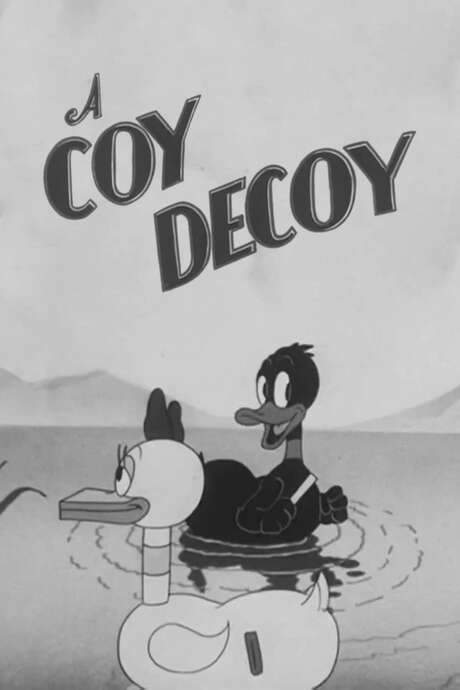
A Coy Decoy 1941

Made by
Leon Schlesinger Productions
A Coy Decoy Plot Summary
Read the complete plot summary and ending explained for A Coy Decoy (1941). From turning points to emotional moments, uncover what really happened and why it matters.
The film opens with a serene rendition of Beethoven’s “Moonlight Sonata”, setting a quiet, almost timeless tone as the scene transitions into a bustling bookstore. The camera gently explores the shelves filled with popular books from early 1941, including titles like Valtin’s Out of the Night, Fedorova’s The Family, and Nordhoff and Hall’s No More Gas. Amidst this literary landscape, an amusing gag reveals an old favorite, Uncle Tom’s Cabin, with a Federal Housing Administration sign humorously placed in front of the cabin, blending classic literature with playful commentary.
Suddenly, the scene comes alive with motion as Mel Blanc’s voice brings Porky Pig, prominently featured on the cover of The Westerner, to life, and he cheerfully belts out, “Ride, Tenderfoot, Ride.” This lively introduction is soon mirrored by Mel Blanc’s voice again, as Daffy Duck, showcased on the cover of The Ugly Duckling, springs into action singing “I Can’t Get A Long Little Dogie.” Daffy’s playful energy takes him from the bookstore to the lake, where instead of riding a horse, he humorously rides on a large, black woman, adding a layer of comic absurdity to his adventure.
The narrative thickens with the emergence of a cunning wolf, which appears from the pages of The Wolf of Wall Street, possibly a nod to Blake McVeigh’s novelization of the 1929 film. This wolf sneaks behind Zane Grey’s The Green Bay Tree and tricks Daffy with a female duck decoy taken from Toys. Entranced and amused, Daffy exclaims, > “Well, Beat Me Daddy, Eight to the Bar,” referencing a popular record, as he is lured deeper into trouble. His initial flirtation with the decoy, where he adopts a mistaken Charles Boyer accent, leads to comic chaos when he closes his eyes and inadvertently embraces the wolf’s nose, realizing his mistake too late.
Recognizing the danger, Daffy dismisses the wolf with humorous bravado, claiming he’s not worth eating because he’s riddled with diseases—a zany callback to his earlier antics from Hare-um Scare-um. He then hurries toward Ethel Vance’s novel Escape, but the wolf blocks his path. Daffy’s quick wit shines as he claps back, quoting the classic radio program Fibber McGee and Molly, “You’re a hard man, McGee.” Using the books at his disposal, Daffy cleverly fights back; he tears open a copy of Nordhoff and Hall’s The Hurricane to blow the wolf away and uses lightning from the book Lightning to strike the creature down. The wolf, defeated, surrenders under the weight of Hemingway’s For Whom the Bell Tolls, providing a humorous literary twist to the action.
After this victorious skirmish, Daffy attempts to retrieve the duck decoy but is interrupted by Porky, who, with a tone of mockery, comments that Daffy and the decoy could never truly “mean anything to each other.” Daffy, with a proud snout, swims away carrying the decoy, followed by several tiny decoys that resemble him, adding a whimsical end to the scene.
Throughout this whimsical adventure, the film showcases a playful celebration of literature and classic characters, woven together with humor, clever references, and lively voice performances. The imaginative use of book titles and characters blends literary homage with animated fun, creating a unique cinematic experience that delights both the mind and the senses.
A Coy Decoy Timeline
Follow the complete movie timeline of A Coy Decoy (1941) with every major event in chronological order. Great for understanding complex plots and story progression.
Opening Scene with Beethoven's 'Moonlight Sonata'
The film opens with Ludwig van Beethoven's 'Moonlight Sonata' playing as the scene shifts to a bookstore. The camera explores an array of bestselling books from early 1941, setting a literary and historical context for the story. The scene establishes a quiet, nostalgic mood before the animated events unfold.
Focus on Classic Books
The camera pans across popular books like 'Valtin's Out of the Night', 'Fedorova's The Family', 'Nordhoff and Hall's No More Gas', and the timeless 'Uncle Tom's Cabin'. These books symbolize the era and serve as backdrop to the animated characters coming to life. The scene emphasizes the connection between literature and the animated universe.
Uncle Tom's Cabin as a Gag
Among the books, 'Uncle Tom's Cabin' is highlighted with a humorous addition—a Federal Housing Administration sign in front of the cabin. This satirical detail adds a layer of comedy and societal commentary to the scene, blending old literature with contemporary parody.
Porky Pig Comes to Life
Porky Pig's cover on 'The Westerner' awakens and begins singing 'Ride, Tenderfoot, Ride.' His lively entrance marks the beginning of the animated characters coming to life from their book covers in the bookstore. This vibrancy introduces a whimsical tone to the story.
Daffy Duck's Entrance
Daffy Duck, featured on the cover of 'The Ugly Duckling', also comes to life, singing 'I Can't Get A Long Little Dogie'. He then interacts with other book characters, adding humor and chaos to the scene. His playful behavior exemplifies the film's lively and unpredictable energy.
Daffy Finds Black Beauty
Daffy rides on a large black woman character from 'Black Beauty', heading towards The Lake. This surreal sequence highlights Daffy's wild imagination and the whimsical nature of the animated scenes, blending literature with absurdity.
A Wolf Emerges from 'The Wolf of Wall Street'
A wolf character, inspired by 'The Wolf of Wall Street', sneaks behind the book 'The Green Bay Tree' and lures Daffy using a female duck decoy from 'Toys'. The wolf's presence introduces a threatening element, setting up a chase sequence and emphasizing danger within the story.
Daffy's Encounter with the Wolf
Daffy is entranced by the wolf using the decoy and humorously tries to woo it, adopting a Charles Boyer accent. When he closes his eyes, the wolf sneaks in, leading to a mistaken embrace and a realization of danger. Daffy's quick wit and humor drive this tense moment.
Daffy Confronts the Wolf
Daffy taunts the wolf, claiming he's not worth eating and citing his many imaginary diseases. He then uses books like 'The Hurricane' and 'Lightning' to fight back, with lightning striking the wolf and forcing it to surrender. The scene showcases creativity and comic action.
Wolf Defeated and Surrenders
The wolf submits after being hit by lightning from books, humiliated and defeated. Daffy stands victorious, considering himself clever in the chaos. The scene highlights the absurdity and humor typical of the film.
Return to the Decoy
Daffy returns to the duck decoy, affirming his affection. Porky Pig enters, mockingly criticizing Daffy and the decoy's relationship, implying that they are not meant for each other. Daffy then swims away with the decoy, along with smaller decoys resembling himself, concluding the comic sequence.
A Coy Decoy Characters
Explore all characters from A Coy Decoy (1941). Get detailed profiles with their roles, arcs, and key relationships explained.
Porky Pig / Daffy Duck (voice) - Mel Blanc
Porky Pig and Daffy Duck are animated characters brought to life who engage in playful singing and mischief within the bookstore. Porky, often portrayed as kind-hearted, has a humorous, easygoing nature, while Daffy is more mischievous and excitable. Their interactions drive much of the comedic tone and depict classic cartoon rivalry and camaraderie.
A Coy Decoy Settings
Learn where and when A Coy Decoy (1941) takes place. Explore the film’s settings, era, and how they shape the narrative.
Time period
Early 1940s
The story takes place during the early 1940s, a period characterized by global upheaval and the buildup to World War II. The year 1941 is hinted at through references to contemporary books and literary works. This time frame provides a backdrop of societal tension and cultural reflection, influencing the narrative's tone and themes.
Location
Bookstore, Literary World
The movie unfolds primarily within a bookstore brimming with classic and contemporary titles from the early 1940s, creating a whimsical literary environment. This setting serves as a magical portal where characters from books come to life, interacting in a world inspired by literature. The scene emphasizes the cultural significance of books during that era and their influence on storytelling.
A Coy Decoy Themes
Discover the main themes in A Coy Decoy (1941). Analyze the deeper meanings, emotional layers, and social commentary behind the film.
🎭
Imagination
The film explores the power of imagination by bringing fictional characters to life within a magical bookstore. It highlights how stories and books can transcend their pages, inspiring adventure and humor. The characters' interactions symbolize the endless possibilities that imagination offers—transforming ordinary settings into extraordinary worlds.
🦊
Deception
Deception plays a central role through the use of book decoys and the wolf's cunning tactics. The characters navigate a world where appearances are misleading, emphasizing themes of trust and trickery. The decoys and disguises underline the importance of perception versus reality in storytelling.

Coming soon on iOS and Android
The Plot Explained Mobile App
From blockbusters to hidden gems — dive into movie stories anytime, anywhere. Save your favorites, discover plots faster, and never miss a twist again.
Sign up to be the first to know when we launch. Your email stays private — always.
Explore the mobile appA Coy Decoy Spoiler-Free Summary
Discover the spoiler-free summary of A Coy Decoy (1941). Get a concise overview without any spoilers.
In a quiet bookstore where the soft strains of Beethoven’s Moonlight Sonata linger, the ordinary shelves become a portal to a mischievous realm of animated literature. Classic covers—The Westerner, The Ugly Duckling, and many more—suddenly stir, letting beloved cartoon figures step into the real world. The atmosphere balances gentle nostalgia with a sprightly sense of absurdity, inviting the audience to wander through aisles that feel both timeless and delightfully chaotic.
Porky Pig arrives first, his signature stutter and upbeat chant setting a playful rhythm that echoes through the stacks. Not far behind, Daffy Duck bursts onto the scene, his flamboyant confidence and quick‑witted banter adding a lively counterpoint. Together they navigate this living library, their chemistry—half rivalry, half camaraderie—propelling the adventure as they hop from one iconic title to the next, each page offering a fresh backdrop for their antics.
Amid the literary maze, a caricature of the Wolf of Wall Street looms as an unmistakable pursuer, its presence turning the otherwise whimsical stroll into a spirited chase. The wolf’s relentless pursuit weaves through a series of evocative book titles, hinting at grander, storm‑filled landscapes without revealing the outcome. This dynamic sets a tone that is both comedic and slightly suspenseful, letting the humor of the characters shine while maintaining a subtle undercurrent of excitement.
The film’s style is a kaleidoscope of visual puns, musical cues, and clever references that celebrate both animation history and literary heritage. Its mood swings effortlessly between gentle parody and high‑energy romp, making the bookstore feel like a boundless playground where every cover can become a stage. As Porky and Daffy dart from title to title, the audience is left with a sense of wonder about what other stories might spring to life just beyond the next shelf.
Movies with Similar Twists and Themes
Uncover films that echo the narrative beats, emotional arcs, or dramatic twists of the one you're exploring. These recommendations are handpicked based on story depth, thematic resonance, and spoiler-worthy moments — perfect for fans who crave more of the same intrigue.

Featured on this page

What's After the Movie?
Not sure whether to stay after the credits? Find out!
Check out our other apps:

SAT Sphere
Build confidence for the Digital SAT.

Mori Atlas
Discover wild places worth protecting.

Luntero
Search smarter for a home in Amsterdam.

Plot Explained
Unravel movie endings and hidden clues.

Pokechamp
Dive into Pokémon data and battle logic.

Driving Theory
Get ready for your European theory test.

Movie Dust
Plan your next cinema trip with ease.

Musemap
Find art and culture as you travel.

Selkobase
Compare credentials before committing.

Local Manual
Turn an unfamiliar country into practical next steps.

Lernavi
Compare school systems before your next move.

GymRoam
Find a workout stop wherever your plans take you.
Explore Our Movie Platform
New Movie Releases (2026)
Famous Movie Actors
Top Film Production Studios
Movie Plot Summaries & Endings
Major Movie Awards & Winners
Best Concert Films & Music Documentaries
Movie Collections and Curated Lists
© 2026 What's After the Movie. All rights reserved.
Privacy Policy