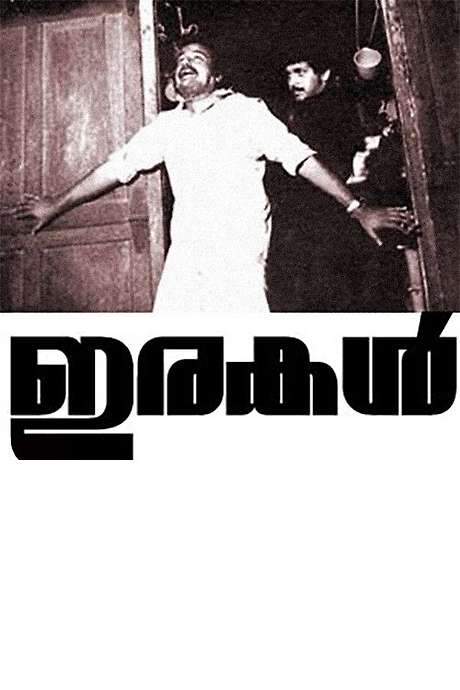


Where to Watch Irakal
See current US streaming, rental, and purchase options for Irakal (1985) via JustWatch.


Streaming availability powered by 
Irakal Plot Summary
Read the complete plot summary and ending explained for Irakal (1985). From turning points to emotional moments, uncover what really happened and why it matters.
Mathews aka Mathukutty [Thilakan] builds an empire as a ruthless Syrian Christian rubber baron, turning sharp business sense into power and weaving a web of favors with cops and labor leaders to secure his grip. His operations span rubber, marijuana, and hooch, creating a sprawling, self-protective machine where profit and fear go hand in hand. The foundation of this world rests on calculated decisions, quiet coercion, and a willingness to bluntly punish anyone who strays from the path of control. In this harsh landscape, Mathukutty’s reach extends into his own family, shaping destinies from the shadows of his success. His eldest son, Koshy [K. B. Ganesh Kumar], serves as the second-in-command, a mirror of his father in ruthlessness and a steady hand for the violent undertakings that keep the business running. Koshy’s presence underscores the dangerous coupling of family loyalty with criminal enterprise, a combination that makes dissent a liability and obedience a necessity.
Sunny Mathews [Sukumaran], the younger son, is introduced as a more troubled, but seemingly milder, presence—a drinker who reels against the suffocating gravity of his father’s empire. He is a regular appetite for rebellion, yet his resolve often dissolves into passivity, leaving him stuck in a system that prizes power over personal freedom. The family’s inner circle is completed by Annie [Srividya], Mathukutty’s daughter, whose life is marked by conflict and excess. Described as a nymphomaniac, she shows little warmth for her husband Andrews [Nedumudi Venu] or their child, and she moves through her marriage with a chilling detachment. Each month, under the pretense of a quarrel with Andrews, Annie returns to her maternal family’s fold to pursue an affair with Unnunni [Mohan Jose], a rubber employee who becomes part of the family’s tangled web. This pattern remains a secret from Mathukutty and Koshy, who assume Annie’s husband bears the blame for family strife and chastise him for supposed faults in the marriage.
Meanwhile, Baby, the youngest son and an engineering student, enters the story with a disturbing curiosity about murder and blood. He displays early antisocial tendencies, a sign that grows clearer as the narrative unfolds. In a brutal initiation of college life, he raggs a junior and uses an electric wire to strangle him, an act that lands him in suspension and drives him back to his home with a heavy, unspoken burden. The junior’s injuries are reported in the headlines as a ragging incident gone too far, a simplification that the family accepts as the price of keeping up appearances. Baby clutches the electric wire as a memento of that moment, and his uncle, a bishop, senses something deeply wrong but finds it hard to reach the troubled boy. The atmosphere inside Mathukutty’s household becomes a dangerous echo chamber for Baby’s growing darkness.
The plot thickens as Baby uncovers Annie’s ongoing affair with Unnunni and decides to act on his visceral anger. In a brutal night scene, he strangles Unnunni in the tools shed where they meet, and then stages the death as a suicide. The family, pressed by fear of police and scandal, disposes of the body to wipe away any trace of foul play, maintaining the appearance of a tragedy rather than a crime. Baby’s paranoia and appetite for violence intensify, feeding frightening dreams and a persistent impulse to murder those around him. He also harbors feelings for Nirmala [Radha], a village girl from a poor family who loves him but understands the crushing weight of caste and class divides that separate them. Nirmala’s affection is real, but her social reality complicates any possibility of a future with Baby.
Nirmala’s life takes a turn when she ends her relationship with Baby after becoming engaged to Balan [Venu Nagavalli], a man from the same neighborhood who represents a different, more stable path. The shift unsettles Baby, who cannot easily let go of what he has with Nirmala. The story then follows Nirmala’s mother as she fixes her daughter’s wedding to Raghavan [Ashokan], a rubber tapper who is also a friend of Baby. Baby makes another violent bid by attempting to strangle Raghavan, but his plan is thwarted when Raghavan recognizes him and alerts the police. The net closes around Baby as law enforcement closes in and the family confronts the consequences of their choices.
As tensions mount, Baby disappears into hiding, only to reappear with a revolver in hand. In a chaotic confrontation, he shoots at Koshy and, when his father shouts at him to stop, at Mathukutty as well. Mathukutty narrowly avoids the fatal shot, but Koshy is struck—injured, not fatally—during the ensuing struggle. In a final, devastating turn, Mathukutty shoots Baby with his own rifle, ending the violent arc of his son and sealing a grim end to a family built on wealth, deceit, and moral compromise. The family’s relentless pursuit of money has blinded them to the danger that lurks within their own ranks, culminating in a tragedy that underscores the corrosive power of greed and the fragility of human ties.
Irakal Timeline
Follow the complete movie timeline of Irakal (1985) with every major event in chronological order. Great for understanding complex plots and story progression.
Mathukutty builds a ruthless rubber empire
Mathukutty, a ruthless Syrian Christian rubber baron, expands his empire through sharp business sense and by greasing cops and labour leaders. His operations include marijuana and hooch, allowing him to maintain control over wealth and power. The family’s wealth and influence set the stage for a corrupt, code-free environment.
Koshy and Sunny join the enterprise
Koshy serves as the second-in-command, sharing his father’s ruthlessness. Sunny is rebellious and lazy, often resisting the family’s grip yet still drawn into the business. The brothers’ dynamic mirrors the old man’s dominance within the family and the enterprise.
Annie’s marital strain and secret life
Annie, the daughter, is depicted as a nymphomaniac who shows no affection for her husband Andrews or daughter. She travels monthly to live with her maternal family under the pretense of fights, using the arrangement to sleep with Unnunni. Mathukutty and Koshy remain unaware of Annie's indiscretions, chastising Andrews as the cause of the marital trouble.
Baby’s early signs of violence at college
Baby, the youngest son, is an engineering student with a dark imagination. He raggs a junior on campus and, in a fit of rage, strangles him with an electric wire. The incident leads to his suspension, and the junior is hospitalized; the family reads about it in the newspaper and writes it off as a bad ragging episode.
Baby murders Unnunni to protect a secret
After discovering Annie’s affair, Baby resolves to eliminate Unnunni. He lures Unnunni to the tools shed where they meet and strangles him. To avert police scrutiny, Baby and the family stage the scene as a suicide and dispose of the body.
Baby’s growing obsession with violence
Baby continues to dream of murder and frequently handles his father’s rifle and an electric wire, signaling a deepening menace. He shows no obvious outward signs of mental illness, but his antisocial tendencies become harder to ignore, a concern even for his bishop uncle who senses something is wrong.
Nirmala’s love and murder of Balan
Baby becomes obsessed with Nirmala, a village girl who loves him despite caste and class barriers. She ends up engaged to Balan, a local shop owner, and Baby murders Balan by strangling him with the electric wire, making the crime look like a robbery gone wrong.
Nirmala confronts Baby; Raghavan’s engagement to her
Nirmala ends her relationship with Baby and is set to marry Raghavan, a rubber tapper and Baby’s friend. Baby attempts to kill Raghavan as well, but fails; Raghavan survives and later identifies Baby, reporting the danger to the police.
Police ring the net on Baby
With threats rising, the police launch a manhunt for Baby. He goes into hiding as the family continues their pursuit of money, unaware of the danger he represents. The search intensifies as the net closes in on him.
The confrontation at home
Baby reappears wielding a revolver and directly targets Koshy, who confronts him, and his father, who tries to intervene. Mathukutty narrowly escapes the gunfire, while Koshy is hit but not fatally. The house erupts into chaos as the family confronts the violence he has unleashed.
Final act of patricide and the fall of Baby
In the ensuing struggle, Mathukutty shoots Baby dead with his rifle. The family, forever chasing wealth, fails to grasp the monster their greed has produced, letting the murderous path arise from within their own ranks.
Aftermath: greed without redemption
The story closes on the chilling note that the family’s pursuit of money blinds them to the animal they have nurtured. The violence ends, but the moral cost remains, as the empire continues with blood on its hands and a warning about corruption’s price.
Irakal Characters
Explore all characters from Irakal (1985). Get detailed profiles with their roles, arcs, and key relationships explained.
Mathews (Mathukutty)
A ruthless Syrian Christian rubber baron who builds an empire through cunning and coercion. He wields wealth to influence authorities and labour unions while keeping a tight lid on family secrets. He remains largely unaware of the exact depths of his son Baby’s violence, clinging to the belief that money and status will shield them all.
Baby
The youngest son, an engineering student with a dangerous mix of antisocial fantasies and criminal tendencies. He carries a wire and a gun, fantasizes about murder, and begins acting on those urges, pulling the family into a spiral of bloodshed. His inner turmoil and alienation drive much of the plot’s tragedy.
Annie
Mathukutty’s daughter, a woman described as wayward and self-centered, engaging in multiple affairs. Her actions strain the family as she navigates love, deceit, and a volatile marriage, all while maintaining an outward veneer of normalcy. She becomes a catalyst for many of the household’s moral compromises.
Andrews
Annie’s husband, who endures her tumultuous behavior and the family’s judgment. His frustration with Annie's lifestyle deepens the family’s internal tensions, complicating any attempts at reconciliation. He becomes a casualty in the broader conflict surrounding the family’s power and secrets.
Unnunni
Annie’s lover, a rubber worker who becomes entangled in the family’s criminal world. As a symbol of extramarital desire and loyalty to the family’s shady enterprises, he meets a violent end that triggers a cascade of cover-ups.
Koshy
Mathews’s second son and a ruthless number-two in the illegal operations. He shares his father’s appetite for power and shows a brutal willingness to physically dominate others to secure the family’s interests.
Sunny Mathews
The elder son, an alcoholic who seems to crave rebellion but lacks the will to strike out on his own. His internal conflicts and faint moral compass highlight the moral decay within the family business. He oscillates between complicity and resistance.
Nirmala
A village girl from a poor background who captures Baby’s interest. Their relationship exposes caste and class tensions and the power dynamics at play in a society stratified by wealth and status.
Raghavan
A rubber tapper and Baby’s friend who becomes a target when his friendship with Baby is exposed. His confrontation with Baby and later reporting of Baby to the police escalate the investigation into the family’s crimes.
Balan
Nirmala’s fiancé, a local shop owner who is murdered by Baby. The crime underscores the indiscriminate nature of Baby’s violence and the larger theme of how wealth and power enable brutal acts.
Ramakrishnan
A supporting character within the rubber community, whose presence helps contextualize the social fabric surrounding the family’s business and the community’s response to the crimes.
Roselin
A member of the extended circle in the rubber town, whose interactions reflect the everyday impact of the family’s wealth and power on ordinary residents.
Pappy
An elder figure in the community whose presence hints at the weight of family legacy and the consequences of moral compromise within a tight-knit network.
Cardinal
A symbolic religious figure in the community whose role underscores the contrast between spiritual authority and the predatory behavior of the powerful family.
Irakal Settings
Learn where and when Irakal (1985) takes place. Explore the film’s settings, era, and how they shape the narrative.
Time period
1980s
The narrative is set in the 1980s, a period marked by rapid commercial expansion and traditional family authority. Wealth from illegal activities sits alongside legitimate commerce, shaping a tense social environment. The era’s moral ambiguities fuel the characters' ambitions and conceal their crimes. The time frame reinforces the clash between old-world family honor and modern profiteering.
Location
Kerala, India
The story unfolds in a rural, rubber-centric region of Kerala, where a wealthy Syrian Christian family controls a vast business empire. The setting mixes small-town dynamics with the harsh realities of a cash-driven, industrialized economy. Coffee plantations and rubber-related enterprises provide the backdrop for family power plays and violence. The locale is integral to the social hierarchy and the family’s ability to operate with limited scrutiny.
Irakal Themes
Discover the main themes in Irakal (1985). Analyze the deeper meanings, emotional layers, and social commentary behind the film.
🔪
Violence
The film centers on a slow-burning, psychological violence that culminates in multiple murders. Baby’s fantasies of killing, his use of an electric wire, and the staged suicides reveal a mind teetering on the edge of madness. Violence is both a family coping mechanism and a personal obsession that destroys trust and safety. The narrative treats violence as an inherited, systemic problem within a wealthy household.
💸
Power and Corruption
Wealth is the fuel that sustains the family’s influence over cops and labor leaders, enabling illegal activity to go unchecked. The elder Mathews and his son Koshy exercise control through money, fear, and intimidation. Corruption permeates every layer, from business to domestic life, illustrating how economic power can deform ethics. The pursuit of profit blinds the family to the human cost of their actions.
🧱
Caste and Class
The romance with Nirmala and the social barriers between classes drive key tensions in the story. The family’s money and status mask a vacuum of genuine emotion and moral responsibility. Class divides shape relationships, limit opportunities, and justify ruthless behavior. The film uses these divides to critique how wealth can entrench social hierarchies and fuel brutality.

Coming soon on iOS and Android
The Plot Explained Mobile App
From blockbusters to hidden gems — dive into movie stories anytime, anywhere. Save your favorites, discover plots faster, and never miss a twist again.
Sign up to be the first to know when we launch. Your email stays private — always.
Explore the mobile appIrakal Spoiler-Free Summary
Discover the spoiler-free summary of Irakal (1985). Get a concise overview without any spoilers.
In the heat‑laden valleys of Kerala, a sprawling rubber plantation becomes the backdrop for a world where commerce and coercion intertwine. At its helm is Mathews, a sharp‑minded Syrian‑Christian baron whose reach extends beyond rubber to shadowy enterprises that blur the line between legitimate trade and illicit power. The film’s atmosphere is dense with the scent of sap and the unspoken threats that keep his empire stable, painting a portrait of wealth built on quiet intimidation.
Within this fortified household, loyalty is both a currency and a chain. Koshy, the elder son, serves as the right hand, mirroring his father’s ruthless efficiency while steering the family’s more violent undertakings. Sunny, the younger brother, drifts on the edges, haunted by the weight of expectation and a yearning for something beyond the family’s rigid hierarchy. Their sister, Annie, moves through the household with a detached allure, her relationships hinting at the fissures that run beneath the veneer of respectability. Together, they create a tense tableau where personal desire constantly collides with collective ambition.
The youngest member, Baby, is an engineering student whose curiosity about the darker side of human nature begins to surface amid the oppressive silence of the estate. His internal struggle is amplified by a forbidden affection for Nirmala, a village girl whose own circumstances reflect the stark social divides that govern the region. Their connection offers a fragile promise of escape, yet the surrounding environment relentlessly presses against any hope of redemption.
Through its brooding cinematography and unflinching focus on family dynamics, the story becomes an intense study of the psychology of violence. It asks how far inherited power can shape a soul, and whether confronting that inherited darkness can ever truly lead to repentance. The tone remains hauntingly immersive, inviting viewers to sense the simmering tension without revealing the inevitable unraveling that lies ahead.
Featured on this page

What's After the Movie?
Not sure whether to stay after the credits? Find out!
Check out our other apps:

SAT Sphere
Build confidence for the Digital SAT.

Mori Atlas
Discover wild places worth protecting.

Luntero
Search smarter for a home in Amsterdam.

Plot Explained
Unravel movie endings and hidden clues.

Pokechamp
Dive into Pokémon data and battle logic.

Driving Theory
Get ready for your European theory test.

Movie Dust
Plan your next cinema trip with ease.

Musemap
Find art and culture as you travel.

Selkobase
Compare credentials before committing.

Local Manual
Turn an unfamiliar country into practical next steps.

Lernavi
Compare school systems before your next move.

GymRoam
Find a workout stop wherever your plans take you.
Explore Our Movie Platform
New Movie Releases (2026)
Famous Movie Actors
Top Film Production Studios
Movie Plot Summaries & Endings
Major Movie Awards & Winners
Best Concert Films & Music Documentaries
Movie Collections and Curated Lists
© 2026 What's After the Movie. All rights reserved.
Privacy Policy