

- Born
- November 28, 1896
- Birthplace
- Haina, German Empire
- Citizenship
- German
- Occupations
- Actor
- Years active
- 1935-1970
Otto Graf's Career in Numbers
Otto Graf's films in numbers — as an actor, not counting appearances as themselves: when they were made, the genres Otto Graf works in most and the milestones along the way. The filmography runs from Robert Koch, der Bekämpfer des Todes (1939) to Gentlemen in White Vests (1970), and the 1940s were the busiest decade.
Otto Graf Movies by Decade
- 1930s 1
- 1940s 3
- 1950s 3
- 1960s 1
- 1970s 1
The 1940s were Otto Graf's busiest decade, with 3 films.
Otto Graf Movies by Genre
- Drama 4
- History 2
- Romance 2
- Crime 1
Drama is the genre Otto Graf has worked in most, with 4 films, ahead of history (2).
Otto Graf Career Milestones
- First film
- Robert Koch, der Bekämpfer des Todes 1939
- Newest film
- Gentlemen in White Vests 1970
Otto Graf Filmography: Every Movie
Every film Otto Graf is credited on, newest first, with the role, the box office and the Movie Echo Score. Re-order the list to see the best-rated films or the biggest hits first.
- 1970
 Gentlemen in White Vests Crime
 - 1960
 The Last Witness as Anwalt Dr. Beyer · Drama
 - 1957
 The Third Sex as Gerichtspräsident · Drama
 - 1956
 Anastasia: the Czar’s Last Daughter as Herzog von Leuchtenberg · History
 - 1956
 Devil in Silk Drama
 - 1944
 The Angel and the Lyre as Dr. Thomas Weinzierl · Romance
 - 1943
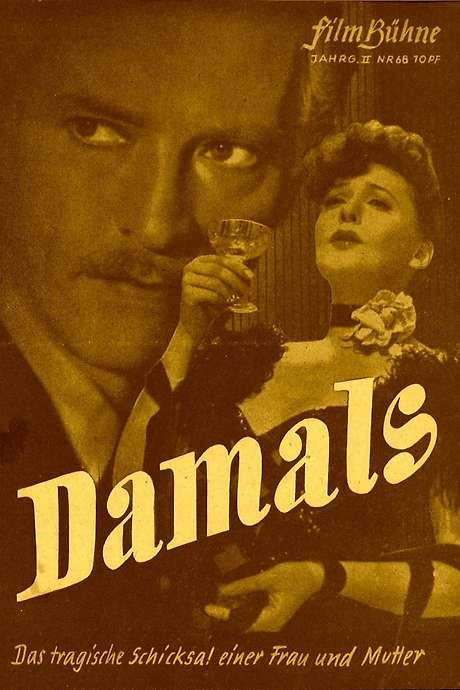 Damals as Dr. Lugeon, Chirurg · Romance
 - 1942
 The Dismissal as Graf zu Eulenburg · History
 - 1939
 Robert Koch, der Bekämpfer des Todes as Kochs Assistent Dr. Friedrich Löffler · Drama
Who Is Otto Graf?
Otto Graf was born in Haina, German Empire in 1896. Credited on films since 1939, as an actor. The background, training and the roles that shaped the career.
Otto Graf was a distinguished German actor whose career spanned over three decades during the turbulent mid-20th century, leaving an indelible mark on German cinema from the Nazi era through the post-war period and into the late 1960s. Born on November 28, 1896, in Haina within the German Empire, Graf embarked on his acting career relatively later in life, making his screen debut in 1935 at the age of 39 with the film Nacht der Verwandlung, where he portrayed René Duval. Throughout the late 1930s, he established himself as a versatile character actor, appearing in numerous productions including The Traitor (1936) as Capitain Dressler, Capers (1937) as a dentist, and Unternehmen Michael (1937) as Capitain Von Grauff. His performances during this period often cast him in authoritative roles such as military officers, doctors, and aristocrats, as evidenced by his portrayals in Die Fledermaus (1937), Urlaub auf Ehrenwort (1938) as Professor Knudsen, and Salonwagen E 417 (1939) as Rittmeister Graf Grenzberg. The actor continued to work prolifically during World War II, taking on roles in significant propaganda and historical films including Ohm Krüger (1941) as the German foreign minister, The Great King (1942) as Friedrich Wilhelm von Seydlitz, and Die Entlassung (1942) as Count Eulenburg, demonstrating his ability to embody complex historical and military figures with gravitas and sophistication. Following the war, Graf seamlessly transitioned into the West German film industry, maintaining his presence on screen throughout the 1950s and 1960s with the same dedication and professional excellence that characterized his earlier work. His post-war credits include notable appearances in Beate (1948) where he played Dr. Schenk, a lawyer, and later in Canaris (1954), a film about the famous German admiral. In 1956, he appeared in Devil in Silk as the chief judge and The Story of Anastasia as the Duke of Leuchtenberg, showcasing his continued versatility across different genres from historical dramas to contemporary stories. His later career saw him take on increasingly distinguished roles such as the chief justice in Different from You and Me (1957), Dr. Beyer in The Last Witness (1960), and the minister president in The Marriage of Mr. Mississippi (1961). One of his final notable performances came in Der junge Lord (1969) as Sir Edgar, followed by appearances in Dr. Fabian: Laughing Is the Best Medicine (1969) and Gentlemen in White Vests (1970) before his retirement. Graf passed away on February 22, 1977, in West Berlin at the age of 80, leaving behind a legacy of over 50 film and television appearances that chronicled the evolution of German cinema through one of its most challenging and transformative periods.
Otto Graf: Questions & Answers
How many movies Otto Graf has made, the biggest hit, the best-rated film, the award record and more, answered from the filmography above.
How many movies has Otto Graf been in?
Otto Graf is credited on 9 films, from 1939 to 1970. The filmography on this page lists every one of them, newest first, with the role and the Movie Echo Score.
What is Otto Graf's newest movie?
The most recent film on Otto Graf's filmography is Gentlemen in White Vests (1970).
The Best Otto Graf Movies, Ranked
Top rated, most awarded and biggest box office hits from 9 credits.
Coming soon to your phone
The Plot Explained Movie Summary App
From blockbusters to hidden gems: plot summaries, endings explained and timelines on your phone. Save your favorites and never miss a twist again.
Be the first to know when it launches. Your email stays private, always. Learn more about the app
