

Donald MacDonald: Movies & Box Office
- films
- 12
- on screen
- 1912–2006
- box office
- $6.73M
- Born
- May 31, 1886
- Birthplace
- New York City, New York, United States
- Full name
- Donald
- Citizenship
- United States
- Occupations
- Actor, Film Director
- Years active
- 1910-1937
- Spouses
- Mabel Troup
Donald MacDonald's Career in Numbers
Donald MacDonald's films in numbers — as an actor, not counting appearances as themselves: when they were made, the genres Donald MacDonald works in most and the milestones along the way. The filmography runs from Making a Man of Her (1912) to Kenny (2006), and the 1950s were the busiest decade.
Donald MacDonald Movies by Decade
- 1910s 3
- 1920s 1
- 1950s 5
- 1980s 2
- 2000s 1
The 1950s were Donald MacDonald's busiest decade, with 5 films.
Donald MacDonald Movies by Genre
- Drama 4
- Western 4
- Comedy 2
- Mystery 1
Drama is the genre Donald MacDonald has worked in most, with 4 films, ahead of western (4).
Donald MacDonald Career Milestones
- First film
- Making a Man of Her 1912
- Biggest box office hit
- Kenny $6.73M worldwide
- Newest film
- Kenny 2006
Donald MacDonald Filmography: Every Movie
Every film Donald MacDonald is credited on, newest first, with the role, the box office and the Movie Echo Score. Re-order the list to see the best-rated films or the biggest hits first.
- 2006
 Kenny as Seminar Presenter · Comedy Worldwide box office: $6.73M
- 1983
 For the Term of His Natural Life as Reverend Meekin · Drama
- 1981
 Strange Residues as The Narrator · Mystery
- 1956
 The Brass Legend as Clay Gipson · Western
- 1956
 The Hardy Boys: The Mystery of the Applegate Treasure as Perry Robinson
- 1956
 Great Day in the Morning as Gary John Lawford · Western
- 1955
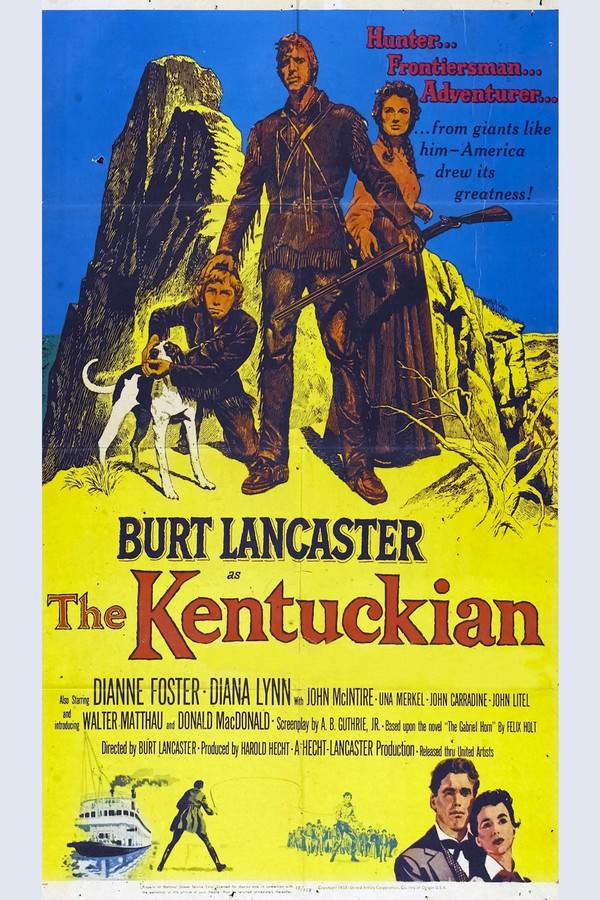 The Kentuckian Drama
- 1954
 Her Twelve Men as Bobby Lennox · Drama
- 1922
 Lorna Doone as Carver Doone · Drama
- 1913
 The Girl Ranchers Comedy
- 1912
 Making a Man of Her as Jim · Western
- 1912
 Making a Man of Her as Jim · Western
Who Is Donald MacDonald?
Donald MacDonald was born in New York City, New York, United States in 1886. Credited on films since 1912, as an actor. The background, training and the roles that shaped the career.
Donald MacDonald (May 31, 1886 – October 9, 1972) was the American actor and film director whose prolific career belongs to the formative era of cinema, with more than 200 screen credits produced between 1910 and 1937. Although many military officers, politicians, clergymen, athletes, and artists shared his name, this MacDonald is the cinema professional who worked extensively during the silent era and remained active through the transition to sound. Born in New York City, he developed an early connection to the stage and entered motion-picture production when performers still had to communicate personality through gesture, posture, and facial expression as effectively as through spoken dialogue. His work during the 1910s established him within the energetic ensemble tradition of early American cinema, where he could move between heroic parts, comedy, and sharply characterized supporting roles. That adaptability made him especially valuable in films built around large casts and in stories requiring an actor to provide authority, age, or social position within a crowded dramatic frame. His credits also connect him to D. W. Griffith's landmark The Birth of a Nation and Intolerance, placing his work within the dramatic experimentation that helped establish Hollywood's visual language. MacDonald later appeared as Meyer Wolfsheim in the 1926 adaptation of The Great Gatsby, demonstrating his ability to embody a worldly, morally ambiguous supporting character without eclipsing the central performance. He also appeared in Old San Francisco, The Crowd, and The Public Enemy, films associated respectively with the elevated melodrama of late silent cinema, the socially observant urban realism of the late 1920s, and the hard-edged gangster genre of early sound cinema. Across these productions, he was frequently cast as a father, judge, businessman, official, or other experienced figure whose bearing could stabilize a scene and make its social relationships immediately legible. As sound became dominant, MacDonald adjusted his screen work to the new medium rather than disappearing with the silent format, appearing in feature films through the early 1930s and continuing until his recorded career ended in 1937. He also worked as a director, although his lasting screen identity rests primarily on the quantity and variety of his performances and on his ability to remain credible in both intimate ensemble drama and broad popular entertainment. Off screen, he was married to stage and screen actress Mabel Troup. By the final phase of his career, he had become a familiar supporting performer whose experience connected the experimental beginnings of American cinema with its mature studio era. He died in Los Angeles on October 9, 1972, at the age of 86, and his legacy remains that of a durable professional craftsman rather than a narrowly specialized star. His more than 200 films make him an important figure for studying the breadth, continuity, and institutional growth of American movie production during the first four decades of the twentieth century.
Donald MacDonald: Questions & Answers
How many movies Donald MacDonald has made, the biggest hit, the best-rated film, the award record and more, answered from the filmography above.
How many movies has Donald MacDonald been in?
Donald MacDonald is credited on 12 films, from 1912 to 2006. The filmography on this page lists every one of them, newest first, with the role and the Movie Echo Score.
What is Donald MacDonald's highest-grossing movie?
Kenny (2006) is Donald MacDonald's biggest box office hit, with $6.73M worldwide. Across every film with box office figures, Donald MacDonald's movies have made $6.73M.
Donald MacDonald's biggest hits What is Donald MacDonald's newest movie?
The most recent film on Donald MacDonald's filmography is Kenny (2006), in the role of Seminar Presenter.
The Best Donald MacDonald Movies, Ranked
Top rated, most awarded and biggest box office hits from 12 credits.
Coming soon to your phone
The Plot Explained Movie Summary App
From blockbusters to hidden gems: plot summaries, endings explained and timelines on your phone. Save your favorites and never miss a twist again.
Be the first to know when it launches. Your email stays private, always. Learn more about the app
