The Surfer 2025


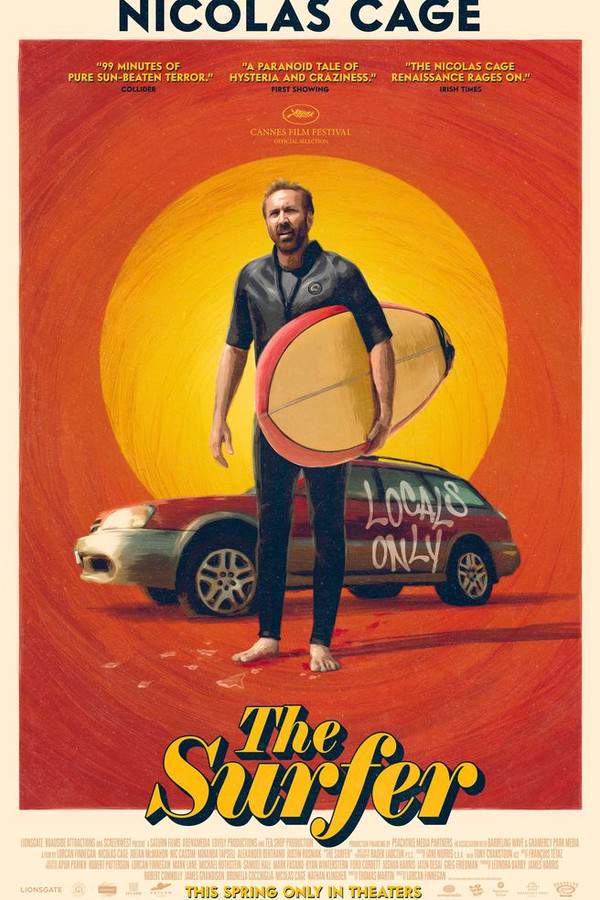
Returning to his childhood beach in Australia, a man hopes to share the joy of surfing with his son. However, he finds himself facing hostility from a group of local surfers who challenge his presence and test his limits. As the summer heat intensifies, he becomes entangled in a conflict that pushes him to confront his past and face a personal crisis.


Does The Surfer have end credit scenes?
No!
The Surfer does not have end credit scenes. You can leave when the credits roll.
Where to Watch The Surfer
See current US streaming, rental, and purchase options for The Surfer (2025) via JustWatch.








Meet the Full Cast and Actors of The Surfer
Explore the complete cast of The Surfer, including both lead and supporting actors. Learn who plays each character, discover their past roles and achievements, and find out what makes this ensemble cast stand out in the world of film and television.

Nicolas Cage
The Surfer

Rahel Romahn
The Estate Agent

Julian McMahon
Scally

Finn Little
The Kid
Charlotte Maggi
Jenny
Michael Abercromby
Curly
Alexander Bertrand
Pitbull
Greg McNeill
Mortgage Broker
Rory O'Keeffe
Blondie
Dean McAskil
Work Colleague
Sally Clune
Blondie's Wife
Violette Davies
Blondie's Daughter
Nicholas Cassim
The Bum
Adam Sollis
The Barista
James Bingham
Runt 1
Austen Wilmot
Runt 2
Talon Hopper
Runt 3
Brenda Meaney
Helen
Patsy Knapp
Helen
Christopher Binns
Derek
External Links and Streaming Options
Discover where to watch The Surfer online, including streaming platforms, rental options, and official sources. Compare reviews, ratings, and in-depth movie information across sites like IMDb, TMDb, Wikipedia or Rotten Tomatoes.










Ratings and Reviews for The Surfer
See how The Surfer is rated across major platforms like IMDb, Metacritic, and TMDb. Compare audience scores and critic reviews to understand where The Surfer stands among top-rated movies in its genre.

The Movie Echo Score
The Surfer offers a striking central performance alongside a distinctive visual tone, but its uneven narrative pacing limits broader engagement. Critics generally laud Nicolas Cage’s fearless commitment and the film’s surreal atmosphere, even as some note a slow burn and moments of payoff that feel inconclusive. The supporting cast and existential undercurrents contribute to its unique flavor. Ultimately, the film registers as an ambitious experiment that captivates through performance and style despite inconsistent storytelling.
The Movie Echo Score Breakdown for The Surfer

Art & Craft
In terms of art and craft, The Surfer features bold visual choices and precise framing, with languid tracking shots and occasional wide-angle compositions noted for their boldness. Production elements such as set design and editing offer a cohesive backdrop for the film’s mood, though some sequences feel overly stylized without advancing the story. Overall, the film’s visual identity is distinctive, yielding moments of striking imagery despite occasional excess in technique.

Character & Emotion
When it comes to character and emotion, the film hinges on Nicolas Cage’s intense portrayal, which reviewers describe as fearless and nuanced. Ensemble performances from supporting actors reinforce the thematic friction, yet character depth beyond Cage’s arc is uneven. Moments of genuine emotional resonance, particularly in depictions of grief and helplessness, stand out amid slower character beats. The net impression is a performance-driven piece that excels in emotional intensity but falters in broader development.

Story & Flow
In terms of story and flow, The Surfer unfolds as a slow-burn narrative that draws attention to existential themes while testing audience patience. Reviews highlight inventive plot turns and psychological tension, but some critics find the pacing uneven and narrative payoff lacking. The film’s originality and nightmarish imagery engage at times, even as coherence suffers from extended sequences that add atmosphere but little forward momentum. Overall, the storytelling is ambitious but uneven.

Sensory Experience
Regarding sensory experience, the film pairs a moody, atmospheric soundscape with an unsettling score that underscores its psychological edge. Sound design punctuates key moments of tension, while cinematography cultivates a surreal and tactile visual style. Reviewers note the cohesion between audio and visual elements in building a visceral tone, though some sequences rely on shock and ambient noise to compensate for narrative gaps. The net effect is immersive and evocative.

Rewatch Factor
When evaluating rewatch factor, The Surfer offers moments of visual flair and hypnotic performance that may reward repeat viewings. Its eclectic atmosphere and Cage’s unpredictable energy can reveal new layers of mood on subsequent watches, but the film’s uneven pacing and unresolved narrative arcs limit long-term appeal. While some audiences may revisit it for its atmospheric strengths and intense central portrayal, broader replay value remains moderate due to its demanding style.

67
Metascore
5.8
User Score


84%
TOMATOMETER

46%
User Score

5.9 /10
IMDb Rating

58
%
User Score
Take the Ultimate The Surfer Movie Quiz
Challenge your knowledge of The Surfer with this fun and interactive movie quiz. Test yourself on key plot points, iconic characters, hidden details, and memorable moments to see how well you really know the film.
The Surfer (2025) Quiz: Test your knowledge of the 2025 film The Surfer with these ten mixed‑difficulty questions.
Which actor portrays the Surfer in the film?
Full Plot Summary and Ending Explained for The Surfer
Read the complete plot summary of The Surfer, including all major events, twists, and the full ending explained in detail. Explore key characters, themes, hidden meanings, and everything you need to understand the story from beginning to end.
In this compelling story, a Nicolas Cage stars as a surfer driven by a deep desire to reconnect with his past and his family. The film opens with the Surfer introducing his teenage son to the beautiful and rugged Luna Bay, a place rich with memories and personal history. His goal is to show his son the beach house that once belonged to his father — a house where he learned to surf and thrive before tragedy struck with his father’s untimely death. He hopes to purchase this house, which holds sentimental value, and share it with his son, creating new memories and perhaps healing old wounds.
However, their plans are abruptly thwarted when they encounter a gang of local surfers led by Julian McMahon’s character, Scally. This self-styled surf guru is fiercely protective of his turf and is determined to keep outsiders away, especially non-residents like the Surfer and his son. The gang members rudely turn the Surfer and his son away from the beach, leaving the boy Finn Little visibly mortified and disappointed. The Surfer’s hopes are dashed as they return disappointedly to the parking lot, with the fragile dream of reclaiming the house slipping further from reach.
Determined to make the deal happen before Christmas, the Surfer relentlessly pesters his real estate agent for info on how to secure the necessary over a million dollars to outbid another potential buyer. Amid these struggles, he receives distressing news from a colleague at his investment firm, indicating a need to return to work swiftly to handle an urgent issue. Meanwhile, his estranged wife drops another blow—she is engaged and expecting a child, crushing the Surfer’s hopes of reuniting and establishing a family life by the beach house for his son. She, along with the agent, suggests he should let go of his obsession, but he remains fixated on his goal.
Throughout this, the Surfer observes Rahel Romahn’s character, known as the Bum, who lives marginally in a broken-down station wagon in the parking lot. The Bum becomes a poignant figure as he recounts the tragic story of his surfing son, a victim posthumously murdered by Scally, and his beloved dog. His sad tale deepens the film’s themes of loss and longing, emphasizing the harsh realities beneath the surf culture.
As tensions rise, the Surfer’s surfboard goes missing one evening, prompting him to confront the gang at their secluded beach retreat. He demands its return but is met with hostility. After a brief but fierce fight, he is forced to retreat and calls the police. Unfortunately, the officer assigned to help him turns out to be another loyal disciple of Scally, dismissing the Surfer’s concerns and warning him to stay away from trouble. This leaves him feeling more isolated and desolate.
In his desperate attempt to reclaim his belongings, the Surfer befriends a photographer who helps him jump-start his car. However, when she charges his phone in exchange for taking photos, he is left without access to funds and unable to buy food from the nearby food hut. As a collateral, he is forced to leave his father’s watch behind. Later, he experiences additional misfortune when his shoes and coat disappear, and he finds himself stranded, starving, and suffering from exhaustion. His reality becomes increasingly fractured as he encounters disturbing visions—including dead surfers in the surf and menacing desert creatures—highlighting his mental deterioration.
His attempts to re-enter the surf world lead him to a confrontation with Alexander Bertrand’s character, Pitbull. After nearly drowning him in a tense showdown, the truth is revealed: the entire ordeal was a test orchestrated by Scally. The goal was to see if the Surfer was worthy of purchasing the house to reunite with his family and become part of their community. This revelation rekindles his resolve.
In a climactic moment, the Surfer is forced to burn his station wagon—the symbol of his struggle—while his son appears on his bike, and the Lexus finally reappears in the parking lot. With newfound hope, the family is reunited, and they return to the beach to finally surf together. Yet, their peace is shattered when the Bum, now armed with a gun, reappears, threatening everyone. In a tense negotiation, the Surfer manages to convince him to lower his guard by returning his shark-tooth necklace, a prized memento that signifies his connection to the surf world.
As they paddle out into the surf to embrace the joy of finally being together, the Bum tragically executes Scally and then takes his own life, lying motionless in the surf just as the Surfer’s father did before him. The film ends on this somber but poetic note, emphasizing themes of sacrifice, redemption, and the relentless pursuit of meaning through the waves of life.
Throughout the film, rich visuals and deep symbolic moments depict the struggles against external threats and inner demons, weaving a story of hope, loss, and the enduring power of connection.

Coming soon on iOS and Android
The Plot Explained Mobile App
From blockbusters to hidden gems — dive into movie stories anytime, anywhere. Save your favorites, discover plots faster, and never miss a twist again.
Sign up to be the first to know when we launch. Your email stays private — always.
Explore the mobile appWatch Trailers, Clips & Behind-the-Scenes for The Surfer
Watch official trailers, exclusive clips, cast interviews, and behind-the-scenes footage from The Surfer. Dive deeper into the making of the film, its standout moments, and key production insights.
Cars Featured in The Surfer
Explore all cars featured in The Surfer, including their makes, models, scenes they appear in, and their significance to the plot. A must-read for car enthusiasts and movie buffs alike.
The Surfer Themes and Keywords
Discover the central themes, ideas, and keywords that define the movie’s story, tone, and message. Analyze the film’s deeper meanings, genre influences, and recurring concepts.
The Surfer Other Names and Titles
Explore the various alternative titles, translations, and other names used for The Surfer across different regions and languages. Understand how the film is marketed and recognized worldwide.
Articles, Reviews & Explainers About The Surfer
Stay updated on The Surfer with in-depth articles, critical reviews, and ending explainers. Explore hidden meanings, major themes, and expert insights into the film’s story and impact.

Similar Movies To The Surfer You Should Know About
Browse a curated list of movies similar in genre, tone, characters, or story structure. Discover new titles like the one you're watching, perfect for fans of related plots, vibes, or cinematic styles.







Quick Links: Summary, Cast, Ratings, More

What's After the Movie?
Not sure whether to stay after the credits? Find out!
Check out our other apps:

SAT Sphere
Build confidence for the Digital SAT.

Mori Atlas
Discover wild places worth protecting.

Luntero
Search smarter for a home in Amsterdam.

Plot Explained
Unravel movie endings and hidden clues.

Pokechamp
Dive into Pokémon data and battle logic.

Driving Theory
Get ready for your European theory test.

Movie Dust
Plan your next cinema trip with ease.

Musemap
Find art and culture as you travel.

Selkobase
Compare credentials before committing.

Local Manual
Turn an unfamiliar country into practical next steps.

Lernavi
Compare school systems before your next move.

GymRoam
Find a workout stop wherever your plans take you.
Explore Our Movie Platform
New Movie Releases (2026)
Famous Movie Actors
Top Film Production Studios
Movie Plot Summaries & Endings
Major Movie Awards & Winners
Best Concert Films & Music Documentaries
Movie Collections and Curated Lists
© 2026 What's After the Movie. All rights reserved.
Privacy Policy