The Best of Enemies 2019


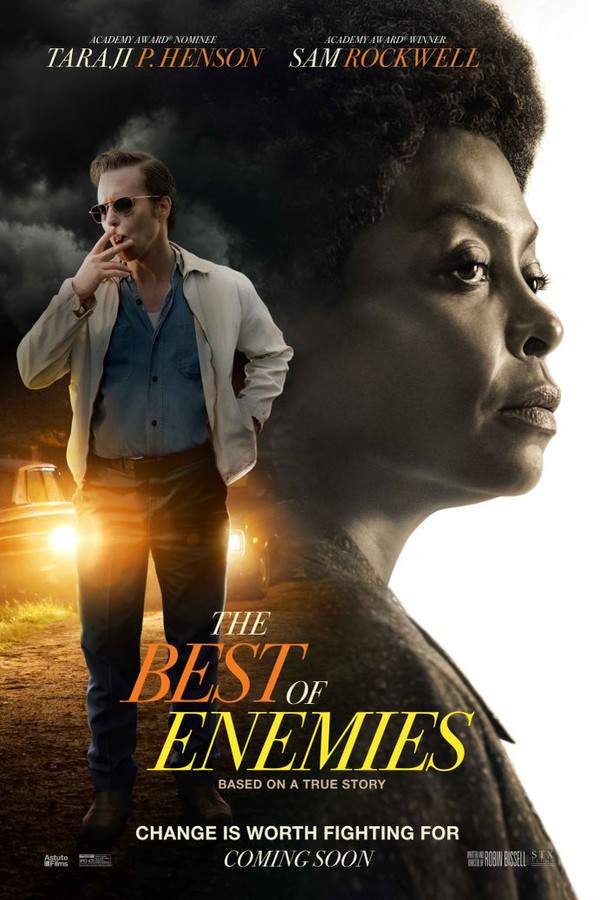
During the volatile summer of 1971, Durham, North Carolina faced intense racial divisions. Ann Atwater, a passionate civil rights activist, and C.P. Ellis, a Ku Klux Klan leader initially resistant to change, found themselves compelled to collaborate on a crucial desegregation initiative. Through their shared work, an unexpected bond developed, forcing both individuals to confront their beliefs and ultimately reshaping their personal journeys and impacting their community.


Does The Best of Enemies have end credit scenes?
No!
The Best of Enemies does not have end credit scenes. You can leave when the credits roll.
Where to Watch The Best of Enemies
See current US streaming, rental, and purchase options for The Best of Enemies (2019) via JustWatch.







Meet the Full Cast and Actors of The Best of Enemies
Explore the complete cast of The Best of Enemies, including both lead and supporting actors. Learn who plays each character, discover their past roles and achievements, and find out what makes this ensemble cast stand out in the world of film and television.

Nicholas Logan
Wiley Yates

Perla Middleton

Nick Searcy
Garland Keith

Wes Bentley
Floyd Kelly

Bruce McGill
Carvie Oldham

Babou Ceesay
Bill Riddick

Taraji P. Henson
Ann Atwater

Alyssa Marie Stilwell

John Gallagher Jr.
Lee Tromblay

Anne Heche
Mary Ellis

Rhoda Griffis

Sam Rockwell
C.P. Ellis
Sope Aluko

Caitlin Mehner
Maddy Mays
Ryan Dinning
Jeb
Carson Holmes
Chris Cavalier
Leonard
Gilbert Glenn Brown
Howard Clement
Jessica Miesel
Ned Vaughn
Susan Williams
External Links and Streaming Options
Discover where to watch The Best of Enemies online, including streaming platforms, rental options, and official sources. Compare reviews, ratings, and in-depth movie information across sites like IMDb, TMDb, Wikipedia or Rotten Tomatoes.












Ratings and Reviews for The Best of Enemies
See how The Best of Enemies is rated across major platforms like IMDb, Metacritic, and TMDb. Compare audience scores and critic reviews to understand where The Best of Enemies stands among top-rated movies in its genre.

The Movie Echo Score
The Best of Enemies delivers noteworthy performances but struggles with predictable storytelling and tentative direction. While critics and audiences commonly praise the leads’ chemistry, many point to the film’s familiar beats and telegraphed emotional moments as detracting from its impact. Commentary also highlights uneven pacing and a cautious visual approach that further dilutes engagement. Overall, the film achieves modest appeal through its cast work but falls short of leaving a lasting emotional impression.
The Movie Echo Score Breakdown for The Best of Enemies

Art & Craft
In terms of art and craft, the direction and technical execution show restraint but lack inspiration. Observers note the framing often adheres to safe compositions, and the pacing of edits seldom builds momentum. Production design and cinematography provide a consistent period feel without drawing attention. Consequently, the film’s visual and editorial elements support the narrative adequately but rarely elevate the material.

Character & Emotion
When it comes to character and emotion, the central performances are consistently acknowledged as the film’s strongest asset. Viewers praise the on-screen rapport between the leads and note credible portrayals of internal transformation. However, emotional resonance is occasionally undermined by predictable character arcs and a shortage of unforeseen developments. In sum, the acting elevates the script, though deeper character complexity remains underexplored.

Story & Flow
In storytelling and flow, the narrative follows a familiar trajectory that many find overly predictable. Reviews highlight telegraphed emotional beats and a lack of substantive surprises, resulting in limited suspense. The pacing at times feels deliberate without introducing narrative tension, and the historical events are arranged in a straightforward progression. Overall, the plot’s predictability diminishes engagement despite sincerity in the source material.

Sensory Experience
In the sensory domain, the film offers a cohesive visual style coupled with a measured musical score. Critics observe that the soundtrack underscores key scenes without overwhelming them, and the production’s period details maintain authenticity. Sound design remains serviceable but does not introduce distinctive sonic elements. Thus, the overall sensory presentation is competent, though it seldom leaves a memorable audio-visual imprint.

Rewatch Factor
When considering rewatch factor, the film’s predictability may limit its appeal on subsequent viewings. Audiences appreciate the strong performances, which can retain some enjoyment, but the familiar story arc reduces the incentive to revisit. The absence of unexpected moments or layered storytelling means revisit value is modest. In conclusion, this title may attract repeat viewings primarily for the lead performances rather than narrative surprises.

49
Metascore
6.3
User Score


51%
TOMATOMETER

77%
User Score

7.3 /10
IMDb Rating

74
%
User Score

3.4
From 9 fan ratings

3.33/5
From 3 fan ratings
Full Plot Summary and Ending Explained for The Best of Enemies
Read the complete plot summary of The Best of Enemies, including all major events, twists, and the full ending explained in detail. Explore key characters, themes, hidden meanings, and everything you need to understand the story from beginning to end.
In 1971, in Durham, North Carolina, a fierce community struggle unfolds as Ann Atwater [Taraji P. Henson] fights to improve housing conditions for poor Black residents, challenging an all-white panel of judges and the entrenched racial boundaries of the town. Her bold push for better living standards puts her on a collision course with C.P. Ellis [Sam Rockwell], the local Ku Klux Klan leader who, despite his harsh racist views, is a father who cares about his children and worries about the world his son will inherit.
When a fire devastates a Black community school, fear swells that Black children will flood white schools, heightening tensions between the two sides. To bridge the divide, Bill Riddick [Babou Ceesay], a pragmatic organizer, arranges a series of charrettes—intense, structured conversations designed to surface issues of segregation and social inequality. At first, Ann and C.P. refuse to participate, aware of how much they despise one another, yet circumstances push them toward a reluctant cooperation.
The group is instructed to select a cross-section of participants at random to vote on the key issues at the end of the sessions, a process intended to democratize the negotiations and reduce personal power plays. During the sessions, a Black reverend asks Bill to allow gospel music to close each meeting; C.P. balks, insisting that if gospel music is welcome, he should be able to display his KKK paraphernalia as well. Ann resists the demand, but Bill finds a compromise that keeps the conversation moving forward.
Tensions rise when a group of Black teenagers tries to damage the KKK items, but Ann intervenes, guiding them to try to understand the KKK rather than simply attack it. C.P. watches closely as the dynamic shifts from confrontation to reluctant dialogue. Bill then pushes for practical, human arrangements: he asks that Black and White participants sit together in the cafeteria, and he places C.P. and Ann side by side, forcing them to confront each other in a fragile, tense silence. The conversation deepens as Ann asks C.P. about his son who lives at a nearby facility for disabled boys; C.P. refuses to discuss his family, revealing the personal cost of his public stance. Ann learns more about Larry, and, moved by the need to protect him, visits Murdock and convinces Bernadette to give Larry a room of his own, a small act of compassion within a flawed system.
A pivotal moment comes when the group visits the burned Black school. The sight of the devastation underscored the stakes for everyone involved, including Mary, C.P.’s wife, who is touched by Ann’s support and support for her husband’s humanity. As the final vote approaches, C.P.’s KKK allies threaten the selected voters to vote for segregation, testing the resolve of both sides. When Ann hears of the intimidation, she condemns C.P. as a coward, underscoring how the struggle has become more than politics—it is a test of character.
When the votes are finally cast, the results align with the movement toward desegregation. Ann votes in favor, and in a surprising turn, C.P. also votes yes, publicly acknowledging the harm of the KKK and delivering a speech that culminates in him tearing up his KKK membership card. The act infuriates his former allies, who lash out with threats and attempt to burn his gas station. C.P. extinguishes the danger and stands by his decision, even as the white community shuns him. In a powerful counter-move, Ann and Bill help pivot the community to support him by encouraging Black residents to shop at his station, signaling a fragile reconciliation and a practical step toward integrated support networks.
The story behind the film is drawn from real life: Ann and C.P. traveled together to other cities to share their experiences, challenging audiences with an honest, ongoing dialogue about race and reconciliation. They remained connected in the later years, and Ann delivered the eulogy at C.P.’s funeral, a testament to a complicated friendship forged in the crucible of a turbulent era. This narrative highlights how personal courage, persistence, and a willingness to see the humanity in one another can gradually shift a community toward a more inclusive future.

Coming soon on iOS and Android
The Plot Explained Mobile App
From blockbusters to hidden gems — dive into movie stories anytime, anywhere. Save your favorites, discover plots faster, and never miss a twist again.
Sign up to be the first to know when we launch. Your email stays private — always.
Explore the mobile appWatch Trailers, Clips & Behind-the-Scenes for The Best of Enemies
Watch official trailers, exclusive clips, cast interviews, and behind-the-scenes footage from The Best of Enemies. Dive deeper into the making of the film, its standout moments, and key production insights.
Cars Featured in The Best of Enemies
Explore all cars featured in The Best of Enemies, including their makes, models, scenes they appear in, and their significance to the plot. A must-read for car enthusiasts and movie buffs alike.
The Best of Enemies Themes and Keywords
Discover the central themes, ideas, and keywords that define the movie’s story, tone, and message. Analyze the film’s deeper meanings, genre influences, and recurring concepts.
The Best of Enemies Other Names and Titles
Explore the various alternative titles, translations, and other names used for The Best of Enemies across different regions and languages. Understand how the film is marketed and recognized worldwide.
Similar Movies To The Best of Enemies You Should Know About
Browse a curated list of movies similar in genre, tone, characters, or story structure. Discover new titles like the one you're watching, perfect for fans of related plots, vibes, or cinematic styles.


Quick Links: Summary, Cast, Ratings, More

What's After the Movie?
Not sure whether to stay after the credits? Find out!
Check out our other apps:

SAT Sphere
Build confidence for the Digital SAT.

Mori Atlas
Discover wild places worth protecting.

Luntero
Search smarter for a home in Amsterdam.

Plot Explained
Unravel movie endings and hidden clues.

Pokechamp
Dive into Pokémon data and battle logic.

Driving Theory
Get ready for your European theory test.

Movie Dust
Plan your next cinema trip with ease.

Musemap
Find art and culture as you travel.

Selkobase
Compare credentials before committing.

Local Manual
Turn an unfamiliar country into practical next steps.

Lernavi
Compare school systems before your next move.

GymRoam
Find a workout stop wherever your plans take you.
Explore Our Movie Platform
New Movie Releases (2026)
Famous Movie Actors
Top Film Production Studios
Movie Plot Summaries & Endings
Major Movie Awards & Winners
Best Concert Films & Music Documentaries
Movie Collections and Curated Lists
© 2026 What's After the Movie. All rights reserved.
Privacy Policy