The Adventures of Picasso 1978


Written by Hans Alfredson and Tage Danielsson, this farcical biopic portrays Pablo Picasso’s life with affectionate exaggeration, sketching his childhood, his artistic prime, and the final years before his death, while also weaving in assorted episodes from the intervening periods.



Does The Adventures of Picasso have end credit scenes?
No!
The Adventures of Picasso does not have end credit scenes. You can leave when the credits roll.
Meet the Full Cast and Actors of The Adventures of Picasso
Explore the complete cast of The Adventures of Picasso, including both lead and supporting actors. Learn who plays each character, discover their past roles and achievements, and find out what makes this ensemble cast stand out in the world of film and television.
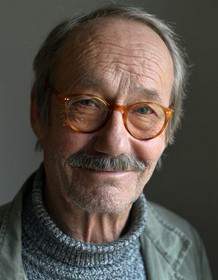
Gösta Ekman
Picasso
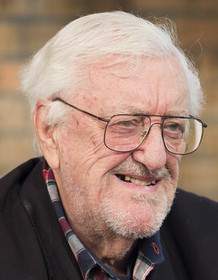
Bernard Cribbins
Gertrude Stein / Narrator (voice)

Margaretha Krook
Dona Maria

Sven Lindberg
Dr. Albert Schweizer
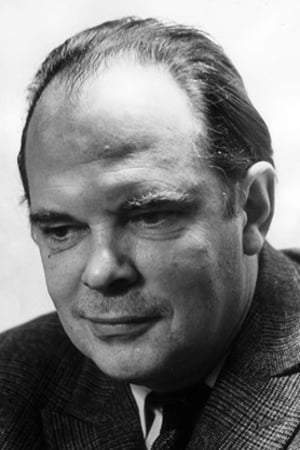
Toivo Pawlo
Elsa Beskow / Narrator (voice)

Lena Olin
Dolores

Wilfrid Brambell
Alice B. Toklas
Tage Danielsson
Per Oscarsson
Apollinaire
Magnus Härenstam
Hitler
Hans Alfredson
Don Jose
Lena Nyman
Sirkka
Birgitta Andersson
Ingrid Svensson-Guggenheim
Marga Pettersson
Dancer (uncredited)
Rolv Wesenlund
Grieg
Agneta Prytz
Queen (uncredited)
Hjördis Petterson
Grandmëre (uncredited)
Tom Younger
Superintendent
Lisbeth Zachrisson
Olga
Hatte Furuhagen
Art Professor (uncredited)
Stellan Sundahl
French Policeman (uncredited)
Folke Lindh
Schultze (uncredited)
Jarl Borssén
Guggenheim (uncredited)
Sune Mangs
Churchill
Lissi Alandh
The Woman in Bed (uncredited)
Lasse Pöysti
Sirkka's Father (uncredited)
Bengt Brunskog
Street Sweeper (uncredited)
Elisabeth Söderström
Mimi
Moltas Eriksson
Butcher at the Studio Party (uncredited)
Lennart Nyman
Henri Rousseau
External Links and Streaming Options
Discover where to watch The Adventures of Picasso online, including streaming platforms, rental options, and official sources. Compare reviews, ratings, and in-depth movie information across sites like IMDb, TMDb, Wikipedia or Letterboxd.




Take the Ultimate The Adventures of Picasso Movie Quiz
Challenge your knowledge of The Adventures of Picasso with this fun and interactive movie quiz. Test yourself on key plot points, iconic characters, hidden details, and memorable moments to see how well you really know the film.
The Adventures of Picasso Quiz: Test your knowledge of the 1978 film The Adventures of Picasso.
Which actor portrays Pablo Picasso in the film?
Full Plot Summary and Ending Explained for The Adventures of Picasso
Read the complete plot summary of The Adventures of Picasso, including all major events, twists, and the full ending explained in detail. Explore key characters, themes, hidden meanings, and everything you need to understand the story from beginning to end.
Art is a lie that leads us closer to the truth.
Pablo Picasso, portrayed by Gösta Ekman, anchors a film that reimagines his life with a playful, almost theatrical flair, guided by a narrator who introduces himself as Toivo Pawlo [toivo-pawlo]. The voiceover frames the story as a loosely woven voyage through art, memory, and fame, inviting viewers to peek behind the canvas and into the man behind the image.
The tale begins in Málaga, Spain, where Picasso’s father, Don Jose—an artist himself—displays an eye for talent when the young boy sculpts a figure of his father from food. As Pablo grows, his journey takes him to Madrid, where his gifts are recognized at the academy and later praised again when he returns home with a portrait of his mother, Dona Maria [Margaretha Krook]. The family happiness is shattered not by death but by a startling revival: at the funeral, Don Jose is revealed to be alive, while Dona Maria’s memory lingers tense and cold, punctuating a household already touched by a stubborn pride and bitterness.
From Madrid, Pablo travels to Paris, where he faces the harsh reality that his canvases don’t sell easily. A visit from his father brings more sorrow—the news that Dona Maria has died—and in a moment of improvisation, he uses an apple as a reference once more, a spark that helps birth a new approach, cubism. The daring display: using a fishing line to lower the painting from a window during a vernissage, the crowd erupts in a chorus of scandal and astonishment. Yet among the murmurs one guest sees something different and magnetic: the great writer Gertrude Stein (as a character here, with Bernard Cribbins voicing the role) who is in Paris with her companion Alice B. Toklas Wilfrid Brambell. The artwork, initially mocked, begins to capture the attention and curiosity of the Parisian art world.
Thus Picasso becomes a central figure in the city’s vibrant scene, rubbing shoulders with a gallery of friends and rivals in a montage of names that blur history and satire. The film invites a playful pastiche: the crowd includes famous figures and fictionalized ephemera alike, while a Swedish-American investor, Ingrid Svensson-Guggenheim Birgitta Andersson, arrives from New York with a keen eye for value and immortality. A masquerade organized in honor of Rousseau–a surreal gathering where guests dress as furniture—lands the party in a dreamlike, almost fairy-tale Paris, culminating with Henri Rousseau Lennart Nyman somehow leaping into the night as the violin carries the final note of the spectacle.
As Europe glances toward a looming war, the year 1914 ushers in a period of upheaval, followed by the tumult of 1918 and the hopeful, uneasy afterglow of a war’s end. Picasso’s world shifts again when his father invents a panacea that doubles as a joke about hair and identity, leaving Pablo with a famous bald look as he embarks on designing sets and costumes for a Russian ballet in London—an endeavor that falters in performance, even as Don Jose concocts snacks for the dancers and the performers break wind in the process.
Back in Paris, a new muse enters Picasso’s orbit: Sirkka, a Finnish singer who captivates him with a single tune—its popularity, however, turns hollow when he discovers the song is more a recipe than a melody. The artist and his father then head to New York, navigating Prohibition-era “underground” art, where Pablo delivers paintings to a mysterious Mrs. X who is revealed to be Ingrid Svensson-Guggenheim again in a different guise. A violent chase erupts as Picasso becomes entangled in a shootout with rivals and law enforcement. A coarse, blunt cop declares the moment a trial of art’s peril, and the courtroom drama devolves into a surreal, improvised trial where background players serve as jurors and Don Jose acts as Picasso’s defender. The electric chair fails to execute him, a sharp satire that ends with Grieg [Rolv Wesenlund], the somewhat comic electrician, accidentally triggering the escape route Picasso sketches on a wall.
The landscape of Europe darkens as fascist powers rise: Benito Mussolini, Adolf Hitler Magnus Härenstam, and Francisco Franco take control, and Don Jose joins the German army, later climbing the ranks to a grotesque, theatrical SS position in charge of Operation Ostrich. Picasso hides dissidents in his apartment during the war, a hidden world of resistance that survives the conflict until the victor’s praise is turned to adoration of a different regime. When the war ends, Don Jose sheds his old clothes for a French uniform, waving an American flag and singing the blues of a country he’s learned to adore for its promises.
Postwar life finds Picasso on the Riviera, where Dolores again returns into the picture—joined by her granddaughter, a moment that brings Lena Olin’s Dolores back into the artist’s orbit. The painter’s doves fly into a Cold War sky as he confronts the price of fame: his home becomes a museum, a public shrine that cannot be escaped, even as he drinks a final drop of the magical ink Dolores once offered. The moment of despair arrives as the signatures on Picasso’s paintings vanish—the Great Picasso crash—yet the film refuses to seal the myth. In the quiet after the storm, Picasso rises, bids farewell to his canvases, and fades into the wall, a final trick of a life spent in the limelight and the shadow of the image it created.

Coming soon on iOS and Android
The Plot Explained Mobile App
From blockbusters to hidden gems — dive into movie stories anytime, anywhere. Save your favorites, discover plots faster, and never miss a twist again.
Sign up to be the first to know when we launch. Your email stays private — always.
Explore the mobile appDiscover Film Music Concerts Near You – Live Orchestras Performing Iconic Movie Soundtracks
Immerse yourself in the magic of cinema with live orchestral performances of your favorite film scores. From sweeping Hollywood blockbusters and animated classics to epic fantasy soundtracks, our curated listings connect you to upcoming film music events worldwide.
Explore concert film screenings paired with full orchestra concerts, read detailed event information, and secure your tickets for unforgettable evenings celebrating legendary composers like John Williams, Hans Zimmer, and more.


The Adventures of Picasso Themes and Keywords
Discover the central themes, ideas, and keywords that define the movie’s story, tone, and message. Analyze the film’s deeper meanings, genre influences, and recurring concepts.

Unlock the World of Movies with Our Comprehensive Wiki
Dive into our Movie Wiki for in-depth film encyclopedia entries, including cast biographies, production trivia, plot synopses, behind-the-scenes facts, and thematic analyses. Whether you’re researching iconic directors, exploring genre histories, or discovering hidden easter eggs, our expertly curated movie database has everything you need to fuel your cinematic passion.
Similar Movies To The Adventures of Picasso You Should Know About
Browse a curated list of movies similar in genre, tone, characters, or story structure. Discover new titles like the one you're watching, perfect for fans of related plots, vibes, or cinematic styles.


Quick Links: Summary, Cast, Ratings, More

What's After the Movie?
Not sure whether to stay after the credits? Find out!
Check out our other apps:

SAT Sphere
Build confidence for the Digital SAT.

Mori Atlas
Discover wild places worth protecting.

Luntero
Search smarter for a home in Amsterdam.

Plot Explained
Unravel movie endings and hidden clues.

Pokechamp
Dive into Pokémon data and battle logic.

Driving Theory
Get ready for your European theory test.

Movie Dust
Plan your next cinema trip with ease.

Musemap
Find art and culture as you travel.

Selkobase
Compare credentials before committing.

Local Manual
Turn an unfamiliar country into practical next steps.

Lernavi
Compare school systems before your next move.

GymRoam
Find a workout stop wherever your plans take you.
Explore Our Movie Platform
New Movie Releases (2026)
Famous Movie Actors
Top Film Production Studios
Movie Plot Summaries & Endings
Major Movie Awards & Winners
Best Concert Films & Music Documentaries
Movie Collections and Curated Lists
© 2026 What's After the Movie. All rights reserved.
Privacy Policy