Silence 1971

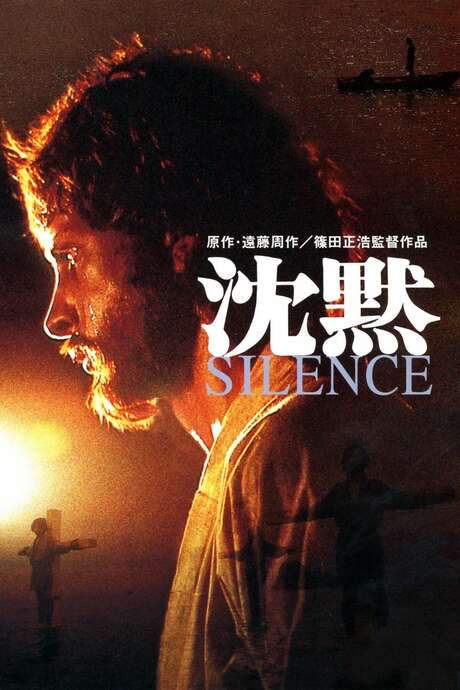
Two Jesuit priests encounter persecution when they travel to Japan in the 17th century to spread Christianity and search for their mentor.


Does Silence have end credit scenes?
No!
Silence does not have end credit scenes. You can leave when the credits roll.
Meet the Full Cast and Actors of Silence
Explore the complete cast of Silence, including both lead and supporting actors. Learn who plays each character, discover their past roles and achievements, and find out what makes this ensemble cast stand out in the world of film and television.

MAKO
Kichijiro

Shima Iwashita
Kiku
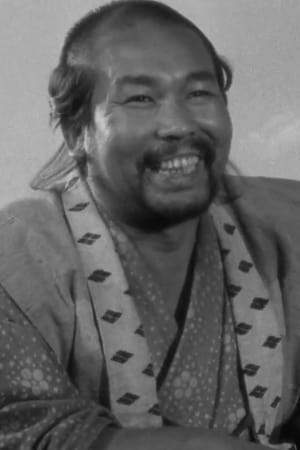
Yoshio Inaba
Prisoner official
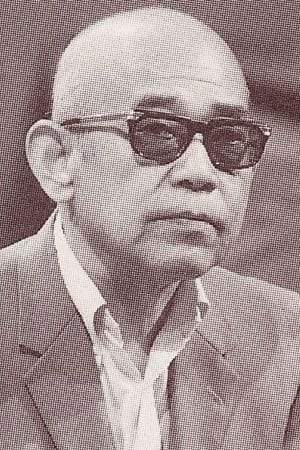
Taiji Tonoyama
Prison guard

Yoshiko Mita
Woman in Maruyama
Masaya Takahashi
Narrator (voice)
Tetsuro Tamba
Cristóvão Ferreira
Yasunori Irikawa
Okada Saemon
Eiji Okada
Inoue Chikugonokami
Noboru Matsuhashi
Mokichi
Kappei Matsumoto
Prisoner official
Junshi Shimada
Prisoner official
Rokkō Toura
Interpreter
Yūsuke Takita
Ichizo
Yoshi Katō
Old man
Tomo'o Nagai
Prisoner official
Kikue Mōri
Old woman
David Lampson
Sebastião Rodrigues
Don Kenny
Francisco Garrpe
External Links and Streaming Options
Discover where to watch Silence online, including streaming platforms, rental options, and official sources. Compare reviews, ratings, and in-depth movie information across sites like IMDb, TMDb, Wikipedia or Letterboxd.




Take the Ultimate Silence Movie Quiz
Challenge your knowledge of Silence with this fun and interactive movie quiz. Test yourself on key plot points, iconic characters, hidden details, and memorable moments to see how well you really know the film.
Silence (1971) Quiz: Test your knowledge of the 1971 film *Silence*, which follows two Portuguese Jesuit priests navigating persecution in 17th‑century Japan.
In which century is the story of *Silence* set?
Full Plot Summary and Ending Explained for Silence
Read the complete plot summary of Silence, including all major events, twists, and the full ending explained in detail. Explore key characters, themes, hidden meanings, and everything you need to understand the story from beginning to end.
In the 17th century, two Portuguese Jesuit priests, Rodrigo and Francisco Garrpe, undertake a perilous journey to Japan to spread Christianity despite a formal crackdown on the faith. They are determined to rendezvous with their mentor, Cristóvão Ferreira, whom they have not heard from in five years and who they believe may be imprisoned. One priest exudes a self-assured warmth, while the other moves with caution; together they navigate a land where their beliefs are met with warning glances and painful restraint. Their arrival is met with a mixture of awe and fear from a community of persecuted Japanese Christians who long for support, comfort, and the familiar rituals of home, and the priests find themselves pulled between duty, hope, and the harsh realities of their hosts’ fear.
They head toward a coastal village where they first encounter a fisherman named Kichijiro, who had helped smuggle them into the country. The welcome is tangled with danger, as a detachment of Japanese officials and samurai descends in search of the two priests. With most of their flock already scattered, tortured, or forced to renounce their faith, the priests decide to retreat, only to be separated in the chaos that follows. The man named Kichijiro reconnects with Rodrigo, admitting his own frailties and revealing that his family was slaughtered for practicing Christianity. The weight of betrayal rises when Nagasaki’s magistrate, Inoue, and his men confront the priests, and money is tossed like a grim symbol—three hundred pieces of silver given to Kichijiro, a gesture that echoes old betrayals and stirs guilt later shared with a prostitute seeking solace.
The authorities haul Rodrigo to Nagasaki for a formal trial, and the mood darkens as a public humiliation unfolds: a Christian samurai family is forced to renounce their faith and endure degradation, while Kiku—the wife in the marriage—recants under pressure, and the husband is executed for defiance. Kichijiro, now burdened by guilt for his treachery, slips back into the cell and begs Rodrigo’s forgiveness, explaining that shame from renouncing faith has driven his actions more than fear itself.
In a private exchange, Inoue, through his interpreter, presses Rodrigo to consider the fate of Christianity in Japan. He argues that the Church is unwanted in the country, likening the Catholic faith to a disruptive concubine that unsettles the conscience of the state. Rodrigo counters with a vision of universality—the belief that truth transcends borders and that the happiness of love between a couple mirrors a larger harmony that the state should not sever. The two men debate, each stubborn but occasionally swayed by the other’s convictions. Yet, bound by the shogunal law, Inoue maintains the ban on Christianity.
Soon after, Rodrigo learns that Garupe has been taken prisoner alongside his Japanese companions. The interpreter reveals a grim choice: if Rodrigo refuses to witness Garupe apostatize, the hidden converts will face death. Garupe’s peers are drowned one by one as he refuses to yield; he resists, frees himself, and plunges into the sea to save others, only to be pierced by spears and to drown. The sacrifice is profound and haunting, underscoring the conflict between faith, loyalty, and survival.
Later, Rodrigo is brought to a Buddhist temple where he meets Inoue’s confidant, known as Sawano, who turns out to be Ferreira under a different name. Ferreira—now an apostate in service to the state—urges Rodrigo to renounce his beliefs and renormalize the church’s role in society. Ferreira’s long arc of preaching has hollowed his own faith, he claims, painting Japan as an inhospitable swamp for Christianity where a native inculturation would rot the seedlings of faith. Rodrigo rebukes him, invoking the memory of Saint Xavier and the original call to faith, even as Sawano’s arguments press on with a chilling logic.
The tide of suffering rises when Rodrigo is subjected to brutal punishment: he is suspended upside down in a pit, while Sawano explains that others who refused to recant have already endured the same fate. The tortures are synchronized with Rodrigo’s internal struggle between love, fidelity, and the presence (or absence) of God amid human pain. Sawano hints that if Rodrigo would renounce his faith for the sake of those who suffer, the others might be spared. Rodrigo maintains that those who suffer find a different, enduring happiness, and he remains steadfast in his beliefs, even as the pressure intensifies.
An ailing test arrives with the fumi-e, a pictorial icon meant to expose hidden faith. The interpreter brings it before Rodrigo, who ultimately steps on it in a moment echoing both denial and defiance. A rooster crows twice, a symbolic echo of biblical betrayal that taunts the moment with memory and consequence. From this point, Rodrigo is seen bending to the demands of the authorities, aiding Inoue’s officers in identifying contraband Christian objects carried by foreigners. Asked to comment on a cup, he notes a subtle difference in form that betrays an authorial eye for ritual detail, a small but telling sign of his compromised stance.
The story culminates in a grim transformation: Rodrigo is made into a samurai and given Kiku as his wife, adopting her late husband’s name, Sanemon Okada, just as Ferreira had once been labeled Lord Sawano. The film closes on a quiet, unsettling note that contrasts the outward accomplishment with the inner cost—an image of Kichijiro, now shown sweeping the surroundings, a silent witness to the long, arduous journey of faith under occupation, doubt, and endurance.

Coming soon on iOS and Android
The Plot Explained Mobile App
From blockbusters to hidden gems — dive into movie stories anytime, anywhere. Save your favorites, discover plots faster, and never miss a twist again.
Sign up to be the first to know when we launch. Your email stays private — always.
Explore the mobile appWatch Trailers, Clips & Behind-the-Scenes for Silence
Watch official trailers, exclusive clips, cast interviews, and behind-the-scenes footage from Silence. Dive deeper into the making of the film, its standout moments, and key production insights.
Silence Themes and Keywords
Discover the central themes, ideas, and keywords that define the movie’s story, tone, and message. Analyze the film’s deeper meanings, genre influences, and recurring concepts.
Silence Other Names and Titles
Explore the various alternative titles, translations, and other names used for Silence across different regions and languages. Understand how the film is marketed and recognized worldwide.
Similar Movies To Silence You Should Know About
Browse a curated list of movies similar in genre, tone, characters, or story structure. Discover new titles like the one you're watching, perfect for fans of related plots, vibes, or cinematic styles.





Quick Links: Summary, Cast, Ratings, More

What's After the Movie?
Not sure whether to stay after the credits? Find out!
Check out our other apps:

SAT Sphere
Build confidence for the Digital SAT.

Mori Atlas
Discover wild places worth protecting.

Luntero
Search smarter for a home in Amsterdam.

Plot Explained
Unravel movie endings and hidden clues.

Pokechamp
Dive into Pokémon data and battle logic.

Driving Theory
Get ready for your European theory test.

Movie Dust
Plan your next cinema trip with ease.

Musemap
Find art and culture as you travel.

Selkobase
Compare credentials before committing.

Local Manual
Turn an unfamiliar country into practical next steps.

Lernavi
Compare school systems before your next move.

GymRoam
Find a workout stop wherever your plans take you.
Explore Our Movie Platform
New Movie Releases (2026)
Famous Movie Actors
Top Film Production Studios
Movie Plot Summaries & Endings
Major Movie Awards & Winners
Best Concert Films & Music Documentaries
Movie Collections and Curated Lists
© 2026 What's After the Movie. All rights reserved.
Privacy Policy