Scarlet Street 1945


She seduces men only to end in murder. Cashier‑artist Christopher Cross falls for Kitty March, who pretends interest while actually longing for Johnny, a small‑time crook. When they discover art dealers want Chris’s paintings, they trick him into letting Kitty claim the work as her own. Chris consents out of love, but devotion has limits.


Does Scarlet Street have end credit scenes?
No!
Scarlet Street does not have end credit scenes. You can leave when the credits roll.
Meet the Full Cast and Actors of Scarlet Street
Explore the complete cast of Scarlet Street, including both lead and supporting actors. Learn who plays each character, discover their past roles and achievements, and find out what makes this ensemble cast stand out in the world of film and television.

Joan Bennett
Katherine 'Kitty' March
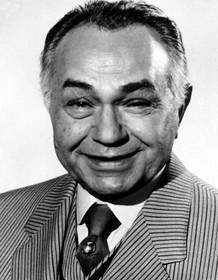
Edward G. Robinson
Christopher Cross

Will Wright
Globe Loan Office Manager (uncredited)
Charles Kemper
Patch-eye Higgins
Clarence Muse
Ben - Bank Janitor (uncredited)
Dick Curtis
Detective (uncredited)
George Meader
Holliday (uncredited)
Charles C. Wilson
Watchman (uncredited)
Fritz Leiber
Evangelist (uncredited)
John Barton
Hurdy-Gurdy Man (uncredited)
Vladimir Sokoloff
Pop LeJon
Robert Malcolm
Policeman (uncredited)
Fred Essler
Marchetti (uncredited)
Tom Daly
Penny - Bartender (uncredited)
Matt Willis
Policeman in Hogarth's Office (uncredited)
William Hall
Policeman (uncredited)
Byron Foulger
Jones - Apartment Manager (uncredited)
Lee Phelps
First Policeman in Hogarth's Office (uncredited)
Amzie Strickland
Woman (uncredited)
Neal Dodd
Priest (uncredited)
Richard Abbott
Critic at Gallery (uncredited)
Samuel S. Hinds
Charles Pringle
Boyd Irwin
Critic at Gallery (uncredited)
Dan Duryea
Johnny Prince
Russell Hicks
J.J. Hogarth
Ralph Dunn
First Policeman in Park (uncredited)
Howard M. Mitchell
Employee (uncredited)
Chuck Hamilton
Chauffeur (uncredited)
Emmett Vogan
Prosecutor (uncredited)
Margaret Lindsay
Millie Ray
Richard Cramer
Principal Keeper (uncredited)
Dewey Robinson
Derelict Saving Cross (uncredited)
Edgar Dearing
Policeman (uncredited)
Thomas E. Jackson
Chief of Detectives (uncredited)
Sherry Hall
Employee (uncredited)
Herbert Heywood
Bellboy (uncredited)
Syd Saylor
Tom Crocker, Evening Globe (uncredited)
George Lloyd
Vince Conway, Ledger (uncredited)
Dick Wessel
Detective (uncredited)
Constance Purdy
Matron (uncredited)
Tom Dillon
Policeman (uncredited)
Edward Keane
Detective (uncredited)
Arthur Loft
Dellarowe
Beatrice Roberts
Secretary (uncredited)
Jess Barker
David Janeway
Anita Sharp-Bolster
Mrs. Michaels
Joe Devlin
Joe Williams, Morning World (uncredited)
Gus Glassmire
Employee (uncredited)
Milton Kibbee
Employee (uncredited)
Lou Lubin
Tiny - Bartender (uncredited)
Cy Kendall
Nick (uncredited)
Rose Plumer
Knitting Woman in Lobby (uncredited)
Rosalind Ivan
Adele Cross
Rodney Bell
Barney (uncredited)
Wallace Scott
Drunk (uncredited)
Arthur Gould-Porter
Critic at Gallery (uncredited)
Lance Fuller
Minor Role (uncredited)
Horace Murphy
Milkman (uncredited)
Ralph Littlefield
Employee (uncredited)
External Links and Streaming Options
Discover where to watch Scarlet Street online, including streaming platforms, rental options, and official sources. Compare reviews, ratings, and in-depth movie information across sites like IMDb, TMDb, Wikipedia or JustWatch.






Take the Ultimate Scarlet Street Movie Quiz
Challenge your knowledge of Scarlet Street with this fun and interactive movie quiz. Test yourself on key plot points, iconic characters, hidden details, and memorable moments to see how well you really know the film.
Scarlet Street Quiz: Test your knowledge of the 1945 film *Scarlet Street*, covering its characters, plot twists, and key details.
What is the name of the elderly cashier who becomes entangled in a scheme of art fraud?
Full Plot Summary and Ending Explained for Scarlet Street
Read the complete plot summary of Scarlet Street, including all major events, twists, and the full ending explained in detail. Explore key characters, themes, hidden meanings, and everything you need to understand the story from beginning to end.
In 1934 New York, Christopher Cross is a mild-mannered, late-middle-aged cashier at a clothing retailer who is celebrated by his employer for a quarter century of loyal service. After the owner, J.J. Hogarth, hands him a gold watch and warm praise, Hogarth departs in a chauffeured limo with his glamorous blonde mistress, leaving Chris to brood about what it would feel like to be truly loved by a young woman. That longing suddenly collides with a sharp, human encounter when Chris comes to the aid of Katherine “Kitty” March, who is menaced by a drunken attacker in Greenwich Village. He clubs the assailant with an umbrella, the man collapses, and Kitty’s world tilts between fear and fascination as Chris escorts her home to her apartment. Kitty, suave and quick-witted, reads Chris as a potential wealthy painter rather than the dutiful, unassuming man he actually is, and she’s not slow to test that impression. Through their awkward, luminous exchange, she seems to offer him a fragile, shimmering possibility of love—an illusion that he eagerly nourishes even as he confesses a loveless marriage to Adele, a wife who revered the memory of her late policeman husband.
From the outset, the film makes clear that Chris’s generosity and his yearning for connection will collide with practical temptations. Johnny, Kitty’s boyfriend, sees an opportunity to ride the wave of Chris’s naivete for cash, insisting that Kitty count on Chris’s “romance” to unlock a fortune. Kitty persuades Chris to rent an apartment that she can supposedly use as a studio, nudging him into a risky, budding collaboration. The couple’s plan hinges on Chris’s trust and his blind faith in Kitty’s affections. As Chris becomes entangled in a small embezzlement scheme—stealing $500 in insurance bonds from Adele’s safe, then $1,000 from Hogarth’s company—he steps further into a shadow world he barely understands. The undercurrent of deception grows stronger, even as the supposed romance between Kitty and Chris seems to bloom into a real, consuming attraction.
The pair’s fortunes pivot on art, ambition, and perception. Johnny tries to hawk some of his “paintings” around town, only to have them dismissed by a street vendor as worth little more than a few cents. Then a genuine spark appears when art critic Damon Janeway encounters the works, praising their originality and daring. Kitty, with a deft blend of charm and manipulation, convinces Janeway that she painted them, channeling Chris’s own opinions about art into a narrative that sells. Captivated by the paintings and by Kitty’s allure, Janeway pushes the pieces into the public eye, fueling a sensational rise in Kitty’s celebrity. Chris, watching his own thoughts and designs become marketable commodities under Kitty’s public persona, feels both pride and a hollow ache—he has created something that others applaud, but he himself never receives his due credit or a share of the profits.
The tension intensifies when Adele—believing she is still in possession of her dead husband’s memory and status—accidentally discovers Chris’s paintings in a gallery window, signed “Katherine March,” and confronts him with accusations that he copied Kitty’s supposed work. Chris quietly confesses that Kitty shaped the public identity of the paintings, and Adele, sensing a transformation in her husband’s life, worries about the erosion of their own precarious security. In a surprising turn, Chris accepts Kitty’s explanation that she needed the money and accepts her as the public face of his art. The result is a dazzling commercial triumph that leaves Chris financially empty in a surprising, almost cruel irony: the paintings are celebrated, the artist is not paid, and the man behind the brush remains a shadow behind Kitty’s luminous reputation. This is where the film tests the cost of artistic recognition, fame, and a man’s moral compromises.
Complications multiply when Higgins—the ex-convict who has long stalked Chris’s fate—appears at Chris’s office to extort money. Higgins, a figure of fear and desperation, reveals ties to corrupt dealings and a past misdeed that involved an earlier brush with the law. He fakes his own death to disappear from accountability, and when Chris agrees to help the extortionist or simply to shield himself from trouble, he becomes ensnared in a plan that could ruin his already fragile life. In a moment driven by fear and the desire to protect Kitty’s fragile future, Chris volunteers extra money to keep the threatening past buried, but the arrangement spirals out of control.
The turning point arrives when Chris, convinced that his relationship with Kitty is finally secure, goes to see her—and discovers Johnny and Kitty in an intimate embrace. The dream shatters in a cruel instant, and Kitty’s rejection of Chris’s aging, ordinary self provokes a violent, fatal response. In a fit of rage, Chris stabs Kitty with an ice pick, a moment that will haunt him forever. The police arrive, tipped off by Higgins, and Hogarth refuses to press charges but fires Chris from his job. Johnny is arrested for Kitty’s murder, his checkered past weighing heavily against him as he faces trial and condemnation.
At the trial, Chris denies that he painted the controversial works, positioning himself instead as a mere beginner who never should have been the artist at the center of the scandal. Yet the testimony of witnesses confirms his claims, while Johnny’s own misdeeds and bad character emerge, sealing Johnny’s fate as he is convicted and executed. Kitty’s genius is celebrated posthumously, paradoxically granting her immortal celebrity while leaving Chris to bear the moral toll of the tragedy. The courtroom outcome intensifies the sense of tragedy: a man who desired recognition finds it at the cost of another’s life, and a woman who achieved fame through another’s hand becomes a symbol of artistic tentativeness and risk.
Haunted by what he has done, Chris attempts to end his life on the night of Johnny’s execution, only to be saved by Good Samaritans. Five years pass, during which he becomes homeless and destitute, with no credit for his own art. A chance encounter with a portrait of Kitty, sold for a staggering sum, jolts him back into a bitter awareness of the price he paid for others’ fame. Tormented by the voices of Kitty and Johnny—their ghosts echoing across the city—Christopher Cross wanders through New York, broken and unable to claim credit for the work that might have redeemed him. The film’s final mood is a stark meditation on ambition, acceptance, and the irreparable cost of choosing fame over integrity.
Notes:
- First mentions of key characters are linked to their respective actors: Christopher Cross, J.J. Hogarth, Katherine ‘Kitty’ March, Johnny Prince, Damon Janeway, and Higgins.

Coming soon on iOS and Android
The Plot Explained Mobile App
From blockbusters to hidden gems — dive into movie stories anytime, anywhere. Save your favorites, discover plots faster, and never miss a twist again.
Sign up to be the first to know when we launch. Your email stays private — always.
Explore the mobile appWatch Trailers, Clips & Behind-the-Scenes for Scarlet Street
Watch official trailers, exclusive clips, cast interviews, and behind-the-scenes footage from Scarlet Street. Dive deeper into the making of the film, its standout moments, and key production insights.
Cars Featured in Scarlet Street
Explore all cars featured in Scarlet Street, including their makes, models, scenes they appear in, and their significance to the plot. A must-read for car enthusiasts and movie buffs alike.
Scarlet Street Themes and Keywords
Discover the central themes, ideas, and keywords that define the movie’s story, tone, and message. Analyze the film’s deeper meanings, genre influences, and recurring concepts.
Scarlet Street Other Names and Titles
Explore the various alternative titles, translations, and other names used for Scarlet Street across different regions and languages. Understand how the film is marketed and recognized worldwide.
Similar Movies To Scarlet Street You Should Know About
Browse a curated list of movies similar in genre, tone, characters, or story structure. Discover new titles like the one you're watching, perfect for fans of related plots, vibes, or cinematic styles.


Quick Links: Summary, Cast, Ratings, More

What's After the Movie?
Not sure whether to stay after the credits? Find out!
Check out our other apps:

SAT Sphere
Build confidence for the Digital SAT.

Mori Atlas
Discover wild places worth protecting.

Luntero
Search smarter for a home in Amsterdam.

Plot Explained
Unravel movie endings and hidden clues.

Pokechamp
Dive into Pokémon data and battle logic.

Driving Theory
Get ready for your European theory test.

Movie Dust
Plan your next cinema trip with ease.

Musemap
Find art and culture as you travel.

Selkobase
Compare credentials before committing.

Local Manual
Turn an unfamiliar country into practical next steps.

Lernavi
Compare school systems before your next move.

GymRoam
Find a workout stop wherever your plans take you.
Explore Our Movie Platform
New Movie Releases (2026)
Famous Movie Actors
Top Film Production Studios
Movie Plot Summaries & Endings
Major Movie Awards & Winners
Best Concert Films & Music Documentaries
Movie Collections and Curated Lists
© 2026 What's After the Movie. All rights reserved.
Privacy Policy