Sarajevo 2014

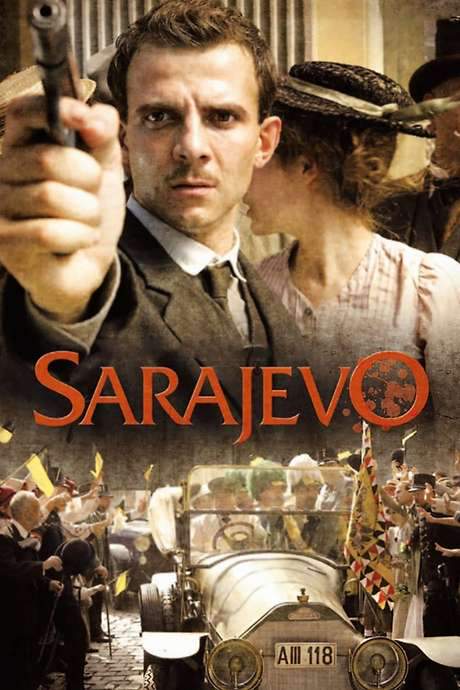
In June 1914, Sarajevo becomes the stage for a gripping thriller. Examining magistrate Dr. Leo Pfeffer, portrayed by Florian Teichtmeister, investigates the assassination of Archduke Franz Ferdinand amidst a city rife with lawlessness and violence. As he strives to uphold justice and protect his loved ones—his sweetheart, Marija, and her father, a respected Serbian merchant—he uncovers a web of intrigues and betrayals. The escalating events ultimately trigger a chain reaction that leads to the outbreak of the Great War.


Does Sarajevo have end credit scenes?
No!
Sarajevo does not have end credit scenes. You can leave when the credits roll.
Where to Watch Sarajevo
See current US streaming, rental, and purchase options for Sarajevo (2014) via JustWatch.


Streaming availability powered by 
Meet the Full Cast and Actors of Sarajevo
Explore the complete cast of Sarajevo, including both lead and supporting actors. Learn who plays each character, discover their past roles and achievements, and find out what makes this ensemble cast stand out in the world of film and television.


External Links and Streaming Options
Discover where to watch Sarajevo online, including streaming platforms, rental options, and official sources. Compare reviews, ratings, and in-depth movie information across sites like IMDb, TMDb, Wikipedia or Rotten Tomatoes.






Full Plot Summary and Ending Explained for Sarajevo
Read the complete plot summary of Sarajevo, including all major events, twists, and the full ending explained in detail. Explore key characters, themes, hidden meanings, and everything you need to understand the story from beginning to end.
This German film, set in June 1914, offers a provocative alternate take on the assassination of Archduke Franz Ferdinand, the event that sparked World War I. While the official account pins the crime on six Bosnian Serb separatists connected to the Serbian government, this movie pushes a different hypothesis, weaving a darker web of motives that reach beyond a single conspiracy.
Dr. Leo Pfiffer, Florian Teichtmeister, a district magistrate for the Austrian administration in Sarajevo who is ethnically Hungarian and Jewish, is tasked with interrogating the young men accused of the deed. At first, he clings to the belief that the Serbian government ordered the assassination to reclaim Bosnia and other territories annexed by Austria. But as the interrogations unfold, he starts to doubt this simplified version. The suspects struggle to recount their journeys from Serbia across the mountains into Sarajevo, including a confessed route that seems inconsistent with what they described. Pfiffer also notes the oddly sparse police presence—only 36 officers on the day of the royal procession—and questions why the parade route was made public in newspapers, all within a volatile and politically charged environment.
As Pfiffer travels deeper into the case, he encounters shadowy figures from both Austria and Germany who seem to pull strings behind the scenes. He begins to suspect that the six youngsters acted more out of local nationalist fervor than direct orders from a distant government. Yet there is a broader design at play: the film argues that wealthy industrialists envision a railroad from Berlin to Baghdad crossing Serbia, and that both Austria and Germany would seize the opportunity to shape Serbia as a buffer against Russia. With every step, Pfiffer uncovers clues suggesting that the assassination was used as a pretext to advance a larger geopolitical agenda.
The narrative tightens around the question of who really benefits from such upheaval. Pfiffer discovers that the motive behind the plot may lie not merely in nationalist fervor but in a calculated, high-stakes plan to redraw power in the region. The film suggests that Germany’s military strength helped set the wheels in motion, potentially sacrificing Archduke Ferdinand to justify swift annexation of Serbia. In a striking closing turn, Pfiffer is warned by a German military doctor—an ally he has come to trust—that Germany intends to overtake Paris within a month, underscoring how quickly war ambitions could unfold once set in motion.
Amid the political intrigue runs a poignant romance: Pfiffer becomes involved with a wealthy Serbian heiress, Melika Foroutan portraying Marija Jeftanović, who lives with her father in Sarajevo. Their clandestine relationship deepens Pfiffer’s humanity amid the murky moral calculus around power, loyalty, and national interest. The couple’s happiness is interrupted by the harsh realities of war, as Marija and her father are forced to return to Paris after discovering she is married to a man there, all while the German army closes in.
The cast threads a web of tense performances that anchor the story. Heino Ferch embodies Dr. Herbert Sattler, a pivotal figure who looms large in Pfiffer’s investigations. The investigators and officials Pfiffer encounters—including Erwin Steinhauer as Oskar Potiorek, Friedrich von Thun as Sektionsrat Wiesner, Edin Hasanović as Danilo Ilic, Juraj Kukura as Stojan Jeftanovic, and Martin Leutgeb as Schimpf—paint a portrait of a world where personal ambition, political maneuvering, and the fate of nations intersect.
The film is presented in both German and Serbian, with English subtitles to guide viewers through its multilingual, historically charged dialogue. Its atmosphere is tense, methodical, and contemplative, inviting audiences to weigh competing narratives while considering how information can be shaped to justify broader imperial ambitions. The result is a thoroughly modern historical drama that stays true to its core events while offering a thought-provoking reinterpretation of a watershed moment in world history.

Coming soon on iOS and Android
The Plot Explained Mobile App
From blockbusters to hidden gems — dive into movie stories anytime, anywhere. Save your favorites, discover plots faster, and never miss a twist again.
Sign up to be the first to know when we launch. Your email stays private — always.
Explore the mobile appDiscover Film Music Concerts Near You – Live Orchestras Performing Iconic Movie Soundtracks
Immerse yourself in the magic of cinema with live orchestral performances of your favorite film scores. From sweeping Hollywood blockbusters and animated classics to epic fantasy soundtracks, our curated listings connect you to upcoming film music events worldwide.
Explore concert film screenings paired with full orchestra concerts, read detailed event information, and secure your tickets for unforgettable evenings celebrating legendary composers like John Williams, Hans Zimmer, and more.


Sarajevo Other Names and Titles
Explore the various alternative titles, translations, and other names used for Sarajevo across different regions and languages. Understand how the film is marketed and recognized worldwide.
Quick Links: Summary, Cast, Ratings, More

What's After the Movie?
Not sure whether to stay after the credits? Find out!
Check out our other apps:

SAT Sphere
Build confidence for the Digital SAT.

Mori Atlas
Discover wild places worth protecting.

Luntero
Search smarter for a home in Amsterdam.

Plot Explained
Unravel movie endings and hidden clues.

Pokechamp
Dive into Pokémon data and battle logic.

Driving Theory
Get ready for your European theory test.

Movie Dust
Plan your next cinema trip with ease.

Musemap
Find art and culture as you travel.

Selkobase
Compare credentials before committing.

Local Manual
Turn an unfamiliar country into practical next steps.

Lernavi
Compare school systems before your next move.

GymRoam
Find a workout stop wherever your plans take you.
Explore Our Movie Platform
New Movie Releases (2026)
Famous Movie Actors
Top Film Production Studios
Movie Plot Summaries & Endings
Major Movie Awards & Winners
Best Concert Films & Music Documentaries
Movie Collections and Curated Lists
© 2026 What's After the Movie. All rights reserved.
Privacy Policy