Pathonpatham Noottandu 2022


Arattupuzha Velayudha Panicker, a 19th century fiery social reformer and his unswerving fight against the dominant caste oppressions by the upper classes.


Does Pathonpatham Noottandu have end credit scenes?
No!
Pathonpatham Noottandu does not have end credit scenes. You can leave when the credits roll.
Meet the Full Cast and Actors of Pathonpatham Noottandu
Explore the complete cast of Pathonpatham Noottandu, including both lead and supporting actors. Learn who plays each character, discover their past roles and achievements, and find out what makes this ensemble cast stand out in the world of film and television.

Chemban Vinod Jose
Kayamkulam Kochunni

Mammootty
Self - Narrator (voice)

Mohanlal
Self - Narrator (voice)
Biju Pappan
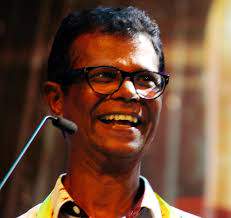
Indrans
Kelu
Suresh Krishna
Panikkasseri Parameswara Kaimal
Shivaji Guruvayoor
Cherthala Naduvazhi
Ramu
Diwan
Sreejith Ravi
Anoop Menon
Maharaja of Travancore
Jayan Cherthala
Muhammad Musthafa
Kandappan
Jaffer Idukki
Thandalkkaran Keshunni
Tini Tom
Kunju Pillai
Poonam Bajwa
Queen of Travancore
Baiju Johnson

Sudheer Karamana
Chief of Travancore Army
Poojappura Radhakrishnan
Spadikam George
Diwan Peshkar

Sunil Sukhada
Chandru Pillai
Raghavan
Eswaran Namboothiri
Krishna
Kalyana Krishnan
Alencier Ley Lopez
Chandrakkaran Raman Thampi
Siju Wilson
Aarattupuzha Velayudha Panicker
Koottickal Jayachandran
Achu Pillai
Adinad Sasi
M B Padmakumar
Nazeer Sankranthi
Konthi Kurup
Sudev Nair
Padaveedan Nambi
Hareesh Pengan
Deepti Sati
Savithri Thampuratti
Jayakumar Parameswaran Pillai
Vishnu Govindan
Chaathan
Manikanda Achari
Bava
Bibin George
Madhuri Braganza
Katha
Senthil Krishna Rajamani
Chirukandan
Renu Soundar
Neeli
Vishnu Vinay
Kanna Kurup
Kayadu Lohar
Nangeli
Gokulam Gopalan
Perumal
Niya Sankranthil
Velutha
Master Adhil Raj
Kunju
Varsha Vishwanath
Janaki
External Links and Streaming Options
Discover where to watch Pathonpatham Noottandu online, including streaming platforms, rental options, and official sources. Compare reviews, ratings, and in-depth movie information across sites like IMDb, TMDb, Wikipedia or Rotten Tomatoes.







Ratings and Reviews for Pathonpatham Noottandu
See how Pathonpatham Noottandu is rated across major platforms like IMDb, Metacritic, and TMDb. Compare audience scores and critic reviews to understand where Pathonpatham Noottandu stands among top-rated movies in its genre.

The Movie Echo Score
Pathonpatham Noottandu delivers a technically impressive period piece, backed by high production values and vivid action set‑pieces, while its narrative depth falls short. Reviewers commend the visual design, choreography, and historical relevance, yet repeatedly note a thin screenplay and uneven character development that dilute engagement. The film’s strengths in art and sensory execution are offset by a middling story, resulting in an entertaining yet imperfect viewing experience.
The Movie Echo Score Breakdown for Pathonpatham Noottandu

Art & Craft
ART: The direction and production design receive consistent praise for authentically recreating 19th‑century Kerala, with commendable cinematography, costume work, and elaborate set pieces. Critics highlight the film’s high‑quality visuals and choreography, though a few note occasional artificiality in period detailing. Overall, the technical craftsmanship stands out as one of the film’s strongest attributes.

Character & Emotion
CHARACTER: Performances elicit mixed reactions; Kayadu Lohar’s portrayal of Nangeli and Siju Wilson’s intense physical commitment are frequently praised, while several reviewers find the remaining cast and character arcs underdeveloped. The lack of nuanced motivations, especially for the protagonist, diminishes emotional resonance, leading to a perception of flat, episodic figures despite isolated strong moments.

Story & Flow
STORY: The narrative’s historical premise is compelling, yet reviewers consistently criticize the screenplay for uneven pacing and a lack of structural cohesion. Plot points such as the fight against the breast tax are highlighted as impactful, but the overall storytelling is described as average, with insufficient character stakes and a missing emotional punch.

Sensory Experience
SENSORY: The film’s soundscape and musical score receive commendation for enhancing the period atmosphere, though some find the songs less memorable. Visual style, including stylised fight sequences and striking set designs, is lauded for creating an immersive experience, while occasional overuse of slow‑motion is noted as a minor drawback.

Rewatch Factor
REWATCH: While the historical context and high‑impact action set‑pieces provide reasons for repeat viewings, the uneven script and thin character development limit lasting appeal. Some viewers describe the film as engaging and worth revisiting for its spectacle, yet others feel the narrative shortcomings reduce its rewatch value.
Take the Ultimate Pathonpatham Noottandu Movie Quiz
Challenge your knowledge of Pathonpatham Noottandu with this fun and interactive movie quiz. Test yourself on key plot points, iconic characters, hidden details, and memorable moments to see how well you really know the film.
Pathonpatham Noottandu Quiz: Test your knowledge of the events, characters, and cultural significance in the 2022 film Pathonpatham Noottandu.
Who is the main hero that later receives the title Panicker?
Full Plot Summary and Ending Explained for Pathonpatham Noottandu
Read the complete plot summary of Pathonpatham Noottandu, including all major events, twists, and the full ending explained in detail. Explore key characters, themes, hidden meanings, and everything you need to understand the story from beginning to end.
A young Arattupuzha Velayudha Panicker from Arattupuzha arrives at the English East India Company headquarters in Travancore to ask a lord for a permit to export cardamom. The scene inside is tense and provocative: a brutal fight among slaves, staged by British officers alongside nobles and other guests. When the winner is forced to kill the loser with a bludgeon, a moment of intervention from Kayamkulam Kochunni interrupts the bloodshed and saves the vanquished man, but the clash spirals into chaos and a close escape for Panicker.
The Maharaja of Travancore summons the brave young warrior to his Durbar, tasking him with locating and capturing the infamous [Kayamkulam Kochunni], who has already stolen sacred salagram ornaments from the Padmanabhaswamy Temple. Yet the palace ministers and governors hesitate to enlist a man from the lower-caste Ezhava community, fearing social upheaval. The tension deepens when Kochunni allegedly assaulted Paachupanikkar, the commander-in-chief of the Travancore Army, and his aides during a failed capture attempt, prompting the Maharaja to declare a reward for anyone who can bring him in. Meanwhile, Kochunni plots to recover the chest of stolen ornaments, which he had hidden underground near the palace during the prince’s wedding celebrations.
In parallel, Panicker’s act of defiance continues to ruffle the status quo: he builds a Shiva temple for lower-caste people, a bold project that sparks an arrest under orders from the Diwan. While Panicker is imprisoned, the deputy commander-in-chief, Padaveedan Nambi, and the naduvazhi Kaimal scheme to poison him to death. Inspector Kannan Kurup, the son of Paachupanikkar’s former commander, rescues him, and the queen steps in, ordering Panicker’s release. She then seeks his help once more—to retrieve the stolen ornaments and bring Kochunni to justice.
During the wedding night when Kochunni reappears to claim the hidden chest, Kurup captures him but releases him in exchange for half the value of the ornaments. Kochunni and Kurup attempt to sell the chest to Looper, a trader who handles ivory and antiques for export to England and France. Panicker arrives, outwits Kochunni and his team, and recovers the chest, while Kurup and Looper escape. Kochunni’s capture seems imminent, yet he ends up jailed, and the Maharaja offers a reward of veera shringala and 1008 gold coins. However, the ministers counsel restraint, citing untouchability laws, so Panicker declines the prize. In a ceremonial gesture, the Maharaja elevates Panicker’s status, bestowing the title Panicker and forever associating him with the name Arattupuzha Velayudha Panicker.
As the story unfolds, the oppression against the lower caste escalates. Women who clad themselves modestly—covering ankles and chests—face brutal punishments, while others suffer slicing punishments for their adornments. Panicker responds with a social protest: he proclaims that women should cover their chests, wear long dothis, and shoulder the heavy burden of the breast tax through the Poothan dance in the Perumpoothan Thullal. He also ensures that garments and nose rings are made available to all women, challenging the tyranny of the tax.
Trouble deepens when Kaimal and Raman Thampi conspire against Panicker. Kandappan, Panicker’s loyal aide, is coerced to kill Panicker, and the plan intensifies as Kaimal, aided by a trusted confidant of the king, spikes the tender coconut drinks during a boat trip. The attack succeeds in disabling several of Panicker’s guards, and Bava—one of Kochunni’s associates—overlaps into the fatal confrontation, meeting his end as the plan to topple Panicker moves forward. The betrayal continues as Kaimal and Raman Thampi secure a deadly advantage.
In the aftermath, Nangeli—the beloved woman who defied the breast tax—suffers at the hands of those enforcing control over her body. Her father Kelu is captured and beaten in the same struggle. To save her father, Nangeli makes a heartbreaking choice: she cuts off her own breasts in a symbolic act of protest and presents them to the authorities, dying soon after. Her lover, Chirukandan, leaps into her funeral pyre in a final, passionate gesture of devotion.
The deaths of Panicker and Nangeli ignite widespread fury and upheaval among the people. Riots erupt as shops and markets are targeted by the angered crowd, and the authorities face mounting pressure. In response, the King takes decisive steps to restore order by abolishing the brutal taxes that had fueled the unrest and by granting women the right to cover their upper bodies, a historic concession that signals a broader social shift for Travancore. The narrative closes on the transformed moral landscape: a realm where courage and sacrifice catalyze social reform, even as the memory of two steadfast figures—Panicker and Nangeli—remains a powerful emblem of resistance and dignity.

Coming soon on iOS and Android
The Plot Explained Mobile App
From blockbusters to hidden gems — dive into movie stories anytime, anywhere. Save your favorites, discover plots faster, and never miss a twist again.
Sign up to be the first to know when we launch. Your email stays private — always.
Explore the mobile appDiscover Film Music Concerts Near You – Live Orchestras Performing Iconic Movie Soundtracks
Immerse yourself in the magic of cinema with live orchestral performances of your favorite film scores. From sweeping Hollywood blockbusters and animated classics to epic fantasy soundtracks, our curated listings connect you to upcoming film music events worldwide.
Explore concert film screenings paired with full orchestra concerts, read detailed event information, and secure your tickets for unforgettable evenings celebrating legendary composers like John Williams, Hans Zimmer, and more.


Unlock the World of Movies with Our Comprehensive Wiki
Dive into our Movie Wiki for in-depth film encyclopedia entries, including cast biographies, production trivia, plot synopses, behind-the-scenes facts, and thematic analyses. Whether you’re researching iconic directors, exploring genre histories, or discovering hidden easter eggs, our expertly curated movie database has everything you need to fuel your cinematic passion.
Quick Links: Summary, Cast, Ratings, More

What's After the Movie?
Not sure whether to stay after the credits? Find out!
Check out our other apps:

SAT Sphere
Build confidence for the Digital SAT.

Mori Atlas
Discover wild places worth protecting.

Luntero
Search smarter for a home in Amsterdam.

Plot Explained
Unravel movie endings and hidden clues.

Pokechamp
Dive into Pokémon data and battle logic.

Driving Theory
Get ready for your European theory test.

Movie Dust
Plan your next cinema trip with ease.

Musemap
Find art and culture as you travel.

Selkobase
Compare credentials before committing.

Local Manual
Turn an unfamiliar country into practical next steps.

Lernavi
Compare school systems before your next move.

GymRoam
Find a workout stop wherever your plans take you.
Explore Our Movie Platform
New Movie Releases (2026)
Famous Movie Actors
Top Film Production Studios
Movie Plot Summaries & Endings
Major Movie Awards & Winners
Best Concert Films & Music Documentaries
Movie Collections and Curated Lists
© 2026 What's After the Movie. All rights reserved.
Privacy Policy