OMG: Oh My God! 2012


A Divine Comedy. A shopkeeper takes God to court when his shop is destroyed by an earthquake.


Does OMG: Oh My God! have end credit scenes?
No!
OMG: Oh My God! does not have end credit scenes. You can leave when the credits roll.
Meet the Full Cast and Actors of OMG: Oh My God!
Explore the complete cast of OMG: Oh My God!, including both lead and supporting actors. Learn who plays each character, discover their past roles and achievements, and find out what makes this ensemble cast stand out in the world of film and television.
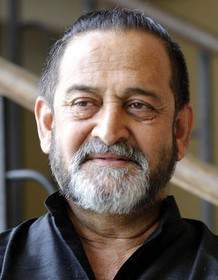
Mahesh Manjrekar
Lawyer Sardesai

Lubna Salim
Sushila
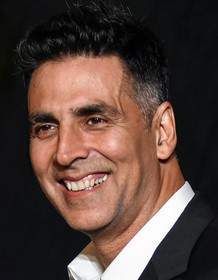
Akshay Kumar
Krishna

Om Puri
Hanif Qureshi
Paresh Rawal
Kanjibhai
Mithun Chakraborty
Leeladhar Swamy
Yusuf Hussain
Judge
Harsh Chhaya
Arun Bali
The Good Monk
Nikhil Ratnaparkhi
Mahadev
Murali Sharma
Laxman Mishra
Nidhi Subbaiah
Shweta Tiwari
Puja Gupta
Hanif's daughter
Apoorva Arora
Jigna
Krunal Pandit
Praveen
Poonam Jhawer
Gopi Ma
Jaineeraj Rajpurohit
Dinesh Gandhi
Azaan Shah
Chintu
Honey Chhaya
Jagdeesh Bhai
Bhakti Ratnaparkhi
Mangala
Pradeep Vengurlekar
Pujari
Kukul Tarmaster
Laxman Mishra's Right Hand
Nilesh Pandya
Bhajan SInger
Pravin Naik
Besaniya
External Links and Streaming Options
Discover where to watch OMG: Oh My God! online, including streaming platforms, rental options, and official sources. Compare reviews, ratings, and in-depth movie information across sites like IMDb, TMDb, Wikipedia or Rotten Tomatoes.








Take the Ultimate OMG: Oh My God! Movie Quiz
Challenge your knowledge of OMG: Oh My God! with this fun and interactive movie quiz. Test yourself on key plot points, iconic characters, hidden details, and memorable moments to see how well you really know the film.
OMG: Oh My God! Quiz: Test your knowledge of the 2012 film *OMG: Oh My God!* with these ten mixed‑difficulty questions.
Which actor portrays Krishna Vasudev Yadav in the film?
Full Plot Summary and Ending Explained for OMG: Oh My God!
Read the complete plot summary of OMG: Oh My God!, including all major events, twists, and the full ending explained in detail. Explore key characters, themes, hidden meanings, and everything you need to understand the story from beginning to end.
Kanji Lalji Mehta, Paresh Rawal, is a middle-class Hindu atheist who runs a shop dealing in Hindu idols and antiques in the bustling Chor Bazaar of Mumbai. When a rare, low-frequency earthquake rattles the city, his shop is the only one destroyed, leaving his family and friends quick to blame his atheistic views for the disaster. The loss is painful not just financially but emotionally, as the community questions whether his beliefs invite misfortune upon them all.
The next day at the insurance office, Kanji and his neighbor Mahadev, Nikhil Ratnaparkhi, discover a grim hurdle: the disaster falls under a blanket clause described as an “Act of God,” and such claims are not covered. With options dwindling, Kanji resolves to sue God itself, yet he cannot find a lawyer willing to take on such a case—until he encounters Hanif Qureshi, Om Puri, a poor Muslim lawyer who is disabled but undeterred. Qureshi agrees to help file the case, and Kanji decides to fight not only for himself but for those who share his plight.
Legal notices go out to the insurance company and to the religious leaders who claim to represent God on Earth. Siddheshwar Maharaj, Govind Namdev, and Leeladhar Swamy, Mithun Chakraborty—along with their followers—are summoned to stand as representatives of God in a courtroom showdown that promises to be anything but ordinary. In the preliminary hearing, the opposing lawyer Sardesai, Mahesh Manjrekar, asks the jury to dismiss the case. Kanji counters by pointing out that religious groups themselves proclaim representation of the divine and thus bear responsibility for their actions; the judge agrees, and the case moves forward.
The court drama draws public fascination with its surreal premise. Yet Kanji’s path grows increasingly perilous as armed fundamentalists close in, his mortgage lender occupies his home, and his wife contemplates leaving him. In every crisis, a startling savior appears: Krishna Vasudev Yadav, Akshay Kumar, who presents himself as a real estate agent from Gokul, Uttar Pradesh—and who resumes miraculous acts that transcend ordinary law. Krishna buys Kanji’s home from the bank while ensuring Kanji can continue living under his roof, all while maintaining an air of mystery about his true nature.
Krishna is portrayed as a young, fearless man whose signature embroidered key-chain is a constant visual cue. As the courtroom saga gains traction and public sympathy tilts toward Kanji, Krishna urges him to take his message to the media. An interview brings wide attention to Kanji’s stand, and the flood of claimants who were denied compensation under the “Act of God” policy pours into Hanif Qureshi’s home to join the suit. Kanji agrees to represent not only himself but the many who were left penniless by the policy’s loophole.
In a twist, Catholic priests and Muslim mullahs are summoned as defendants as the case widens its scope. Sardesai challenges Kanji to prove that the disaster was an “Act of God,” and the judge, Yusuf Hussain, demands a concrete written record that can withstand scrutiny. Hopelessness threatens to derail the pursuit, until Krishna’s guidance pushes Kanji toward a deeper study of sacred texts—The Bhagavad Gita, the Quran, and the Bible—seeking a universal rationale for the world’s creation and its trials.
For a month, Kanji immerses himself in holy scriptures, hoping to uncover a passage that could shore up his claim. He eventually cites a verse arguing that the world is a creation of God and that life and destruction unfold by His will. But just as understanding dawns, tragedy strikes: Kanji collapses, slipping into a coma. Doctors announce that his body is paralyzed and that only God can save him. The media reports his death, but Kanji’s condition abruptly reverses when Krishna arrives—Krishna touches Kanji with his key-chain and endows him with renewed life and strength.
Krishna then reveals a startling truth: he is the Lord Krishna in human form, who has saved Kanji to demonstrate that God exists but not within temples or ritualized spaces alone. Religion, Krishna explains, was crafted by humans, while He Himself created the world and all its inhabitants. He destroyed Kanji’s shop not to punish but to challenge the god-men who monetize faith and intimidate believers. Krishna’s philosophy is clear: he does not reside in temples, nor does he crave offerings; instead, he envisions a world where millions suffer hunger while temple coffers grow.
The revelation shifts the case from a legal battle to a spiritual awakening. The court’s verdict ultimately orders compensation for all plaintiffs, and Kanji begins to be hailed by the public as a “god” in the sense of moral authority rather than worship. Meanwhile, Leeladhar Swamy, Gopi Maiyya, and Siddheshwar inaugurate a temple dedicated to Kanji, amassing substantial donations. Yet Kanji’s family plans to remove him from life support, signaling the end of one journey and the beginning of another.
Krishna explains that his role as God is to reveal right and wrong, leaving people to act as they see fit. With that, Kanji resolves to fight back against coercive religion and blind faith. Mounted on Krishna’s motorcycle, the two ride to the heart of the procession, arriving just in time to address the crowd. Kanji publicly tears down the temple and its statue, urging people to search for God within themselves and in others rather than in idols. He condemns fraudulent god-men who turn religion into business and mislead the vulnerable.
After delivering his impassioned speech, Kanji returns to thank Krishna, only to find that the pair has vanished—along with the motorbike. His family arrives as he resumes life with them, but a final moment presses the question of faith: Kanji notices Krishna’s key chain on the floor. As he reaches to tuck it away, Krishna’s voice returns, urging him to discard the key chain altogether because idol worship was exactly what he fought against. With a knowing smile, Kanji drops the chain, a powerful symbol that faith resides not in objects but in the choices people make and the compassion they show to one another.

Coming soon on iOS and Android
The Plot Explained Mobile App
From blockbusters to hidden gems — dive into movie stories anytime, anywhere. Save your favorites, discover plots faster, and never miss a twist again.
Sign up to be the first to know when we launch. Your email stays private — always.
Explore the mobile appWatch Trailers, Clips & Behind-the-Scenes for OMG: Oh My God!
Watch official trailers, exclusive clips, cast interviews, and behind-the-scenes footage from OMG: Oh My God!. Dive deeper into the making of the film, its standout moments, and key production insights.
Cars Featured in OMG: Oh My God!
Explore all cars featured in OMG: Oh My God!, including their makes, models, scenes they appear in, and their significance to the plot. A must-read for car enthusiasts and movie buffs alike.
OMG: Oh My God! Other Names and Titles
Explore the various alternative titles, translations, and other names used for OMG: Oh My God! across different regions and languages. Understand how the film is marketed and recognized worldwide.
Quick Links: Summary, Cast, Ratings, More

What's After the Movie?
Not sure whether to stay after the credits? Find out!
Check out our other apps:

SAT Sphere
Build confidence for the Digital SAT.

Mori Atlas
Discover wild places worth protecting.

Luntero
Search smarter for a home in Amsterdam.

Plot Explained
Unravel movie endings and hidden clues.

Pokechamp
Dive into Pokémon data and battle logic.

Driving Theory
Get ready for your European theory test.

Movie Dust
Plan your next cinema trip with ease.

Musemap
Find art and culture as you travel.

Selkobase
Compare credentials before committing.

Local Manual
Turn an unfamiliar country into practical next steps.

Lernavi
Compare school systems before your next move.

GymRoam
Find a workout stop wherever your plans take you.
Explore Our Movie Platform
New Movie Releases (2026)
Famous Movie Actors
Top Film Production Studios
Movie Plot Summaries & Endings
Major Movie Awards & Winners
Best Concert Films & Music Documentaries
Movie Collections and Curated Lists
© 2026 What's After the Movie. All rights reserved.
Privacy Policy