N.T.R: Kathanayakudu 2019


Based on the journey of the legendary Telugu actor, filmmaker and ex-Chief Minister Late Taraka Rama Rao Nandamuri.


Does N.T.R: Kathanayakudu have end credit scenes?
No!
N.T.R: Kathanayakudu does not have end credit scenes. You can leave when the credits roll.
Where to Watch N.T.R: Kathanayakudu
See current US streaming, rental, and purchase options for N.T.R: Kathanayakudu (2019) via JustWatch.


Streaming availability powered by 
Meet the Full Cast and Actors of N.T.R: Kathanayakudu
Explore the complete cast of N.T.R: Kathanayakudu, including both lead and supporting actors. Learn who plays each character, discover their past roles and achievements, and find out what makes this ensemble cast stand out in the world of film and television.
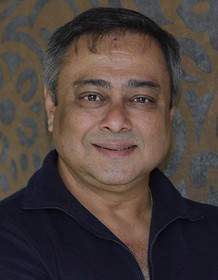
Sachin Khedekar
N. Bhaskara Rao
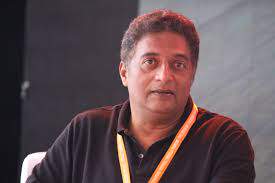
Prakash Raj
Nagi Reddy

Vennela Kishore
Rukmanandha Rao

Vidya Balan
Basavatarakam
Rana Daggubati
Nara Chandrababu Naidu
Ravi Kishan
Ravikant Nagaich
Rakul Preet Singh
Sridevi
Pranitha Subhash
Krishna Kumari
Bhanuchander
Police Commissioner
Shriya Saran
Prabha
Anushka Shetty
B. Saroja Devi
Murali Sharma
Aluri Chakrapani
Nandamuri Balakrishna
N.T.Rama Rao
Ravi Prakash
D Yoganand
Naresh
B. A. Subba Rao
Nithya Menen
Savitri
Poonam Bajwa
Garapati Lokeshwari
Jisshu Sengupta
L. V. Prasad
Kalyan Ram
Nandamuri Harikrishna
Sumanth
Akkineni Nageswara Rao
Kaikala Satyanarayana
H.M. Reddy
Hansika Motwani
Jaya Pradha
Devayani
Akkineni Annapurna
Bharath Reddy
Daggubati Venkateswara Rao
Manjima Mohan
Nara Bhuvaneswari
Heroshini Komali
Uma Maheswari
Supriya Vinod
Indra Gandhi
Shalini Pandey
Sowcar Janaki
Payal Rajput
Jaya Sudha
Kishore Kumar Polimera
Village man
Shri Tej
Y. S. Rajasekhara Reddy
Mirchi Madhavi
Nannapaneni Rajakumari
External Links and Streaming Options
Discover where to watch N.T.R: Kathanayakudu online, including streaming platforms, rental options, and official sources. Compare reviews, ratings, and in-depth movie information across sites like IMDb, TMDb, Wikipedia or Rotten Tomatoes.







Ratings and Reviews for N.T.R: Kathanayakudu
See how N.T.R: Kathanayakudu is rated across major platforms like IMDb, Metacritic, and TMDb. Compare audience scores and critic reviews to understand where N.T.R: Kathanayakudu stands among top-rated movies in its genre.

The Movie Echo Score
N.T.R: Kathanayakudu elicits a polarized response, earning a modest overall rating. While the direction and technical execution receive occasional commendation, the film is widely criticized for its hagiographic tone and uneven narrative structure. Performances divide opinion, with some viewers appreciating the lead's charisma while others find the portrayals exaggerated. The soundtrack and visual style are deemed competent but unremarkable, limiting its lasting appeal. Consequently, the movie offers limited rewatch value beyond dedicated fans of the subject.
The Movie Echo Score Breakdown for N.T.R: Kathanayakudu

Art & Craft
Direction and technical craftsmanship appear competent in several reviews. The director is praised for creating a nostalgic visual experience and managing production design effectively. However, criticism points to a lack of nuanced storytelling and over‑dramatic choices that diminish the overall artful impact. Overall, the film's art and craft are regarded as above average but not exceptional.

Character & Emotion
Acting and character depth receive mixed feedback. The lead's performance is described as both charismatic and insufficiently nuanced, while supporting roles are seen as underdeveloped. Some reviewers appreciate the emotional resonance for fans, yet many note an over‑idealized portrayal that sacrifices realism. In balance, character work is viewed as moderate, offering limited emotional complexity.

Story & Flow
The narrative structure is largely judged as uneven and predictable. Critics highlight a slow pace, disjointed scenes, and a reliance on glorified anecdotes rather than a coherent plot. The biopic intent is deemed undermined by melodramatic exaggeration, reducing originality. Consequently, the story aspect is considered below average, detracting from overall engagement.

Sensory Experience
Sensory elements such as cinematography and production design are described as satisfactory. Technical aspects, including visual recreations of iconic moments, receive some praise, while the soundtrack is noted for lacking lasting impact. The overall sensory experience is competent but does not stand out, leading to an average assessment.

Rewatch Factor
Replay value varies considerably among viewers. Fans of N.T.R. appreciate the nostalgic moments and may revisit the film, whereas others find it slow, repetitive, and lacking depth. The limited narrative innovation and mixed emotional resonance reduce incentive for repeated viewings. Overall, the rewatch factor is assessed as modest.
Take the Ultimate N.T.R: Kathanayakudu Movie Quiz
Challenge your knowledge of N.T.R: Kathanayakudu with this fun and interactive movie quiz. Test yourself on key plot points, iconic characters, hidden details, and memorable moments to see how well you really know the film.
N.T.R: Kathanayakudu Quiz: Test your knowledge of the life and career of N.T. Rama Rao as depicted in the film N.T.R: Kathanayakudu.
In which year did N.T. Rama Rao quit his job as a sub‑registrar to pursue a career in films?
Full Plot Summary and Ending Explained for N.T.R: Kathanayakudu
Read the complete plot summary of N.T.R: Kathanayakudu, including all major events, twists, and the full ending explained in detail. Explore key characters, themes, hidden meanings, and everything you need to understand the story from beginning to end.
In 1984, Basavatarakam asks Nandamuri Harikrishna for a photo album of her husband, N. T. Rama Rao from when he was younger, a gesture that quietly foregrounds the film’s obsession with memory, lineage, and the making of a legend. The narrative then travels back to 1947, when Rama Rao works as a sub-registrar at the Guntur sub-courts, a beginning that the film patiently contrasts with the sweeping, almost mythic arc of his later life. He quits that stable post and decides to chase a dream that seems almost too bright to be true, a dream that would redefine Telugu cinema and, in many ways, the cultural map of a region.
From the outset, the man’s path is supported by two steadfast pillars: a devoted partner and a protective family. Although the original lineages are steeped in affectionate memory, the story highlights how his ideal companion, Basavatarakam, and his loyal brother, Nandamuri Harikrishna, rally behind his ambition. The decision to head to Madras becomes a turning point, a move that thrusts him into the orbit of the film industry and introduces him to a new ecosystem of directors, producers, and fellow stars. On arrival, Rama Rao meets the ambitious and influential scene of Tamil cinema’s neighboring city, and the film shows how casual conversations and chance introductions can alter a life’s trajectory. One pivotal connection is with the director who helps him break into the screen world, and through a sequence of introductions, he lands with a project that sets the stage for a historic ascent.
Though he enters through a cameo in Mana Desam and secures monthly wages within a banner that backs his ambitions, the real catalytic moment comes when a different producer-director duo sees in him a potential that others overlook. The man who will become a household name rises first through a blockbusting project that cements his reputation and earns him the title of the region’s first true Super Star on the Indian screen. The breakthrough changes more than his career; it reshapes where cinema lives, how families rally around it, and how a star can become a symbol for a people’s pride. The narrative shows him moving with his growing family into the Tamil heartland of Madras, and with each success, the public perception of him deepens—from actor to almost sacred public figure.
As the tale advances, a severe drought darkens the Rayalaseema region, and Rama Rao steps into a public role not as a performer but as a leader who unites industry stalwarts and mobilizes donations. His ability to galvanize others underscores a broader transformation: the cinema man begins to cross over from the silver screen to the public sphere, becoming a figure who can mobilize resources for the common good. Yet this period also brings tensions, as disagreements arise with Nagireddy and his allies. The film shows Rama Rao stepping away from certain collaborations and launching his own banner, National Art Theatres, while bringing along his brother and his close associates, including Rukmanandha Rao. The story doesn’t gloss over the frictions; it frames them as part of the gritty, human process of building something enduring in a volatile industry. In this era, his friends—D. Yoganand among them—continue to support his ambitions, even as they navigate the shifting tides of production and studio life.
The pressure and passion of production pull him into ever more ambitious projects. The film recounts the moment when, during the making of a devotional epic, Rama Rao already embodies a persona beyond his own years, captivating audiences with his presence and his willingness to inhabit the mythic role of a divine figure. The industry, fans, and the public begin to credit him with a spiritual magnetism, and the line between actor and deity begins to blur in the public imagination. The narrative suggests that devotion and superstardom feed one another, creating a powerful feedback loop that deepens his legend and cements his standing as a cultural pillar.
Meanwhile, Rama Rao and Akkineni Nageswara Rao become central figures in a growing film empire, and the story documents how their collaborative energy reshapes film culture in the region. The film traces how the two icons’ journeys intertwine, pushing each other to new heights as they navigate the pressures of stardom, production, and the politics of cinema itself. The narrative occasionally nods to the broader network of people around them, including family members and collaborators who help keep the machine running even as personal tragedies, like the loss of a beloved elder son, test the men personally and professionally.
As years roll on, the duo earns national recognition, but the story makes clear that their influence extends far beyond the screen. The government recognizes their contributions with honors such as the Padma Shri, while political dynamics begin to pull at the edges of their public personas. Rama Rao grows increasingly aware of the regional and national identity issues that come with public life, insisting on a sense of pride for the Andhra Pradesh region even as political winds shift. The film uses these moments to show how a cinema icon negotiates a complex relationship with power, fame, and public service.
The political arc thickens as the real-world context intensifies. The public begins to view Rama Rao through the lens of leadership, and a national conversation about identity, language, and regional pride comes to the fore. In this landscape, the tide of politics sways through alliances, family debates, and the evolving careers of those close to him. Nara Chandrababu Naidu emerges as a focal figure in these scenes, illustrating how political futures are often intertwined with cinematic legacies. The film also nods to the lineage of influence surrounding Rama Rao, including collaborations and family ties that sit at the heart of the Telugu Desam Party movement.
In the culmination, the film traces Rama Rao’s bold decision to launch a political party that would bear his name and mission into the public arena, a choice that meets resistance from parts of his own family but earns steadfast support from others who believe in his vision for regional empowerment. The narrative closes by underscoring the enduring partnership between cinema and politics, the enduring bonds of family, and the dream of a cinematic icon who steps onto the political stage to shepherd a new era. In the end, the story leaves the audience with the iconic moment of a party’s birth—an assertion of identity, a testament to perseverance, and a reminder of how a single life can influence the course of a nation. Nara Chandrababu Naidu and Daggubati Venkateswara Rao loom large in the backdrop of this transforming journey, while Nara Bhuvaneswari figures as part of the family story that anchors the drama in human emotion and shared history.

Coming soon on iOS and Android
The Plot Explained Mobile App
From blockbusters to hidden gems — dive into movie stories anytime, anywhere. Save your favorites, discover plots faster, and never miss a twist again.
Sign up to be the first to know when we launch. Your email stays private — always.
Explore the mobile appWatch Trailers, Clips & Behind-the-Scenes for N.T.R: Kathanayakudu
Watch official trailers, exclusive clips, cast interviews, and behind-the-scenes footage from N.T.R: Kathanayakudu. Dive deeper into the making of the film, its standout moments, and key production insights.
N.T.R: Kathanayakudu Themes and Keywords
Discover the central themes, ideas, and keywords that define the movie’s story, tone, and message. Analyze the film’s deeper meanings, genre influences, and recurring concepts.
N.T.R: Kathanayakudu Other Names and Titles
Explore the various alternative titles, translations, and other names used for N.T.R: Kathanayakudu across different regions and languages. Understand how the film is marketed and recognized worldwide.
Similar Movies To N.T.R: Kathanayakudu You Should Know About
Browse a curated list of movies similar in genre, tone, characters, or story structure. Discover new titles like the one you're watching, perfect for fans of related plots, vibes, or cinematic styles.







Quick Links: Summary, Cast, Ratings, More

What's After the Movie?
Not sure whether to stay after the credits? Find out!
Check out our other apps:

SAT Sphere
Build confidence for the Digital SAT.

Mori Atlas
Discover wild places worth protecting.

Luntero
Search smarter for a home in Amsterdam.

Plot Explained
Unravel movie endings and hidden clues.

Pokechamp
Dive into Pokémon data and battle logic.

Driving Theory
Get ready for your European theory test.

Movie Dust
Plan your next cinema trip with ease.

Musemap
Find art and culture as you travel.

Selkobase
Compare credentials before committing.

Local Manual
Turn an unfamiliar country into practical next steps.

Lernavi
Compare school systems before your next move.

GymRoam
Find a workout stop wherever your plans take you.
Explore Our Movie Platform
New Movie Releases (2026)
Famous Movie Actors
Top Film Production Studios
Movie Plot Summaries & Endings
Major Movie Awards & Winners
Best Concert Films & Music Documentaries
Movie Collections and Curated Lists
© 2026 What's After the Movie. All rights reserved.
Privacy Policy