Nixon by Nixon: In His Own Words 2014


Between 1971 and 1973, Richard Nixon secretly recorded conversations in the White House. This film presents the content of those tapes, offering a revealing look at his thoughts and decisions during a turbulent period. The recordings cover topics such as the Vietnam War, the Pentagon Papers controversy, and his selections for the Supreme Court. The film also exposes some of Nixon’s candid and controversial remarks regarding women, minorities, Jewish people, and the press.



Does Nixon by Nixon: In His Own Words have end credit scenes?
No!
Nixon by Nixon: In His Own Words does not have end credit scenes. You can leave when the credits roll.
Where to Watch Nixon by Nixon: In His Own Words
See current US streaming, rental, and purchase options for Nixon by Nixon: In His Own Words (2014) via JustWatch.








Meet the Full Cast and Actors of Nixon by Nixon: In His Own Words
Explore the complete cast of Nixon by Nixon: In His Own Words, including both lead and supporting actors. Learn who plays each character, discover their past roles and achievements, and find out what makes this ensemble cast stand out in the world of film and television.

Howard K. Smith
Self (archive footage)

John F. Kennedy
Self (archive footage)
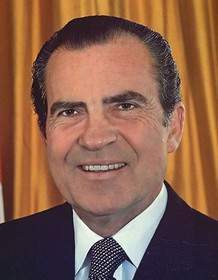
Richard Nixon
Self (archive footage)
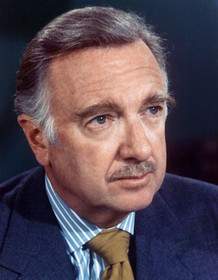
Walter Cronkite
Self (archive footage)

Daniel Ellsberg
Self (archive footage)
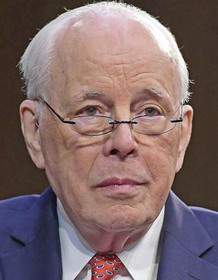
John Dean
Self (archive footage)
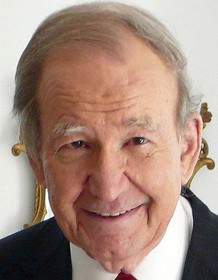
Pat Buchanan
Self (archive sound)
John Chancellor
Self (archive footage)

Barbara Walters
Self (archive footage)

John Kerry
Self (archive footage)
John Ehrlichman
Self (archive sound)
H.R. Haldeman
Self (archive sound)
Harry Reasoner
Self (archive footage)
Billy Graham
Self (archive footage)
David Brinkley
Self (archive footage)
Henry Kissinger
Self (archive sound)
Alexander Butterfield
Self (archive footage)
Dan Rather
Self (archive footage)
Ted Kennedy
Self (archive footage)
Tricia Nixon Cox
Self (archive footage)
Pat Nixon
Self (archive footage)
Mao Zedong
Self (archive footage)
George McGovern
Self (archive footage)
Ronald Ziegler
Self (archive sound)
Daniel Schorr
Self (archive footage)
Bob Schieffer
Self (archive footage)
J. Edgar Hoover
Self (archive footage)
Stephen Bull
Self - White House Aide (archive sound)
Charles Colson
Self (archive footage)
Sam Donaldson
Self (archive footage)
Sam Ervin
Self (archive footage)
Carol Feraci
Self - Ray Conniff Singer (archive footage)
Alexander Haig
Self (archive sound)
E. Howard Hunt
Self (archive footage)
Martha Mitchell
Self (archive footage)
Thomas Moorer
Self (archive sound)
Edwin Newman
Self (archive footage)
Julie Nixon
Self (archive sound)
Adele Rogers
Self (archive footage)
William Rogers
Self (archive footage)
George Romney
Self (archive footage)
Lenore Romney
Self (archive footage)
George Rosenberg
Self - Immigration Official (archive footage)
Garrick Utley
Self (archive footage)
External Links and Streaming Options
Discover where to watch Nixon by Nixon: In His Own Words online, including streaming platforms, rental options, and official sources. Compare reviews, ratings, and in-depth movie information across sites like IMDb, TMDb, JustWatch or Letterboxd.




Full Plot Summary and Ending Explained for Nixon by Nixon: In His Own Words
Read the complete plot summary of Nixon by Nixon: In His Own Words, including all major events, twists, and the full ending explained in detail. Explore key characters, themes, hidden meanings, and everything you need to understand the story from beginning to end.
On Aug. 9, 1974, Richard Nixon became the first American president to resign from office. From 1971 to 1973, he secretly recorded his private conversations, reportedly to keep a historical record, but the existence of these 3,700 hours of tapes would eventually topple his presidency. After leaving office, he sought to prevent their public release for the rest of his life, a move that underscored the gravity of the tapes’ content. Yet in the years following his death in 1994, the government began releasing the recordings, gradually lifting the veil on a presidency defined by secrecy and controversy. The final tapes were made public on Aug. 20, 2013, closing a chapter that had haunted American politics for decades.
In 1982, John Ehrlichman voiced a concern that history might misread a single hour of tape in isolation. “The problem is that historians are going to grab an hour of tape—and if you listen to a snippet of tape, you’re going to form an impression of this man that’s going to be wrong. Sometime, hopefully, there will be a committee of historians who will listen to all the tapes and go into all the archives and then come out and say Richard Nixon was the strangest collection, the strangest paradoxical combination of any man I ever heard of. And they’ll be right.” Only a handful of insiders knew of the recordings: [H.R. Haldeman], the Chief of Staff; [Alexander Butterfield], the Deputy Assistant; and [Stephen Bull], a Special Assistant, all of whom were aware that the conversations were being recorded. Those who did not know included other key figures such as Henry Kissinger, John Mitchell, and Secretary of State William Rogers, among others, highlighting the breadth of the administration’s compartmentalization and the risk of uncontrolled leaks.
The declassified tapes reveal Nixon’s opinions on a wide range of topics, from the Vietnam War and the Pentagon Papers leak to his Supreme Court appointments and broader state matters. In private discussions with [Henry Kissinger], Nixon disparaged anti-war protesters, telling a confidant it “really burns me up.” He even directed harsh words toward the young Vietnam veteran [John Kerry], calling him “quite a phony,” a remark that would later complicate perceptions of his presidency. He also insisted that despite growing anti-war sentiment in Congress and among the media, that sentiment did not reflect “the voice of America” and instead argued for the notion of a “silent majority.”
The tapes also betray a deep tension with the press. After the New York Times published thousands of secret Pentagon documents detailing U.S. involvement in Vietnam, Nixon’s reaction was fiery: “This is treasonable action on the part of the bastards that put it out,” he exclaimed to Kissinger. Daniel Ellsberg, the source of the Pentagon Papers, became a frequent target of Nixon’s derision and even anti-Semitic outbursts; in one personal remark, he referred to “The Jews” as “born spies.” The tone of these exchanges reveals a president who believed that the press posed an existential threat to his agenda and legacy, and who urged colleagues to undermine media credibility at every turn.
On the topic of a potential Supreme Court lineup, Nixon discussed candidates with internal confidence and privately admitted reservations about pursuing “the woman kick,” a remark attributed to his discussions with [John Mitchell], though the public record shows he occasionally highlighted women nominees such as Mildred Lillie and Sylvia Bacon. In other moments, Nixon boasted that the appointment of Supreme Court justices was among his most significant domestic achievements, even as his international diplomacy—most notably his famed 1972 visit to China and subsequent arms-control talks—figured as major foreign policy milestones.
The crowds of tapes also capture the tense atmosphere around the press and political accountability. “The press is the enemy. The press is the enemy. The press is the enemy,” Nixon can be heard saying in one private moment, a line that has reverberated through decades of media analysis and presidential history. After the Watergate break-in, Nixon discussed with [H.R. Haldeman] the possibility of bailing out the five burglars, remarking, “Well, they took a hell of a risk. And they have to be paid.” Later, he confided in Pat Buchanan, a trusted speechwriter, that “The Watergate thing… well, that’s going to pass. They’ll indict a few people, and then the goddamn thing’s over,” illustrating a propensity to minimize the scandal’s significance in real time.
Even as Nixon achieved electoral success and asserted that he had secured “peace with honor” in Vietnam, Watergate would endure as an enduring stain. The Senate Watergate hearings brought further revelations: at the July 16, 1973 hearing, [Alexander Butterfield] revealed the existence of the president’s secret electronic listening devices, a disclosure that underscored the depth of the White House’s surveillance and the erosion of trust between the executive branch and Congress. Facing the likelihood of impeachment, [Richard Nixon] ultimately resigned, ending a presidency defined by tapes, secrecy, and an enduring confrontation with the limits of presidential power.
This documentary presents a measured, balanced view of a presidency that shaped American political culture. It juxtaposes private bravado with public consequences, showing how a web of recordings, loyalties, and political calculations can alter a nation’s trajectory. The story is not just about a single man or a single scandal; it is about how power, the press, and historical memory intersect—and how, in the end, the truth emerged through a process that kept turning over the same damning questions, even as the chapters closed.

Coming soon on iOS and Android
The Plot Explained Mobile App
From blockbusters to hidden gems — dive into movie stories anytime, anywhere. Save your favorites, discover plots faster, and never miss a twist again.
Sign up to be the first to know when we launch. Your email stays private — always.
Explore the mobile appWatch Trailers, Clips & Behind-the-Scenes for Nixon by Nixon: In His Own Words
Watch official trailers, exclusive clips, cast interviews, and behind-the-scenes footage from Nixon by Nixon: In His Own Words. Dive deeper into the making of the film, its standout moments, and key production insights.
Nixon by Nixon: In His Own Words Other Names and Titles
Explore the various alternative titles, translations, and other names used for Nixon by Nixon: In His Own Words across different regions and languages. Understand how the film is marketed and recognized worldwide.
Quick Links: Summary, Cast, Ratings, More

What's After the Movie?
Not sure whether to stay after the credits? Find out!
Check out our other apps:

SAT Sphere
Build confidence for the Digital SAT.

Mori Atlas
Discover wild places worth protecting.

Luntero
Search smarter for a home in Amsterdam.

Plot Explained
Unravel movie endings and hidden clues.

Pokechamp
Dive into Pokémon data and battle logic.

Driving Theory
Get ready for your European theory test.

Movie Dust
Plan your next cinema trip with ease.

Musemap
Find art and culture as you travel.

Selkobase
Compare credentials before committing.

Local Manual
Turn an unfamiliar country into practical next steps.

Lernavi
Compare school systems before your next move.

GymRoam
Find a workout stop wherever your plans take you.
Explore Our Movie Platform
New Movie Releases (2026)
Famous Movie Actors
Top Film Production Studios
Movie Plot Summaries & Endings
Major Movie Awards & Winners
Best Concert Films & Music Documentaries
Movie Collections and Curated Lists
© 2026 What's After the Movie. All rights reserved.
Privacy Policy