Metropolis (re-release) 2002

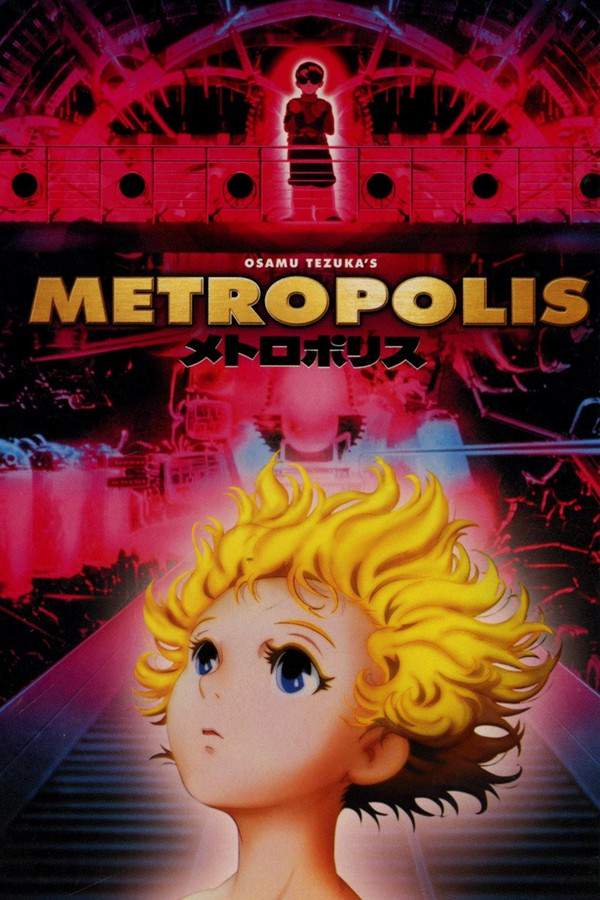
Regarded as possibly the crowning achievement of silent cinema, Fritz Lang's 1927 blockbuster combines the frantic, pulpy storytelling of the Roaring Twenties with his fascination for the darker aspects of human nature, delivering a visually striking, thematically rich experience that continues to influence filmmakers.


Does Metropolis (re-release) have end credit scenes?
No!
Metropolis (re-release) does not have end credit scenes. You can leave when the credits roll.
Meet the Full Cast and Actors of Metropolis (re-release)
Explore the complete cast of Metropolis (re-release), including both lead and supporting actors. Learn who plays each character, discover their past roles and achievements, and find out what makes this ensemble cast stand out in the world of film and television.

Alfred Abel
Johann (Joh) Fredersen
Brigitte Helm
Maria, Maschinenmensch, The Machine Man
Gustav Fröhlich
Freder Fredersen - Joh Fredersens Sohn
Fritz Rasp
Der Schmale, The Thin Man
Theodor Loos
Josaphat, Joseph
Erwin Biswanger
11811 - Georgy
Heinrich George
Grot -Wärter der Herzmaschine, Guardian of the Heart Machine
Fritz Alberti
Schöpferischer Mensch, Creative Human
Grete Berger
Arbeiterin, Working Woman
Olly Boeheim
Arbeiterin, Working Woman
Max Dietze
Arbeiter, Working Man
Ellen Frey
Arbeiterin, Working Woman
Beatrice Garga
Frau der ewigen Gärten, Woman of Eternal Gardens
Heinrich Gotho
Zermonienmeister, Master of Ceremonies
Dolly Grey
Arbeiterin, Working Woman
Anny Hintze
Frau der ewigen Gärten, Woman of Eternal Gardens
Gottfried Huppertz
Man Playing Violin
Georg John
Arbeiter, Working Man Who Causes Explosion of M-Machine
Walter Kuehle
Arbeiter, Working Man
Rudolf Klein-Rogge
Erfinder C.A. Rotwang, The Inventor
External Links and Streaming Options
Discover where to watch Metropolis (re-release) online, including streaming platforms, rental options, and official sources. Compare reviews, ratings, and in-depth movie information across sites like Wikipedia, Rotten Tomatoes, Metacritic or JustWatch.






Full Plot Summary and Ending Explained for Metropolis (re-release)
Read the complete plot summary of Metropolis (re-release), including all major events, twists, and the full ending explained in detail. Explore key characters, themes, hidden meanings, and everything you need to understand the story from beginning to end.
In the plutocratic city of Metropolis, Alfred Abel plays Johann Fredersen, the enigmatic power broker who sits at the top of a rigid social order. The city’s gleaming towers above a sprawling underworld where human workers toil in dangerous, dehumanizing conditions. Robots and automated systems keep the metropolis running, yet the impoverished masses blame the machines for their unemployment and the widening gulf between the social classes. The film establishes a stark contrast: a world of luxury and control above and a grim, grinding existence below, where the human spirit is tested by oppression, secrecy, and the promise of rebellion. The drama centers on the tension between those who wield power and those who are kept in subservience, setting the stage for a reckoning that could redefine the city’s future.
The mechanical ideal—Maria, the Maschinenmensch—emerges as a pivotal figure in this unfolding power play. The android modeled after a deceased daughter is born from secret science and ambition, with Brigitte Helm guiding the iconic design and performance of the Machine Woman. The creation becomes a catalyst for events that threaten to destabilize the already fragile balance of Metropolis, as those who crave control seek to weaponize humanity’s creations for their own ends.
Rock, the adopted son of the city’s wealthiest magnate, leads a fiercely loyal paramilitary faction known as the Marduks. Rock is portrayed by Gustav Fröhlich and embodies a volatile mix of zeal, loyalty, and insecurity. He is determined to stamp out any threat to order, including rogue robots that slip from their designated zones or malfunction, believing that fear and force will preserve the social hierarchy he inherits and enforces.
Across this volatile landscape, a pair of outsiders arrives with the intent to intervene in Metropolis’s tangled affairs. Shunsaku Ban, a detective, travels with his young nephew Kenichi Shikishima to bring a rogue scientist to justice. The scientist’s name is Dr. Laughton, a figure wanted for organ trafficking and cruelty, whose secret collaboration with Red (the city’s most powerful patron) reveals a plan to use a perfected android to wield a devastating weapon from the top of the Ziggurat. The formidable inventor Rotwang, the mastermind behind the android’s creation, is portrayed by [Rudolf Klein-Rogge], whose presence deepens the web of danger surrounding the city’s elites and their ambitions.
Shunsaku’s pursuit of Laughton unfolds alongside Kenichi’s discovery of Tima—the awakened android whose humanity begins to blossom in the sewers beneath Metropolis. The two youths navigate a labyrinth of tunnels and factions, growing closer while protecting a being who is not quite human, even as they remain unaware of the full scope of Red’s plans. The pair’s bond strengthens as they encounter a resistance movement formed by those who refuse to accept the dictating terms of the city’s rulers and their robotic workforce.
Civil unrest finally erupts as dissidents, disillusioned by the rulers’ grip on power, mount an armed revolution. The rebellion draws in high-ranking figures who conspire to manipulate the city’s leadership and turn the crisis into a broader struggle for control. Yet the revolt is quickly destabilized by betrayal, and martial law is imposed as the state’s leaders tighten their grip. Red seizes the opportunity to crush the uprising and reassert his authority, while the young allies regroup and plan their next move.
Rock, seeking to salvage the situation and win his father’s favor, abducts Tima. Shunsaku intervenes, incapacitating Rock and rescuing the android. Guided by Laughton’s notebook, Shunsaku attempts to link Tima to the Ziggurat’s central computer, exposing a path to retrieve Kenichi, who has been captured and held within the fortress-like tower. Red and the Marduks are close behind, bringing everyone to the apex of the Ziggurat as the truth of Tima’s purpose is revealed: she is the throne’s central control unit for a weapon capable of ordering the world’s machines to destroy humanity as punishment for oppression.
In a tense confrontation, Rock disguises himself as a maid and shoots Tima, revealing her circuitry to the world. The moment exposes the vulnerability of the android and shatters her confidence, and she begins to lash out in confusion as her implanted programming asserts itself. Red’s guards respond with force, while the throne’s power surges to life, triggering a citywide robot revolt. Kenichi reaches Tima and works to separate her from the throne, but the threat is far from over. Rock triggers an overload within the weapon, extinguishing himself and Red in a cataclysmic explosion that shakes the Ziggurat and devastates large parts of Metropolis.
As the dust clears, the Ziggurat collapses and the world begins to realize the consequences of weaponizing the machines that sustain them. Tima’s control falters, and she dangles from a cable, her humanity flickering back to life as Kenichi stretches to pull her to safety. In a poignant moment, her memories of Kenichi resurface, and she asks the crucial question, Who am I?
Who am I?
From the ruins, a fragile seed of possibility emerges. A photograph shown during the end credits hints at a hopeful future: Kenichi ultimately rebuilds Tima and establishes a small robot workshop alongside their shared dreams. Metropolis begins to heal not by erasing its past but by reimagining the relationship between humans and the sentient machines who once served as instruments of oppression, suggesting that cooperation, memory, and creativity may guide a society toward a more balanced coexistence.

Coming soon on iOS and Android
The Plot Explained Mobile App
From blockbusters to hidden gems — dive into movie stories anytime, anywhere. Save your favorites, discover plots faster, and never miss a twist again.
Sign up to be the first to know when we launch. Your email stays private — always.
Explore the mobile appDiscover Film Music Concerts Near You – Live Orchestras Performing Iconic Movie Soundtracks
Immerse yourself in the magic of cinema with live orchestral performances of your favorite film scores. From sweeping Hollywood blockbusters and animated classics to epic fantasy soundtracks, our curated listings connect you to upcoming film music events worldwide.
Explore concert film screenings paired with full orchestra concerts, read detailed event information, and secure your tickets for unforgettable evenings celebrating legendary composers like John Williams, Hans Zimmer, and more.


Unlock the World of Movies with Our Comprehensive Wiki
Dive into our Movie Wiki for in-depth film encyclopedia entries, including cast biographies, production trivia, plot synopses, behind-the-scenes facts, and thematic analyses. Whether you’re researching iconic directors, exploring genre histories, or discovering hidden easter eggs, our expertly curated movie database has everything you need to fuel your cinematic passion.
Quick Links: Summary, Cast, Ratings, More

What's After the Movie?
Not sure whether to stay after the credits? Find out!
Check out our other apps:

SAT Sphere
Build confidence for the Digital SAT.

Mori Atlas
Discover wild places worth protecting.

Luntero
Search smarter for a home in Amsterdam.

Plot Explained
Unravel movie endings and hidden clues.

Pokechamp
Dive into Pokémon data and battle logic.

Driving Theory
Get ready for your European theory test.

Movie Dust
Plan your next cinema trip with ease.

Musemap
Find art and culture as you travel.

Selkobase
Compare credentials before committing.

Local Manual
Turn an unfamiliar country into practical next steps.

Lernavi
Compare school systems before your next move.

GymRoam
Find a workout stop wherever your plans take you.
Explore Our Movie Platform
New Movie Releases (2026)
Famous Movie Actors
Top Film Production Studios
Movie Plot Summaries & Endings
Major Movie Awards & Winners
Best Concert Films & Music Documentaries
Movie Collections and Curated Lists
© 2026 What's After the Movie. All rights reserved.
Privacy Policy