Magic Town 1947


Rip Smith, whose opinion‑poll business is failing, discovers that the tiny town of Grandview mirrors the nation’s demographics. He and his team secretly flood the town with surveys, hoping to revive his venture, while civic activist Mary Peterman strives to keep the town unchanged. As Rip falls for Mary, their romance threatens his plan, turning everything upside‑down.


Does Magic Town have end credit scenes?
No!
Magic Town does not have end credit scenes. You can leave when the credits roll.
Meet the Full Cast and Actors of Magic Town
Explore the complete cast of Magic Town, including both lead and supporting actors. Learn who plays each character, discover their past roles and achievements, and find out what makes this ensemble cast stand out in the world of film and television.
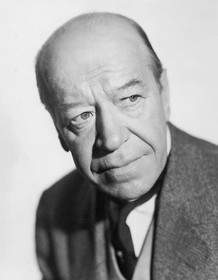
Donald Meek
Mr. Twiddle

James Stewart
Rip Smith

Kent Smith
Hoopendecker
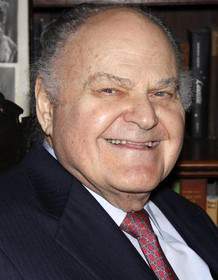
George Irving
Senator Wilton
Wallace Ford
Lou Dicketts
George Chandler
Bus Driver
Regis Toomey
Ed Weaver
Ned Sparks
Ike
Ann Doran
Mrs. Weaver
Tom Kennedy
Moving Man (uncredited)
Jane Wyman
Mary Peterman
Ann Shoemaker
Ma Peterman
Howard Freeman
Nickleby
Garry Owen
Cigar Counter Clerk (uncredited)
Selmer Jackson
Stringer
Paul Scardon
Hodges
Robert Dudley
Dickey
Harry Holman
Mayor
Frank Darien
Quincy
Bert Moorhouse
Newspaper Man (uncredited)
Bess Flowers
Mayor's Secretary (uncredited)
Joel Friedkin
Dingle
Edgar Dearing
Questioning Grandview Citizen (uncredited)
Nella Walker
Grandview Citizen (uncredited)
Mary Currier
Mrs. Frisby
Danny Mummert
Benny
Frank Fenton
Birch
Mickey Kuhn
Hank Nickleby
E.J. Ballantine
Moody
Larry Wheat
Sam Fuller
Julia Dean
Mrs. Wilton
Jimmy Crane
Shorty
Mickey Roth
Bob Peterman
External Links and Streaming Options
Discover where to watch Magic Town online, including streaming platforms, rental options, and official sources. Compare reviews, ratings, and in-depth movie information across sites like IMDb, TMDb, Wikipedia or Letterboxd.




Take the Ultimate Magic Town Movie Quiz
Challenge your knowledge of Magic Town with this fun and interactive movie quiz. Test yourself on key plot points, iconic characters, hidden details, and memorable moments to see how well you really know the film.
Magic Town Quiz: Test your knowledge of the 1947 film *Magic Town* with these ten questions ranging from easy to challenging.
Which actor portrays Rip Smith, the former basketball player turned pollster?
Full Plot Summary and Ending Explained for Magic Town
Read the complete plot summary of Magic Town, including all major events, twists, and the full ending explained in detail. Explore key characters, themes, hidden meanings, and everything you need to understand the story from beginning to end.
Rip Smith [James Stewart] is a former basketball player and ex-military man who now runs a polling company, chasing a dream of a flawless, almost magical “miracle formula” that can deliver perfect survey results and outpace his rival firms. With limited funds and a stubborn drive to prove himself, he sets his sights on a new opportunity that could level the playing field against the industry leader. The spark comes when a friend and ex-Army comrade, Hoopendecker [Kent Smith], conducts a local survey in Grandview that unexpectedly mirrors a national study being chased by Rip’s larger rival. To Rip, this small-town sample seems like a precise microcosm of the country, and suddenly Grandview looks like the key he’s been seeking—if he can harness its data to reflect the nation as a whole.
Eager to test his theory, Rip lands a commission to survey attitudes toward progressive education, promising a result that will hold for the entire country and vowing to deliver it on the same day as the rival’s project. To carry out the job, his team travels to Grandview undercover, posing as insurance salesmen, while the town’s quiet rhythms become the testing ground for his grand plan. But a clash of priorities unfolds the moment Rip overhears a conversation that pits change against preservation. Mary Peterman [Jane Wyman], a determined advocate for a expansive civic center and new town investments, pushes hard to reshape Grandview, while Rip fights to keep the town from morphing into a living laboratory for his numbers.
Rip makes a bold opening move, delivering an electrifying speech to defend the town’s current character, which sways the conservative factions on the town council to side with him over Mary’s editorial agenda. The tension between them deepens into a complicated attraction: the more they spend time together, the more Rip’s professional judgment is blurred by personal feelings. He even volunteers to coach the local school basketball team and attends a community dance, where he meets Mary’s family in a social orbit that complicates his mission. Yet the truth of his approach looms beneath the surface as Mary quietly uncovers the deception—Rip isn’t merely studying Grandview; he’s using it to mirror the nation for his own commercial ends.
When Mary publishes her side of the story in the town paper, the ripple grows into a nationwide storm. A larger, national press outlet picks up the tale, turning Grandview into a symbol of how public opinion can be manufactured and sold. The town earns the label of “the public opinion capital of the U.S.”, and citizens begin offering freely their viewpoints on street corners, while the city council begins to dream aloud about a broader expansion. Rip and Mary are forced to confront the consequences of their actions, and the deeper questions of ethical surveying and civic responsibility come to the fore. The initial excitement curdles into shame, and Rip, feeling the weight of what he’s triggered, leaves Grandview and Mary behind. Not long after, a curious poll suggests Americans would even elect a female president, and the town becomes a target of ridicule, stalling the expansion plans and exposing the fragility of confidence built on manipulated data.
Yet the heart of the story remains: Rip cannot forget Mary. He returns to Grandview, compelled to face the truth of his feelings and the town’s unintended damage. Mary, acknowledging her own feelings, proposes a path forward that begins with repair rather than romance alone. To salvage Grandview, Rip turns to Senator Wilton [George Irving] for support and funding to save the town from collapse, presenting a plan to the city council that aims to stabilize the community without erasing its identity. The council, led by Nickleby [Howard Freeman], remains skeptical, and Rip’s resolve is tested when he tells Nickleby he is “walking out on the team” after a tense confrontation. The drama thickens when Hank Nickleby [Mickey Kuhn] reveals that his father already sold critical land intended for the town’s expansion to a private company, threatening the town’s future.
In a strategic turn, Rip quietly publishes portions of a long-ago council speech—where officials spoke of expanding Grandview “with their own hands”—to remind residents of the town’s democratic roots and collective voice. The public response is swift: readers pressure the council to prioritize the town’s own development, and the plan to sell land loses momentum. The sale agreement proves flawed, and the land is returned to the community. With the restoration of trust, the townspeople—led by a renewed sense of shared purpose—band together to build a civic center on the reclaimed land. In the end, the town’s pride is restored, and Rip and Mary forge a genuine partnership grounded in accountability and mutual respect.
This tale tracks the tension between ambition and integrity, showing how data and persuasion intersect with community values. It questions whether a single, slick formula can ever capture the living, evolving essence of a place, or whether true insight comes from listening to the people who call Grandview home. Through its arc of ambition, romance, and civic renewal, the story invites readers to consider how information shapes neighborhoods—and how honest collaboration can heal the unintended rifts that data-driven schemes can create.

Coming soon on iOS and Android
The Plot Explained Mobile App
From blockbusters to hidden gems — dive into movie stories anytime, anywhere. Save your favorites, discover plots faster, and never miss a twist again.
Sign up to be the first to know when we launch. Your email stays private — always.
Explore the mobile appDiscover Film Music Concerts Near You – Live Orchestras Performing Iconic Movie Soundtracks
Immerse yourself in the magic of cinema with live orchestral performances of your favorite film scores. From sweeping Hollywood blockbusters and animated classics to epic fantasy soundtracks, our curated listings connect you to upcoming film music events worldwide.
Explore concert film screenings paired with full orchestra concerts, read detailed event information, and secure your tickets for unforgettable evenings celebrating legendary composers like John Williams, Hans Zimmer, and more.


Magic Town Themes and Keywords
Discover the central themes, ideas, and keywords that define the movie’s story, tone, and message. Analyze the film’s deeper meanings, genre influences, and recurring concepts.
Magic Town Other Names and Titles
Explore the various alternative titles, translations, and other names used for Magic Town across different regions and languages. Understand how the film is marketed and recognized worldwide.
Similar Movies To Magic Town You Should Know About
Browse a curated list of movies similar in genre, tone, characters, or story structure. Discover new titles like the one you're watching, perfect for fans of related plots, vibes, or cinematic styles.




Quick Links: Summary, Cast, Ratings, More

What's After the Movie?
Not sure whether to stay after the credits? Find out!
Check out our other apps:

SAT Sphere
Build confidence for the Digital SAT.

Mori Atlas
Discover wild places worth protecting.

Luntero
Search smarter for a home in Amsterdam.

Plot Explained
Unravel movie endings and hidden clues.

Pokechamp
Dive into Pokémon data and battle logic.

Driving Theory
Get ready for your European theory test.

Movie Dust
Plan your next cinema trip with ease.

Musemap
Find art and culture as you travel.

Selkobase
Compare credentials before committing.

Local Manual
Turn an unfamiliar country into practical next steps.

Lernavi
Compare school systems before your next move.

GymRoam
Find a workout stop wherever your plans take you.
Explore Our Movie Platform
New Movie Releases (2026)
Famous Movie Actors
Top Film Production Studios
Movie Plot Summaries & Endings
Major Movie Awards & Winners
Best Concert Films & Music Documentaries
Movie Collections and Curated Lists
© 2026 What's After the Movie. All rights reserved.
Privacy Policy