Maestro! 2015

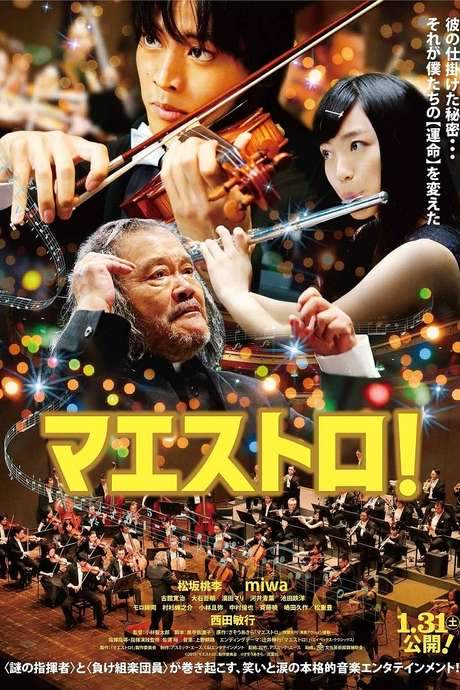
Facing closure due to economic hardship, an orchestra finds itself disbanded. News arrives that the group might be reformed, prompting a reunion of some former members who haven't been rehired. Eager to play together again, they attempt a performance, but their sound is far from perfect. Suddenly, the conductor Tetsusaburo Tendou reappears, offering a chance to rediscover their musical harmony.


Does Maestro! have end credit scenes?
No!
Maestro! does not have end credit scenes. You can leave when the credits roll.
Where to Watch Maestro!
See current US streaming, rental, and purchase options for Maestro! (2015) via JustWatch.









Meet the Full Cast and Actors of Maestro!
Explore the complete cast of Maestro!, including both lead and supporting actors. Learn who plays each character, discover their past roles and achievements, and find out what makes this ensemble cast stand out in the world of film and television.

Mari Hamada
Yukie Tani

Aoba Kawai
Ryoko Sakaki
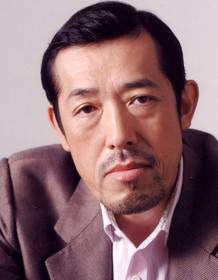
Kyûsaku Shimada
Shuzo Shimaoka
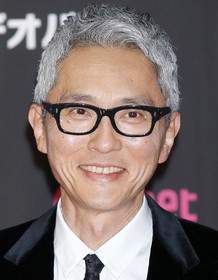
Yutaka Matsushige
Hiroaki Soma

Denden
Toshiyuki Nishida
Tetsusaburo Tendou
Kanji Furutachi
Kentaro Akutsu
Moro Morooka
Minoru Suzuki
Katsuya Kobayashi
Shukei Itami
Tomoya Nakamura
Hiroshi Tange
Junko Miyashita
Tori Matsuzaka
Shinichi Kousaka
Tetsuhiro Ikeda
Toru Imaizumi
Seminosuke Murasugi
Naoto Kabe
Yuri Nakamura
Toshiki Ayata
Yasushi Fuchikami
Goro Oishi
Isao Murakami
Satoru Saito
Kaoru Icchouda
Masanori Ishii
miwa
Amane Tachibana
Hanta Kinoshita
External Links and Streaming Options
Discover where to watch Maestro! online, including streaming platforms, rental options, and official sources. Compare reviews, ratings, and in-depth movie information across sites like IMDb, TMDb, Wikipedia or JustWatch.







Full Plot Summary and Ending Explained for Maestro!
Read the complete plot summary of Maestro!, including all major events, twists, and the full ending explained in detail. Explore key characters, themes, hidden meanings, and everything you need to understand the story from beginning to end.
An orchestra that once dissolved over money troubles is brought back to life, not by a clean, corporate reinvention, but under the guidance of a mysterious benefactor whose hands-on management style unsettles many of the musicians. The resurgence is billed as a prestige project, a revival that promises artistic glory, yet it arrives with a sense of unease and predictably fraught dynamics. The film adapts a popular manga, expanding the world with a patient, observant lens that respects the source material while letting the performers’ personalities breathe on screen.
The center of gravity in this new formation is Kosaka, a young violinist who earns a coveted seat in the reformed ensemble. His arrival marks the beginning of a long, nuanced examination of skill, ambition, and the stubborn rhythms of an orchestra trying to find its footing again. The rehearsal space itself mirrors the film’s mood: a disused factory turned into a makeshift stage and studio, where the acoustics are imperfect and the atmosphere feels half-rehearsal, half-laboratory. The performances of the members are not seamless; they arrive in bursts, sometimes brilliant, often marred by nerves, fatigue, or stubborn habits. In this sense, the production becomes almost a study in how groups regain cohesion when history and money have left scars.
As the players navigate the fragile balance between artistry and practicality, tensions mount. The ensemble is led by the conductor Tetsusaburo Tendou [Toshiyuki Nishida], a figure whose charisma and uncompromising methods push the musicians toward results they didn’t think possible. Tendou’s approach is controversial and theatrical, a force that unsettles even seasoned players while drawing out moments of unexpected precision. The film is careful to show that his effectiveness comes with a price: it intensifies the friction among the group, highlighting the clash between rigorous work ethics and personal egos. The clash isn’t just about notes and tempo; it’s about identity, pride, and what each musician is willing to sacrifice to serve a larger musical truth.
Amid this crucible, Amane Tachibana, a gifted amateur flute player, arrives to join the ensemble. Played by [Miwa], Amane’s presence stirs the room in subtle, shifting ways. Her talent challenges established routines and the unspoken hierarchies that form within the orchestra, creating both opportunities for breakthrough and new sources of tension. The dynamic surrounding Amane is one of the film’s quiet engines: she embodies possibility, but she also exposes the fragile balance of a group that has already weathered financial storms and the strain of reformation. Her interactions with the rest of the ensemble reveal how even a seemingly small moment—a solo, a breath, a cue—can ripple through a room that is already teetering on the edge of discord.
In parallel strands, a constellation of individual characters adds texture to the story. Yukie Tani [Mari Hamada] brings a disciplined, exacting presence that sharpens the ensemble’s expectations. Ryoko Sakaki [Aoba Kawai] embodies another facet of dedication, while Shuzo Shimaoka [Kyûsaku Shimada] and Hiroaki Soma [Yutaka Matsushige] contribute their own histories and tensions to the fabric of the orchestra. These figures aren’t merely background; they personify the competing philosophies of performance, where some players prize meticulous rehearsal, others prize spontaneity, and many navigate between the two with varying degrees of success. Each character’s arc intertwines with Kosaka’s, building toward a shared sense of purpose that must be earned rather than given.
The plot’s center of gravity remains the relationships among the players—the negotiations of time, energy, and sound—yet the external pressures never fully recede. The orchestra contends with ongoing financial problems that threaten its very future, a pressure that intensifies Tendou’s controversial regimen and amplifies the stakes of every rehearsal. The result is a slowly emerging, stubbornly earned momentum: a performance that proves the group can operate at a higher level, even when the conditions are far from ideal. The film’s tone stays balanced and restrained, avoiding melodrama while still conveying the emotional weight of men and women who have staked their careers on a single shared pursuit: making music together in a room that fights back against their most ambitious aims.
Shifts in leadership, evolving friendships, and moments of abrupt quiet reveal the orchestra’s inner life as much as its outer one. When a particularly thorny passage finally yields, the film marks it not with fanfare but with a breath of relief between players, a small, almost private victory that readers will feel in the ribs as well as on the score. The narrative pace is patient, letting the viewer witness the micro-dramas—the glances, the hesitations, the spontaneous harmonies—that cumulatively define a group’s character. In this way, the movie not only chronicles a comeback but also paints a portrait of what it takes to sustain a communal art in the face of financial strain and competing egos.
Ultimately, the story remains faithful to its manga roots while translating its core into a cinematic experience. It asks how much a group can bend, or be bent, to achieve a brighter collective sound; how much control a conductor must exert to coax a difficult ensemble toward cohesion; and how individual brilliance must harmonize with collective discipline. The film’s answer is neither cynical nor naïve but earned, showing that when many voices learn to listen to one another, a disused factory can become a cradle for something thrilling and new. The reformed orchestra is not simply a comeback story; it is a study in perseverance, collaboration, and the fragile beauty that arises when people commit to a shared rhythm, even as the world outside them keeps testing their resolve.

Coming soon on iOS and Android
The Plot Explained Mobile App
From blockbusters to hidden gems — dive into movie stories anytime, anywhere. Save your favorites, discover plots faster, and never miss a twist again.
Sign up to be the first to know when we launch. Your email stays private — always.
Explore the mobile appDiscover Film Music Concerts Near You – Live Orchestras Performing Iconic Movie Soundtracks
Immerse yourself in the magic of cinema with live orchestral performances of your favorite film scores. From sweeping Hollywood blockbusters and animated classics to epic fantasy soundtracks, our curated listings connect you to upcoming film music events worldwide.
Explore concert film screenings paired with full orchestra concerts, read detailed event information, and secure your tickets for unforgettable evenings celebrating legendary composers like John Williams, Hans Zimmer, and more.


Cars Featured in Maestro!
Explore all cars featured in Maestro!, including their makes, models, scenes they appear in, and their significance to the plot. A must-read for car enthusiasts and movie buffs alike.
Maestro! Other Names and Titles
Explore the various alternative titles, translations, and other names used for Maestro! across different regions and languages. Understand how the film is marketed and recognized worldwide.
Quick Links: Summary, Cast, Ratings, More

What's After the Movie?
Not sure whether to stay after the credits? Find out!
Check out our other apps:

SAT Sphere
Build confidence for the Digital SAT.

Mori Atlas
Discover wild places worth protecting.

Luntero
Search smarter for a home in Amsterdam.

Plot Explained
Unravel movie endings and hidden clues.

Pokechamp
Dive into Pokémon data and battle logic.

Driving Theory
Get ready for your European theory test.

Movie Dust
Plan your next cinema trip with ease.

Musemap
Find art and culture as you travel.

Selkobase
Compare credentials before committing.

Local Manual
Turn an unfamiliar country into practical next steps.

Lernavi
Compare school systems before your next move.

GymRoam
Find a workout stop wherever your plans take you.
Explore Our Movie Platform
New Movie Releases (2026)
Famous Movie Actors
Top Film Production Studios
Movie Plot Summaries & Endings
Major Movie Awards & Winners
Best Concert Films & Music Documentaries
Movie Collections and Curated Lists
© 2026 What's After the Movie. All rights reserved.
Privacy Policy