Lost Horizon 1937


British diplomat Robert Conway and a handful of civilians survive a crash in the Himalayas and are taken in by the secret, tranquil valley of Shangri‑La. Isolated by surrounding peaks, the utopian community shields them from the looming turmoil of World II, offering Conway a tempting refuge from the weariness of his world.



Does Lost Horizon have end credit scenes?
No!
Lost Horizon does not have end credit scenes. You can leave when the credits roll.
Meet the Full Cast and Actors of Lost Horizon
Explore the complete cast of Lost Horizon, including both lead and supporting actors. Learn who plays each character, discover their past roles and achievements, and find out what makes this ensemble cast stand out in the world of film and television.

Thomas Mitchell
Henry Barnard

Edward Everett Horton
Alexander P. " Lovey " Lovett

Noble Johnson
Leader of Porters (uncredited)
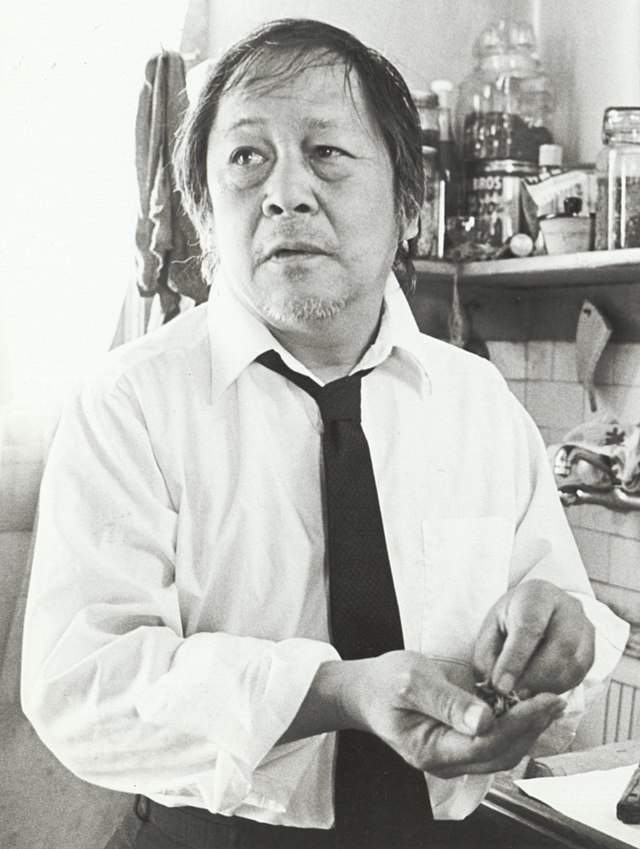
Victor Wong
Bandit Leader (uncredited)

John Howard
George Conway
Sam Jaffe
High Lama
H.B. Warner
Chang
Ronald Colman
Robert " Bob " Conway
Willie Fung
Bandit Leader at Fuel Stop-over (uncredited)
Isabel Jewell
Gloria Stone
Norman Ainsley
Embassy Club Steward (uncredited)
Margo
Maria
Richard Loo
Shanghai Airport Official (uncredited)
Carl Stockdale
Missionary (uncredited)
Wedgwood Nowell
Englishman (uncredited)
Margaret McWade
Missionary (uncredited)
Jane Wyatt
Sondra Bizet
David Torrence
Prime Minister (uncredited)
Wyrley Birch
Missionary (uncredited)
David Clyde
Embassy Club Steward (uncredited)
Chief John Big Tree
Porter (uncredited)
George Chan
Chinese Priest (uncredited)
John T. Murray
Meeker (uncredited)
Milton Owen
Fenner (uncredited)
Harold Lishman
Porter (uncredited)
External Links and Streaming Options
Discover where to watch Lost Horizon online, including streaming platforms, rental options, and official sources. Compare reviews, ratings, and in-depth movie information across sites like IMDb, TMDb, Wikipedia or Letterboxd.





Take the Ultimate Lost Horizon Movie Quiz
Challenge your knowledge of Lost Horizon with this fun and interactive movie quiz. Test yourself on key plot points, iconic characters, hidden details, and memorable moments to see how well you really know the film.
Lost Horizon (1937) Quiz: Test your knowledge of the classic 1937 adventure film "Lost Horizon", its characters, plot points, and themes.
Which profession does the narrator of the frame story hold?
Full Plot Summary and Ending Explained for Lost Horizon
Read the complete plot summary of Lost Horizon, including all major events, twists, and the full ending explained in detail. Explore key characters, themes, hidden meanings, and everything you need to understand the story from beginning to end.
In a quiet, reflective frame, the tale opens with a neurologist who narrates a prologue and epilogue that braid a physician’s curiosity with a novelist’s sensibility. The two men—one a scientist of the mind, the other a storyteller of human journeys—share a meal at Tempelhof, in Berlin, hosted by Wyland, a secretary at the British embassy and an old schoolmate. A casual remark from a passing airman nudges the conversation toward Hugh Conway, a British consul whose vanishing years earlier set off a cascade of questions. The neurologist then learns of Conway’s extraordinary fate through Rutherford, his friend and chronicler: after Conway disappeared, he was found in a French mission hospital in Chung-Kiang, China, suffering from amnesia. He recovered his memory, told Rutherford his own story (which Rutherford faithfully recorded in manuscript form), and then vanished again. Rutherford hands the manuscript to the neurologist, making the whole account the beating heart of the narrative that follows.
The main story unfolds in a perilous moment of political upheaval. In May 1931, amid the British Raj’s turmoil, Baskul’s eighty White residents are being evacuated toward Peshawar as revolution roils the region. On the Maharajah of Chandrapur’s aeroplane accompany the consul, Henry Barnard, a youthful vice-consul Charles Mallinson, an American named Henry D. Barnard, and a British missionary, Miss Roberta Brinklow. In a dramatic turn of events, the plane is hijacked and redirected over the Himalayan foothills toward Tibet, then crashes. The pilot’s death leaves the four survivors to face a mystery of ascent and belonging, guided by a Chinese-speaking guide named Chang toward an enigmatic valley that, at its heart, hosts Shangri-La.
When they reach the valley, they find a lamasery that blends the austere serenity of monastic life with astonishing comforts: centralized heat, bathtubs, a vast library, a grand piano, a harpsichord, and abundant food sourced from a fertile valley below. The colossal peak Karakal, known to locals as the “Blue Moon,” looms over the settlement, a silent sentinel guarding the secret of the place. Mallinson longs to hire porters and depart, but Chang gently delays him. The others, however, gradually decide to stay. Miss Brinklow sees the opportunity to teach the valley a sense of sin; Barnard seeks a harbor in which to pursue a hidden life and a possible mine venture, and Conway imagines a life of scholarly contemplation that suits him far more than a hurried return to the outside world.
Among the postulants is a young Manchu woman named Lo-Tsen, who speaks no English but accompanies the lamasery’s daily routine by playing the harpsichord. A strong, unspoken attraction forms: Mallinson falls in love with Lo-Tsen, and Conway feels a more languid tenderness toward her. Conway earns a rare audience with the High Lama, an unseen authority who exudes a quiet power. Through their exchange, Conway learns that the lamasery’s mysterious past began with a Catholic monk named Perrault from Luxembourg, who laid down its present form centuries ago. The valley’s gates opened to others who found their way in, and a strange rule emerged: those who enter age more slowly, while those who leave age rapidly and die. Conway intuits that the High Lama is Perrault, now about two and a half centuries old, a revelation that unsettles him with its implications about time, memory, and meaning.
A second audience deepens the awe. The High Lama, nearing the end of his long life, reveals that he is dying and that he wishes Conway to assume leadership of the valley. The Lama’s death is a solemn hinge, and Conway’s thoughts turn to the future of Shangri-La once the old order passes. Soon afterward, Mallinson announces a plan to depart with the porters and Lo-Tsen, while Brinklow and Barnard elect to remain. The party waiting to be ferried out—porters and the alluring Lo-Tsen—stand a few kilometers outside the valley’s edges, but the dangerous trek back is something Conway cannot face alone. He must decide whether to walk back into the old world or step into Shangri-La’s promise.
Conway makes his choice under the moonlit trees, and he chooses to accompany Mallinson, driven by an impulse tied to the bond he feels for the younger man. This decision ends Rutherford’s manuscript and seals Conway’s fate as the crossroads of two worlds—the practical, restless realm outside and the timeless, contemplative sanctuary inside Shangri-La. The narrative returns to Rutherford’s search for truth, as he seeks to verify Conway’s extraordinary claims. He tracks down a Chung-Kiang doctor who treated Conway and learns that Conway was brought in by a Chinese woman who, in the doctor’s memory, died soon after. The doctor’s recollection adds a poignant wrinkle: the woman was old beyond measure, suggesting that the cost of leaving Shangri-La was a generous, almost eternal aging that upon departure accelerates once again. The doctor’s final observation—“Most old of anyone I have ever seen”—hints that Lo-Tsen’s life in Shangri-La may have rested on an exchange of time itself. The narrator closes with a haunting question: can Conway ever find his way back to the paradise he found, or has the valley’s spell altered him beyond return?
“progressed far beyond the western range of the Himalayas”
As the pages turn, the tale remains a meditation on memory, belonging, and the delicate balance between paradise and obligation. The frame story, Rutherford’s manuscript, and Conway’s fateful decision weave together into a meditation on what it means to choose a possible eternity over a difficult present, and whether such a choice might ever really be reversible.

Coming soon on iOS and Android
The Plot Explained Mobile App
From blockbusters to hidden gems — dive into movie stories anytime, anywhere. Save your favorites, discover plots faster, and never miss a twist again.
Sign up to be the first to know when we launch. Your email stays private — always.
Explore the mobile appDiscover Film Music Concerts Near You – Live Orchestras Performing Iconic Movie Soundtracks
Immerse yourself in the magic of cinema with live orchestral performances of your favorite film scores. From sweeping Hollywood blockbusters and animated classics to epic fantasy soundtracks, our curated listings connect you to upcoming film music events worldwide.
Explore concert film screenings paired with full orchestra concerts, read detailed event information, and secure your tickets for unforgettable evenings celebrating legendary composers like John Williams, Hans Zimmer, and more.


Cars Featured in Lost Horizon
Explore all cars featured in Lost Horizon, including their makes, models, scenes they appear in, and their significance to the plot. A must-read for car enthusiasts and movie buffs alike.
Lost Horizon Themes and Keywords
Discover the central themes, ideas, and keywords that define the movie’s story, tone, and message. Analyze the film’s deeper meanings, genre influences, and recurring concepts.

Unlock the World of Movies with Our Comprehensive Wiki
Dive into our Movie Wiki for in-depth film encyclopedia entries, including cast biographies, production trivia, plot synopses, behind-the-scenes facts, and thematic analyses. Whether you’re researching iconic directors, exploring genre histories, or discovering hidden easter eggs, our expertly curated movie database has everything you need to fuel your cinematic passion.
Similar Movies To Lost Horizon You Should Know About
Browse a curated list of movies similar in genre, tone, characters, or story structure. Discover new titles like the one you're watching, perfect for fans of related plots, vibes, or cinematic styles.






Quick Links: Summary, Cast, Ratings, More

What's After the Movie?
Not sure whether to stay after the credits? Find out!
Check out our other apps:

SAT Sphere
Build confidence for the Digital SAT.

Mori Atlas
Discover wild places worth protecting.

Luntero
Search smarter for a home in Amsterdam.

Plot Explained
Unravel movie endings and hidden clues.

Pokechamp
Dive into Pokémon data and battle logic.

Driving Theory
Get ready for your European theory test.

Movie Dust
Plan your next cinema trip with ease.

Musemap
Find art and culture as you travel.

Selkobase
Compare credentials before committing.

Local Manual
Turn an unfamiliar country into practical next steps.

Lernavi
Compare school systems before your next move.

GymRoam
Find a workout stop wherever your plans take you.
Explore Our Movie Platform
New Movie Releases (2026)
Famous Movie Actors
Top Film Production Studios
Movie Plot Summaries & Endings
Major Movie Awards & Winners
Best Concert Films & Music Documentaries
Movie Collections and Curated Lists
© 2026 What's After the Movie. All rights reserved.
Privacy Policy