Kansas City 1996


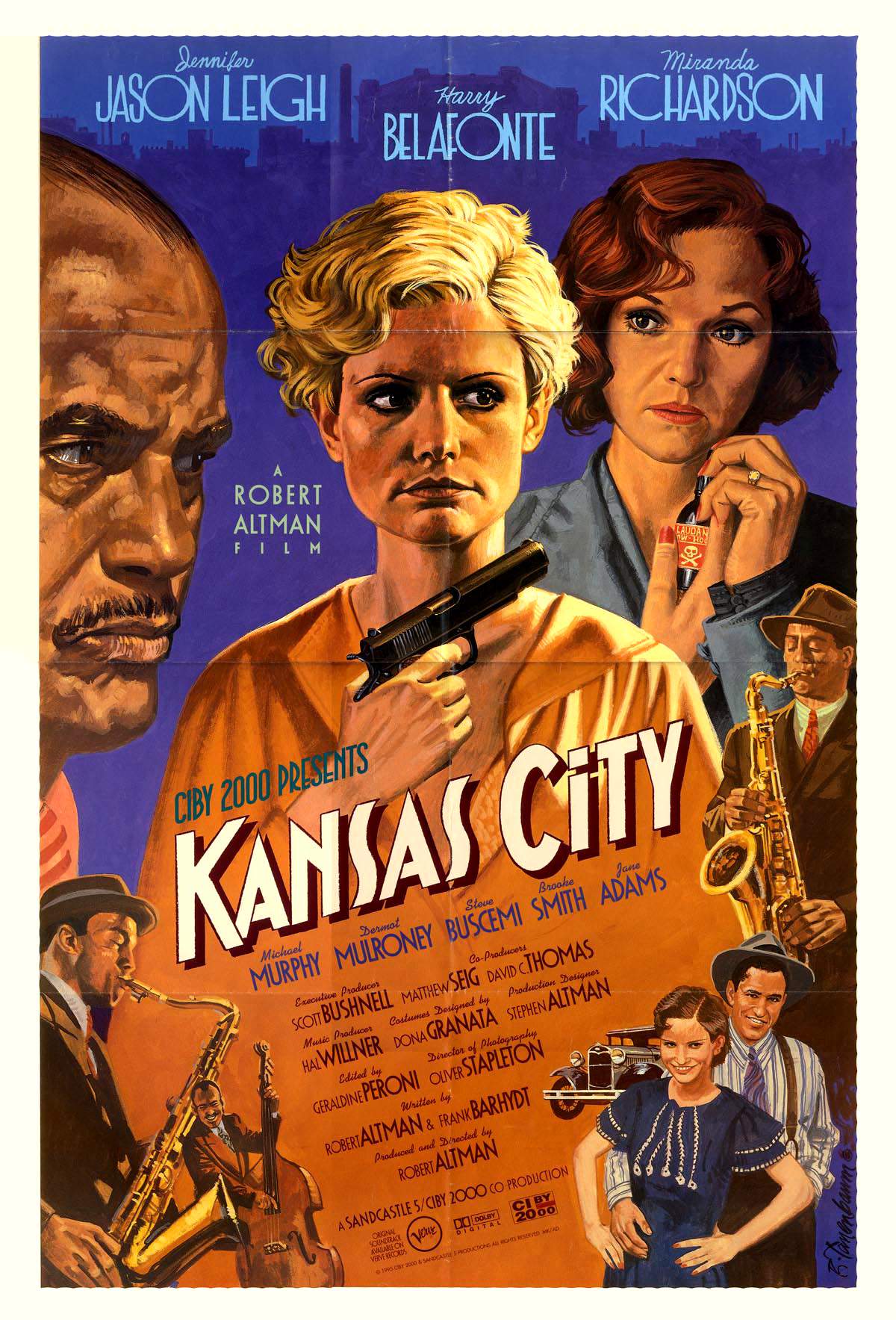
Filmmaker Sue Vicory explores the vibrant music scene of Kansas City, showcasing the city's rich legacy of jazz and blues. The documentary intertwines musical performances with stories of crime and drama, offering a captivating portrait of this iconic city and its complex history. It reveals the heart and soul of Kansas City through its compelling soundtrack and compelling narratives.

Does Kansas City have end credit scenes?
No!
Kansas City does not have end credit scenes. You can leave when the credits roll.
Where to Watch Kansas City
See current US streaming, rental, and purchase options for Kansas City (1996) via JustWatch.







Meet the Full Cast and Actors of Kansas City
Explore the complete cast of Kansas City, including both lead and supporting actors. Learn who plays each character, discover their past roles and achievements, and find out what makes this ensemble cast stand out in the world of film and television.


External Links and Streaming Options
Discover where to watch Kansas City online, including streaming platforms, rental options, and official sources. Compare reviews, ratings, and in-depth movie information across sites like IMDb, TMDb, Wikipedia or Rotten Tomatoes.









Ratings and Reviews for Kansas City
See how Kansas City is rated across major platforms like IMDb, Metacritic, and TMDb. Compare audience scores and critic reviews to understand where Kansas City stands among top-rated movies in its genre.

58
Metascore
6.0
User Score

6.3 /10
IMDb Rating

63
%
User Score
Full Plot Summary and Ending Explained for Kansas City
Read the complete plot summary of Kansas City, including all major events, twists, and the full ending explained in detail. Explore key characters, themes, hidden meanings, and everything you need to understand the story from beginning to end.
On the afternoon before the 1934 Democratic primary election in Kansas City, a petty thief named Johnny O’Hara bungles a seemingly small score: he attempts to rob Sheepshan Red, a wealthy Black gambler who makes a semi-annual pilgrimage to the Hey Hey Club, the jazz venue and casino run by the formidable local mob boss Seldom Seen. As a token of respect to a highly lucrative customer, Seldom Seen, Harry Belafonte, steps in personally, seizes Johnny, and holds him at the Hey Hey Club. What follows is a slow, public reckoning: the boss stages a private monologue with Johnny, unpacking the sting of racism and weighing the most severe punishment, all while the club’s music—Kansas City jazz performances—pulse in and out of the scene, threading a fevered rhythm through the tension. The film uses these interludes to blur the line between entertainment and danger, creating a setting where violence can feel as choreographed as a dance.
Blondie O’Hara, Jennifer Jason Leigh, Johnny’s wife who is infatuated with the glamour of Jean Harlow, refuses to stand by as events unfold. Desperation drives her to desperate measures, and she crafts a risky plan to secure Johnny’s release by kidnapping Carolyn Stilton, the wife of local politician Henry Stilton. Blondie’s gambit hinges on Carolyn’s connection to the political world and the looming election, turning personal peril into political leverage. The stakes quickly widen beyond a ransom: Blondie’s bold move drags Carolyn into the heart of a city where alliances are murky and loyalties are tested at every corner.
Carolyn Stilton, Miranda Richardson, is introduced as a wife trapped in a loveless marriage, nursing a laudanum addiction to cope with emotional distance from her husband. Her first instincts are to resist, but Blondie’s devotion to Johnny sparks a surprising kinship between two women from different worlds. As they travel through the city together, their shared vulnerability grows into a fragile friendship, even as they stay one step ahead of a city that seems determined to police their every move. Carolyn’s perspective softens the starkness of her predicament, inviting the audience to consider the human costs hidden beneath political theater and street-level crime.
The political machinery of Kansas City intensifies the drama. When Blondie reveals the kidnapping to Henry, he wrestles with competing duties: the loyalty he owes his wife and the potential damage to his re-election campaign. Henry leans on the city’s power structure, enlisting the aid of the Pendergast political machine and its influential boss, Thomas Pendergast, who agrees to intervene indirectly with Seldom Seen. This connection underscores a central theme of the film: personal survival and family loyalty are inseparable from the broader, often ruthless, machinery of local politics.
As the election approaches, Blondie’s plan becomes a delicate game of hide-and-seek and misdirection. On the morning of the vote, she attempts to shelter Carolyn at a bar owned by Carolyn’s own brother, who, ironically, operates as a Pendergast ward heeler—responsible for paying local vagrants and addicts to vote. The irony is sharp: the family guardrails designed to protect civic order now intersect with schemes of control and manipulation. The brother realizes who Carolyn is and drives them away, and the moment crystallizes the precarious balance between personal risk and political expediency in the city.
Seldom Seen makes his grim decision to kill Johnny known, a moment that reframes the earlier negotiations into a stark ultimatum. Johnny, unwilling to simply be a victim, offers to submit as a slave to Seldom in a bid to preserve his life, a haunting gesture that speaks to a desperate, almost ritualized code among the players who inhabit this world of crime and power. The tension escalates as the evening approaches, and the film coalesces around a brutal collision of ransom, loyalty, and the unyielding pull of fate.
That evening brings Blondie and Carolyn back to the O’Hara residence, where Johnny had been held for a day. Henry arranges for Johnny’s release, but the moment of deliverance is overshadowed by violence: Seldom and his gang shoot and mutilate Johnny as soon as he enters the house, leaving him to collapse and die in front of Blondie. The room fills with grief and shock, the kind of devastation that lingers long after the gunfire ceases. Blondie’s heartbreak gives way to a deeper, more volatile emotion when Carolyn, in a final, devastating act, grabs a gun and shoots Blondie dead. Carolyn then leaves the house, climbs into Henry’s car, and, in a quiet, unsettled moment, Henry asks if she is all right. She offers no reply, leaving the question hanging in the air as the car drives away.
In this tale, the threads of crime, romance, race, and politics intertwine within a city that feels both intimate and dangerous. The Hey Hey Club is not merely a setting; it is a microcosm of a community grappling with prejudice and power, where jazz serves as a soundtrack to risk and revelation. The characters are drawn with a cool, unflinching eye, their choices shaped by loyalty, fear, desire, and the ever-present weight of a political machine that can bend, break, or bury the people at its mercy. The film remains faithful to its core premise: a sequence of charged decisions, each one pushing the protagonists deeper into a web where survival often means choosing between two hard truths, and where the line between protection and coercion is always perilously thin.

Coming soon on iOS and Android
The Plot Explained Mobile App
From blockbusters to hidden gems — dive into movie stories anytime, anywhere. Save your favorites, discover plots faster, and never miss a twist again.
Sign up to be the first to know when we launch. Your email stays private — always.
Explore the mobile appWatch Trailers, Clips & Behind-the-Scenes for Kansas City
Watch official trailers, exclusive clips, cast interviews, and behind-the-scenes footage from Kansas City. Dive deeper into the making of the film, its standout moments, and key production insights.
Kansas City Themes and Keywords
Discover the central themes, ideas, and keywords that define the movie’s story, tone, and message. Analyze the film’s deeper meanings, genre influences, and recurring concepts.
Kansas City Other Names and Titles
Explore the various alternative titles, translations, and other names used for Kansas City across different regions and languages. Understand how the film is marketed and recognized worldwide.
Similar Movies To Kansas City You Should Know About
Browse a curated list of movies similar in genre, tone, characters, or story structure. Discover new titles like the one you're watching, perfect for fans of related plots, vibes, or cinematic styles.




Quick Links: Summary, Cast, Ratings, More

What's After the Movie?
Not sure whether to stay after the credits? Find out!
Check out our other apps:

SAT Sphere
Build confidence for the Digital SAT.

Mori Atlas
Discover wild places worth protecting.

Luntero
Search smarter for a home in Amsterdam.

Plot Explained
Unravel movie endings and hidden clues.

Pokechamp
Dive into Pokémon data and battle logic.

Driving Theory
Get ready for your European theory test.

Movie Dust
Plan your next cinema trip with ease.

Musemap
Find art and culture as you travel.

Selkobase
Compare credentials before committing.

Local Manual
Turn an unfamiliar country into practical next steps.

Lernavi
Compare school systems before your next move.

GymRoam
Find a workout stop wherever your plans take you.
Explore Our Movie Platform
New Movie Releases (2026)
Famous Movie Actors
Top Film Production Studios
Movie Plot Summaries & Endings
Major Movie Awards & Winners
Best Concert Films & Music Documentaries
Movie Collections and Curated Lists
© 2026 What's After the Movie. All rights reserved.
Privacy Policy