Jaya Jaya Jaya Jaya Hey 2022


Jayabharathi's childhood was marked by the denial of basic joys simply because she was a woman. She marries Rajesh, a man displaying chauvinistic, short-tempered, and selfish traits. Facing domestic violence and lacking support, she resolves to fight back against her circumstances and reclaim her life.


Does Jaya Jaya Jaya Jaya Hey have end credit scenes?
No!
Jaya Jaya Jaya Jaya Hey does not have end credit scenes. You can leave when the credits roll.
Meet the Full Cast and Actors of Jaya Jaya Jaya Jaya Hey
Explore the complete cast of Jaya Jaya Jaya Jaya Hey, including both lead and supporting actors. Learn who plays each character, discover their past roles and achievements, and find out what makes this ensemble cast stand out in the world of film and television.

Darshana Rajendran
Jaya Bharathi
Basil Joseph
Rajesh
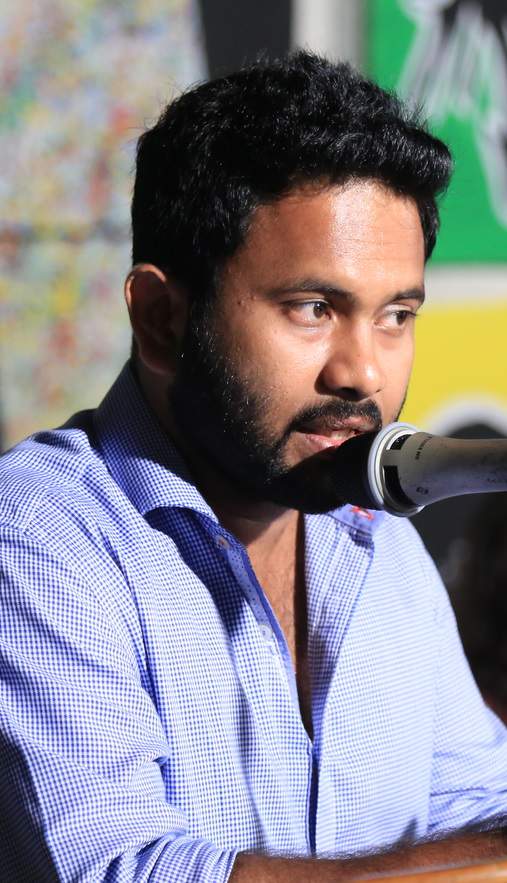
Aju Varghese
Karthikeyan
Noby Marcose
Kannappan
Manju Pillai
Court Judge
Azees Nedumangad
Ani Annan
Hareesh Pengan
Sudheer Paravoor
Mani Ammavan
Faisal Muhammed
Anand Manmadhan
Jayan
Sarath Sabha
Kudassanad Kanakam
Rajesh’s mother
Sheethal Zackaria
Raji
External Links and Streaming Options
Discover where to watch Jaya Jaya Jaya Jaya Hey online, including streaming platforms, rental options, and official sources. Compare reviews, ratings, and in-depth movie information across sites like IMDb, TMDb, Wikipedia or Rotten Tomatoes.







Ratings and Reviews for Jaya Jaya Jaya Jaya Hey
See how Jaya Jaya Jaya Jaya Hey is rated across major platforms like IMDb, Metacritic, and TMDb. Compare audience scores and critic reviews to understand where Jaya Jaya Jaya Jaya Hey stands among top-rated movies in its genre.

The Movie Echo Score
Jaya Jaya Jaya Hey delivers a spirited blend of satire and social commentary, anchored by a lively comedic tone. Reviewers commend its earnest portrayal of domestic abuse and gender bias, noting the film’s capacity to provoke both laughter and reflection. While a few critics point to narrative shortcuts and occasional implausibilities, the overall impression is that the film succeeds in engaging audiences through humor and relevance. Consequently, it stands as a commendable addition to contemporary Malayalam cinema.
The Movie Echo Score Breakdown for Jaya Jaya Jaya Jaya Hey

Art & Craft
In terms of art and craft, the film exhibits a vibrant visual palette and purposeful direction. Critics highlight Bablu's fresh cinematography and the director's ability to balance satire with realism. Some note a rushed climax that suggests editing compromises, yet the overall production design is praised for supporting the narrative's tonal shifts. The artistic execution therefore registers as solid with room for refinement.

Character & Emotion
When evaluating character and emotion, the ensemble cast receives strong commendation for nuanced performances. Darshana Rajendran and supporting actors are described as delivering memorable, relatable portrayals that enhance the film's thematic weight. A minority of reviewers find the wife’s characterization underdeveloped, but the prevailing sentiment underscores effective chemistry and emotional resonance. Overall, the character work is deemed a standout element.

Story & Flow
The story and flow are praised for its clear, accessible plot and unexpected twists that sustain audience interest. Reviewers appreciate the straightforward narrative that foregrounds societal issues without sacrificing humor. Criticism centers on an abrupt climax and occasional logical gaps that diminish narrative cohesion. Nevertheless, the film’s originality and engaging pacing secure a generally positive assessment.

Sensory Experience
Sensory experience receives mixed feedback, with acknowledgment of competent sound design and a soundtrack that complements the comedic tone. The visual style, notably the coloring of Kollam’s outskirts, is cited as a fresh element, while some consider the songs superfluous. Absent major technical flaws, the sensory components are judged adequate, contributing modestly to the overall impact.

Rewatch Factor
Rewatch factor is highlighted as high owing to the film’s humor, relatable scenarios, and pointed social critique. Audiences report a strong desire to view the movie again for its laugh‑riot moments and thoughtful messaging. A few dissenting opinions note the unsatisfying ending, yet the prevailing view is that the film maintains lasting appeal and encourages repeat viewings.
Take the Ultimate Jaya Jaya Jaya Jaya Hey Movie Quiz
Challenge your knowledge of Jaya Jaya Jaya Jaya Hey with this fun and interactive movie quiz. Test yourself on key plot points, iconic characters, hidden details, and memorable moments to see how well you really know the film.
Jaya Jaya Jaya Jaya Hey Quiz: Test your knowledge of the 2022 film Jaya Jaya Jaya Jaya Hey with these ten mixed‑difficulty questions.
What is the protagonist's full name in the film?
Full Plot Summary and Ending Explained for Jaya Jaya Jaya Jaya Hey
Read the complete plot summary of Jaya Jaya Jaya Jaya Hey, including all major events, twists, and the full ending explained in detail. Explore key characters, themes, hidden meanings, and everything you need to understand the story from beginning to end.
Jaya Bharathi grows up in a steady, middle-class world where family decisions are meant to shield her, not to guide her dreams. Her parents, while eager to protect her, invest heavily in her brother’s future and push him toward a college path that’s financially taxing. When it’s Jaya’s turn, they steer her toward a nearby, cheaper option, assuming they know what’s best. Yet Jaya doesn’t surrender her agency; she quietly tests boundaries, pushing back against expectations and trying to steer her own course, even as the family’s gaze and judgment linger over every choice she makes. This tension comes to a head after a romance with a college lecturer who appears progressive and feminist but is, in truth, insecure and possessive, a twist that nudges her parents toward a drastic step: arranging a marriage for Jaya before she finishes her education.
Rajesh, a poultry farm owner, is presented as the perfect match—not because he understands much beyond the farm, but because he agrees to let Jaya continue her studies. The marriage seems practical at first, but beneath the surface, Rajesh is aggressive and short-tempered, with a stubborn, old-fashioned view of gender roles. His laziness and controlling streak quickly surface, and he postpones Jaya’s education while demanding that everything in the household bend to his will. The situation deteriorates into abuse, with slaps and shouted put-downs that erode Jaya’s confidence. When she seeks support from her parents, they tell her to “adjust” and be the ideal wife, a reply that both pushes and pits her further toward independence.
Jaya’s quiet rebellion becomes a doorway to something more self-reliant. She starts secretly learning martial arts through videos—Kalari payattu and Karate—training her body and mind for a form of self-defense that goes beyond the kitchen and chores. The power she gains is not only physical; it becomes a tool for reclaiming dignity in a system that wants to keep her dependent. The first major flashpoint comes when Rajesh tries to seize her phone, and she defends herself with a decisive kick that leaves him reeling and humiliated. In the moment of male pride shattered, Rajesh turns to his cousin Ani for advice on how to “handle” the situation, a plan that involves training himself and using a manipulated public record to trap Jaya in a scandal.
Ani Annan enters the story as part of this scheming circle. He and Rajesh hatch a trap: they arrange for a private fight to be recorded, intending to blackmail Jaya into submission. But the plan backfires spectacularly when Jaya’s quick reflexes and newly learned skills turn the encounter into a clear display of her resilience, and the incident is captured on camera. The footage, once uploaded by a repair technician who fixes the phone, goes viral, turning a personal crisis into a public reckoning. The humiliation shifts; Rajesh’s life begins to crumble as the online spotlight reveals the truth about his temperament and his treatment of Jaya.
The fallout expands beyond the digital world into the real one. In the family court, the process exposes a deeper, more systemic bias. The presiding judge initially scolds Jaya for the altercation and sides with the notion that she should simply have stayed quiet. Yet as the testimonies unfold and Jaya speaks from her lived experience, the courtroom tilts toward equality and fairness. The female judge openly challenges Rajesh on his ignorance of a woman’s needs and rights, insisting that a healthy family requires equality, liberty, and justice. The verdict leans toward allowing Jaya to divorce, and she signs the papers, stepping into a future where she refuses to be defined by a traditional script.
As the personal frontier shifts, so too does the economic one. Jaya reveals a sharper business sense: she takes over a rival poultry operation that Rajesh had refused to buy, expanding her own poultry business and achieving higher profits than before. In a bold pivot, she prices her chicken competitively, undercutting the market and demonstrating a capacity to compete on her own terms. Her success comes with a new kind of power: she can defend herself and her livelihood, and she can do so with a clear sense of autonomy. When Rajesh’s hired goons threaten the former owner and attempt intimidation, Jaya stands firm and repels them, transforming a moment of vulnerability into a decisive victory.
The story unfolds with a blend of realism and empowerment, tracking Jaya’s journey from a constrained daughter-in-law to a self-reliant businesswoman and a woman who asserts her voice in both family and society. It’s a narrative about the cost of exerting control over a person’s life and the resilience required to reclaim one’s freedom. It’s about the courage to pursue education, to seek equality, and to redefine success on one’s own terms. It’s about turning a painful private history into a viable, powerful public future, where dignity is earned, boundaries are respected, and justice is more than a word—it is a lived practice.

Coming soon on iOS and Android
The Plot Explained Mobile App
From blockbusters to hidden gems — dive into movie stories anytime, anywhere. Save your favorites, discover plots faster, and never miss a twist again.
Sign up to be the first to know when we launch. Your email stays private — always.
Explore the mobile appDiscover Film Music Concerts Near You – Live Orchestras Performing Iconic Movie Soundtracks
Immerse yourself in the magic of cinema with live orchestral performances of your favorite film scores. From sweeping Hollywood blockbusters and animated classics to epic fantasy soundtracks, our curated listings connect you to upcoming film music events worldwide.
Explore concert film screenings paired with full orchestra concerts, read detailed event information, and secure your tickets for unforgettable evenings celebrating legendary composers like John Williams, Hans Zimmer, and more.


Jaya Jaya Jaya Jaya Hey Other Names and Titles
Explore the various alternative titles, translations, and other names used for Jaya Jaya Jaya Jaya Hey across different regions and languages. Understand how the film is marketed and recognized worldwide.
Quick Links: Summary, Cast, Ratings, More

What's After the Movie?
Not sure whether to stay after the credits? Find out!
Check out our other apps:

SAT Sphere
Build confidence for the Digital SAT.

Mori Atlas
Discover wild places worth protecting.

Luntero
Search smarter for a home in Amsterdam.

Plot Explained
Unravel movie endings and hidden clues.

Pokechamp
Dive into Pokémon data and battle logic.

Driving Theory
Get ready for your European theory test.

Movie Dust
Plan your next cinema trip with ease.

Musemap
Find art and culture as you travel.

Selkobase
Compare credentials before committing.

Local Manual
Turn an unfamiliar country into practical next steps.

Lernavi
Compare school systems before your next move.

GymRoam
Find a workout stop wherever your plans take you.
Explore Our Movie Platform
New Movie Releases (2026)
Famous Movie Actors
Top Film Production Studios
Movie Plot Summaries & Endings
Major Movie Awards & Winners
Best Concert Films & Music Documentaries
Movie Collections and Curated Lists
© 2026 What's After the Movie. All rights reserved.
Privacy Policy