Invitation to a Gunfighter 1964



In New Mexico, a Confederate veteran returns home only to find his fiancée remarried to a Union soldier. His Yankee neighbors have turned against him, and the local banker, having sold his property, hires a gunman to kill the veteran, forcing him to face the bitterness of post‑war loyalties.

Does Invitation to a Gunfighter have end credit scenes?
No!
Invitation to a Gunfighter does not have end credit scenes. You can leave when the credits roll.
Where to Watch Invitation to a Gunfighter
See current US streaming, rental, and purchase options for Invitation to a Gunfighter (1964) via JustWatch.

Amazon Prime Video
HD
Amazon Prime Video with Ads
HD
fuboTV
HD
MGM Plus
HD
MGM Plus Roku Premium Channel
HD
MGM+ Amazon Channel
HD
Philo
HD
ScreenPix Amazon Channel
HD
ScreenPix Apple TV channel
HD
Tubi TV
SD
Amazon Video
HD
Apple TV Store
HD
Fandango At Home
HD Streaming availability powered by 
Meet the Full Cast and Actors of Invitation to a Gunfighter
Explore the complete cast of Invitation to a Gunfighter, including both lead and supporting actors. Learn who plays each character, discover their past roles and achievements, and find out what makes this ensemble cast stand out in the world of film and television.
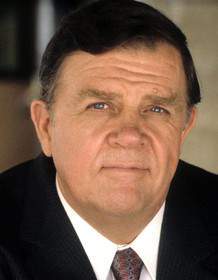
Pat Hingle
Sam Brewster

George Segal
Matt Weaver
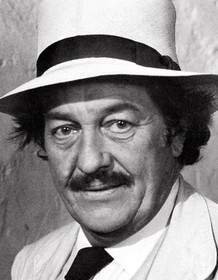
Strother Martin
Fiddler

Richard Wilson

Brad Dexter
Kenarsie
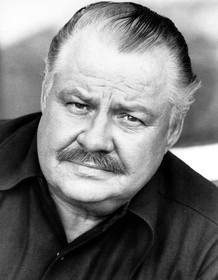
Clifton James
Tuttle
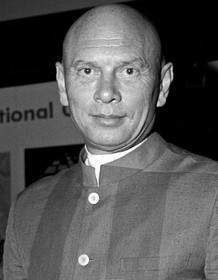
Yul Brynner
Jules Gaspard d'Estaing

Bert Freed
Sheriff
Alfred Ryder
Doc Barker
Curt Conway
McKeever
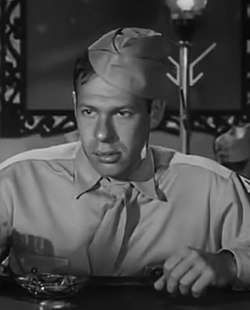
Mike Kellin
Blind Union Vet
Janice Rule
Ruth Adams
John A. Alonzo
Manuel
Clifford David
Crane Adams
Clarke Gordon
Hickman
Gerald Hiken
Gully
Arthur Peterson
Schoop
External Links and Streaming Options
Discover where to watch Invitation to a Gunfighter online, including streaming platforms, rental options, and official sources. Compare reviews, ratings, and in-depth movie information across sites like IMDb, TMDb, Wikipedia or Letterboxd.




Take the Ultimate Invitation to a Gunfighter Movie Quiz
Challenge your knowledge of Invitation to a Gunfighter with this fun and interactive movie quiz. Test yourself on key plot points, iconic characters, hidden details, and memorable moments to see how well you really know the film.
Invitation to a Gunfighter (1964) Quiz: Test your knowledge of the 1964 western film about post‑Civil War tensions, land disputes, and a cultured gunfighter.
Who portrays the Confederate veteran Matt Weaver?
Full Plot Summary and Ending Explained for Invitation to a Gunfighter
Read the complete plot summary of Invitation to a Gunfighter, including all major events, twists, and the full ending explained in detail. Explore key characters, themes, hidden meanings, and everything you need to understand the story from beginning to end.
Confederate veteran Matt Weaver, George Segal, returns home to a sun-baked New Mexico town after the Civil War, only to discover his farm has been sold by the unscrupulous banker Sam Brewster, Pat Hingle. Brewster has exploited the chaos of the era to bend the town to his will, fanning racism and corrupt methods to gain financial and political clout. Weaver’s fiancée Ruth Adams, Janice Rule, had already married another man while he was away, a betrayal that isolates him further and underscores the town’s moral rot. The aftermath reveals a community more interested in appearances and profit than in justice, and Brewster’s influence tightens its grip as Weaver fights to reclaim what’s his.
When Weaver attempts to reassert his rights to the land, the confrontation escalates into violence, and the ill-conceived force used to push Brewster’s agenda leads to the death of the husband who lives on the farm—an outcome that taints everyone involved and exposes the hollowness of the town’s supposed order. Weaver’s effort to take back his property brings him into contact with the town’s Mexican inhabitants, who have long shared a more honest and lasting bond with him than with the white power structure. Their presence casts a stark light on the town’s racial fault lines and highlights the hypocrisy that festers beneath its surface, where professed civility and real loyalty rarely align.
Into this tense milieu arrives Jules Gaspard d’Estaing, a creole gunman with a cultivated sensibility and a complex past. Yul Brynner plays Jules as a man of letters and manners—born of a Jewish-French creole lineage, educated in English and French, versed in music, and raised with a keen sense of honor that sits oddly with his lethal trade. He is both an outsider and a mirror to the town’s own pretensions, and his arrival unsettles Brewster’s machinations as well as the townspeople’s uneasy sense of justice. Although the locals nickname him “Jewel” with a mixture of contempt and curiosity, Jules’s measured demeanor and principled grievances begin to win over some who have long tolerated oppression.
As Jules investigates what fuels the town’s hostility toward Weaver, he starts to see beyond the surface and recognizes a pattern of retaliation masquerading as civilization. His growing sympathy for Ruth—who feels betrayed by Weaver’s absence and the war’s disillusionments—adds a personal dimension to a conflict driven by pride and fear. Ruth herself is torn between history and possibility, and she makes clear she will not abandon her sense of self for a new allegiance. Jules’s presence gradually reshapes the power dynamics: some townspeople respond to his calm, civil approach, while others cling to Brewster’s punitive code that protects their comfortable arrangements even as it harms the vulnerable.
Brewster, never content to surrender his grip, seeks to neutralize Jules by arranging a gunfighter to finish Weaver’s challenge. Yet Jules’s arrival and presence disrupt the town’s complacency enough to complicate Brewster’s plan; the gunfighter story becomes a catalyst for a broader reckoning about justice, loyalty, and what it means to belong in a community that has long spent more energy preserving its prejudices than its humanity. In a fateful sequence, Brewster manipulates Ruth into thinking Jules has isolated her from Weaver, hoping to provoke a violent response and derail any effort at reconciliation. Weaver, still bound to Ruth by history and feeling, agrees to confront the threat in an atmosphere thick with tension and moral ambiguity.
What follows is a tense, explicit clash that exposes the town’s deep-running contradictions. Weaver arrives in time to confront Jules, and a deadly stand-off unfolds as Brewster makes a last, desperate bid to seize power. A flurry of gunfire erupts; Jules is seriously wounded but remains steadfast, forcing Brewster to kneel and acknowledge his crimes. In that moment, Jules embodies retribution and atonement, a figure who exposes the town’s complicity and its fear of accountability. Jules dies before Brewster can complete his confession, but Weaver’s next move is decisive: he shoots Brewster, ending the banker’s era of exploitation and deceit.
With Jules’s death and Brewster’s downfall, the town—comprising both whites and Mexicans—reddens its long-standing fault lines by uniting to carry Jules’s body away for burial. Ruth and Weaver, who have navigated a spectrum of loyalties, share a quiet victory as they clasp hands and walk together through the crowd, signaling a fragile, hard-won possibility of reconciliation and shared future. The film closes on a note that is at once somber and hopeful: justice has been meted out, the veneer of order has cracked, and a community that once thrived on hypocrisy now confronts the consequences of its own choices, guided by a man who speaks softly but acts decisively, even at the cost of his own life.

Coming soon on iOS and Android
The Plot Explained Mobile App
From blockbusters to hidden gems — dive into movie stories anytime, anywhere. Save your favorites, discover plots faster, and never miss a twist again.
Sign up to be the first to know when we launch. Your email stays private — always.
Explore the mobile appWatch Trailers, Clips & Behind-the-Scenes for Invitation to a Gunfighter
Watch official trailers, exclusive clips, cast interviews, and behind-the-scenes footage from Invitation to a Gunfighter. Dive deeper into the making of the film, its standout moments, and key production insights.
Invitation to a Gunfighter Themes and Keywords
Discover the central themes, ideas, and keywords that define the movie’s story, tone, and message. Analyze the film’s deeper meanings, genre influences, and recurring concepts.
Invitation to a Gunfighter Other Names and Titles
Explore the various alternative titles, translations, and other names used for Invitation to a Gunfighter across different regions and languages. Understand how the film is marketed and recognized worldwide.
Similar Movies To Invitation to a Gunfighter You Should Know About
Browse a curated list of movies similar in genre, tone, characters, or story structure. Discover new titles like the one you're watching, perfect for fans of related plots, vibes, or cinematic styles.






Quick Links: Summary, Cast, Ratings, More

What's After the Movie?
Not sure whether to stay after the credits? Find out!
Check out our other apps:

SAT Sphere
Build confidence for the Digital SAT.

Mori Atlas
Discover wild places worth protecting.

Luntero
Search smarter for a home in Amsterdam.

Plot Explained
Unravel movie endings and hidden clues.

Pokechamp
Dive into Pokémon data and battle logic.

Driving Theory
Get ready for your European theory test.

Movie Dust
Plan your next cinema trip with ease.

Musemap
Find art and culture as you travel.

Selkobase
Compare credentials before committing.

Local Manual
Turn an unfamiliar country into practical next steps.

Lernavi
Compare school systems before your next move.

GymRoam
Find a workout stop wherever your plans take you.
Explore Our Movie Platform
New Movie Releases (2026)
Famous Movie Actors
Top Film Production Studios
Movie Plot Summaries & Endings
Major Movie Awards & Winners
Best Concert Films & Music Documentaries
Movie Collections and Curated Lists
© 2026 What's After the Movie. All rights reserved.
Privacy Policy