I Wake Up Screaming 1941



Featuring three of Hollywood’s biggest stars, the film follows a young promoter who becomes the prime suspect in the murder of Vicky Lynn, the actress he lifted from waitressing. The investigation unfolds amidst the involvement of former actor Robin Ray and gossip columnist Larry Evans, whose presence fuels the scandal.

Does I Wake Up Screaming have end credit scenes?
No!
I Wake Up Screaming does not have end credit scenes. You can leave when the credits roll.
Where to Watch I Wake Up Screaming
See current US streaming, rental, and purchase options for I Wake Up Screaming (1941) via JustWatch.

Streaming availability powered by 
Meet the Full Cast and Actors of I Wake Up Screaming
Explore the complete cast of I Wake Up Screaming, including both lead and supporting actors. Learn who plays each character, discover their past roles and achievements, and find out what makes this ensemble cast stand out in the world of film and television.
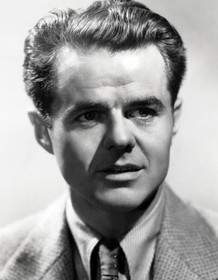
Elisha Cook Jr.
Harry Williams
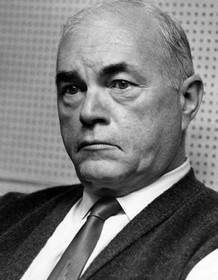
James Flavin
Detective (uncredited)

Betty Grable
Jill Lynn
Alan Mowbray
Robin Ray
Stuart Hall
Nightclub patron (uncredited)
Sarah Edwards
Customer (uncredited)
Tim Ryan
Detective (uncredited)
Charles Lane
Keating- Florist
William Gargan
Jerry 'Mac' MacDonald
Victor Mature
Frankie Christopher (Botticelli)
Allyn Joslyn
Larry Evans
Cyril Ring
Reporter
Ralph Brooks
Nightclub patron (uncredited)
Stanley Blystone
Detective (uncredited)
John Breen
Sidewalk passerby (uncredited)
Amzie Strickland
Girl at table (uncredited)
Laird Cregar
Police Insp. Ed Cornell
Carole Landis
Vicky Lynn
Heinie Conklin
Pedestrian newspaper buyer (uncredited)
Eddie Dunn
Detective (uncredited)
Edward Biby
Nightclub patron (uncredited)
Paul Weigel
Gus- Deleicatesson Proprietor (uncredited)
Cecil Weston
Police Matron (uncredited)
Morris Ankrum
Assistant District Attorney
Wade Boteler
Detective (uncredited)
Frank McLure
Nightclub patron (uncredited)
Kenner G. Kemp
Cab driver (uncredited)
Stanley Clements
Newsboy (uncredited)
James Conaty
Nightclub patron (uncredited)
Ralph Dunn
Detective (uncredited)
Robert Haines
Waiter (uncredited)
Dick Rich
Detective (uncredited)
Bess Flowers
Lady Handel's party guest (uncredited)
Harold Miller
Nightclub patron (uncredited)
Forbes Murray
Mr. Handel (uncredited)
Harry Strang
Officer Murphy (uncredited)
Albert Pollet
Waiter (uncredited)
Harry Seymour
Bartender (uncredited)
Bert Stevens
Nightclub patron (uncredited)
Jack Gargan
Nightclub Waiter (uncredited)
William J. O'Brien
Man hosing sidewalk (uncredited)
Brooks Benedict
Nightclub patron (uncredited)
Philip Morris
Detective (uncredited)
Frank Orth
Cemetery Caretaker
Pat McKee
Ozinski - Newsman (uncredited)
Edward McWade
Old man at library (uncredited)
George Hickman
Newsboy (uncredited)
Mike Morelli
Fight spectator (uncredited)
Chick Chandler
Reporter
Gregory Gaye
Headwaiter
Russ Clark
Policeman (uncredited)
Dorothy Dearing
Girl at table (uncredited)
May Beatty
Lady Handel
Basil Walker
Reporter (uncredited)
Bob Cornell
Reporter (uncredited)
External Links and Streaming Options
Discover where to watch I Wake Up Screaming online, including streaming platforms, rental options, and official sources. Compare reviews, ratings, and in-depth movie information across sites like IMDb, TMDb, Wikipedia or JustWatch.





Take the Ultimate I Wake Up Screaming Movie Quiz
Challenge your knowledge of I Wake Up Screaming with this fun and interactive movie quiz. Test yourself on key plot points, iconic characters, hidden details, and memorable moments to see how well you really know the film.
I Wake Up Screaming - Quiz: Test your knowledge of the 1941 film I Wake Up Screaming with these 10 mixed‑difficulty questions.
Which actor portrays the New York sports promoter Frankie Christopher?
Full Plot Summary and Ending Explained for I Wake Up Screaming
Read the complete plot summary of I Wake Up Screaming, including all major events, twists, and the full ending explained in detail. Explore key characters, themes, hidden meanings, and everything you need to understand the story from beginning to end.
In a moody, noir-tinged New York thrill ride, the story unfolds largely through flashbacks as New York sports promoter Frankie Christopher, [Victor Mature], is interrogated at a police station about the murder of a rising young actress, Vicky Lynn, [Carole Landis]. The narrative takes shape as Christopher recounts how he first met Vicky in a lively restaurant, where she worked as a waitress, and how his friends challenged him to try to turn her into a star. The tale then spirals through the glamour and grit of show business, where ambition, jealousy, and danger collide.
Christopher’s recollection centers on a bold dare: to transform Vicky from a hopeful to a headline-name with their help. He teams up with two friends whose roles in this scheme are as much about ego as opportunity. Robin Ray, [Alan Mowbray], a fading actor, and Larry Evans, [Allyn Joslyn], a sharp-tongued gossip columnist, throw themselves into the plan with a mix of bravado and genuine belief that they can craft Vicky’s destiny. Their early efforts are bright with possibility—concerted auditions, calculated appearances, and a carefully staged path that makes Vicky’s ascent plausible within the bustling, scrutinizing world of Hollywood-bound fame. Yet even at this promising dawn, the seeds of trouble begin to sprout, hinted at in the tensions that simmer beneath the surface of showbiz dreams.
Vicky’s momentum grows, but so do the costs. She signs with a powerful Hollywood producer, a step that ratchets up the stakes for everyone involved. At the apartment she shares with her sister Jill Lynn, [Betty Grable], the tension cracks open. Vicky makes a startling confession to Christopher: she is leaving him as she readies for a new chapter in her career. The words land like a blunt instrument, and a heated confrontation follows. The next morning, Jill returns to the apartment to discover Vicky dead beside her sister’s belongings, with Christopher standing nearby. The scene establishes a murder that is not only personal but embedded in the larger machine of celebrity culture, where loyalties shift and the line between success and manipulation can be deadly.
Detective Ed Cornell, [Laird Cregar], becomes the force that drives the case—relentless and unbending, yet increasingly aggressive in method. With little concrete evidence to hold Christopher, Cornell releases him but remains absolutely certain of the promoter’s guilt. His approach is coercive and invasive, as he infiltrates Christopher’s home and other places without warrants, using power as a weapon in a bid to squeeze a confession from a man who insists he is innocent. The tension between a man fighting for his life and a detective who believes he already has the truth becomes a central axis of the story, highlighting themes of justice, prejudice, and the costs of chasing certainty in a city where appearances can be meticulously manufactured.
As the investigation twists forward, Jill—who hadn’t always seen eye to eye with Christopher—begins to see him in a new light. The two quietly grow closer, not out of romance alone but out of a shared motive to uncover what happened to Vicky. They follow Vicky’s past movements, retracing the steps of her recent life: the meetings, the suggestive entanglements, the small evidence that points toward a more complicated killer than a single, obvious suspect. In this search, the pair moves from suspicion to collaboration, their uneasy alliance gradually turning into trust even as danger closes in around them. The emotional stakes are high, and the bond between Jill and Frankie becomes a counterweight to Cornell’s unyielding pursuit of a straightforward culprit.
Their investigation begins to crack the veil around the building where Vicky spent much of her last days. It is here that the trio—Christopher, Jill, and the sprawling, shadow-filled chain of witnesses—narrow the focus to a person who has easy access and motive: Harry Williams, the front desk manager of the building, a figure who knows the rhythms of the place and the people who pass through. Williams, [Elisha Cook Jr.], is pressed with questions and awkward truths, and he eventually admits to the crime. Yet his confession alone doesn’t end the case, because Cornell’s earlier insinuations have already cast a longer shadow across Christopher’s name. Williams’ admission seems genuine, but it also unfolds against Cornell’s insinuations that he already knew of the culpability, a detail that raises questions about the detective’s methods and the cost of freeing an innocent man in a system that can be as dangerous as the crime.
With Williams’ admission in hand, the story hurtles toward a final confrontation that reveals the deeper web of jealousy, ambition, and manipulation that defined the case from the outset. Christopher travels to Cornell’s apartment and discovers walls plastered with posters of Vicky, a stark reminder of how a life can be commodified and consumed by the pursuit of notoriety. What follows is a culminating moment in which Cornell finally confesses to attempting to frame Christopher, a crime born from jealousy over Vicky’s growing star power and the competitive hunger that pervades the police, the press, and the performers themselves. The truth emerges not simply as a confession of murder, but as an exposé of a system where power—whether in law, media, or celebrity—can distort justice and threaten the innocent.
Across this labyrinth of flashbacks, interrogations, and quiet alliances, the film keeps its focus on the human costs of stardom and the uneasy alliances formed in its wake. Frankie Christopher’s persistence in the face of an aggressive, biased investigation becomes a testament to tenacity and hope, even as the mystery settles into a carefully reasoned resolution. Jill’s loyalty, too, deepens into a genuine partnership forged in the shadow of tragedy, illustrating how personal relationships can be a counterforce to the cold machinery of fame and law. In the end, the truth about Vicky’s death is laid bare, the corrupting influence of jealousy exposed, and the characters—each with their own ambitions and flaws—are left to reckon with what the case has demanded of them.

Coming soon on iOS and Android
The Plot Explained Mobile App
From blockbusters to hidden gems — dive into movie stories anytime, anywhere. Save your favorites, discover plots faster, and never miss a twist again.
Sign up to be the first to know when we launch. Your email stays private — always.
Explore the mobile appWatch Trailers, Clips & Behind-the-Scenes for I Wake Up Screaming
Watch official trailers, exclusive clips, cast interviews, and behind-the-scenes footage from I Wake Up Screaming. Dive deeper into the making of the film, its standout moments, and key production insights.
I Wake Up Screaming Themes and Keywords
Discover the central themes, ideas, and keywords that define the movie’s story, tone, and message. Analyze the film’s deeper meanings, genre influences, and recurring concepts.

Unlock the World of Movies with Our Comprehensive Wiki
Dive into our Movie Wiki for in-depth film encyclopedia entries, including cast biographies, production trivia, plot synopses, behind-the-scenes facts, and thematic analyses. Whether you’re researching iconic directors, exploring genre histories, or discovering hidden easter eggs, our expertly curated movie database has everything you need to fuel your cinematic passion.

Similar Movies To I Wake Up Screaming You Should Know About
Browse a curated list of movies similar in genre, tone, characters, or story structure. Discover new titles like the one you're watching, perfect for fans of related plots, vibes, or cinematic styles.




Quick Links: Summary, Cast, Ratings, More

What's After the Movie?
Not sure whether to stay after the credits? Find out!
Check out our other apps:

SAT Sphere
Build confidence for the Digital SAT.

Mori Atlas
Discover wild places worth protecting.

Luntero
Search smarter for a home in Amsterdam.

Plot Explained
Unravel movie endings and hidden clues.

Pokechamp
Dive into Pokémon data and battle logic.

Driving Theory
Get ready for your European theory test.

Movie Dust
Plan your next cinema trip with ease.

Musemap
Find art and culture as you travel.

Selkobase
Compare credentials before committing.

Local Manual
Turn an unfamiliar country into practical next steps.

Lernavi
Compare school systems before your next move.

GymRoam
Find a workout stop wherever your plans take you.
Explore Our Movie Platform
New Movie Releases (2026)
Famous Movie Actors
Top Film Production Studios
Movie Plot Summaries & Endings
Major Movie Awards & Winners
Best Concert Films & Music Documentaries
Movie Collections and Curated Lists
© 2026 What's After the Movie. All rights reserved.
Privacy Policy