Eleven Samurai 1967



The lord of the Oshi fief is slain by his trespassing neighbor, the ruthless Nariatsu, son of the former shogun. An investigation pins the crime on the Oshi clan, which is ordered to be dissolved. Defying the sentence, eleven of the clan’s finest samurai rally to protect their honor and sacrifice everything for justice.

Does Eleven Samurai have end credit scenes?
No!
Eleven Samurai does not have end credit scenes. You can leave when the credits roll.
Where to Watch Eleven Samurai
See current US streaming, rental, and purchase options for Eleven Samurai (1967) via JustWatch.

Amazon Prime Video
HD
Amazon Prime Video with Ads
HD
Criterion Channel
HD
HBO Max
HD
HBO Max Amazon Channel
HD
Kanopy
HD
Plex
HD
Plex Channel
HD
Shout! Factory TV
HD
Tubi TV
SD
YouTube Free
HD
Amazon Video
4K
Apple TV Store
4K
Fandango At Home
SD
Google Play Movies
SD
YouTube
SD Streaming availability powered by 
Meet the Full Cast and Actors of Eleven Samurai
Explore the complete cast of Eleven Samurai, including both lead and supporting actors. Learn who plays each character, discover their past roles and achievements, and find out what makes this ensemble cast stand out in the world of film and television.
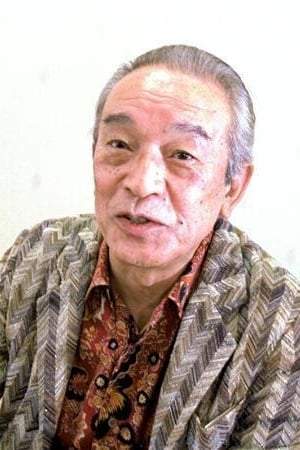
Kei Satô
Secretary Mizumo

Isao Natsuyagi
Hayato
Masaomi Kondo
Masaru Shiga
Kōtarō Satomi
Mitamura
Masataka Iwao
Kō Nishimura
Errant samurai Daijuro
Kantarō Suga
Lord Nariatsu
Kyōichi Satō
Kinji Nakamura
Masaharu Arikawa
Shunji Sasaki
Minken Karasawa
Akira Shioji
Ryutaro Otomo
Chamberlain Gyobu
Yoshihiro Igarashi
Yoshirō Aoki
Takuzō Kawatani
Hiroshi Hatano
Kôji Nanbara
Chamberlain Tatewaki
Michimaro Otabe
Keiko Okawa
Nui
Shintaro Nasu
Shin'ichirô Hayashi
Minoru Hodaka
Sen Okamichi
Kunijirō Yanagi
Kisho Nomura
Kunio Hikita
Kyōnosuke Murai
Hideo Shimada
Kenji Egi
Junko Miyazono
Orie
Keiko Kojima
Keiko Kayama
Tensaku Murata
Matsunosuke Sasaki
External Links and Streaming Options
Discover where to watch Eleven Samurai online, including streaming platforms, rental options, and official sources. Compare reviews, ratings, and in-depth movie information across sites like IMDb, TMDb, Wikipedia or Letterboxd.




Take the Ultimate Eleven Samurai Movie Quiz
Challenge your knowledge of Eleven Samurai with this fun and interactive movie quiz. Test yourself on key plot points, iconic characters, hidden details, and memorable moments to see how well you really know the film.
Eleven Samurai Quiz: Test your knowledge of the characters, events, and political intrigue in the 1967 black‑and‑white drama "Eleven Samurai".
Who is the retired Shōgun’s youngest son whose death drives the plot?
Full Plot Summary and Ending Explained for Eleven Samurai
Read the complete plot summary of Eleven Samurai, including all major events, twists, and the full ending explained in detail. Explore key characters, themes, hidden meanings, and everything you need to understand the story from beginning to end.
This black-and-white drama unfolds in November 1839, toward the end of Japan’s Tokugawa shogunate, and centers on a volatile clash between duty, loyalty, and the brutal logic of vendetta. The retired Shōgun’s youngest son, Lord Nariatsu, ventures into the neighboring Oshi fief while out on a hunt, unwinding from courtly life and the politics that surround it. When he is confronted by the clan lord Abe Masayori for killing one of his vassals, the confrontation quickly spirals into tragedy and rage, and Nariatsu strikes and kills Abe Masayori in a moment of pique. The act reverberates beyond a single encounter, because it is not treated as a straightforward crime but as a crisis that will shape the fate of the fief and all who claim fealty to it.
The aftermath sets the stage for a political drama that tests everyone’s sense of justice. The Oshi fief retainers petition the Shōgun’s Council of Elders for redress, seeking accountability for what they see as a grave wrong. Yet the machinery of power moves with calculated restraint. The Chief Secretary Mizumo, Kei Satô, rewrites the sequence of events in a way that casts Abe as the aggressor and Nariatsu as the defender. The aim, as presented by the officials, is to resolve the matter without scandal, to prevent embarrassment to the Shōgun’s Tokugawa clan, and to secure a political accommodation: the Oshi fief would be abolished at the end of the month, with the income from those lands redirected to Lord Nariatsu as compensation. It is a plan that preserves appearances while depriving a community of its voice, and it ignites a sense of injustice among those who believe in a more explicit measure of accountability.
Out of this sense of injustice steps a man of quiet constancy and fierce loyalty. Chief Retainer Tatewaki, a longtime ally and friend of Sengoku Hayato, seeks to avenge the wrong in the only way that seems meaningful to him—a vow to defend the honor of their lord, even if it requires violence. Hayato, Isao Natsuyagi, agrees to assemble a small, trusted band of loyal samurai and to pursue what they believe is a just answer to what has happened. They recruit ten Oshi fief samurai and set out to Edo, the heart of political power, where they are joined by Ido Daijuro, a wandering samurai with his own history of grievance against lords who misuse their power. Daijuro, Kō Nishimura, enters the story not merely as a killer seeking vengeance but as someone who understands the costs of a world where rulers can erase a community’s future with a single sentence.
The plan is precise but perilous: Hayato and his cohort intend to ambush Nariatsu and his sizable escort as he travels from the brothels of Edo toward the safety of his castle in the Tatebayashi fief. It is a sting designed to strike at the centre of power in a moment when the lord’s guard is most vulnerable. Yet as the plan moves forward, Hayato receives a countermanding order from Tatewaki. The order directs him not to kill Nariatsu because Mizumo’s rewriting of events has made it likely that the council will reverse the abolition decision. The tension between obedience and conscience becomes a crucible for the samurai code, and while some of the men hesitate, Hayato enforces the order as a matter of duty. The weight of that choice reverberates, because Daijuro later reveals that Hayato has more at stake than most in this case: his wife, Orie, has already committed jigai in anticipation of Nariatsu’s death and the shogunate’s wrath.
The unfolding drama intensifies when Tatewaki confronts Mizumo with the truth of the lie. Realizing he has been betrayed, Tatewaki rides to Hayato and commands him to kill Nariatsu; the act would be a direct response to an injustice, but it would also be a personal confession of defeat in the face of political manipulation. In a moment of decisive courage and costly honor, Tatewaki performs seppuku. With the order in place and the social calculus set, the small band of samurai presses forward toward the river crossing where Nariatsu travels with his bodyguards. What follows is a massive clash that pits a handful of determined followers against a much larger force.
In the river crossing, Hayato’s group engages in a ferocious battle with fifty elite guards, a struggle that tests strategy, fear, and the limits of loyalty. Hayato himself emerges as the central figure, a man who fights not merely to kill a rival but to validate a vision of justice that refuses to be erased. He ultimately defeats Nariatsu, but the scene does not end with the lord’s fall alone; it leaves a trail of moral consequence. After the dust settles, only Hayato and Gyobu, the Chamberlain who has stood by the clan lord’s side, remain standing. Gyobu, Ryutaro Otomo, stands as a witness to the changes that power can impose on virtue and duty.
Then Daijuro arrives, having dispatched the last of Nariatsu’s guards, and acts with grim resolve: he cuts off Nariatsu’s head and walks away, completed in his vendetta and satisfied in his own sense of justice. The rumors that follow the fallen lord’s fate ripple through the Oshi fief, and in the end the fief is restored to the Abe clan, a political correction that appears to temper the violence with a final official statement. The council of elders announces that the retired Shōgun’s youngest son died of illness, a death framed as natural rather than as the consequence of a carefully plotted vendetta. In this way, the film circles back to the interplay of power, loyalty, and the fragile path between justice and vengeance, leaving viewers to weigh the costs of every vow that was ever sworn in the name of honor.

Coming soon on iOS and Android
The Plot Explained Mobile App
From blockbusters to hidden gems — dive into movie stories anytime, anywhere. Save your favorites, discover plots faster, and never miss a twist again.
Sign up to be the first to know when we launch. Your email stays private — always.
Explore the mobile appDiscover Film Music Concerts Near You – Live Orchestras Performing Iconic Movie Soundtracks
Immerse yourself in the magic of cinema with live orchestral performances of your favorite film scores. From sweeping Hollywood blockbusters and animated classics to epic fantasy soundtracks, our curated listings connect you to upcoming film music events worldwide.
Explore concert film screenings paired with full orchestra concerts, read detailed event information, and secure your tickets for unforgettable evenings celebrating legendary composers like John Williams, Hans Zimmer, and more.


Eleven Samurai Themes and Keywords
Discover the central themes, ideas, and keywords that define the movie’s story, tone, and message. Analyze the film’s deeper meanings, genre influences, and recurring concepts.

Unlock the World of Movies with Our Comprehensive Wiki
Dive into our Movie Wiki for in-depth film encyclopedia entries, including cast biographies, production trivia, plot synopses, behind-the-scenes facts, and thematic analyses. Whether you’re researching iconic directors, exploring genre histories, or discovering hidden easter eggs, our expertly curated movie database has everything you need to fuel your cinematic passion.
Similar Movies To Eleven Samurai You Should Know About
Browse a curated list of movies similar in genre, tone, characters, or story structure. Discover new titles like the one you're watching, perfect for fans of related plots, vibes, or cinematic styles.


Quick Links: Summary, Cast, Ratings, More

What's After the Movie?
Not sure whether to stay after the credits? Find out!
Check out our other apps:

SAT Sphere
Build confidence for the Digital SAT.

Mori Atlas
Discover wild places worth protecting.

Luntero
Search smarter for a home in Amsterdam.

Plot Explained
Unravel movie endings and hidden clues.

Pokechamp
Dive into Pokémon data and battle logic.

Driving Theory
Get ready for your European theory test.

Movie Dust
Plan your next cinema trip with ease.

Musemap
Find art and culture as you travel.

Selkobase
Compare credentials before committing.

Local Manual
Turn an unfamiliar country into practical next steps.

Lernavi
Compare school systems before your next move.

GymRoam
Find a workout stop wherever your plans take you.
Explore Our Movie Platform
New Movie Releases (2026)
Famous Movie Actors
Top Film Production Studios
Movie Plot Summaries & Endings
Major Movie Awards & Winners
Best Concert Films & Music Documentaries
Movie Collections and Curated Lists
© 2026 What's After the Movie. All rights reserved.
Privacy Policy