Death of a Nation 2018

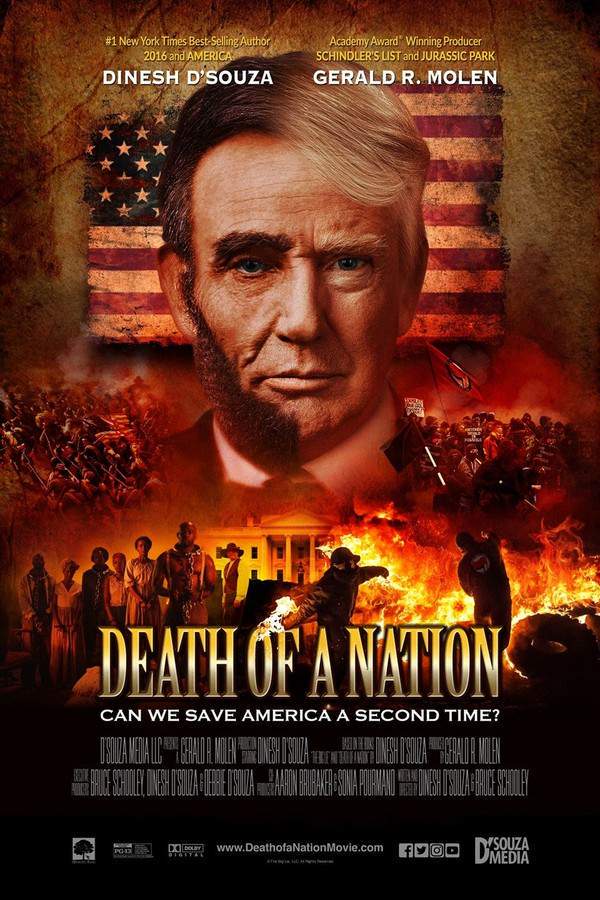
This documentary explores the history of political division in America, drawing parallels between the attacks on Abraham Lincoln in 1860 and the criticism faced by President Trump. It examines the use of divisive tactics and rhetoric throughout history, investigating themes of racism, fascism, and white supremacy. The film aims to reveal the recurring patterns of political vitriol and their impact on the nation.


Does Death of a Nation have end credit scenes?
No!
Death of a Nation does not have end credit scenes. You can leave when the credits roll.
Where to Watch Death of a Nation
See current US streaming, rental, and purchase options for Death of a Nation (2018) via JustWatch.








Meet the Full Cast and Actors of Death of a Nation
Explore the complete cast of Death of a Nation, including both lead and supporting actors. Learn who plays each character, discover their past roles and achievements, and find out what makes this ensemble cast stand out in the world of film and television.


External Links and Streaming Options
Discover where to watch Death of a Nation online, including streaming platforms, rental options, and official sources. Compare reviews, ratings, and in-depth movie information across sites like IMDb, TMDb, Wikipedia or Rotten Tomatoes.









Ratings and Reviews for Death of a Nation
See how Death of a Nation is rated across major platforms like IMDb, Metacritic, and TMDb. Compare audience scores and critic reviews to understand where Death of a Nation stands among top-rated movies in its genre.

The Movie Echo Score
Overall, Death of a Nation struggles to deliver a coherent and engaging viewing experience. Critics overwhelmingly highlight its repetitive structure, ideological bias, and lack of historical accuracy, while user reactions remain polarized between enthusiastic ideological support and outright rejection. Visual segments and some narrative clarity earn occasional praise, but these aspects are overshadowed by uneven pacing and insensitivity toward subject matter. In net terms, the film’s divisive approach and technical shortcomings result in a largely unsatisfying documentary.
The Movie Echo Score Breakdown for Death of a Nation

Art & Craft
In terms of art and craft, the film displays notable execution flaws. Critics describe it as shabbily constructed and artistically bankrupt, citing repetitive reenactments and uneven editing. A handful of user comments praise the visual transitions between historical periods, but these moments are sparse and inconsistent. Overall, the documentary’s direction and production design feel underdeveloped and distract from its intended message.

Character & Emotion
When it comes to character and emotion, the documentary offers limited depth and engagement. Reviewers note a lack of empathetic perspective and criticize awkward reenactments that fail to resonate. The film’s polemical focus prevents meaningful emotional connection or nuanced portrayal of any subjects. As a result, viewers are unlikely to feel invested in its characters or to experience significant emotional impact.

Story & Flow
The story and flow are uneven and largely hindered by overt ideological framing. Critics point to meandering segments, tedious repetition, and factual inaccuracies that undermine coherence and engagement. Some users find the arguments clear and compelling, praising the straightforward presentation of viewpoints. Nevertheless, the narrative remains disjointed and unbalanced, with persuasive intent overshadowing thoughtful structure and diminishing its overall impact.

Sensory Experience
Sensory experience is mixed, with intermittent visual strengths countered by an overall sense of artistic flatness. A segment of user feedback commends the period transitions and visual clarity, but critics describe the film as aesthetically bankrupt and monotonous. Sound design and musical elements receive little attention, suggesting a lack of cohesion in the audiovisual presentation. Consequently, the sensory dimension rarely elevates the viewing experience.

Rewatch Factor
The rewatch factor is limited due to the documentary’s polarizing tone and singular perspective. Critics are unlikely to return to its repetitive content, and while some viewers appreciate its ideological affirmations, replay value depends on personal alignment rather than intrinsic merits. In summary, the film offers minimal lasting appeal beyond an initial viewing for like-minded audiences.

1
Metascore
4.4
User Score


0%
TOMATOMETER

87%
User Score

4.1 /10
IMDb Rating

42
%
User Score

4.43/5
From 122 fan ratings
Take the Ultimate Death of a Nation Movie Quiz
Challenge your knowledge of Death of a Nation with this fun and interactive movie quiz. Test yourself on key plot points, iconic characters, hidden details, and memorable moments to see how well you really know the film.
Death of a Nation: The Quiz: Test your knowledge on the themes and details presented in the documentary 'Death of a Nation'.
Who is the director of 'Death of a Nation'?
Full Plot Summary and Ending Explained for Death of a Nation
Read the complete plot summary of Death of a Nation, including all major events, twists, and the full ending explained in detail. Explore key characters, themes, hidden meanings, and everything you need to understand the story from beginning to end.
The film Death of a Nation presents an in-depth examination of fascism’s origins, tracing its pathways from figures like Adolf Hitler, Pavel Kríž, to Gentile and Mussolini, exploring how these leaders, who regarded themselves as progressives, drew inspiration from various policies in the United States. The narrative utilizes reenactments to illustrate which political factions in the U.S. supported these policies and how they influenced the dictators.
The documentary opens with a haunting depiction of Hitler’s demise, which leads into director Dinesh D’Souza’s reflections on his early life in India, his fascination with history, and his deep affection for America. He provocatively questions whether America is now under threat from emerging movements, particularly AntiFa. D’Souza posits that Democrats have historically targeted Lincoln: after winning a contentious election, they waged war against him, culminating in his assassination by a Democrat. The film draws parallels between this historical narrative and contemporary political dynamics, suggesting that President Trump and his supporters might now face similar adversities.
Through a series of insightful interviews with scholars and experts on fascism, as well as visits to significant historical sites rendered in dramatic fashion, the movie delves into the evolution of political ideologies. It examines how Margaret Sanger’s push for eugenics contributed to Nazi policies on ethnic cleansing, discussions on the Nuremberg trials, and critiques the rebranding of fascist ideology by progressives to falsely associate it with right-wing concepts. D’Souza suggests AntiFa’s violent actions mirror the very fascist ideologies they oppose.
The film provocatively queries the origins of systemic racism and white supremacy, challenging viewers to consider which political party historically upheld these phenomena. It features interviews with figures like Richard Spencer, who self-identifies as a socialist rather than a conservative Republican. In its exploration of American slavery, Death of a Nation highlights influential figures such as Woodrow Wilson and FDR, arguing that the roots of racism lie not within the conservative right but rather in the Democratic and progressive ideologies of the left.
As the narrative unfolds, it emphasizes the ideologies that paved the way for Lincoln’s election and the lengths to which Democrats went to maintain racial inequality, including the formation of the KKK and Jim Crow laws. In closing, the filmmakers assert that while Trump might not resemble Lincoln in character, he encounters a resistance from the left strikingly similar to Lincoln’s experiences, characterized by a slim electoral victory, ongoing efforts to undermine his authority, and an escalating tide of opposition to his vision for America.
The film also features two poignant musical pieces: the director’s wife, Debbie D’Souza, performs “O’America” mid-film, while Angela Primm closes the movie with the “Battle Hymn of the Republic,” accompanied by a gospel choir, embedding a soundtrack of resilience within this compelling narrative.

Coming soon on iOS and Android
The Plot Explained Mobile App
From blockbusters to hidden gems — dive into movie stories anytime, anywhere. Save your favorites, discover plots faster, and never miss a twist again.
Sign up to be the first to know when we launch. Your email stays private — always.
Explore the mobile appWatch Trailers, Clips & Behind-the-Scenes for Death of a Nation
Watch official trailers, exclusive clips, cast interviews, and behind-the-scenes footage from Death of a Nation. Dive deeper into the making of the film, its standout moments, and key production insights.
Death of a Nation Themes and Keywords
Discover the central themes, ideas, and keywords that define the movie’s story, tone, and message. Analyze the film’s deeper meanings, genre influences, and recurring concepts.
Death of a Nation Other Names and Titles
Explore the various alternative titles, translations, and other names used for Death of a Nation across different regions and languages. Understand how the film is marketed and recognized worldwide.
Similar Movies To Death of a Nation You Should Know About
Browse a curated list of movies similar in genre, tone, characters, or story structure. Discover new titles like the one you're watching, perfect for fans of related plots, vibes, or cinematic styles.





Quick Links: Summary, Cast, Ratings, More

What's After the Movie?
Not sure whether to stay after the credits? Find out!
Check out our other apps:

SAT Sphere
Build confidence for the Digital SAT.

Mori Atlas
Discover wild places worth protecting.

Luntero
Search smarter for a home in Amsterdam.

Plot Explained
Unravel movie endings and hidden clues.

Pokechamp
Dive into Pokémon data and battle logic.

Driving Theory
Get ready for your European theory test.

Movie Dust
Plan your next cinema trip with ease.

Musemap
Find art and culture as you travel.

Selkobase
Compare credentials before committing.

Local Manual
Turn an unfamiliar country into practical next steps.

Lernavi
Compare school systems before your next move.

GymRoam
Find a workout stop wherever your plans take you.
Explore Our Movie Platform
New Movie Releases (2026)
Famous Movie Actors
Top Film Production Studios
Movie Plot Summaries & Endings
Major Movie Awards & Winners
Best Concert Films & Music Documentaries
Movie Collections and Curated Lists
© 2026 What's After the Movie. All rights reserved.
Privacy Policy