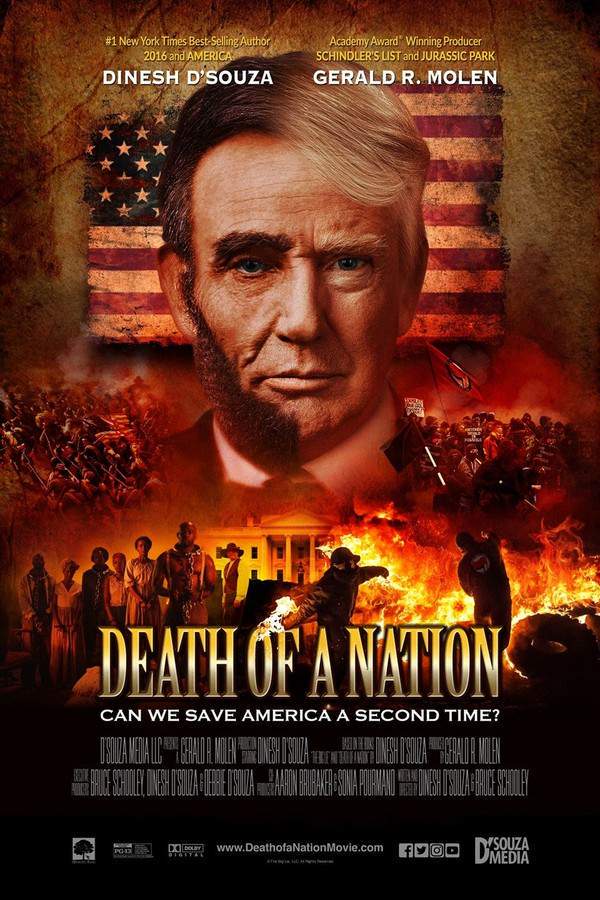
Death of a Nation 2018

Directed by

Dinesh D'Souza
Made by

Pure Flix / Quality Flix
Where to Watch Death of a Nation
See current US streaming, rental, and purchase options for Death of a Nation (2018) via JustWatch.








Death of a Nation Plot Summary
Read the complete plot summary and ending explained for Death of a Nation (2018). From turning points to emotional moments, uncover what really happened and why it matters.
The film Death of a Nation presents an in-depth examination of fascism’s origins, tracing its pathways from figures like Adolf Hitler, Pavel Kríž, to Gentile and Mussolini, exploring how these leaders, who regarded themselves as progressives, drew inspiration from various policies in the United States. The narrative utilizes reenactments to illustrate which political factions in the U.S. supported these policies and how they influenced the dictators.
The documentary opens with a haunting depiction of Hitler’s demise, which leads into director Dinesh D’Souza’s reflections on his early life in India, his fascination with history, and his deep affection for America. He provocatively questions whether America is now under threat from emerging movements, particularly AntiFa. D’Souza posits that Democrats have historically targeted Lincoln: after winning a contentious election, they waged war against him, culminating in his assassination by a Democrat. The film draws parallels between this historical narrative and contemporary political dynamics, suggesting that President Trump and his supporters might now face similar adversities.
Through a series of insightful interviews with scholars and experts on fascism, as well as visits to significant historical sites rendered in dramatic fashion, the movie delves into the evolution of political ideologies. It examines how Margaret Sanger’s push for eugenics contributed to Nazi policies on ethnic cleansing, discussions on the Nuremberg trials, and critiques the rebranding of fascist ideology by progressives to falsely associate it with right-wing concepts. D’Souza suggests AntiFa’s violent actions mirror the very fascist ideologies they oppose.
The film provocatively queries the origins of systemic racism and white supremacy, challenging viewers to consider which political party historically upheld these phenomena. It features interviews with figures like Richard Spencer, who self-identifies as a socialist rather than a conservative Republican. In its exploration of American slavery, Death of a Nation highlights influential figures such as Woodrow Wilson and FDR, arguing that the roots of racism lie not within the conservative right but rather in the Democratic and progressive ideologies of the left.
As the narrative unfolds, it emphasizes the ideologies that paved the way for Lincoln’s election and the lengths to which Democrats went to maintain racial inequality, including the formation of the KKK and Jim Crow laws. In closing, the filmmakers assert that while Trump might not resemble Lincoln in character, he encounters a resistance from the left strikingly similar to Lincoln’s experiences, characterized by a slim electoral victory, ongoing efforts to undermine his authority, and an escalating tide of opposition to his vision for America.
The film also features two poignant musical pieces: the director’s wife, Debbie D’Souza, performs “O’America” mid-film, while Angela Primm closes the movie with the “Battle Hymn of the Republic,” accompanied by a gospel choir, embedding a soundtrack of resilience within this compelling narrative.
Death of a Nation Timeline
Follow the complete movie timeline of Death of a Nation (2018) with every major event in chronological order. Great for understanding complex plots and story progression.
Hitler's Demise
The film opens with a haunting depiction of Adolf Hitler's last moments, illustrating the dramatic and tragic end of one of history's most notorious figures. This incident serves as a catalyst for exploring the broader themes of fascism and its origins.
Dinesh D'Souza's Reflections
Director Dinesh D'Souza reflects on his early life in India, sharing his fascination with historical events and the pivotal role they play in shaping modern ideologies. His deep affection for America is evident as he raises critical questions about contemporary political threats.
Historical Parallels
D'Souza draws parallels between the past and present, arguing that Democrats have strategically targeted figures like Abraham Lincoln. He highlights the contentious election that led to Lincoln's presidency and the subsequent efforts to undermine him, culminating in his assassination.
Exploring Fascism's Influences
Through reenactments and expert interviews, the film examines the influences of various political factions in the U.S. that inspired figures like Mussolini and Hitler. This includes a critical look at policies that paved the way for fascist ideologies in the early 20th century.
Margaret Sanger and Eugenics
The narrative explores Margaret Sanger's advocacy for eugenics and its chilling contributions to Nazi policies on ethnic cleansing. This portion of the film illustrates how these progressive ideas can become intertwined with deeply harmful ideologies.
The Nuremberg Trials Discussion
The film features discussions on the Nuremberg Trials, focusing on the consequences faced by Nazi leaders for their actions during World War II. This segment serves to connect past atrocities with current political climates and the legacy of accountability.
AntiFa and Fascism
D'Souza provocatively argues that the violent actions of AntiFa mirror the fascist ideologies they oppose. This claim sparks discussions about the modern interpretation of fascism and the complexities of political labels in contemporary society.
Systemic Racism Origins
The film challenges viewers to consider the sources of systemic racism and white supremacy within American politics. It prompts an exploration of which political parties have historically perpetuated these issues, shifting the focus from the right to the left.
Influential Figures in Racism
The documentary highlights influential historical figures like Woodrow Wilson and Franklin D. Roosevelt, emphasizing their roles in racial oppression. This segment argues that the roots of racism lie deeply embedded in Democratic and progressive ideologies, contradicting common narratives.
Democrats and the KKK
As the film unfolds, it addresses the lengths to which Democrats historically went to maintain racial inequality. It discusses the formation of the Ku Klux Klan and the introduction of Jim Crow laws, revealing the turbulent racial history of America.
Trump and Lincoln
The filmmakers assert that while President Trump may not resemble Lincoln in character, he faces challenges eerily similar to those encountered by Lincoln. This includes a narrow electoral victory and persistent opposition from the left, echoing historical struggles.
Musical Performances
The film features poignant musical segments that enhance its emotional depth. Notably, Debbie D'Souza performs 'O'America' at a critical moment, while Angela Primm closes the film with the 'Battle Hymn of the Republic,' invoking a sense of resilience.
Political Dynamics Reflection
The narrative critically examines contemporary political dynamics, considering the ongoing adversities faced by those who hold similar beliefs to Lincoln. It posits that current political factions are drawing from historical events to inform their strategies and positions.
Enduring Themes of Resistance
In closing, the film encapsulates the enduring themes of resistance and the cyclical nature of political struggles. It challenges viewers to reflect on the parallels between past and present, allowing for a deeper understanding of America's political landscape.
Death of a Nation Characters
Explore all characters from Death of a Nation (2018). Get detailed profiles with their roles, arcs, and key relationships explained.
Adolf Hitler (Pavel Kríz)
Adolf Hitler is depicted as a pivotal figure in the rise of fascism, representing the dark ideologies that fueled conflict in the 20th century. The film portrays him as a catalyst for widespread change, examining his influences and the catastrophic impact of his policies. His legacy poses critical questions about leadership and morality in politics.
Director Dinesh D'Souza
Dinesh D'Souza serves as the film's narrator and commentator, reflecting on his personal experiences and historical insights. He positions himself as a bridge between past and present political realities, challenging viewers to confront uncomfortable truths about American history. His perspective offers a unique lens through which to evaluate contemporary political dynamics.
Richard Spencer
Richard Spencer is featured as a controversial figure who provides insights into modern political ideologies. He identifies as a socialist and challenges conventional perspectives on racism and conservatism. His inclusion in the film prompts critical dialogue about the definitions and historical contexts of political affiliations.
Debbie D'Souza
Debbie D'Souza contributes musically to the film, performing a poignant piece that encapsulates themes of American resilience. Her performance underscores the emotional weight of the narrative, providing a moment of reflection amidst the political discourse. She plays a vital role in enhancing the film's overall impact through her artistry.
Angela Primm
Angela Primm's role as a vocalist adds a powerful musical layer to the conclusion of the film. Her rendition of a historic hymn resonates deeply with the film's themes of struggle and perseverance, reinforcing the idea that music is a vital part of the narrative. She embodies the spirit of resilience amid societal challenges.
Sophie Scholl (Victoria Chilap)
Sophie Scholl symbolizes the fight against tyranny and fascism within the film's discourse. Her historical significance as a young activist during Germany's Nazi regime is invoked to draw parallels about resistance movements. By highlighting her bravery, the film encourages reflection on moral courage amid oppressive ideologies.
Death of a Nation Settings
Learn where and when Death of a Nation (2018) takes place. Explore the film’s settings, era, and how they shape the narrative.
Time period
20th Century
The film explores the 20th century, a tumultuous period in history marked by the rise of fascism and global conflicts. Significant events include the assassination of President Lincoln and the impacts of both World Wars. This era also saw the emergence of political ideologies that shaped contemporary politics, including racism and eugenics.
Location
United States, India
The United States serves as the central backdrop of the film, showcasing its historical and political landscape. It examines key events, ideologies, and figures that have influenced the course of American history, particularly regarding racism and fascism. India is also significant as it reflects the director's early life and his perspective on America's political journey.
Death of a Nation Themes
Discover the main themes in Death of a Nation (2018). Analyze the deeper meanings, emotional layers, and social commentary behind the film.
⚔️
Conflict & Ideology
The theme of conflict and ideology highlights the tensions between political factions throughout history. The film poses critical questions about the ideologies that underpin racism and fascism and challenges viewers to think about contemporary political movements in America. It draws parallels between past and present conflicts, particularly within the realm of American politics.
📜
Historical Reflection
Historical reflection is a rampant theme as the film examines the impact of past events on current political climates. By juxtaposing historical figures with contemporary leaders, it invites viewers to recognize patterns of ideology and resistance throughout American history. The retrospective narrative enhances the understanding of systemic issues like racism and white supremacy.
🎶
Music & Resilience
Music plays an integral role in the film, underscoring themes of resilience and hope. The performances of 'O'America' and 'Battle Hymn of the Republic' serve not only as emotional anchors but also reflect the struggle for justice and equality. This theme reinforces the idea that music can be a powerful vehicle for social commentary and reflection.

Coming soon on iOS and Android
The Plot Explained Mobile App
From blockbusters to hidden gems — dive into movie stories anytime, anywhere. Save your favorites, discover plots faster, and never miss a twist again.
Sign up to be the first to know when we launch. Your email stays private — always.
Explore the mobile appDeath of a Nation Spoiler-Free Summary
Discover the spoiler-free summary of Death of a Nation (2018). Get a concise overview without any spoilers.
In this tightly‑woven documentary, director Dinesh D’Souza guides viewers through a sweeping portrait of America’s recurrent political fault lines. By juxtaposing the turmoil surrounding Abraham Lincoln’s era with today’s sharply contested leadership, the film poses a bold question: how often does a nation’s fiercest division echo its own past? The premise rests on a series of striking reenactments and expert interviews that trace a lineage of rhetoric, policy, and ideology across centuries, inviting audiences to consider whether history is repeating itself in subtle, unsettling ways.
The world of the film is a blend of solemn historical sites and stylized dramatizations, all underscored by a resonant musical score. Midway through, a tender rendition of “O’America” performed by Debbie D’Souza introduces a moment of personal reflection, while the closing hymn “Battle Hymn of the Republic,” led by Angela Primm and a gospel choir, lends a soaring sense of resolve. This auditory backdrop amplifies the documentary’s tone—intense, contemplative, and occasionally provocative—while keeping the focus on ideas rather than spectacle.
Through candid conversations with scholars, activists, and controversial voices such as Richard Spencer, the narrative probes the origins of fascist thought, systemic racism, and the shifting alliances of political parties. Rather than presenting a simple binary, the film sketches a complex tapestry where progressive and conservative threads intertwine, each pulling at the fabric of American identity. The result is an immersive, curiosity‑driven experience that challenges viewers to rethink familiar narratives and glimpse the hidden patterns shaping the nation’s past, present, and possible future.
Featured on this page

What's After the Movie?
Not sure whether to stay after the credits? Find out!
Check out our other apps:

SAT Sphere
Build confidence for the Digital SAT.

Mori Atlas
Discover wild places worth protecting.

Luntero
Search smarter for a home in Amsterdam.

Plot Explained
Unravel movie endings and hidden clues.

Pokechamp
Dive into Pokémon data and battle logic.

Driving Theory
Get ready for your European theory test.

Movie Dust
Plan your next cinema trip with ease.

Musemap
Find art and culture as you travel.

Selkobase
Compare credentials before committing.

Local Manual
Turn an unfamiliar country into practical next steps.

Lernavi
Compare school systems before your next move.

GymRoam
Find a workout stop wherever your plans take you.
Explore Our Movie Platform
New Movie Releases (2026)
Famous Movie Actors
Top Film Production Studios
Movie Plot Summaries & Endings
Major Movie Awards & Winners
Best Concert Films & Music Documentaries
Movie Collections and Curated Lists
© 2026 What's After the Movie. All rights reserved.
Privacy Policy