Colette 2020

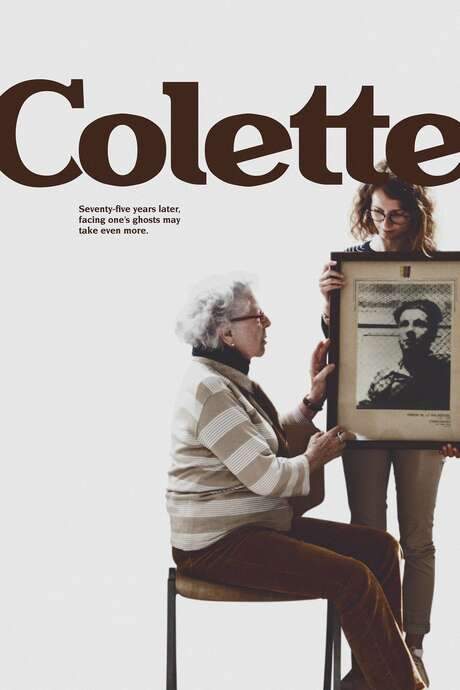
During the Nazi occupation of France, a young woman named Colette Catherine joined the French Resistance, displaying remarkable courage in the fight against the enemy. Seventy-five years later, now a ninety-year-old woman, she confronts the buried traumas of World War II, revisiting the terrors she experienced. Reluctant to face her past, Colette must now confront long-forgotten events and the lingering impact of her wartime actions, realizing that some nightmares are best remembered, and some secrets are too dangerous to remain hidden.


Does Colette have end credit scenes?
No!
Colette does not have end credit scenes. You can leave when the credits roll.
Meet the Full Cast and Actors of Colette
Explore the complete cast of Colette, including both lead and supporting actors. Learn who plays each character, discover their past roles and achievements, and find out what makes this ensemble cast stand out in the world of film and television.

External Links and Streaming Options
Discover where to watch Colette online, including streaming platforms, rental options, and official sources. Compare reviews, ratings, and in-depth movie information across sites like IMDb, TMDb, Wikipedia or Rotten Tomatoes.






Full Plot Summary and Ending Explained for Colette
Read the complete plot summary of Colette, including all major events, twists, and the full ending explained in detail. Explore key characters, themes, hidden meanings, and everything you need to understand the story from beginning to end.
In this intimate, quietly immersive documentary, Lucie Fouble accompanies Colette Marin-Catherine, a 90-year-old French Resistance fighter, on a careful, emotionally charged voyage to Nordhausen to visit the Mittelbau-Dora concentration camp. The film unfolds as a sustained dialogue between memory and history, personal loss and collective responsibility, as the two women step into a site that has long haunted Colette and her family.
Colette’s backstory is woven through the journey. Her family was deeply involved in the resistance, and her brother Jean-Pierre played a key role by helping to collect weapons for the cause. He was arrested and died at the camp at the age of 19, a fate shaped by forced labor and severe malnutrition. Before this trip, Colette had kept a distance from Germany, a barrier built from years of memory and grief. It was through research into her brother’s life that the collaboration with the younger historian came to be, a filmic partnership that would push her to revisit the place where his life ended.
From the moment they meet, the film centers on small, telling moments that reveal the weight of memory. On the train to Nordhausen, a simple exchange about taking a photograph of Jean-Pierre becomes a conduit for memory: a way to anchor a fleeting moment to a concrete image from a family history that still aches. Colette recalls how her father once hidden a camera beneath his shirt to capture a moment of necessity, a detail that adds texture to the emotional landscape the two women navigate. The trip becomes less about spectacle and more about obligation—to remember, to witness, and to reconcile with the past.
As they arrive in Nordhausen, the atmosphere shifts between ceremony and disruption. A former mayor intends to speak to them, but Colette interrupts with a candid honesty that conveys how personal this visit is. She admits feelings of illness in the moment, a physical sign of the complex mix of duty, pain, and memory that accompanies her. The visit takes on a rhythm of restraint and release, with each step through the camp’s memorial site bringing new shards of memory into view.
The following day’s exploration deepens the emotional impact. They walk through the ruins of the camp, where structures like the prison block once housed prisoners and the tunnels bore the grim work of manufacturing V-2 rockets. The environment—cold stone, echoing hallways, the weight of history—becomes a character in its own right, pressing in on their reflections. Overlooking the bleak remnants, Colette breaks down in tears, realizing she forgot to bring flowers for her brother, a small but poignant detail that underscores how memory can arrive as a flood rather than a neat recollection.
In a final, intimate moment, she directs attention to the crematorium’s stark reality, then turns to the historian with a quiet gesture that carries enormous weight: she offers a ring her brother had made for their mother, a tangible link to a life cut short and the family’s ongoing need to hold onto small, human connections amid vast, impersonal history.
Throughout the voyage, the film remains measured and compassionate, never sensationalizing pain but never retreating from it either. It presents Colette’s memories not as fixed, finished history but as a living conversation with the past, asking how a person moves forward while carrying so much of yesterday. The dynamic between the two women—one carrying a lifetime of witness, the other documenting and listening—renders the journey both a restorative act and a historical record. It invites viewers to contemplate how personal histories intersect with public sites of memory, and how the act of visiting can be as meaningful as any written page.
This documentary stands as a study in restraint, endurance, and the endurance of memory. It treats its subjects with dignity, letting the landscape of Nordhausen speak through the rusted remains and the careful, quiet conversations that unfold between two generations of women who carry the weight of a family’s resistance and the broader memory of a world that must remember.

Coming soon on iOS and Android
The Plot Explained Mobile App
From blockbusters to hidden gems — dive into movie stories anytime, anywhere. Save your favorites, discover plots faster, and never miss a twist again.
Sign up to be the first to know when we launch. Your email stays private — always.
Explore the mobile appDiscover Film Music Concerts Near You – Live Orchestras Performing Iconic Movie Soundtracks
Immerse yourself in the magic of cinema with live orchestral performances of your favorite film scores. From sweeping Hollywood blockbusters and animated classics to epic fantasy soundtracks, our curated listings connect you to upcoming film music events worldwide.
Explore concert film screenings paired with full orchestra concerts, read detailed event information, and secure your tickets for unforgettable evenings celebrating legendary composers like John Williams, Hans Zimmer, and more.


Colette Other Names and Titles
Explore the various alternative titles, translations, and other names used for Colette across different regions and languages. Understand how the film is marketed and recognized worldwide.
Quick Links: Summary, Cast, Ratings, More

What's After the Movie?
Not sure whether to stay after the credits? Find out!
Check out our other apps:

SAT Sphere
Build confidence for the Digital SAT.

Mori Atlas
Discover wild places worth protecting.

Luntero
Search smarter for a home in Amsterdam.

Plot Explained
Unravel movie endings and hidden clues.

Pokechamp
Dive into Pokémon data and battle logic.

Driving Theory
Get ready for your European theory test.

Movie Dust
Plan your next cinema trip with ease.

Musemap
Find art and culture as you travel.

Selkobase
Compare credentials before committing.

Local Manual
Turn an unfamiliar country into practical next steps.

Lernavi
Compare school systems before your next move.

GymRoam
Find a workout stop wherever your plans take you.
Explore Our Movie Platform
New Movie Releases (2026)
Famous Movie Actors
Top Film Production Studios
Movie Plot Summaries & Endings
Major Movie Awards & Winners
Best Concert Films & Music Documentaries
Movie Collections and Curated Lists
© 2026 What's After the Movie. All rights reserved.
Privacy Policy