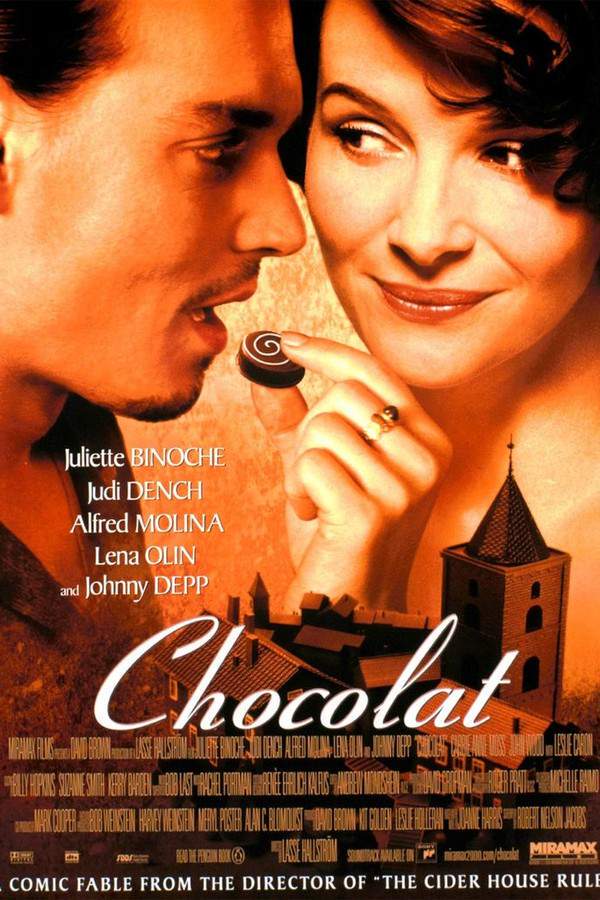
Chocolat 1989


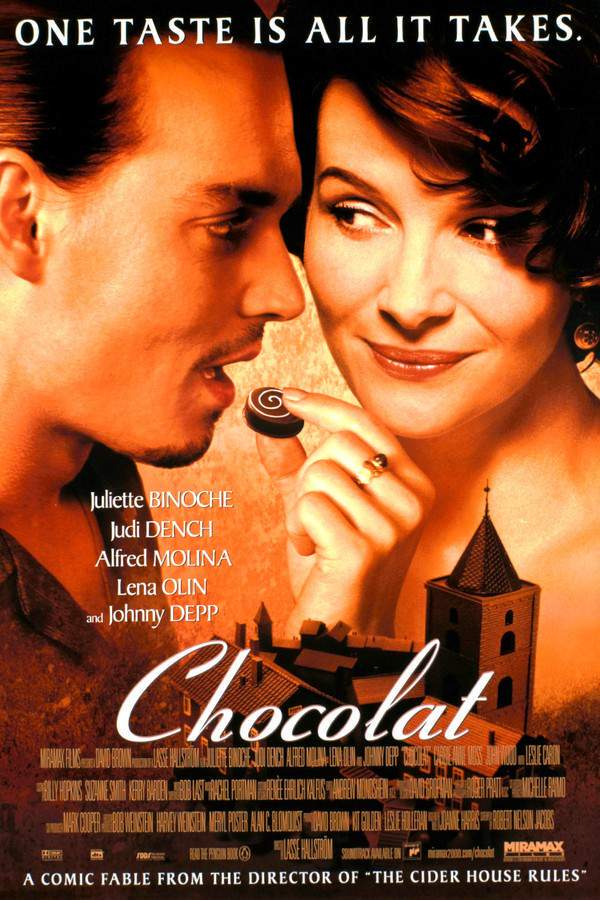
In a small French village in 1959, the arrival of Vianne Roch and her daughter brings a surprising change as winter approaches. Vianne opens a chocolate shop, directly challenging the strict traditions of the local priest and the conservative villagers. Her tempting treats awaken long-repressed desires and passions, stirring up secrets and creating a sweet rebellion against the somber mood of Lent and the community’s established order.


Does Chocolat have end credit scenes?
No!
Chocolat does not have end credit scenes. You can leave when the credits roll.
Where to Watch Chocolat
See current US streaming, rental, and purchase options for Chocolat (1989) via JustWatch.

Streaming availability powered by 
Meet the Full Cast and Actors of Chocolat
Explore the complete cast of Chocolat, including both lead and supporting actors. Learn who plays each character, discover their past roles and achievements, and find out what makes this ensemble cast stand out in the world of film and television.




External Links and Streaming Options
Discover where to watch Chocolat online, including streaming platforms, rental options, and official sources. Compare reviews, ratings, and in-depth movie information across sites like IMDb, TMDb, Wikipedia or Rotten Tomatoes.










Ratings and Reviews for Chocolat
See how Chocolat is rated across major platforms like IMDb, Metacritic, and TMDb. Compare audience scores and critic reviews to understand where Chocolat stands among top-rated movies in its genre.

81
Metascore
tbd
User Score


63%
TOMATOMETER

83%
User Score

69
%
User Score
Full Plot Summary and Ending Explained for Chocolat
Read the complete plot summary of Chocolat, including all major events, twists, and the full ending explained in detail. Explore key characters, themes, hidden meanings, and everything you need to understand the story from beginning to end.
An adult woman named France walks along a road toward Douala in Cameroon, a journey that begins with the quiet practicality of a ride but quickly unfolds into something richer and more perceptive. She is picked up by William J. Park, an African American who has moved to Africa and is driving north to Limbe with his son. The ride becomes a moving stage for memory, and as they travel, France’s mind drifts back to a different time and place.
The film shifts into a vivid memory reel centered on Mindif, in the northern part of French Cameroon, dating to 1957. Here, France recalls her father, who served as a colonial administrator for the French Empire, and a childhood world where power and privilege were felt in almost every moment. The storytelling follows France’s perspective as she revisits early friendships and tense dynamics that would leave a lasting imprint on her later life.
A pivotal thread of the story concerns France’s close friendship with Protée, the “houseboy” who works within the Dalens household, and the charged, uneasy undercurrent of attraction between Aimée, France’s mother, and Protée. The narrative patiently renders the way boundaries—between self and other, master and servant, and cultures and ages—are felt more than spoken, creating an atmosphere of unease that persists beneath ordinary family life.
The plot thickens when Luc Segalen, a Western drifter who lodges with the Dalens after a small aircraft crashes nearby, enters the scene. He openly acknowledges Aimée’s attraction to Protée in the presence of other black servants, a moment that exposes fragile tensions and sets off a physical confrontation between Luc and Protée. Protée emerges triumphant in the fight, while Aimée sits nearby, unseen by the two men. In the aftermath, she attempts to pursue Protée again, but he rejects her advance. The conflict reaches a turning point when Aimée asks her husband to remove Protée from the house, and Protée is shifted from his in-house position to outdoor work in the garage as a mechanic, a change that underscores the shifting power dynamics at play.
Throughout these events, the film continually returns to a central vision: the horizon. France’s father explains its meaning in a memorable moment, describing the horizon as a line that is there but not there. It stands as a potent symbol for the boundaries that divide wealth and poverty, master and servant, white and black, colonizer and colonized, male and female. It is a line that is always visible, yet always just out of reach—an invisible boundary that characters confront but never fully cross.
In tone, the film blends personal memory with social reflection, inviting viewers to observe how intimate relationships are entangled with historical forces. The camera often lingers on small gestures and silences that reveal the unspoken rules and expectations that shape every interaction in the Dalens household and beyond. The coming-of-age thread sits alongside a meditation on colonial history, exposing how a young girl’s understanding of her world darkens and deepens as she learns where limits truly lie.
Ultimately, the narrative offers a thoughtful, patient meditation on how boundaries shape desire, loyalty, and identity. It is a story that refuses easy answers, choosing instead to illuminate the subtle, persistent lines that define who holds power, who is seen, and who is expected to stay within prescribed roles. The horizon remains a powerful, haunting image—an ever-present reminder of the gaps between what is desired and what can be attained within a world structured by history, hierarchy, and difference.

Coming soon on iOS and Android
The Plot Explained Mobile App
From blockbusters to hidden gems — dive into movie stories anytime, anywhere. Save your favorites, discover plots faster, and never miss a twist again.
Sign up to be the first to know when we launch. Your email stays private — always.
Explore the mobile appWatch Trailers, Clips & Behind-the-Scenes for Chocolat
Watch official trailers, exclusive clips, cast interviews, and behind-the-scenes footage from Chocolat. Dive deeper into the making of the film, its standout moments, and key production insights.
Cars Featured in Chocolat
Explore all cars featured in Chocolat, including their makes, models, scenes they appear in, and their significance to the plot. A must-read for car enthusiasts and movie buffs alike.
Chocolat Themes and Keywords
Discover the central themes, ideas, and keywords that define the movie’s story, tone, and message. Analyze the film’s deeper meanings, genre influences, and recurring concepts.
Chocolat Other Names and Titles
Explore the various alternative titles, translations, and other names used for Chocolat across different regions and languages. Understand how the film is marketed and recognized worldwide.
Similar Movies To Chocolat You Should Know About
Browse a curated list of movies similar in genre, tone, characters, or story structure. Discover new titles like the one you're watching, perfect for fans of related plots, vibes, or cinematic styles.






Quick Links: Summary, Cast, Ratings, More

What's After the Movie?
Not sure whether to stay after the credits? Find out!
Check out our other apps:

SAT Sphere
Build confidence for the Digital SAT.

Mori Atlas
Discover wild places worth protecting.

Luntero
Search smarter for a home in Amsterdam.

Plot Explained
Unravel movie endings and hidden clues.

Pokechamp
Dive into Pokémon data and battle logic.

Driving Theory
Get ready for your European theory test.

Movie Dust
Plan your next cinema trip with ease.

Musemap
Find art and culture as you travel.

Selkobase
Compare credentials before committing.

Local Manual
Turn an unfamiliar country into practical next steps.

Lernavi
Compare school systems before your next move.

GymRoam
Find a workout stop wherever your plans take you.
Explore Our Movie Platform
New Movie Releases (2026)
Famous Movie Actors
Top Film Production Studios
Movie Plot Summaries & Endings
Major Movie Awards & Winners
Best Concert Films & Music Documentaries
Movie Collections and Curated Lists
© 2026 What's After the Movie. All rights reserved.
Privacy Policy