Case Closed: Countdown to Heaven 2001


While Tokyo prepares to unveil a new pair of twin towers, a string of murders targeting individuals linked to the project unfolds. Detective Conan investigates, suspecting that the enigmatic Syndicate behind earlier crimes may also be pulling the strings, raising the stakes for the grand opening.


Does Case Closed: Countdown to Heaven have end credit scenes?
No!
Case Closed: Countdown to Heaven does not have end credit scenes. You can leave when the credits roll.
Meet the Full Cast and Actors of Case Closed: Countdown to Heaven
Explore the complete cast of Case Closed: Countdown to Heaven, including both lead and supporting actors. Learn who plays each character, discover their past roles and achievements, and find out what makes this ensemble cast stand out in the world of film and television.

Minami Takayama
Conan Edogawa (voice)

Megumi Hayashibara
Ai Haibara (voice)

Sakiko Tamagawa
Akemi Miyano (voice)
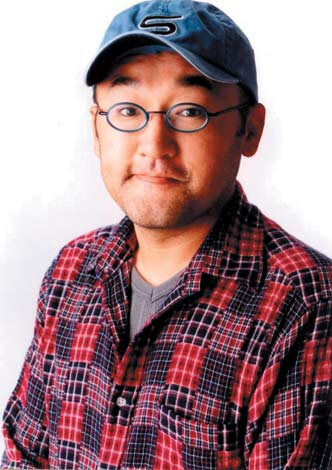
Fumihiko Tachiki
Vodka (voice)
Aya Hisakawa
Chinami Sawaguchi (voice)
Wataru Takagi
Genta Kojima / Wataru Tagagi (voice)
Kazuhiko Inoue
Inspector Shiratori (voice)
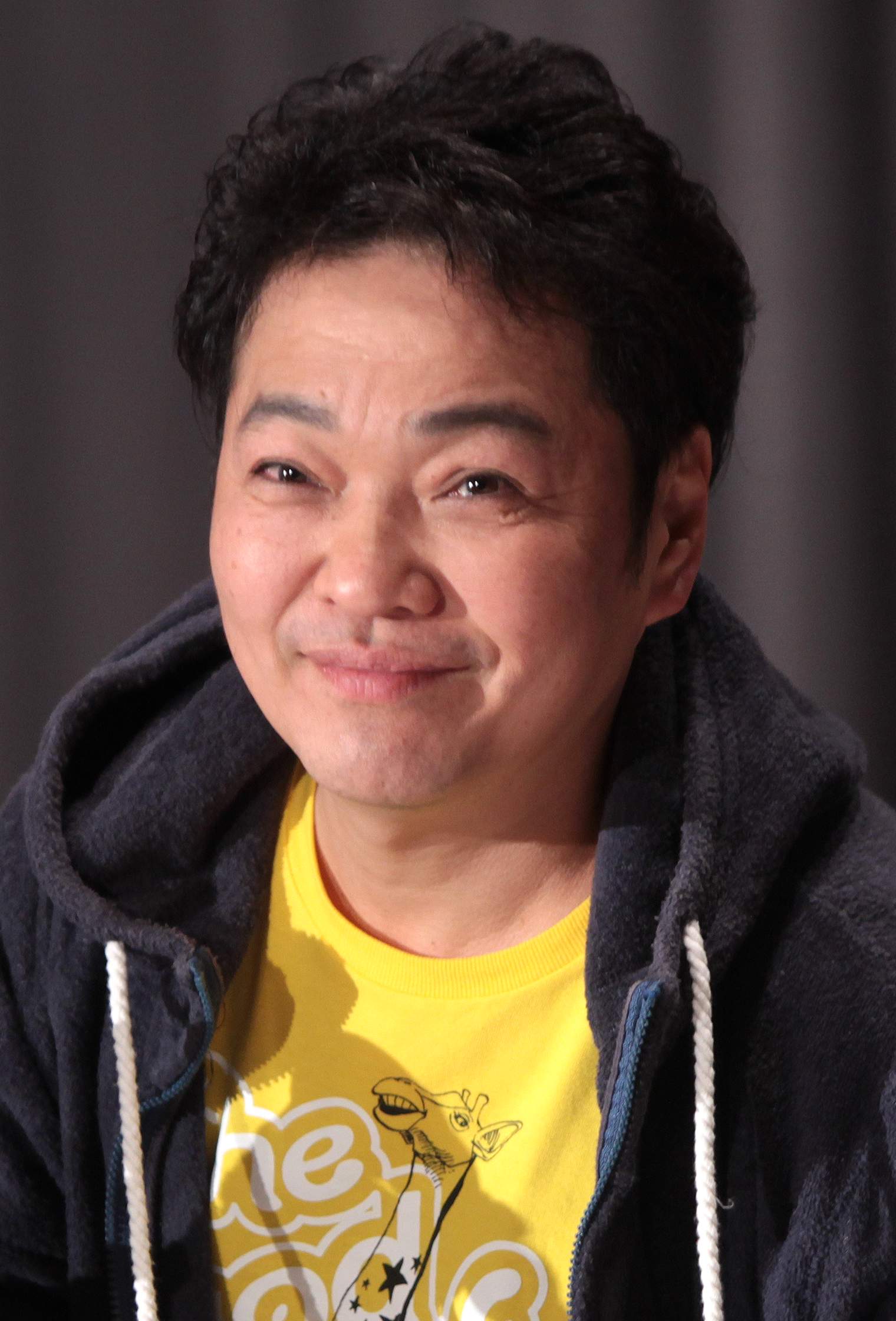
Kappei Yamaguchi
Shinichi Kudo (voice)
Isshin Chiba
Detective Chiba (voice)
Jurota Kosugi
Hidehiko Kazama (voice)
Naoko Matsui
Sonoko Suzuki (voice)
Yukiko Iwai
Ayumi Yoshida (voice)
Wakana Yamazaki
Ran Mouri (voice)

Ikue Otani
Mitsuhiko Tsuburaya (voice)
Kenichi Ogata
Hiroshi Agasa (voice)
Ichiro Nagai
Housui Kisaragi (voice)
Chafurin
Juzo Megure (voice)
Toshiko Fujita
Mio Tokiwa (voice)
Akira Kamiya
Kogoro Mouri (voice)
Yukitoshi Hori
Gin (voice)
Takeshi Watabe
Iwamatsu Ooki (voice)
Koichi Hashimoto
Yoshiaki Hara (voice)
External Links and Streaming Options
Discover where to watch Case Closed: Countdown to Heaven online, including streaming platforms, rental options, and official sources. Compare reviews, ratings, and in-depth movie information across sites like IMDb, TMDb, Wikipedia or Letterboxd.




Take the Ultimate Case Closed: Countdown to Heaven Movie Quiz
Challenge your knowledge of Case Closed: Countdown to Heaven with this fun and interactive movie quiz. Test yourself on key plot points, iconic characters, hidden details, and memorable moments to see how well you really know the film.
Case Closed: Countdown to Heaven Quiz: Test your knowledge of the 2001 film Case Closed: Countdown to Heaven with these 10 varied difficulty questions.
Who is the young detective that leads the Junior Detective League in the film?
Full Plot Summary and Ending Explained for Case Closed: Countdown to Heaven
Read the complete plot summary of Case Closed: Countdown to Heaven, including all major events, twists, and the full ending explained in detail. Explore key characters, themes, hidden meanings, and everything you need to understand the story from beginning to end.
Conan Edogawa [Minami Takayama], Ai Haibara [Megumi Hayashibara], and Dr. Agasa [Kenichi Ogata] set out on a weekend camping trip that feels like a simple misadventure for a trio of young detectives and their eccentric mentor. The air is fresh, the sky is wide, and the group moves with the easy rhythm of friends who have solved tougher cases than any ordinary hiking trail could offer. Yet even in this peaceful retreat, the undercurrent of danger is never far away, and the kids’ sharp eyes pick up clues in every rustle of leaves and every distant hum of city life. As they hike toward a distant overlook, they glimpse Mount Fuji rising like a quiet sentinel and, in the distance, the gleaming outline of the newly constructed Twin Towers, Japan’s tallest structures, standing as a modern testament to ambition and dreams. The sight, both awe-inspiring and a little intimidating, plants a seed in Conan’s mind about how people build monuments and sometimes unwittingly invite trouble to dwell nearby.
Meanwhile, in a parallel thread of danger, two infamous infiltrators from a shadow organization—Gin [Yukitoshi Hori] and Vodka [Fumihiko Tachiki]—sneak into Akemi Miyano’s [Sakiko Tamagawa] apartment to listen to the messages on her answering machine. Their objective is chilling and precise: Shiho Miyano is expected to attend a private viewing at the tower complex in West Tama City, and the plan is to seize that moment for a deadly confrontation. The scene in Akemi’s place is tense and clinical, a stark contrast to the carefree energy of the Junior Detective League in the woods. The intruders hear of a plan that ties Shiho to a specific, high-stakes location, and they resolve to strike there, turning a weekend of sightseeing into a ticking clock.
As the group makes their way toward the towers, Conan’s instincts prick at small, telling details—the way a security guard’s gaze lingers, the whisper of a conversation that seems almost staged, the way a seemingly ordinary car drawls up and then fades away without a trace. The Twin Towers loom closer on their path, described in whispers as “the closest thing to heaven,” a phrase that resonates with Conan’s habit of reading meaning into architecture and light. The building’s design becomes a character in its own right, a labyrinth of glass and steel that promises spectacle but also invites misdirection. The kids’ walk takes an unexpected turn when they overhear staff chatter about a private VIP elevator and a Porsche 356A that drew attention with its distinct shine—details that would later prove to be important breadcrumbs rather than mere background color. Conan notes these lines with a careful, almost clinical precision, a habit that has saved them more than once.
The next day brings a series of troubling discoveries that pull the Junior Detective League deeper into a case that looks less like a schoolyard mystery and more like a conspiracy. A broken sake cup is found at a crime scene, and the painting that Augustine Odell, a person connected with the tower’s grand opening, had is suddenly missing. The police come to two competing hypotheses about the sake cup: either it fell in the heat of a struggle, or it was left deliberately as a message. The League, ever curious and fearless, conducts its own inquiries, interrogating key figures who stand in the shadow of the project’s rapid construction. Theodore—someone who landed a job thanks to Odell—and Housui Kisaragi, who was painting Mt. Fuji but had his vision blocked by his own shaded lenses, become focal points. The kids’ questioning becomes more pointed as they push past superficial explanations, and the investigation begins to fracture the comfortable boundaries of their small group. In the middle of all this, Haibara remains a steady voice, her grief over Shiho Miyano’s fate softened by the memory of her sister’s voice. The tension of the moment lands with particular weight on her, and Conan’s awareness of her pain adds a human layer to their sleuthing.
As the investigation unfolds, the grand opening party for the towers draws near, and the stakes rise dramatically. Madison Monroe hosts a high-profile event that feels almost ceremonial, an event designed to celebrate architecture and ambition while quietly masking the darker currents swirling beneath the surface. The atmosphere is electric, with production hands and backstage workers moving with practiced precision as actors of a different kind—those who move in the shadows—watch carefully from the wings. On stage, a presentation involving Kisaragi’s art is planned, with handling by Theodore and Cherilyn Chrisabel behind the scenes. When the curtain rises, the audience is stunned to find Madison dead, her body suspended in a grim tableau that mirrors the missing painting and the unbroken sake cup left as a cryptic clue, a symbolic Mount Fuji obscured by the towers. The room freezes in a hush, and the killer’s message lingers in the air as the room resolves into a chorus of suspicion and fear. Conan, guided by a quiet hint from Haibara, begins to piece the puzzle together while the others wrestle with the shock of the murder and the logistics of an event that could turn into a catastrophe at any moment.
Conan’s deductions point toward a killer who has used a combination of artful misdirection and intimate knowledge of the tower’s structure to manipulate events. The detectives’ investigation grows more perilous as the Black Organization tightens its grip on the scene. Gin and Vodka linger in the periphery, their attention shifting away from Shiho Miyano as they realize that her presence at the towers is not guaranteed after all, and that the search may be drifting toward a dead end. Meanwhile, the twins of danger—the bombs planted by the Organization—begin to detonate, and the Twin Towers erupt into a blaze of smoke and fear. Serena, who is brought into the unfolding drama through proximity to Conan, finds herself in a perilous moment in a glass elevator, and Conan has to improvise a quick, clever distraction to prevent a fatal misstep. The image of Shiho Miyano, blurred by a disguise of perm or hair, becomes a hinge on which Conan’s plan pivots, and the danger is not merely in the flames but in the careful, predatory silence of the killers who watch from the wings.
Conan’s bold, almost cinematic intervention comes into sharp focus as he moves to confront the killer directly. The suspect revealed on the stage is Housui Kisaragi, the painter who has attempted to obscure Mount Fuji behind the silhouette of the Twin Towers. Kisaragi’s motive is revealed in a string of confessions and the revelation of a pearl necklace—a relic of Madison Monroe’s—hidden in his cane, along with a second, identical necklace rigged with fishing line and used to stage the final tableau. The broken and unbroken sake cups, the painting, and the mountain’s silhouette combine into a signature that Conan deciphers with Haibara’s quiet, analytic insight. In a dramatic, careful confrontation, Conan uses a tranquilizer to end Kisaragi’s escalating plan, preventing a suicide by the killer himself and breaking the immediate threat to the group. The moment is tense but precise, a classic example of Conan’s blend of cleverness, timing, and a touch of risk.
With the immediate danger contained, the group makes a narrow escape as the towers’ bridges are torn away and lower floors burn. Conan guides the kids through a perilous exit, leveraging his quick thinking and a burst of improvised speed to propel them to safety in a Ford Mustang convertible—an explosive push that feels almost cinematic in its scale and ambition. The blaze continues to devour the upper levels as fire crews, security teams, and the recovering crowd scramble to keep pace with the unfolding disaster. On the ground, Gin and Vodka reassess their priorities, and the reality they face becomes clear: Shiho Miyano was not at the towers, and their hunt shifts away from her toward other, more pressing targets.
In the end, the case resolves through a blend of sharp observation, careful evidence gathering, and the stubborn bravery of a detective team that refuses to bow to fear. The Twin Towers’ shadow recedes momentarily as the truth about the night emerges: Kisaragi’s motive is tied to a long frustration with the tower project and what it represents to him, a symbol he felt blocked his beloved Mount Fuji. The story closes with a sense of relief and a renewed commitment to safety and justice—an assurance that the Junior Detective League, aided by their mentors and friends, will continue to chase the truth even when the path is treacherous and the night is long. In this vein, the characters’ arcs—Conan’s quick wit and leadership, Ai’s resilience in the face of loss, and the wide circle of allies who rally around them—feel tested, but unbroken, as they move forward into whatever comes next. The world of the Twin Towers, Mount Fuji, and the hidden threats lurking in the shadows remains a place where courage and curiosity must coexist, and where every clue, no matter how small, can tip the balance toward safety and justice.

Coming soon on iOS and Android
The Plot Explained Mobile App
From blockbusters to hidden gems — dive into movie stories anytime, anywhere. Save your favorites, discover plots faster, and never miss a twist again.
Sign up to be the first to know when we launch. Your email stays private — always.
Explore the mobile appDiscover Film Music Concerts Near You – Live Orchestras Performing Iconic Movie Soundtracks
Immerse yourself in the magic of cinema with live orchestral performances of your favorite film scores. From sweeping Hollywood blockbusters and animated classics to epic fantasy soundtracks, our curated listings connect you to upcoming film music events worldwide.
Explore concert film screenings paired with full orchestra concerts, read detailed event information, and secure your tickets for unforgettable evenings celebrating legendary composers like John Williams, Hans Zimmer, and more.


Case Closed: Countdown to Heaven Themes and Keywords
Discover the central themes, ideas, and keywords that define the movie’s story, tone, and message. Analyze the film’s deeper meanings, genre influences, and recurring concepts.
Case Closed: Countdown to Heaven Other Names and Titles
Explore the various alternative titles, translations, and other names used for Case Closed: Countdown to Heaven across different regions and languages. Understand how the film is marketed and recognized worldwide.
Similar Movies To Case Closed: Countdown to Heaven You Should Know About
Browse a curated list of movies similar in genre, tone, characters, or story structure. Discover new titles like the one you're watching, perfect for fans of related plots, vibes, or cinematic styles.


Quick Links: Summary, Cast, Ratings, More

What's After the Movie?
Not sure whether to stay after the credits? Find out!
Check out our other apps:

SAT Sphere
Build confidence for the Digital SAT.

Mori Atlas
Discover wild places worth protecting.

Luntero
Search smarter for a home in Amsterdam.

Plot Explained
Unravel movie endings and hidden clues.

Pokechamp
Dive into Pokémon data and battle logic.

Driving Theory
Get ready for your European theory test.

Movie Dust
Plan your next cinema trip with ease.

Musemap
Find art and culture as you travel.

Selkobase
Compare credentials before committing.

Local Manual
Turn an unfamiliar country into practical next steps.

Lernavi
Compare school systems before your next move.

GymRoam
Find a workout stop wherever your plans take you.
Explore Our Movie Platform
New Movie Releases (2026)
Famous Movie Actors
Top Film Production Studios
Movie Plot Summaries & Endings
Major Movie Awards & Winners
Best Concert Films & Music Documentaries
Movie Collections and Curated Lists
© 2026 What's After the Movie. All rights reserved.
Privacy Policy