Are You There? 2025

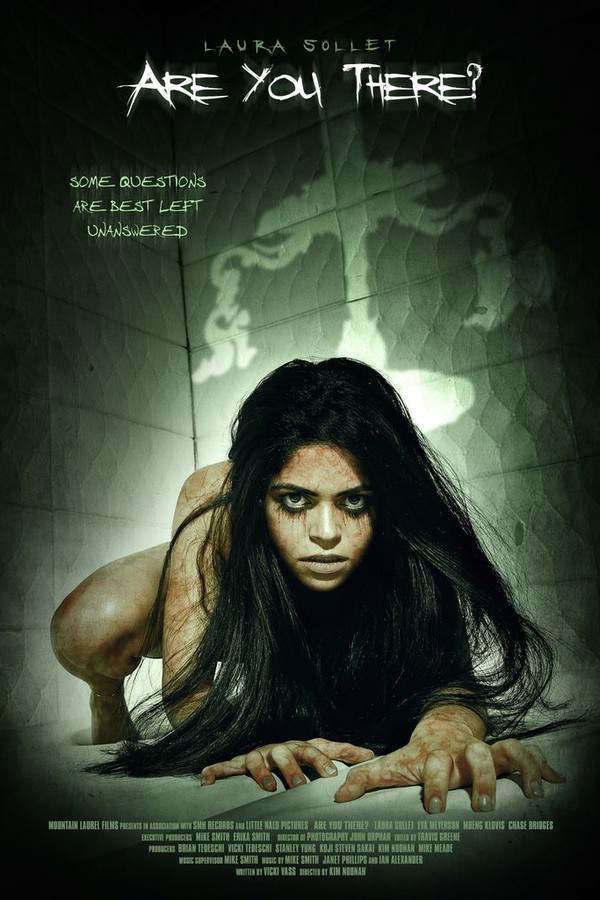
Paranormal psychology student Rosa Gonzalez inadvertently triggers a dangerous game when she performs a summoning ritual. As a candle she lights burns down, she finds herself in a life-or-death contest of twenty questions. She soon realizes that some inquiries carry dire consequences and that her survival depends on resisting the urge to learn more.


Does Are You There? have end credit scenes?
No!
Are You There? does not have end credit scenes. You can leave when the credits roll.
Where to Watch Are You There?
See current US streaming, rental, and purchase options for Are You There? (2025) via JustWatch.

Fandango at Home Free
HD
Plex
HD
Plex Channel
HD
The Roku Channel
HD
Amazon Video
SD
Apple TV Store
HD Fandango At Home
SD
Google Play Movies
SD
YouTube
SD Streaming availability powered by 
Meet the Full Cast and Actors of Are You There?
Explore the complete cast of Are You There?, including both lead and supporting actors. Learn who plays each character, discover their past roles and achievements, and find out what makes this ensemble cast stand out in the world of film and television.

John Oliver
Grandpa
Madison Geiger
Maria
Laura Sollet
Rosa
Eva Meyerson
Natalie
Mbeng Klovis
Dr. Kirby
Chase Bridges
Travis
Kay Galvin
Driver
Maria Gajdosik
College Student, Grandma
Nicholas Haren
College Student
Norah Daniel
College student
Sarah Elisa Delanuez
College student
Colin Glascott
College student
Alyssa Hildenbrand
College student
Ashlyn Horton
College student
Isabelle Western
College student
External Links and Streaming Options
Discover where to watch Are You There? online, including streaming platforms, rental options, and official sources. Compare reviews, ratings, and in-depth movie information across sites like IMDb, TMDb, Wikipedia or Rotten Tomatoes.









Ratings and Reviews for Are You There?
See how Are You There? is rated across major platforms like IMDb, Metacritic, and TMDb. Compare audience scores and critic reviews to understand where Are You There? stands among top-rated movies in its genre.

The Movie Echo Score
Overall, Are You There? delivers a thoughtful supernatural narrative anchored by empathetic performances and striking visuals. The plot weaves human desperation with curiosity about the afterlife, sustaining engagement through its tight 90-minute runtime. While the budgetary constraints occasionally show, effective direction and pacing maintain momentum without overstaying its welcome. Character portrayals generate genuine emotional investment, supported by cohesive visual choices. The combined strengths of story, performance, and style result in a satisfying viewing experience.
The Movie Echo Score Breakdown for Are You There?

Art & Craft
In terms of art and craft, Are You There? exhibits strong visual storytelling through its cinematography and color grading. The film leverages a restrained aesthetic to reinforce its moody atmosphere, and the direction keeps scenes focused and purposeful. Although the production design reflects modest resources, the editing’s measured pacing and coherent shot composition uphold an engaging visual identity. The result is a polished albeit resourceful presentation.

Character & Emotion
When it comes to character and emotion, Are You There? excels in eliciting empathy for its protagonists. Performances are grounded and authentic, with the lead delivering a raw portrayal that fosters genuine concern for her fate. Supporting roles consistently reinforce the film’s emotional stakes, creating believable relationships. The nuanced performances and relatable character arcs underpin the film’s most resonant moments.

Story & Flow
In terms of story and flow, Are You There? presents a concise, psychologically driven narrative. The plot centers on a quest for understanding the afterlife, maintaining coherence across its 90-minute span. Pacing remains efficient, balancing moments of tension with reflective beats, while the psychological dimension adds a layer of originality. Engagement is sustained by clear narrative intent and purposeful scene transitions.

Sensory Experience
In terms of sensory experience, Are You There? benefits from a cohesive visual style and deliberate sound design that heighten suspense. The color grading accentuates the film’s eerie mood, and ambient audio cues support key emotional beats. Although the soundtrack is understated, it complements rather than overwhelms. The combined visual and auditory elements form a unified atmospheric framework.

Rewatch Factor
Regarding rewatch value, Are You There? offers a compact horror tale that rewards multiple viewings through its thematic depth. Its exploration of desperation and curiosity invites reflection on successive watches. The tight runtime and focused narrative reduce filler, encouraging repeat engagement without fatigue. While not densely layered, the film’s human-centric moments and visual flair lend it a modest lasting appeal.

7.3 /10
IMDb Rating

40
%
User Score

/5
Take the Ultimate Are You There? Movie Quiz
Challenge your knowledge of Are You There? with this fun and interactive movie quiz. Test yourself on key plot points, iconic characters, hidden details, and memorable moments to see how well you really know the film.
Margaret's Journey to Self-Discovery: Test your knowledge on the emotional and transformative journey of eleven-year-old Margaret Simon as she navigates friendship, family, and faith.
What year does Margaret's story begin?
Full Plot Summary and Ending Explained for Are You There?
Read the complete plot summary of Are You There?, including all major events, twists, and the full ending explained in detail. Explore key characters, themes, hidden meanings, and everything you need to understand the story from beginning to end.
In the year 1970, Margaret Simon, an eleven-year-old girl, faces a tough transition as her family relocates from the vibrant streets of New York City to a quiet suburb in New Jersey due to her father, Herb, receiving a promotion. This news leaves Margaret feeling upset, as she dreads leaving behind her friends and, most importantly, her cherished paternal grandmother, Sylvia. In her quest for companionship and understanding, Margaret begins to converse with God, sharing her worries and aspirations.
Upon her arrival in New Jersey, Margaret quickly forms a friendship with her neighbor, Nancy Wheeler. Nancy introduces her to a group of girls, including Gretchen Potter and Janie Loomis. At school, Mr. Benedict, their teacher, sets a semester-long research project in motion. During this assignment, Margaret confides in Mr. Benedict about her complex feelings regarding religion. With a Christian mother and a Jewish father, she explains how her family has left the decision of her religious path entirely up to her, which only adds to her inner turmoil.
As Margaret delves deeper into her identity, she learns about her family dynamics, particularly the estrangement between her mother, Barbara, and her devoutly Christian parents, Paul and Mary. This revelation unfolds as she visits New York City with her grandmother, where she takes the step of asking Sylvia to accompany her to temple, an experience that Sylvia happily embraces. Meanwhile, Barbara becomes increasingly involved with the PTA, navigating through her parental duties, which sadly takes her away from her passion for art.
Alongside her friends, Margaret anticipates the strange yet exciting milestones of puberty. From wearing a bra to experiencing first kisses, they navigate this transformative stage together. One memorable moment occurs at a birthday party, where she shares her first kiss with Philip Leroy, a boy who piques her interest during a game of spin the bottle. The excitement grows again when the class views a film about menstruation, propelling Margaret and her friends into a frenzy over the onset of their periods. As her friends begin to experience these milestones ahead of her, including Gretchen and Nancy, Margaret’s impatience leads her and Janie to purchase sanitary products at a local pharmacy for when her time finally arrives.
A pivotal moment occurs during a trip to New York City with Nancy, where Margaret uncovers Nancy’s deception about her own menstrual experience. Later, in school, Margaret partners with Laura Danker, a girl ostracized by her classmates for being taller and seemingly more mature. However, during their time in the library, misunderstandings arise when Margaret unwittingly brings up rumors about Laura, leading to a confrontation that leaves both girls feeling unsettled.
As spring break approaches, Margaret dreams of visiting Sylvia in Florida. Yet this plan is derailed when Paul and Mary reach out, expressing a desire to meet Margaret for the first time, leading to an unexpected visit that stirs tension within the family. The situation escalates during an awkward dinner, where Paul and Mary suggest that Margaret might benefit from Sunday school, igniting a fierce rebuttal from Sylvia, who insists that Margaret has already chosen Judaism by attending temple. The resulting argument forces Margaret to confront her feelings very directly, as she vehemently claims indifference toward religion and doubts God’s existence.
Returning to school, Margaret submits her research paper, reflecting her frustrations with religion, and takes steps to mend her relationships with her parents and Sylvia. As the school year concludes, she thanks Mr. Benedict for his supportive guidance. In an encouraging twist, she befriends Laura, inviting her to join in dances, stepping beyond the initial friction between them. Barbara, shifting her priorities, informs Nancy’s mother that she will no longer partake in PTA tasks, allowing her more time for her art.
Just before embarking on a summer camp adventure, Margaret shares a sweet exchange with Nancy’s older brother, delivering hope for their budding connection upon her return. Finally, back at home, she discovers that her first period has arrived, rejoicing in this newfound milestone. Following this revelation, Margaret resumes her conversations with God, sealing her journey of self-discovery and acceptance.

Coming soon on iOS and Android
The Plot Explained Mobile App
From blockbusters to hidden gems — dive into movie stories anytime, anywhere. Save your favorites, discover plots faster, and never miss a twist again.
Sign up to be the first to know when we launch. Your email stays private — always.
Explore the mobile appWatch Trailers, Clips & Behind-the-Scenes for Are You There?
Watch official trailers, exclusive clips, cast interviews, and behind-the-scenes footage from Are You There?. Dive deeper into the making of the film, its standout moments, and key production insights.
Cars Featured in Are You There?
Explore all cars featured in Are You There?, including their makes, models, scenes they appear in, and their significance to the plot. A must-read for car enthusiasts and movie buffs alike.
Are You There? Themes and Keywords
Discover the central themes, ideas, and keywords that define the movie’s story, tone, and message. Analyze the film’s deeper meanings, genre influences, and recurring concepts.

Unlock the World of Movies with Our Comprehensive Wiki
Dive into our Movie Wiki for in-depth film encyclopedia entries, including cast biographies, production trivia, plot synopses, behind-the-scenes facts, and thematic analyses. Whether you’re researching iconic directors, exploring genre histories, or discovering hidden easter eggs, our expertly curated movie database has everything you need to fuel your cinematic passion.

Similar Movies To Are You There? You Should Know About
Browse a curated list of movies similar in genre, tone, characters, or story structure. Discover new titles like the one you're watching, perfect for fans of related plots, vibes, or cinematic styles.





Quick Links: Summary, Cast, Ratings, More

What's After the Movie?
Not sure whether to stay after the credits? Find out!
Check out our other apps:

SAT Sphere
Build confidence for the Digital SAT.

Mori Atlas
Discover wild places worth protecting.

Luntero
Search smarter for a home in Amsterdam.

Plot Explained
Unravel movie endings and hidden clues.

Pokechamp
Dive into Pokémon data and battle logic.

Driving Theory
Get ready for your European theory test.

Movie Dust
Plan your next cinema trip with ease.

Musemap
Find art and culture as you travel.

Selkobase
Compare credentials before committing.

Local Manual
Turn an unfamiliar country into practical next steps.

Lernavi
Compare school systems before your next move.

GymRoam
Find a workout stop wherever your plans take you.
Explore Our Movie Platform
New Movie Releases (2026)
Famous Movie Actors
Top Film Production Studios
Movie Plot Summaries & Endings
Major Movie Awards & Winners
Best Concert Films & Music Documentaries
Movie Collections and Curated Lists
© 2026 What's After the Movie. All rights reserved.
Privacy Policy