Ardh Satya 1983


A newly appointed police rookie deals with corruption, romance, and brutality.


Does Ardh Satya have end credit scenes?
No!
Ardh Satya does not have end credit scenes. You can leave when the credits roll.
Meet the Full Cast and Actors of Ardh Satya
Explore the complete cast of Ardh Satya, including both lead and supporting actors. Learn who plays each character, discover their past roles and achievements, and find out what makes this ensemble cast stand out in the world of film and television.
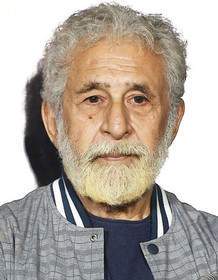
Naseeruddin Shah
Mike Lobo
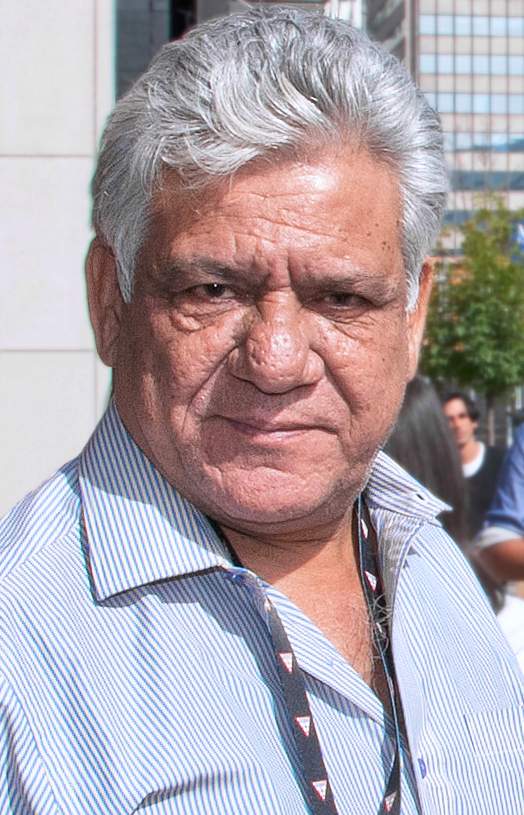
Om Puri
Sub-inspector Anant Velankar

Ila Arun
Neha Vajpayee
Satish Shah
K.K. Raina
Vijay Kashyap
Union Leader
Salim
Sadashiv Amrapurkar
Rama Shetty
Achyut Potdar
Inspector Patil
Ravi
Amrish Puri
Faujdar Velankar
Suresh Bhagwat
Complainant
Madan Jain
Shafi Inamdar
Inspector Hyder Ali
Smita Patil
Jyotsna Gokhale
Adil Rana
Rafique Mukadam
Arun Kakde
Prabhakar Patankar
Shanta Gokhale
Madhuri Purandare
Leela Jariwala
Surendra Roy
Sharad Smart
Uttam Patil
Deepak Halyalkar
Raju Parsekar
Bharat Parekh
Laxmi Narayan
Laxmi Narsaiya
Jairaj
Mohammed Salim
Dilip Satam
Anoop Bindal
Mangesh
Khwaja Moinuddin
Namdeo Ghodke
S. Bhagat
Prakash Kundalik
Vishwanath Chavan
Yeshwant Bhoir
Ramesh Bhoir
Deepak Pingle
Bhagwan Patil
Prabhakar Bakre
Narayan Mhatre
Suresh Honekari
Vishwas Jagdale
Surendra Raghwani
Vasant Dev
Anant Bhave
Neela Bhattacharjee
Ratilal Shah
Akash Kaurana
Neetu
External Links and Streaming Options
Discover where to watch Ardh Satya online, including streaming platforms, rental options, and official sources. Compare reviews, ratings, and in-depth movie information across sites like IMDb, TMDb, Wikipedia or Letterboxd.




Take the Ultimate Ardh Satya Movie Quiz
Challenge your knowledge of Ardh Satya with this fun and interactive movie quiz. Test yourself on key plot points, iconic characters, hidden details, and memorable moments to see how well you really know the film.
Ardh Satya Quiz: Test your knowledge of the 1983 film Ardh Satya.
Which actor portrays Sub‑Inspector Anant Welankar?
Full Plot Summary and Ending Explained for Ardh Satya
Read the complete plot summary of Ardh Satya, including all major events, twists, and the full ending explained in detail. Explore key characters, themes, hidden meanings, and everything you need to understand the story from beginning to end.
Anant Welankar, Om Puri, a diligent sub-inspector with the Bombay police, steps into a world where idealism meets a hard, everyday reality. At a party, he crosses paths with Jyotsna Gokhale, Smita Patil, a lecturer in literature who works at a local college, and what begins as a spirited exchange of ideas soon grows into a warm, affectionate connection. Their budding relationship offers Anant a touchstone of normalcy in a life spent chasing elusive justice, and Jyotsna’s intellect and calm grounding provide him with a different lens through which to view the forces he battles on the streets.
The film builds its tension around a stark truth: the police force sits amid a murky nexus of the local mafia, corrupt politicians, and the organized muscle that supports election campaigns. Anant arrives with a clear sense of duty and a genuine belief that honest work can make a dent in this system, but the state of affairs soon pinches the scope of his authority. He finds himself operating in the lower ranks where his authority is constrained, and where the corrupt machinery enjoys a quiet, almost invisible control over outcomes. The world he enters is not merely hostile; it is designed to shield those who traffic in crime and political favors, leaving honest officers like Anant with little room to maneuver.
When Anant arrests three petty thugs, the weight of the case shifts quickly. The boss of those men, Rama Shetty, a formidable don in the local underworld, begins to exert pressure. Rama Shetty is unfazed by the arrest and attempts to bend the situation to his advantage, offering incentives or threats to get his people out of trouble. Anant refuses to be swayed, standing his ground even as Rama Shetty’s influence begins to loom over him. The Don’s watchful eye lingers, a quiet, menacing reminder that power can bend rules in ways that leave a man morally adrift.
Soon after, a meek resident from a nearby slum lodges a complaint about thugs who harass his wife. Anant tracks down the culprits, locks them up, and administers a severe beating in response to the harassment. The incident triggers a political storm: the local MLA demands Anant’s suspension, framing the matter as a disruption to electoral order rather than a matter of justice. The clash reveals how quickly the line between policing and politics blurs, and how the system tends to shield those who wield political power.
Inspector Haider Ali, Anant’s superior, explains the grim order of the day: the ruffians the MLA employs as muscle for rallies and campaigns can be moved out of trouble by higher authorities only so far. Anant’s conscience remains intact, but the reality is bleak. Even with the responsibility of upholding justice, the prospect of a tribunal or suspension looms large, and the stigma of a black mark on his record could close doors to further opportunities within the force. The conversation leaves Anant both defiant and shaken, his faith in the system fluttering under the weight of repeated disappointments.
Desai, a mediator with links to New Delhi, is brought into the picture as a way to quietly mute the controversy. Desai exerts leverage from the national centers of power, illustrating the unsettling truth that issues can be “settled” from above, bypassing the local struggle for accountability. The encounter unsettles Anant further, forcing him to reckon with the idea that righteous methods may not be enough to secure real justice when higher-ups can quietly override them. The moral tremor pushes him toward a crisis of certainty: does he continue to fight within the law, or does he accept a compromised path to effect change?
As Anant reflects on his childhood, the film deepens the character’s inner conflict. He remembers his father, who retired as a Faujdar (a local constable) and who was a hard, violent man who did not hesitate to slap or beat his wife. Those memories illuminate Anant’s own uneasy birth into policing: a rigid, perhaps inherited code, tempered by circumstances that forced him to join the police rather than pursue other avenues for justice. This past shapes his sense of duty and his reluctance to compromise, even as the present demands a pragmatic—if morally gray—strategy.
The plot intensifies when Anant encounters one more brutal consequence of the criminal underworld. A goon, badly beaten and left to die, enters the hospital under Anant’s care. Anant takes the man’s statement, naming Rama Shetty and others who orchestrated the assault. He storms Rama Shetty’s rooms to arrest him, only to be met with a simple, chilling response: Rama Shetty, with a calm and chilling politeness, calls a high-ranking cop who immediately orders Anant to back off. Anant’s moral certainty collides with a system that can be coaxed, redirected, or suppressed, leaving him humiliated and more determined to press on, even as his personal life unravels.
Haider Ali’s candid explanation of political power and the electoral calculus continues to weigh on Anant. Rama Shetty’s ambition to run for city council during the upcoming municipal elections becomes a central driving force: a man who can’t afford a let-up in the public eye won’t tolerate anything that could derail his ascent. Anant’s sense of justice hardens, even as his professional standing deteriorates. He begins to drink more heavily, and Jyotsna’s trust in him strains under the mounting pressure of duty, secrecy, and the fear that his strength is slipping away.
A turning point arrives when Anant fails to secure credit for a dangerous arrest of a bandit in the hills, a blow that deepens his sense of injustice and fuels his frustration. The strain of the job begins to fracture his relationship with Jyotsna, who sees the toll the case is taking on him. The psychological weight of the case, the mounting suspensions, and a growing sense that the system has turned against him drive Anant toward a night of heavy drinking, where his emotions spill over into brutal action.
A dramatic night unfolds when a petty thief, accused of stealing a small radio, is brought into custody. Anant, intoxicated and angry, delivers a brutal beating to the thief and accuses him of “stealing the legitimate Rights of Others.” The savage act proves to be the final blow: the thief dies, and Anant is suspended and charged with excessive force. He tries to invoke Desai again, but Haider Ali withdraws, signaling that the heated atmosphere has become too dangerous for anyone to escalate the situation further. The plot pivots toward a grim reckoning, with Rama Shetty’s political power becoming a possible lifeline for Anant.
In a final, dangerous encounter, Anant ventures to Rama Shetty’s betting den to seek help, and Rama Shetty greets him with a cordial, almost intimate familiarity. Rama Shetty offers a deal: assist him in exchange for protection and advancement. Infuriated and resolute, Anant accepts nothing of the kind and, in a moment of searing ferocity, strangles Rama Shetty there and then. The act marks a brutal end to the Don’s untouchable sovereignty and signals a dangerous break from Anant’s earlier restraint. The film closes with Anant turning himself in, an act that frames the entire arc as a testament to the cost of integrity in a world where power and corruption often override the law.

Coming soon on iOS and Android
The Plot Explained Mobile App
From blockbusters to hidden gems — dive into movie stories anytime, anywhere. Save your favorites, discover plots faster, and never miss a twist again.
Sign up to be the first to know when we launch. Your email stays private — always.
Explore the mobile appDiscover Film Music Concerts Near You – Live Orchestras Performing Iconic Movie Soundtracks
Immerse yourself in the magic of cinema with live orchestral performances of your favorite film scores. From sweeping Hollywood blockbusters and animated classics to epic fantasy soundtracks, our curated listings connect you to upcoming film music events worldwide.
Explore concert film screenings paired with full orchestra concerts, read detailed event information, and secure your tickets for unforgettable evenings celebrating legendary composers like John Williams, Hans Zimmer, and more.


Ardh Satya Themes and Keywords
Discover the central themes, ideas, and keywords that define the movie’s story, tone, and message. Analyze the film’s deeper meanings, genre influences, and recurring concepts.
Ardh Satya Other Names and Titles
Explore the various alternative titles, translations, and other names used for Ardh Satya across different regions and languages. Understand how the film is marketed and recognized worldwide.
Similar Movies To Ardh Satya You Should Know About
Browse a curated list of movies similar in genre, tone, characters, or story structure. Discover new titles like the one you're watching, perfect for fans of related plots, vibes, or cinematic styles.






Quick Links: Summary, Cast, Ratings, More

What's After the Movie?
Not sure whether to stay after the credits? Find out!
Check out our other apps:

SAT Sphere
Build confidence for the Digital SAT.

Mori Atlas
Discover wild places worth protecting.

Luntero
Search smarter for a home in Amsterdam.

Plot Explained
Unravel movie endings and hidden clues.

Pokechamp
Dive into Pokémon data and battle logic.

Driving Theory
Get ready for your European theory test.

Movie Dust
Plan your next cinema trip with ease.

Musemap
Find art and culture as you travel.

Selkobase
Compare credentials before committing.

Local Manual
Turn an unfamiliar country into practical next steps.

Lernavi
Compare school systems before your next move.

GymRoam
Find a workout stop wherever your plans take you.
Explore Our Movie Platform
New Movie Releases (2026)
Famous Movie Actors
Top Film Production Studios
Movie Plot Summaries & Endings
Major Movie Awards & Winners
Best Concert Films & Music Documentaries
Movie Collections and Curated Lists
© 2026 What's After the Movie. All rights reserved.
Privacy Policy