A Beautiful Day in the Neighborhood 2019


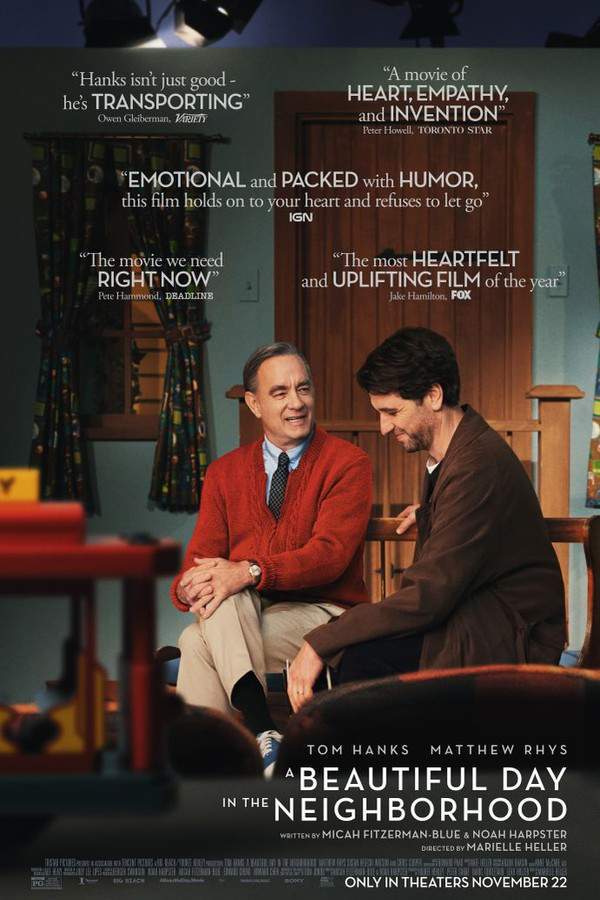
A journalist struggling with personal challenges is assigned to profile Fred Rogers, the beloved host of a children’s television program. Initially skeptical, the journalist finds himself unexpectedly touched by Rogers’ gentle nature and unwavering optimism. Through their developing friendship, the journalist confronts his own cynicism and rediscovers the importance of compassion, empathy, and simple human decency.


Does A Beautiful Day in the Neighborhood have end credit scenes?
No!
A Beautiful Day in the Neighborhood does not have end credit scenes. You can leave when the credits roll.
Where to Watch A Beautiful Day in the Neighborhood
See current US streaming, rental, and purchase options for A Beautiful Day in the Neighborhood (2019) via JustWatch.

Netflix
HD
Netflix Standard with Ads
HD
Sony Pictures Core Amazon Channel
4K
Amazon Video
4K
Apple TV Store
4K
Fandango At Home
4K
Google Play Movies
SD
Plex
HD
Spectrum On Demand
HD
YouTube
SD Streaming availability powered by 
Meet the Full Cast and Actors of A Beautiful Day in the Neighborhood
Explore the complete cast of A Beautiful Day in the Neighborhood, including both lead and supporting actors. Learn who plays each character, discover their past roles and achievements, and find out what makes this ensemble cast stand out in the world of film and television.
Tom Hanks
Fred Rogers

Chris Cooper
Jerry Vogel

Maryann Plunkett
Joanne Rogers

Enrico Colantoni
Bill Isler
Matthew Rhys
Lloyd Vogel

Kevin L. Johnson

Maddie Corman
Lady Aberlin

Crystal Lonneberg

Tammy Blanchard
Lorraine

Christine Lahti
Ellen
Sakina Jaffrey
Wendy Makkena
Dorothy
Carmen Cusack
Margy
Noah Harpster
Todd
Rebecca Watson
Susan Kelechi Watson
Andrea Vogel
External Links and Streaming Options
Discover where to watch A Beautiful Day in the Neighborhood online, including streaming platforms, rental options, and official sources. Compare reviews, ratings, and in-depth movie information across sites like IMDb, TMDb, Wikipedia or Rotten Tomatoes.












Ratings and Reviews for A Beautiful Day in the Neighborhood
See how A Beautiful Day in the Neighborhood is rated across major platforms like IMDb, Metacritic, and TMDb. Compare audience scores and critic reviews to understand where A Beautiful Day in the Neighborhood stands among top-rated movies in its genre.

The Movie Echo Score
The film excels in its affectionate direction and heartfelt performance, though some viewers note occasional predictability and uneven focus. The balanced pacing and sincere tone create an inviting atmosphere, while Tom Hanks’s portrayal and the narrative arc foster emotional connection. Though the story’s predictability and occasional lack of depth in character backstory temper the impact, the film’s warmth and craft leave a lasting impression.
The Movie Echo Score Breakdown for A Beautiful Day in the Neighborhood

Art & Craft
In terms of art and craft, the film’s direction and visual design are consistently assured. The deliberate pacing and formal playfulness reflect careful compositional choices, while the transitional sequences evoke an understated cohesion. Cinematography often mirrors the nostalgic tone without feeling contrived. Overall, the creative construction and production values contribute significantly to the film’s polished sensibility.

Character & Emotion
When it comes to character and emotion, the central performance delivers nuanced warmth, anchoring the film in sincerity. Tom Hanks’s portrayal conveys gentle conviction, and the emotional arc of the protagonist fosters genuine empathy. Some secondary figures feel underexplored, limiting deeper resonance at times. Nonetheless, the core interactions sustain a heartfelt connection that resonates beyond the runtime.

Story & Flow
In terms of story and flow, the narrative unfolds with measured pacing and a clear thematic focus on forgiveness. The plot maintains engagement through character-driven vignettes, though moments of predictability and an uneven focus between protagonists can lessen dramatic tension. Original sequences, such as symbolic dream imagery, provide variation. Overall, the storyline offers a steady emotional journey despite occasional narrative familiarity.

Sensory Experience
When evaluating the sensory experience, the understated jazz-inflected score and gentle sound design reinforce the film’s reflective tone. Visual styling alternates between nostalgic framing and modern cinematic continuity, supporting tonal cohesion. Occasional formal flourishes, such as dreamlike puppetry, add textural interest without overwhelming the simplicity. In sum, the audiovisual elements harmonize effectively with the narrative’s contemplative mood.

Rewatch Factor
Regarding rewatch value, the film’s compassionate tone and thematic clarity encourage reflection on forgiveness and personal growth. The consistent emotional warmth and gentle pacing lend themselves to subsequent viewings, though some may find the narrative familiarity and limited depth in secondary arcs reduce repeat appeal. Overall, the film sustains a modest replay value anchored by its core message and affective resonance.

80
Metascore
7.1
User Score


95%
TOMATOMETER

92%
User Score

7.2 /10
IMDb Rating

70
%
User Score

3.6
From 348 fan ratings

4.36/5
From 11 fan ratings
Take the Ultimate A Beautiful Day in the Neighborhood Movie Quiz
Challenge your knowledge of A Beautiful Day in the Neighborhood with this fun and interactive movie quiz. Test yourself on key plot points, iconic characters, hidden details, and memorable moments to see how well you really know the film.
A Beautiful Day in the Neighborhood Quiz: Test your knowledge about the heartwarming film 'A Beautiful Day in the Neighborhood' and its themes of forgiveness and compassion.
What year is the pivotal moment in Mister Rogers' Neighborhood set?
Awards & Nominations for A Beautiful Day in the Neighborhood
Discover all the awards and nominations received by A Beautiful Day in the Neighborhood, from Oscars to film festival honors. Learn how A Beautiful Day in the Neighborhood and its cast and crew have been recognized by critics and the industry alike.
Full Plot Summary and Ending Explained for A Beautiful Day in the Neighborhood
Read the complete plot summary of A Beautiful Day in the Neighborhood, including all major events, twists, and the full ending explained in detail. Explore key characters, themes, hidden meanings, and everything you need to understand the story from beginning to end.
In 1998, during an episode of Mister Rogers’ Neighborhood, Mr. Rogers, portrayed by Tom Hanks, begins by singing “A Beautiful Day in the Neighborhood”. He presents a picture board featuring five doors. Three of these doors open to reveal familiar faces—Lady Aberlin, King Friday, and Mr. McFeely. Upon opening the fourth door, we are introduced to Mr. Rogers’ troubled new friend, Lloyd Vogel, played by Matthew Rhys. With a black eye and a cut near his nose, Lloyd’s presence signals deeper troubles. Mr. Rogers explains that Lloyd is grappling with the concept of forgiveness—struggling to mend the wounds inflicted upon him.
Lloyd Vogel, an award-winning yet cynical Esquire journalist, attends his sister Lorraine’s wedding alongside his wife, Andrea, and their newborn son, Gavin. Lorraine’s husband, Todd, is introduced as well. However, during the reception, a confrontation with his estranged father, Jerry, spirals into chaos. A joke about Lloyd’s late mother, Lila, leads to a violent outburst, resulting in a chaotic brawl that leaves Lloyd injured.
As the story unfolds, we witness Mr. Rogers’ dedication to his young viewers through the simplicity of his show, where he explains complex concepts in accessible ways. The following day, Lloyd’s editor gives him an assignment to interview Fred Rogers for a 400-word article focused on heroes. Lloyd finds himself perplexed by this assignment, given his reputation for writing scathing pieces. His foray into the WQED studio in Pittsburgh reveals Rogers’ genuine nature—someone who listens attentively and is beloved by his crew.
During their interview, Mr. Rogers’ concern for Lloyd’s physical injury opens up deeper discussions concerning Lloyd’s tumultuous relationship with his father, who has sought forgiveness. Mr. Rogers shares his unconventional methods for managing anger, including an insightful moment when he plays the piano. He highlights the importance of emotional education for children, instilling values through his beloved show.
As Lloyd delves deeper into his “investigation,” he becomes increasingly fascinated yet frustrated, leading to additional conversations with Rogers—one notably including the perception of him as a “living saint,” a term Joanne dismisses as unrealistic. Throughout their journeys, including a subway ride where passengers sing Rogers’ songs, Lloyd battles his preconceptions while coming to terms with his own painful past.
A critical moment occurs when Lloyd confronts his father and the painful memories surrounding his mother’s death. Despite the turmoil, a heart attack befalls Jerry, which sends shockwaves through Lloyd’s family. Choosing to return to Pittsburgh rather than stay at the hospital, Lloyd’s emotional struggles culminate in a surreal dream sequence that pushes him to confront childhood trauma and submerged feelings regarding his mother.
In an act of compassion, Mr. Rogers and Joanne invite Lloyd into their home for rest and recovery. A pivotal dinner discussion at a restaurant sees Rogers urging Lloyd to reflect on those who have shaped his life and to consider forgiveness for his father. After reconciling with Andrea and discovering that Jerry is terminally ill, Lloyd finally finds peace within himself.
With reconciliation, Lloyd vows to be a better father to Gavin and pens a heartfelt article, “Can You Say … Hero?”, which resonates with many, including Jerry. Following Rogers’ touching final visit to Jerry, the story concludes with Mr. Rogers filming another episode of his show, closing with his iconic piano performance. This film beautifully captures a journey through forgiveness, love, and understanding amid personal and familial strife.

Coming soon on iOS and Android
The Plot Explained Mobile App
From blockbusters to hidden gems — dive into movie stories anytime, anywhere. Save your favorites, discover plots faster, and never miss a twist again.
Sign up to be the first to know when we launch. Your email stays private — always.
Explore the mobile appWatch Trailers, Clips & Behind-the-Scenes for A Beautiful Day in the Neighborhood
Watch official trailers, exclusive clips, cast interviews, and behind-the-scenes footage from A Beautiful Day in the Neighborhood. Dive deeper into the making of the film, its standout moments, and key production insights.
Cars Featured in A Beautiful Day in the Neighborhood
Explore all cars featured in A Beautiful Day in the Neighborhood, including their makes, models, scenes they appear in, and their significance to the plot. A must-read for car enthusiasts and movie buffs alike.
A Beautiful Day in the Neighborhood Themes and Keywords
Discover the central themes, ideas, and keywords that define the movie’s story, tone, and message. Analyze the film’s deeper meanings, genre influences, and recurring concepts.
A Beautiful Day in the Neighborhood Other Names and Titles
Explore the various alternative titles, translations, and other names used for A Beautiful Day in the Neighborhood across different regions and languages. Understand how the film is marketed and recognized worldwide.
Similar Movies To A Beautiful Day in the Neighborhood You Should Know About
Browse a curated list of movies similar in genre, tone, characters, or story structure. Discover new titles like the one you're watching, perfect for fans of related plots, vibes, or cinematic styles.





Quick Links: Summary, Cast, Ratings, More

What's After the Movie?
Not sure whether to stay after the credits? Find out!
Check out our other apps:

SAT Sphere
Build confidence for the Digital SAT.

Mori Atlas
Discover wild places worth protecting.

Luntero
Search smarter for a home in Amsterdam.

Plot Explained
Unravel movie endings and hidden clues.

Pokechamp
Dive into Pokémon data and battle logic.

Driving Theory
Get ready for your European theory test.

Movie Dust
Plan your next cinema trip with ease.

Musemap
Find art and culture as you travel.

Selkobase
Compare credentials before committing.

Local Manual
Turn an unfamiliar country into practical next steps.

Lernavi
Compare school systems before your next move.

GymRoam
Find a workout stop wherever your plans take you.
Explore Our Movie Platform
New Movie Releases (2026)
Famous Movie Actors
Top Film Production Studios
Movie Plot Summaries & Endings
Major Movie Awards & Winners
Best Concert Films & Music Documentaries
Movie Collections and Curated Lists
© 2026 What's After the Movie. All rights reserved.
Privacy Policy