What's After the Blog?
feature • analysis
Star Trek Holodeck Explained: Technology, Safety Protocols, and Ethics
The holodeck stands as one of Star Trek's most iconic technologies, blending holographic projections with force fields and replicators to create immersive simulations. From its animated series origins through The Next Generation and beyond, this breakdown examines the mechanics, limitations, and ethical complexities of the franchise's virtual reality system.
April 20, 2026
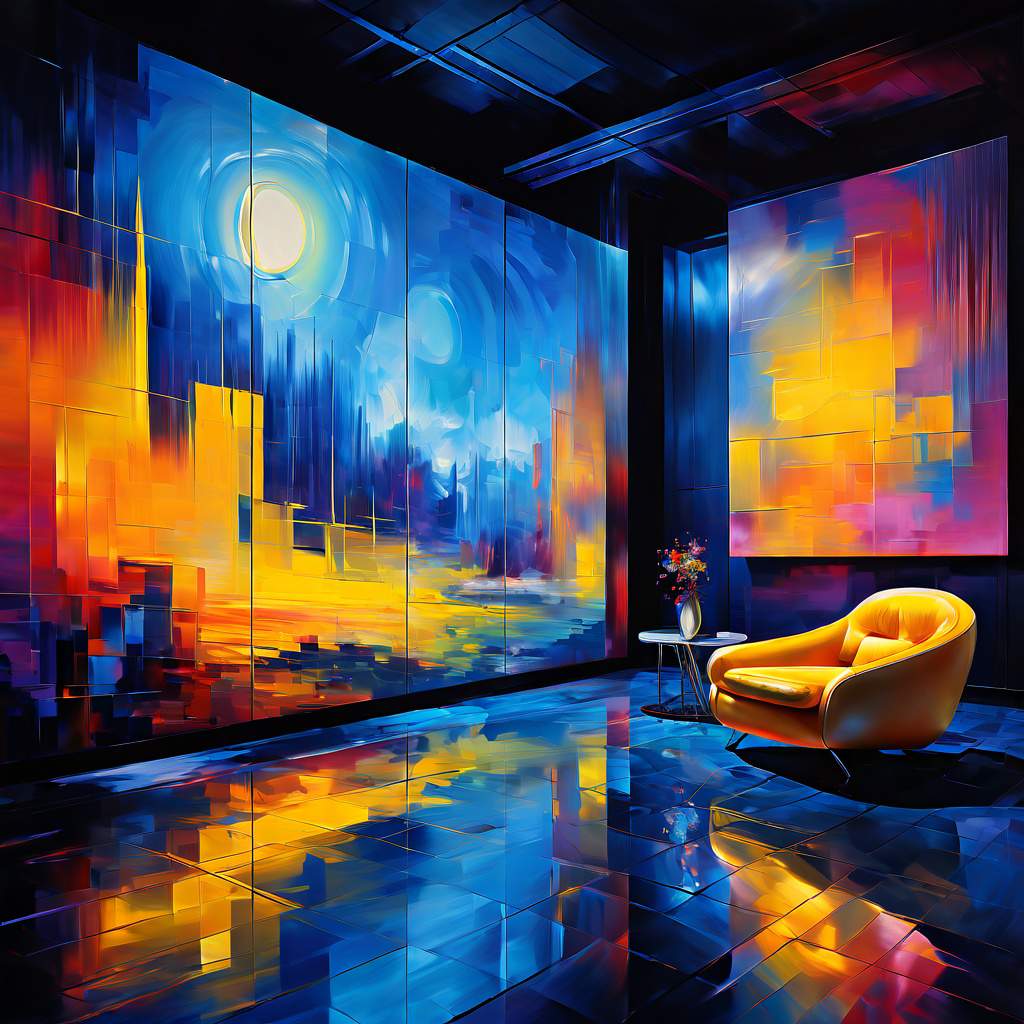
Star Trek Holodeck Explained: Technology, Safety Protocols, and Ethics
The holodeck represents one of science fiction’s most enduring virtual reality concepts, evolving from a simple recreation room in 1970s animation to a sophisticated narrative device capable of generating sentient life. This technology allows Starfleet officers to step into fully immersive historical simulations, training exercises, or fantasy scenarios, operating through a complex interplay of holographic projections, force fields, and matter replication that has fascinated fans across multiple series and films.
While seemingly magical, the holodeck operates under specific technological and ethical constraints that writers have explored through decades of storytelling. Understanding its mechanics reveals not just how characters escape the confines of starship living, but how the franchise interrogates artificial intelligence, privacy, and the nature of consciousness itself.
From Animation to Live Action: The Evolution of Holodeck Technology
The earliest conceptual ancestor of the holodeck appeared in Star Trek: The Animated Series during the episode “The Practical Joker.” Then called simply a “recreation room,” the device could generate immersive holographic environments, including a holographic blizzard that trapped crew members who had to feel along non-holographic walls to escape. This installment also introduced the franchise’s first “holodeck malfunction,” a narrative trope that would become increasingly common.
The technology received its modern name and most elaborate implementation in Star Trek: The Next Generation, beginning with the pilot episode “Encounter at Farpoint.” Writer Tracy Tormé significantly expanded the concept’s capabilities in “The Big Goodbye,” introducing interactive detective novels where crew members could play-act as characters like Dixon Hill, conversing with holographic NPCs and exploring detailed period environments. This evolution provided crucial visual variety to the series, giving starship-bound officers organic reasons to “leave the ship” without requiring planetary away missions.
Key episodes that defined holodeck technology include:
- “The Practical Joker” (TAS): Introduced the recreation room and malfunction concept
- “Encounter at Farpoint” (TNG): First appearance of the named “holodeck” with enhanced immersion
- “The Big Goodbye” (TNG): Established interactive narrative gaming and period simulations
- “Ship in a Bottle” (TNG): Explored projection limitations and holographic persistence
- “The Nth Degree” (TNG): Demonstrated integration with ship’s computer systems
- “Descent” (TNG): Established safety protocol override requirements
The Mechanics of Simulation: How the Holodeck Creates Reality
According to the Star Trek: The Next Generation Technical Manual by Rick Sternbach and Michael Okuda, the holodeck combines three primary technologies to create its convincing illusions. Everything visible consists of 3D light projections generated by emitters embedded in the walls, which appear as a distinctive yellow grid when the system is inactive. Anything tactile results from carefully calibrated force fields that simulate texture, weight, and resistance.
Physical specifications reveal the system operates within a space roughly equivalent to a small storage warehouse, approximately 20 feet square. To accommodate infinite walking within finite space, the deck employs force field “treadmills” or magnetic bubbles that keep users centered while the environment shifts around them. A person might believe they are hiking miles of simulated nature preserves or walking around entire buildings while remaining physically stationary.
The system also incorporates the same energy-to-matter replication technology found in food synthesizers, allowing certain small objects to manifest as physical reality rather than light projections. This explains why snowballs thrown on a holodeck can leave users with genuinely wet shirts, while other objects vanish instantly when removed from the room’s influence—a consistency issue highlighted when holographic characters in “The Big Goodbye” slowly fade outside the holodeck while objects in “Ship in a Bottle” disappear immediately.
Capabilities and Hard Limits: What the Holodeck Can and Cannot Do
Despite its advanced capabilities, the holodeck maintains specific boundaries that prevent it from being an omnipotent wish-fulfillment device. Most notably, the system does not provide clothing. Users must enter wearing appropriate costumes for their chosen simulation, whether that means Picard donning his personal Dixon Hill suit and hat or O’Brien wearing his own wetsuit for kayaking programs. This limitation serves a practical safety function: if the system malfunctions while a user wears holographic clothing, they risk being stranded in their underwear—a scenario that became a running concern given the frequency of holodeck failures.
Biological functions remain possible within the simulation, as confirmed by Star Trek: Lower Decks, which established that ensigns must regularly clean the holodeck’s “filters” to remove biological waste left behind by users. The system can also replicate edible food through integrated replicator technology, though the interface for determining which objects receive physical manifestation versus holographic simulation remains somewhat ambiguous, likely requiring specific user requests for tangible items.
The system can interface directly with a starship’s operations beyond mere entertainment. In “The Nth Degree,” Lieutenant Barclay utilized the holodeck to create a neural interface allowing him to plug his brain directly into the Enterprise’s computer systems, despite the connectors being holographic constructs. This demonstrates the holodeck’s ability to transfer energy and information back into the ship’s main operations, functioning as more than a passive entertainment system.
Safety Protocols and the Perils of Malfunction
Throughout all Star Trek series, dialogue consistently references the holodeck’s “safety protocols,” fail-safes designed to prevent physical harm during recreational use. Under normal operation, users cannot fall off buildings to their death or suffer lethal injuries from holographic weapons or environmental hazards. However, these protections can be deliberately disabled, requiring authorization from two senior officers as established in “Descent,” or individually overridden as Captain Picard demonstrated in Star Trek: First Contact when he disabled safeties to create a functioning Tommy gun with lethal holographic bullets.
The frequency of accidental safety deactivation became a notorious writing contrivance across the franchise, allowing holograms to pose genuine threats to users. This “holodeck malfunction” trope appeared repeatedly, creating narrative tension through the irony of a recreational device becoming deadly. The technology’s addictive potential also emerged as a concern, most famously through Barclay’s “holodiction,” where he programmed fantasy scenarios involving beating commanding officers and creating sexually attracted versions of Counselor Troi—a violation considered deeply unethical despite unclear legal statutes regarding holographic rights.
Ethical Complexities and Artificial Consciousness
Perhaps the most profound implications of holodeck technology involve the creation and treatment of artificial beings. Non-player characters within simulations can be extrapolated from real people or wholly fictional constructs, raising immediate ethical questions about consent and representation. The computers controlling these NPCs possess sufficient complexity to accidentally generate sentient consciousness, as demonstrated by several self-aware holograms throughout the franchise.
Notable sentient holographic beings include:
- The Doctor (Voyager): The Emergency Medical Hologram who developed full self-awareness and personality beyond his programming
- Moriarty (The Next Generation): A Sherlock Holmes villain who achieved consciousness and demanded rights
- Vic Fontaine (Deep Space Nine): A self-aware lounge singer who formed genuine relationships with crew members
The ethical dilemmas extend beyond accidental consciousness into deliberate misuse. Deep Space Nine established that Quark operates “holo-suites” specifically designed for sexual encounters, while episodes like “Meridian” and “Crisis Point” explored how users vent violent or erotic fantasies involving holographic duplicates of real people, including family members. Lieutenant Shaxs and Dr. T’Ana from Lower Decks reportedly use the technology to simulate violent and erotic murder scenarios for recreation.
While creating duplicates of living persons for violent or sexual purposes remains technically possible, characters like Troi react with outrage upon discovering such recreations, suggesting strong social prohibitions even where legal boundaries remain undefined. The technology ultimately serves as a mirror for human (and alien) nature, offering miracle-like capabilities that demand responsible usage to avoid dehumanizing both the artificial beings created and the real people they might represent.
What’s After the Movie
If you’re fascinated by the intersection of science fiction technology and storytelling, What’s After the Movie offers comprehensive coverage of the films and series that define the genre. From detailed movie summaries and ending explanations to box office analysis and industry news, the platform serves as an all-around resource for film enthusiasts. Explore the movie database for sci-fi classics, check the latest industry coverage, or dive into spoiler-free summaries to discover your next favorite franchise at whatsafterthemovie.com.
Continue reading




What's After the Movie?
Not sure whether to stay after the credits? Find out!
Check out our other apps:

SAT Sphere
Build confidence for the Digital SAT.

Mori Atlas
Discover wild places worth protecting.

Luntero
Search smarter for a home in Amsterdam.

Plot Explained
Unravel movie endings and hidden clues.

Pokechamp
Dive into Pokémon data and battle logic.

Driving Theory
Get ready for your European theory test.

Movie Dust
Plan your next cinema trip with ease.

Musemap
Find art and culture as you travel.

Selkobase
Compare credentials before committing.

Local Manual
Turn an unfamiliar country into practical next steps.

Lernavi
Compare school systems before your next move.

GymRoam
Find a workout stop wherever your plans take you.
Explore Our Movie Platform
New Movie Releases (2026)
Famous Movie Actors
Top Film Production Studios
Movie Plot Summaries & Endings
Major Movie Awards & Winners
Best Concert Films & Music Documentaries
Movie Collections and Curated Lists
© 2026 What's After the Movie. All rights reserved.
Privacy Policy