
What's After the Movie
Patricia Roc
Patricia Roc, born Felicia Miriam Ursula Herold on 7 June 1915 in Hampstead, London, emerged as one of the most luminous stars of British cinema during the 1940s, embodying what studio head J. Arthur Rank famously called "the archetypal British beauty." Following her adoption by her mother's second husband, Dutch-Belgian stockbroker André Magnus Riese, she became known as Felicia Riese and received an elite education at private schools in London and Paris before winning a coveted place at the Royal Academy of Dramatic Art in 1937. Her professional breakthrough arrived when West End theatre producer Sydney Carroll discovered her and cast her in The Mask of Virtue, suggesting she adopt a shorter, more memorable stage name; she chose "Patricia Roc" by modifying "Rock" (suggested due to Rock Film Studios) to drop the "k" and selecting "Patricia" as the nearest equivalent to her birth name, Felicia. She transitioned to film in 1938 with an uncredited role in The Divorce of Lady X and quickly established herself as a leading lady in productions such as The Rebel Son and The Gaunt Stranger, demonstrating remarkable versatility across dramatic and comedic roles. Roc achieved her greatest fame as the epitome of the "English rose" in Gainsborough Studios' escapist melodramas during the Second World War, providing audiences with much-needed relief from wartime hardships through films like Millions Like Us (1943), which cemented her status as a top-billed star. She delivered acclaimed performances alongside Margaret Lockwood and Stewart Granger in Love Story (1944) and Madonna of the Seven Moons (1945), but her most commercially successful film was The Wicked Lady (1945), which became the highest-grossing British film of 1946 despite American censors demanding retakes to de-emphasize her décolletage. Her brief Hollywood venture in Canyon Passage (1946), a Technicolor Western made under a lend-lease agreement between Rank and Universal, failed to translate her appeal to American audiences despite positive reviews and romantic links to Ronald Reagan. After returning to Britain, she starred in The Brothers (1947) and Jassy (1947), but her career momentum slowed significantly following the tragic death of her second husband, French cameraman André Thomas, in 1954, leading to only sporadic television work including her final appearance in the first episode of The Saint. She retired completely from acting in 1964 after marrying businessman Walter Reif, eventually moving to Switzerland where she died in 2003 at the age of 88. Throughout her career, she was celebrated by Noël Coward as "a phenomenon" and "an unspoiled film star who can act," securing her legacy as one of Britain's most beloved wartime screen icons.
Biography, Career & Filmography
Learn more about Patricia Roc, including a detailed biography, career timeline, personal life insights, and complete filmography. Discover how Patricia Roc rose to fame, their major roles, industry impact, and personal milestones in the world of film.
Given Name: Felicia Miriam Ursula Herold
Born: Hampstead, London, England
Citizenship: British, English
Birthday: June 7, 1915
Occupations: Actress
Years Active: 1938-1962
Children: 1
Spouses: Dr. Murray Laing, André Thomas, Walter Reif
External Links and Streaming Options
Explore more about on trusted external platforms like Wikipedia. Find additional details, reviews, and related content to deepen your understanding.

Movies Featuring Patricia Roc

Black Jack

Circle of Danger

When The Bough Breaks

Madonna of the Seven Moons

Return to Life

The Gaunt Stranger

The Wicked Lady

The Divorce of Lady X

The House in the Woods

Johnny Frenchman

Two Thousand Women

A Window in London

The Perfect Woman

Bluebeard’s 10 Honeymoons

Millions Like Us
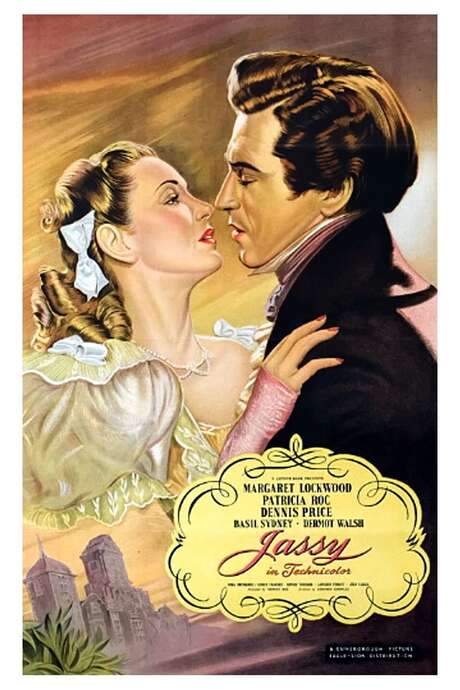
Jassy

The Brothers

The Man on the Eiffel Tower

We’ll Meet Again

Suspected Person

So Well Remembered

Holiday Camp

Canyon Passage

Love Story
Career Timeline
Track the complete movie timeline of Patricia Roc, including all film releases, career breakthroughs, and notable roles. Follow their journey from early performances to recent blockbusters and upcoming projects.
1949
Return to Life
Lieutenant Evelyne (segment "Le retour d'Antoine")
The Perfect Woman
Penelope Belman
The Man on the Eiffel Tower
Helen Kirby
1947
When The Bough Breaks
Lily Bates
Jassy
Dilys Helmar
The Brothers
Mary
So Well Remembered
Julie Morgan
Holiday Camp
Herself

Coming soon on iOS and Android
The Plot Explained Mobile App
From blockbusters to hidden gems — dive into movie stories anytime, anywhere. Save your favorites, discover plots faster, and never miss a twist again.
Sign up to be the first to know when we launch. Your email stays private — always.
Explore the mobile app
What's After the Movie?
Not sure whether to stay after the credits? Find out!
Check out our other apps:

SAT Sphere
Build confidence for the Digital SAT.

Mori Atlas
Discover wild places worth protecting.

Luntero
Search smarter for a home in Amsterdam.

Plot Explained
Unravel movie endings and hidden clues.

Pokechamp
Dive into Pokémon data and battle logic.

Driving Theory
Get ready for your European theory test.

Movie Dust
Plan your next cinema trip with ease.

Musemap
Find art and culture as you travel.

Selkobase
Compare credentials before committing.

Local Manual
Turn an unfamiliar country into practical next steps.

Lernavi
Compare school systems before your next move.

GymRoam
Find a workout stop wherever your plans take you.
Explore Our Movie Platform
New Movie Releases (2026)
Famous Movie Actors
Top Film Production Studios
Movie Plot Summaries & Endings
Major Movie Awards & Winners
Best Concert Films & Music Documentaries
Movie Collections and Curated Lists
© 2026 What's After the Movie. All rights reserved.
Privacy Policy