
What's After the Movie
Francesca Bertini
Francesca Bertini (born Elena Seracini Vitiello on 5 January 1892 in Prato, Kingdom of Italy) began her life in modest circumstances, registered at an orphanage as Elena Taddei before her mother, Adelina di Venanzio Fratiglioni, married Arturo Vitiello in 1910. From a young age she displayed a magnetic stage presence, joining theatrical troupes and stepping in front of the camera at the tender age of seventeen as Italian cinema was just finding its footing. By 1915 she had already appeared in more than fifty productions, including the groundbreaking melodrama Assunta Spina, where she not only embodied the titular heroine but also claimed responsibility for the film’s script and, according to some contemporary accounts, its direction—an early assertion of artistic agency that foreshadowed the auteur era. Bertini’s striking beauty, elegant bearing, and intensely expressive acting set her apart, allowing her to convey both the languid decadence of aristocratic heroines and the raw, everyday emotions of common women, a duality that made her a pioneer of realism in a medium then dominated by theatrical exaggerations. Her repertoire spanned iconic roles such as Odette, Fedora, Tosca, and the Lady of the Camellias, each performance reinforcing her reputation as one of the most successful silent film stars of the early twentieth‑century. Critics note her ability to infuse authentic feeling into every gesture, an approach that anticipated the later Neorealist movement.
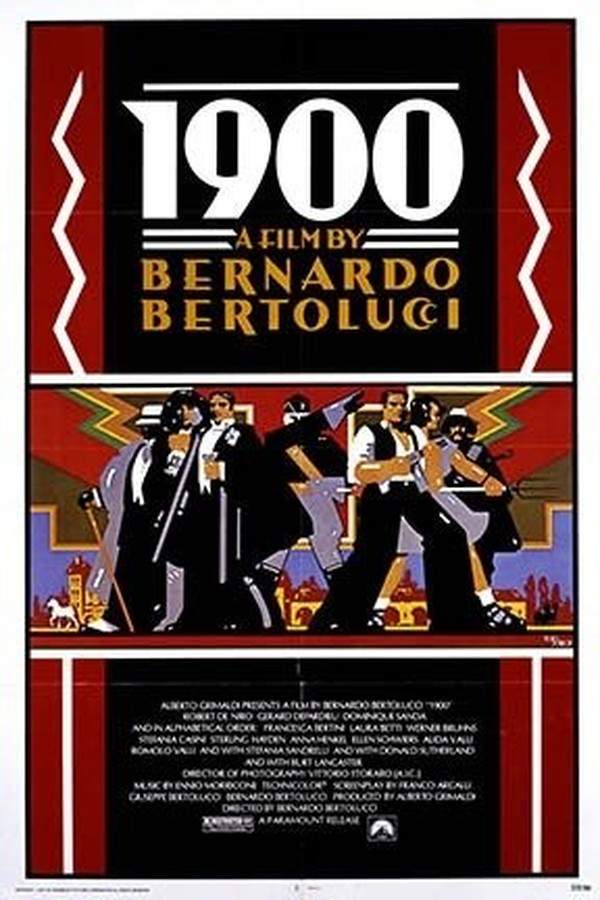
In 1920 the Fox Film Corporation extended an invitation to bring her to Hollywood, but Bertini declined, choosing instead to remain with her husband, the affluent Swiss banker Paul Cartier, and relocate to Switzerland. After his death she returned to Rome, where she navigated the turbulent transition to sound cinema, though the Italian film industry was then contending with the rise of Telefoni bianchi comedies, Fascist censorship, and the disruptions of World War II. A remarkable resurgence occurred in 1974 when Bernardo Bertolucci persuaded her to appear as a nun in Novecento, re‑introducing her to a new generation. She later participated in a three‑part television documentary in 1982, reflecting on her storied career. Francesca Bertini passed away in Rome on 13 October 1985 at the age of ninety‑three, leaving a legacy that endures as a testament to the expressive power and pioneering spirit of early Italian cinema.
Biography, Career & Filmography
Learn more about Francesca Bertini, including a detailed biography, career timeline, personal life insights, and complete filmography. Discover how Francesca Bertini rose to fame, their major roles, industry impact, and personal milestones in the world of film.
Given Name: Elena Seracini Vitiello
Born: Prato, Kingdom of Italy
Citizenship: Italian
Birthday: January 5, 1892
Occupations: Actress
Years Active: 1909-1976
Spouses: Paul Cartier
External Links and Streaming Options
Explore more about on trusted external platforms like TMDb, Rotten Tomatoes, Wikipedia or IMDb. Find additional details, reviews, and related content to deepen your understanding.





Movies Featuring Francesca Bertini






Career Timeline
Track the complete movie timeline of Francesca Bertini, including all film releases, career breakthroughs, and notable roles. Follow their journey from early performances to recent blockbusters and upcoming projects.

Coming soon on iOS and Android
The Plot Explained Mobile App
From blockbusters to hidden gems — dive into movie stories anytime, anywhere. Save your favorites, discover plots faster, and never miss a twist again.
Sign up to be the first to know when we launch. Your email stays private — always.
Explore the mobile app
What's After the Movie?
Not sure whether to stay after the credits? Find out!
Check out our other apps:

SAT Sphere
Build confidence for the Digital SAT.

Mori Atlas
Discover wild places worth protecting.

Luntero
Search smarter for a home in Amsterdam.

Plot Explained
Unravel movie endings and hidden clues.

Pokechamp
Dive into Pokémon data and battle logic.

Driving Theory
Get ready for your European theory test.

Movie Dust
Plan your next cinema trip with ease.

Musemap
Find art and culture as you travel.

Selkobase
Compare credentials before committing.

Local Manual
Turn an unfamiliar country into practical next steps.

Lernavi
Compare school systems before your next move.

GymRoam
Find a workout stop wherever your plans take you.
Explore Our Movie Platform
New Movie Releases (2026)
Famous Movie Actors
Top Film Production Studios
Movie Plot Summaries & Endings
Major Movie Awards & Winners
Best Concert Films & Music Documentaries
Movie Collections and Curated Lists
© 2026 What's After the Movie. All rights reserved.
Privacy Policy