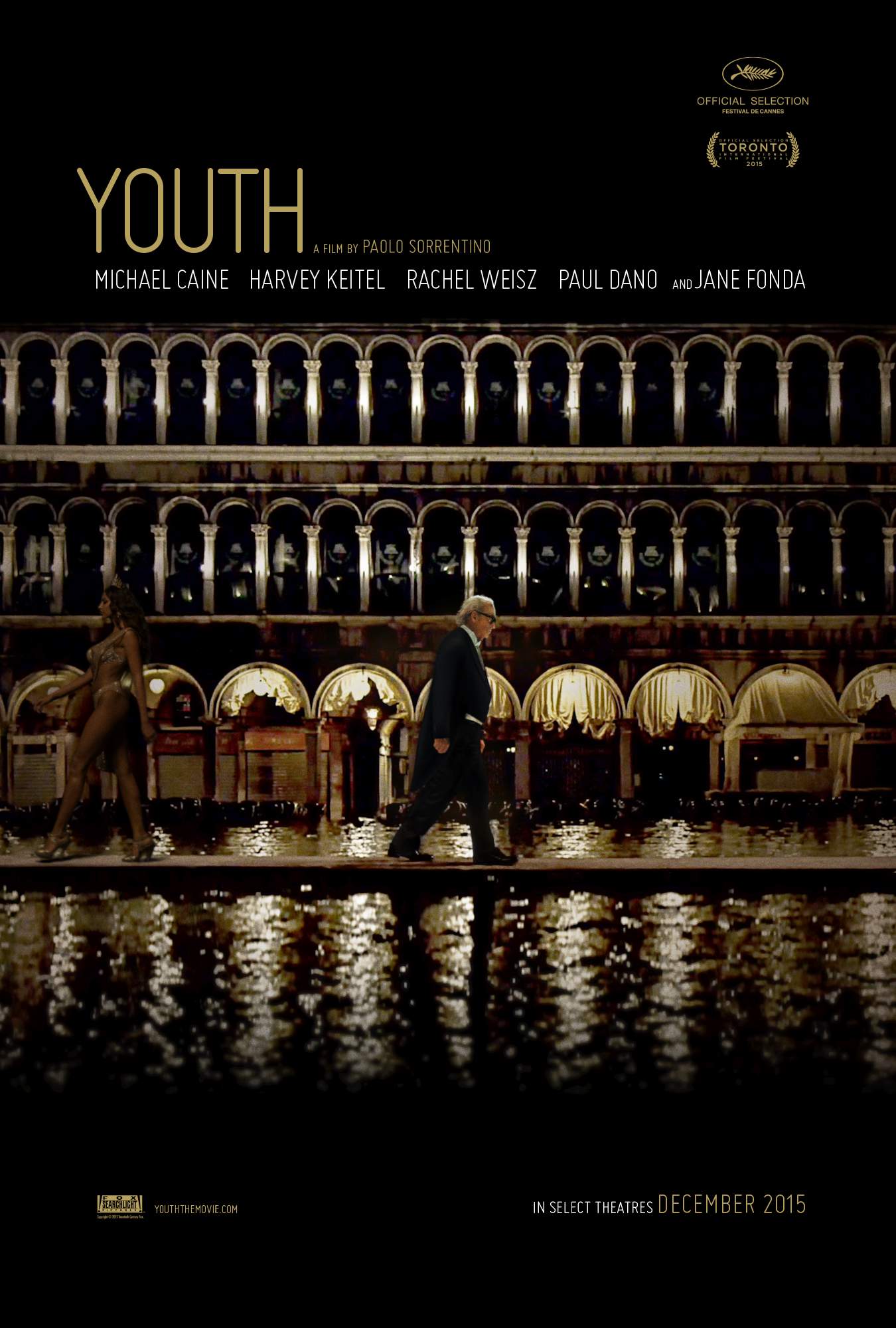
Youth 2015

Directed by

Paolo Sorrentino
Made by

Fox Searchlight Pictures
Where to Watch Youth
See current US streaming, rental, and purchase options for Youth (2015) via JustWatch.






Youth Plot Summary
Read the complete plot summary and ending explained for Youth (2015). From turning points to emotional moments, uncover what really happened and why it matters.
On a serene Swiss spa retreat in Flims, two septuagenarian friends — Michael Caine as Fred Ballinger and Harvey Keitel as Mick Boyle — drift through a vacation that feels more like a meditation on aging than a holiday. Fred, a celebrated retired composer of classical music, receives an emissary from Queen Elizabeth II bearing a knighthood offer and a request to perform his popular piece, “Simple Song #3,” at Prince Philip’s upcoming birthday concert. Fred declines with quiet resolve, insisting he is no longer drawn to the stage, even though the melodies still echo in his mind when he’s alone with his thoughts.
Nearby, Mick Boyle, a seasoned film director, furiously works with a circle of writers to shape the screenplay for his latest project, which he calls his “testament.” He pursues cinema as a craft even as time gnaws at his optimism, and his pursuit is tempered by a sense of watching the world move beyond the kind of movies he once made. Also present is Jimmy Tree, an actor researching for a new role and growing frustrated that his most enduring memory is that of a robot.
The hotel itself is a mosaic of peculiar personalities: a young masseuse moving with practiced ease, an oversized Diego Maradona who seems to enjoy the hotel’s oddities, and a Miss Universe contestant who radiates charm amid the resort’s reflective mood. The setting becomes a stage for introspection as Fred and Mick confront the erosion of memory and the uncertain road ahead.
Lena, Fred’s daughter and assistant — Rachel Weisz — remains at the resort, channeling her frustration toward a father who was emotionally distant as she grew up. She is married to Mick’s son, but their marriage is strained when he leaves her for pop star Paloma Faith. Lena’s presence stirs old resentments, and she uses the moment to articulate the pain of a life shaped by lines drawn in childhood and the weight of unresolved affection. Her experiences at the spa heighten the film’s quiet drama as the emissary returns with news that deepen the tensions among the group.
The emotional center thickens when Fred explains once again why he won’t sing the soprano part: it belongs to his wife, who can no longer sing, a detail that fractures the moment and underscores the unsentimental truth of time’s passage. Mick, meanwhile, finishes his screenplay and faces a blunt disappointment in the realization that the era he loved may have receded into history. The moment of truth arrives when Brenda Morel, an aging diva who has starred in many of his films, unexpectedly appears at the resort. She reveals a preference for a television role over cinema, telling Mick that the medium has changed and that his career hasn’t produced a truly great film in years. The confrontation rocks him, and tragedy follows as Mick ends his life by leaping from a balcony before Fred’s eyes.
Moved by the events and the weight of a life lived in the glare of memory, Fred makes a choice: he decides to visit his wife in a Venice care home for the first time in years. The trip softens his resolve and reframes what remains meaningful to him as he prepares to return to the United Kingdom to conduct “Simple Song #3” in front of the Queen and Prince, a gesture that blends personal memory with public ceremony.
Throughout the narrative, the film treads between the tangible and the unreal, weaving in surreal moments that tilt the ordinary into the fantastical: a levitating monk drifting above the spa grounds, an imagined Paloma Faith music video that interrupts the peace, Jimmy appearing in a provocative costume reminiscent of a long-ago era, Fred conducting a field of cowbells in a ceremonial, almost ritualistic procession, and Mick envisioning all his former leading ladies gathered on a mountaintop. The sequence even frames Brenda in a new light, recalling her presence in the past while placing her within the strange, almost dreamlike theater of the film’s final vision. These moments underscore the film’s meditation on legacy, fame, love, and the inexorable flow of time.
Youth Timeline
Follow the complete movie timeline of Youth (2015) with every major event in chronological order. Great for understanding complex plots and story progression.
Arrival at the Flims spa resort
Fred Ballinger and Mick Boyle arrive at a luxurious spa in Flims, tucked in the snowy Swiss Alps, to escape their pasts. The retreat hums with eccentric guests and a quiet sense of aging and memory. They settle into the rhythms of a life away from fame and obligation.
Emissary invites Fred to be knighted and perform
An emissary for Queen Elizabeth II visits Fred with an offer: a knighthood and a performance of Simple Song #3 at Prince Philip's birthday concert. Fred is not interested in performing anymore, and he makes clear that his music lives in his head rather than on stage. The encounter foreshadows the sacrifices and refusals that haunt him.
Mick develops his 'testament' screenplay
Mick Boyle works with a group of writers on the screenplay for his latest film, a project he calls his testament. He plans a central role for aging diva Brenda Morel, hoping to capture cinema's last breath. He clings to the idea that, even as the art form shifts, there is meaning in shaping it with his words.
Jimmy Tree researches for his role
Actor Jimmy Tree roams the resort, gathering material for his upcoming part and lamenting that he is most remembered for a robotic character. His study highlights how fame fixes certain images in an actor’s mind. He searches in the resort’s corners for the spark that will redefine him.
Lena vents about her father
Lena Ballinger, Fred's daughter and Mick’s daughter-in-law, remains at the resort and vents anger about Fred’s emotional distance during her childhood. The tension between generations and careers weighs on everyone as relationships fray. Her presence anchors the emotional cost of their fame.
Emissary returns; Lena cries as Fred explains
The emissary returns to press Fred again, and Lena breaks down in tears as Fred explains why he will not perform. He reiterates that the soprano part belongs to his wife, who can no longer sing. The moment deepens the sense of lost chances that threads through the retreat.
Mick finishes the screenplay; Brenda arrives
Mick completes the screenplay and feels a quiet satisfaction at having captured something enduring. Brenda Morel unexpectedly arrives at the resort, only to reveal she is choosing a television role instead; she dismisses cinema as a thing of the past. The encounter leaves Mick shaken and questioning his craft's relevance.
Mick takes his life
Disheartened and overwhelmed by the changing tides of cinema, Mick steps onto a balcony and jumps to his death before Fred. The act shatters the resort’s calm and propels Fred toward a life-altering choice. The suicide casts a long shadow over the remaining story.
Fred visits his wife in a Venice care home
Fred decides to visit his wife for the first time in years, traveling to a care home in Venice where she is senile and largely unresponsive. The brief reunion underscores Fred’s loneliness and the consequences of decades apart. It also reframes his view of love and memory.
Fred returns to the UK for Simple Song #3
Fred returns to England to conduct Simple Song #3 in front of the Queen and Prince. The performance reframes his career as a collision of memory, legacy, and the demands of a royal audience. He confronts the reality that his music is tied to what remains possible rather than what he wants to do.
Surreal sequence: levitating monk
Throughout the film, a levitating monk appears, a surreal image that interrupts the resort’s quiet conversations. The vision blurs the line between memory and fantasy, inviting reflection on faith and wonder. It is one of several dreamlike interruptions that punctuate the narrative.
Surreal sequence: imagined Paloma Faith music video
An imagined Paloma Faith music video cuts through the retreat’s stillness, contrasting theatrical fantasy with the characters’ ordinary lives. The fantasy emphasizes longing for performance and stardom amid aging and irrelevance. It acts as a mirror to the film’s preoccupations with fame.
Surreal sequence: Jimmy dressed as Adolf Hitler
In another jarring cut, Jimmy Tree appears dressed as Adolf Hitler, a provocative image that unsettles the viewer and comments on the dangers of performance and identity. The sequence sits alongside the resort’s gentle textures, heightening the film’s contrasts. It reinforces the theme that art can confront discomfort head-on.
Surreal sequence: Fred conducts a field of cowbells
A pastoral fantasy shows Fred conducting a field of cowbells instead of an orchestra, turning a simple countryside scene into a strange, musical moment. The image underscores Fred’s detachment from conventional performance and his solitary reign over sound. It probes the loneliness and whimsy at the heart of aging artists.
Mick’s mountaintop vision of his leading ladies
Mick envisions all his former leading ladies gathered on a mountaintop, including Brenda in a new TV role. The dream crystallizes his regrets and the price of chasing fame, contrasting the glamour of the past with the present’s bleakness. It functions as a closure-like reflection on his career.
Youth Characters
Explore all characters from Youth (2015). Get detailed profiles with their roles, arcs, and key relationships explained.
Fred Ballinger (Michael Caine)
A retired classical composer whose memories are fading. He declines a knighthood and a public performance of 'Simple Song #3,' preferring to keep his work private and to compose in his head when alone.
Mick Boyle (Harvey Keitel)
A film director developing a new screenplay, treating the project as his 'testament.' He is surrounded by ideas and writers, but the sense of artistic decline weighs on him, culminating in tragedy.
Lena (Rachel Weisz)
Fred's daughter and assistant, married to Mick's son. She stays at the resort, expressing anger toward her distant father. She navigates a complicated web of family and career.
Jimmy Tree (Paul Dano)
An actor researching for a role who resents being remembered mainly for a robotic character, craving meaningful recognition beyond a single iconic part. His frustration reflects a broader struggle with typecasting and personal identity.
Brenda Morel
An aging cinema diva who has starred in many of Mick's films. She arrives at the resort to pursue a TV role, arguing that cinema is the past and challenging Mick's current work.
Youth Settings
Learn where and when Youth (2015) takes place. Explore the film’s settings, era, and how they shape the narrative.
Time period
Present-day
Set in contemporary times, the story unfolds at a modern alpine retreat with nods to real-world royalty and current pop culture. The sense of era is anchored by references to a royal knighthood and living stars, illustrating the clash between public attention and private memory. The characters navigate fame and aging within a world that feels recognizably present-day.
Location
Flims, Swiss Alps
Flims in the Swiss Alps hosts a secluded luxury spa where the resort sits among pine-clad mountains and pristine air. The quiet, upscale environment provides a backdrop for aging artists to reflect on their lives and legacies. The alpine town and resort atmosphere underscore the contrast between nature's timelessness and celebrity culture's fleeting spotlight.
Youth Themes
Discover the main themes in Youth (2015). Analyze the deeper meanings, emotional layers, and social commentary behind the film.
⏳
Aging
Time weighs on the two friends as youth fades into memory. They confront bodily decline, the narrowing opportunities of their art forms, and the sense that their legacies are all they truly own. The film uses quiet moments to explore how aging alters relationships and self-perception.
💭
Memory
Memory, loss, and retrospective judgment shape the characters' conversations and choices. Past successes haunt them, while present disappointments push them toward introspection. The story intersperses fantasies and reminiscences to blur what is real and what is imagined.
🎨
Art & Fame
The tension between cinema's past and ongoing creativity drives the plot, with discussions of legacy and what constitutes great art. Characters oscillate between denying the relevance of their former works and yearning to leave a lasting impression. Fame is portrayed as both a comfort and a trap, shaping decisions and relationships.
🤝
Friendship
Two lifelong friends navigate shared history, competing egos, and the fragility of their bonds. Their conversations reveal tenderness, resentment, and moments of mutual understanding. The resort's surreal episodes mirror the complexity of companionship, where support and rivalry coexist.

Coming soon on iOS and Android
The Plot Explained Mobile App
From blockbusters to hidden gems — dive into movie stories anytime, anywhere. Save your favorites, discover plots faster, and never miss a twist again.
Sign up to be the first to know when we launch. Your email stays private — always.
Explore the mobile appYouth Ending Explained
Unravel the ending of Youth (2015) with our detailed explanation. Understand the final scenes, character fates, and unresolved questions.
At the film’s climax, Luke confronts the mysterious Fountain of Youth and has a vision of Charlotte and her son Thomas in a frail, sickly state. This vision reveals to him that the Fountain’s power is beyond human comprehension and that drinking from it would drain the vitality of his loved ones to grant him immortality. Recognizing this, Luke chooses not to partake, understanding that the true treasure is his family and the connection he shares with them. Instead, Owen Carver, who initially appeared to seek the Fountain for selfish reasons, drinks from it and suffers a rapid life drain — a consequence of his greed and self-love. His fate remains ambiguous, as Esme uses a key to shut down the Fountain and stop him from gaining more power.
The ending also hints that the characters have found a new balance. Charlotte and Luke, having resolved their past differences, decide to continue their adventures together, searching for what is “lost” in the world and in themselves. This signifies that the journey and the relationships they cherish matter more than any mythological or eternal life. The story ultimately suggests that the greatest treasure isn’t a fountain’s mystical liquid but the love, family, and meaning found in everyday life. The Fountain of Youth symbolizes that true happiness and fulfillment come from within—by recognizing what truly matters and appreciating the life and loved ones we already have.
Youth Spoiler-Free Summary
Discover the spoiler-free summary of Youth (2015). Get a concise overview without any spoilers.
The tranquil Swiss Alps provide a breathtaking backdrop for a quiet retreat where two lifelong friends gather to contemplate the next chapter of their lives. The resort’s serene spa, perched among snow‑capped peaks and alpine meadows, feels less like a vacation and more like a gentle meditation on aging, memory, and the quiet yearning for purpose that can accompany the later years.
Fred Ballinger arrives as a retired composer whose celebrated melodies still linger in his mind, while Mick Boyle, a seasoned film director, spends his days sketching the outline of a screenplay that might serve as his artistic testament. Their camaraderie is seasoned with the easy banter of old acquaintances, yet beneath the surface each grapples with the question of whether the creative fire that once defined them can still burn bright.
Lena, Fred’s daughter and devoted assistant, joins the gathering, bringing a mix of admiration, frustration, and unresolved sibling‑like tension that adds depth to the intergenerational dialogue. Alongside her is Jimmy Tree, a young actor on a quest for inspiration, whose fresh perspective highlights the contrast between youthful ambition and the seasoned insight of his elders. Brenda Morel, an iconic actress from Mick’s past, drifts into the mix, suggesting the allure and melancholy of past glories that continue to echo in the present.
Together, these characters weave a tapestry of introspection, artistic longing, and quiet humor, set against a landscape that feels both grounding and ethereal. The film’s tone balances the lyrical beauty of its alpine setting with the subtle surrealism of fleeting, dream‑like moments—a levitating monk, the echo of cowbells, and other poetic touches that remind viewers how memory and imagination can transform everyday scenes into something almost magical.
Movies with Similar Twists and Themes
Uncover films that echo the narrative beats, emotional arcs, or dramatic twists of the one you're exploring. These recommendations are handpicked based on story depth, thematic resonance, and spoiler-worthy moments — perfect for fans who crave more of the same intrigue.
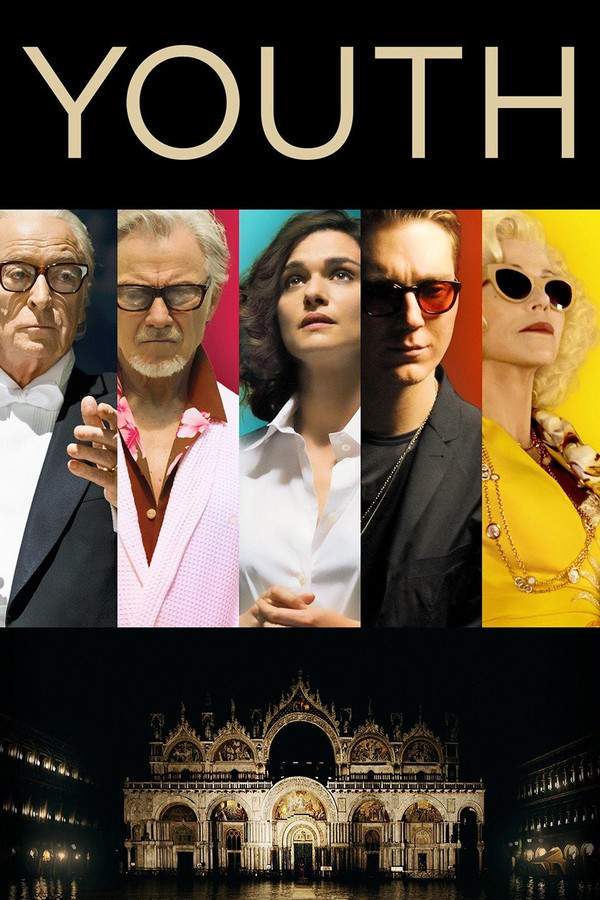


Featured on this page

What's After the Movie?
Not sure whether to stay after the credits? Find out!
Check out our other apps:

SAT Sphere
Build confidence for the Digital SAT.

Mori Atlas
Discover wild places worth protecting.

Luntero
Search smarter for a home in Amsterdam.

Plot Explained
Unravel movie endings and hidden clues.

Pokechamp
Dive into Pokémon data and battle logic.

Driving Theory
Get ready for your European theory test.

Movie Dust
Plan your next cinema trip with ease.

Musemap
Find art and culture as you travel.

Selkobase
Compare credentials before committing.

Local Manual
Turn an unfamiliar country into practical next steps.

Lernavi
Compare school systems before your next move.

GymRoam
Find a workout stop wherever your plans take you.
Explore Our Movie Platform
New Movie Releases (2026)
Famous Movie Actors
Top Film Production Studios
Movie Plot Summaries & Endings
Major Movie Awards & Winners
Best Concert Films & Music Documentaries
Movie Collections and Curated Lists
© 2026 What's After the Movie. All rights reserved.
Privacy Policy