

What Is Yatra About?
The premise of Yatra in 278 words, with nothing given away. The full story follows below.
Set against the vivid tapestry of early‑2000s Andhra Pradesh, the film opens to a region bristling with hope, hardship, and the restless pulse of everyday life. Streets lined with market stalls, bustling villages, and the lingering echo of political rallies create a world where ordinary conversations can turn into matters of destiny. The tone balances documentary‑like reverence with cinematic warmth, inviting the audience to feel the weight of a community yearning for change while hinting at the larger forces shaping its future.
At the heart of this landscape stands Y.S.R., a charismatic statesman whose ambition is matched only by his empathy. Guided by a relentless desire to leave a lasting imprint, he is portrayed as both a strategic thinker and a man of the people, equally comfortable in the corridors of power and amid the dust‑laden lanes of his constituency. His charisma is reflected in quiet moments of listening, impassioned speeches, and an unwavering belief that governance should be rooted in personal connection. This portrait sets the stage for a transformative undertaking that promises to reshape his relationship with the electorate.
The film’s narrative unfolds like a long, steady march, its rhythm echoing the cadence of countless footsteps across the state’s diverse terrain. Through sweeping vistas and intimate close‑ups, viewers glimpse the subtle interplay between hope and hardship, ambition and accountability. A tone of earnest optimism pervades, tempered by the gravity of the issues that demand attention—from health to education, from agrarian distress to urban aspiration. This evocative blend of grand scale and personal detail invites the audience to contemplate the power of grassroots engagement, leaving one eager to see how the journey reshapes both leader and land.
What Happens in Yatra?
The complete story of Yatra, from the first scene to the last, in 337 words (about 1 minute). Spoilers throughout. Names in the text link to 3 cast member pages.
Spoilers ahead
The film Yatra unfolds as a retrospective narrative presented in a biopic format, tracing the life and political ascent of Y. S. Rajasekhara Reddy. Directed by Mahi V. Raghav, it centers on a charismatic and compassionate leader who forged a deep bond with the people of Andhra Pradesh and rolled out welfare programs aimed at improving healthcare, education, and the lives of the underprivileged. The story emphasizes how his vision extended beyond slogans, shaping policies that sought to lift vast sections of society and alter the course of the state’s development.
Across his tenure as Chief Minister, the film highlights the political challenges and obstacles he faced, painting a portrait of tireless effort amid opposition and the pressure to translate ideals into tangible change. A defining feature of the narrative is the Padayatra, a sweeping cross-state march that brought the leader into direct contact with citizens, enabling him to listen to their grievances and aspirations on the ground. This journey threads through the film as a crucial mechanism for understanding the real impact of leadership on everyday life.
Through a series of intimate moments and public events, the narrative maps his personal and political struggles, showing how interactions with a wide circle of people helped shape pivotal moments in his career and solidified his popular support. The film also places real-world figures within the broader political tapestry, including Ghulam Nabi Azad, illustrating the diverse landscape in which his leadership operated, and Sabitha Indra Reddy, highlighting key allies and rivals who influenced the course of events.
The emotional core of Yatra builds toward the tragedy that ended his life: the helicopter crash that claimed Y. S. Rajasekhara Reddy’s life and stunned the state. The aftermath reveals a nation in mourning, but also a powerful demonstration of unity and collective tribute from the people who had supported him throughout his journey. In its generous, human-centered portrayal, the film presents a nuanced portrait of a leader whose work and compassion left a lasting mark on the state and its citizens.
Yatra Timeline: Every Key Event in Order
12 key events in the order they happen, from “YSR's political rise and visionary ambition” to “Legacy and memory”.
- 1
YSR's political rise and visionary ambition
The film opens by tracing YSR's political ascent and his relentless drive to reform Andhra Pradesh. It frames his ambition as a catalyst for change, grounded in a deep connection with the people. This setup establishes the tone for a biopic that blends personal resolve with public impact.
- 2
A charismatic, compassionate leader who resonates with the masses
YSR is portrayed as a charismatic and compassionate leader who earns widespread trust from the masses. The narrative emphasizes his warmth, honesty, and willingness to stand with ordinary citizens. This portrayal helps explain the strong public support that underpins his governance.
- 3
Addressing healthcare and education gaps
As Chief Minister, he confronts persistent challenges in healthcare and education that affect everyday life. The film shows him prioritizing reforms and allocation of resources to expand access for the underprivileged. His efforts are presented as the core of his governance during this period.
- 4
Welfare programs and policies that win support
The storyline highlights the rollout of numerous welfare schemes and policies designed to uplift the disadvantaged. It describes how these initiatives touch hospitals, schools, and social services across the state. Collectively, they help explain why YSR becomes a beloved figure for many communities.
- 5
Padayatra: the mass outreach across the state
Padayatra becomes a central turning point as YSR undertakes a long foot journey across the state. He stops along the route to listen to people, understand their problems, and articulate solutions directly. The journey symbolizes his commitment to grassroots democracy and direct engagement with citizens.
When:During Padayatra across Andhra Pradesh Where:Andhra Pradesh
- 6
Listening to the people and addressing grievances
The events during the Padayatra foreground direct exchanges with diverse individuals and communities. He absorbs grievances and translates these voices into political action and policy ideas. The sequence reinforces the image of a leader deeply rooted in the everyday lives of people.
When:During tenure Where:Andhra Pradesh
- 7
Political challenges and obstacles faced
Throughout his tenure, YSR faces political challenges and obstacles from opponents, coalitions, and competing priorities. The film depicts the pressure of governance and the need to negotiate to push reforms forward. It portrays resilience and strategic thinking in the face of adversity.
When:During tenure
- 8
Pivotal moments shaping his career
Key moments—moments of decision, crisis, and breakthrough—shape his trajectory as a leader. The narrative ties personal conviction to pivotal political events that redirected policy and public perception. These scenes establish the arc of a transformative figure in the state's history.
- 9
Unwavering support from the masses
The masses' unwavering support is shown as a foundation of his political journey. Communities rally in solidarity during both triumphs and tragedies. This enduring backing helps enable the ambitious reforms he champions.
Where:Andhra Pradesh
- 10
Leadership under crisis: the policy response
During times of crisis and urgency, his leadership is portrayed as decisive and action-oriented. He mobilizes resources, coordinates services, and prioritizes the most vulnerable. The sequence reinforces the public image of a leader who puts welfare at the forefront.
When:During crises in office
- 11
The climactic tragedy: helicopter crash
Ultimately the film reaches its climactic moment with YSR's helicopter crash, a tragedy that sends shockwaves through the state. It captures the immediate shock, the nationwide mourning, and the sense of loss felt by families, workers, and supporters. The event underscores the depth of connection between YSR and his people.
When:Climax Where:Andhra Pradesh
- 12
Legacy and memory
The closing pages reflect on YSR's lasting legacy—the welfare-centered vision, the mass-connective leadership, and the policies that outlive his years in office. It suggests that his memory continues to inspire politicians and citizens alike. The film presents YSR's life as a testament to service and the enduring power of public empathy.
Who Are the Main Characters in Yatra?
6 characters, among them Y. S. Rajasekhara Reddy (Mammootty), Ghulam Nabi Azad (Sachin Khedekar) and Sabitha Indra Reddy (Suhasini Maniratnam): who each one is and the part they play in the story. Every profile links to the actor’s page.
-

Y. S. Rajasekhara Reddy (Mammootty)
Played by Mammootty
A charismatic and compassionate chief minister whose welfare-first approach earns him mass support. He connects with people during the Padayatra and demonstrates political acumen, resilience, and empathy under pressure. The character embodies a leadership style that blends policy expertise with heartfelt public service.
- 🤝 Charismatic leadership
- 🧭 Public welfare
- 👥 Mass support
-

Ghulam Nabi Azad (Sachin Khedekar)
Played by Sachin Khedekar
A national political ally who helps navigate the broader political landscape and translates a vision into policy in collaboration with YSR. He represents the strategic bridge between state-level ambitions and national politics, facilitating dialogue and partnership.
- 🤝 National politics
- 🗣️ Strategic dialogue
- 🧭 Alliance-building
- SI
Sabitha Indra Reddy (Suhasini Maniratnam)
Played by Suhasini Maniratnam
A stabilizing partner in leadership, she provides moral support and steadies the political ship during crises. Her presence underscores the personal dimension of public service and the weight of family ties in governance.
- 👪 Family influence
- 🕊️ Supportive partner
- 🗳️ Political ally
-
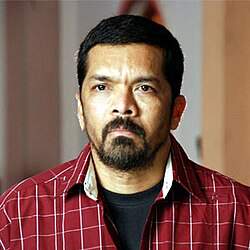
Y. Venkata Rao (Posani Krishna Murali)
Played by Posani Krishna Murali
A seasoned political figure who challenges or advises the chief minister, reflecting the balancing act of governance. His interactions highlight the complexities of policy, power, and opposition within the state machinery.
- 📊 Political challenge
- 🧭 State machinery
- 🗣️ Advisory role
- D(
D.C.P. (Sanjay Swaroop)
Played by Sanjay Swaroop
The police chief interfacing with the chief minister during mass outreach, illustrating law, order, and the state's response to public demonstrations. He embodies the administrative side of governance under pressure.
- 👮 Law and order
- 🧭 Administrative role
- 🗒️ Public demonstrations
- YS
Y. S. Vijayamma (Ashrita Vemuganti)
Played by Ashrita Vemuganti
Family member close to the leader, offering moral support and sharing the burden of public service. Her presence emphasizes the personal costs and familial stakes in a public career.
- 👪 Family influence
- 🧡 Public service
- 🗣️ Moral support
Where and When Is Yatra Set?
Yatra is set in Andhra Pradesh (2000s). Here is why the time and place matter to the story.
When
2000s
Set in the early 21st century, the narrative traces YSR's rise, his mass outreach during the Padayatra, and his policy-driven tenure in Andhra Pradesh. It highlights the era's emphasis on welfare, healthcare, and education as drivers of public support. The period culminates in a tragedy that shocks the state and defines the legacy of the leader.
Where
Andhra Pradesh
The action centers in the southern Indian state of Andhra Pradesh, where the film follows YSR's welfare-driven governance and his attempts to connect with the people. The Padayatra and public outreach depicted in the story anchor the setting in a politically active region. The state is portrayed as a landscape of diverse communities whose support shapes political fortunes.
- 🏞️ State setting
- 🗺️ Indian state
- 🗳️ Political backdrop
What Are the Themes of Yatra?
4 ideas the story keeps returning to, among them Public Welfare, Grassroots Reach and Resilience & Leadership.
-
01
Public Welfare
The film centers on a leader who uses welfare programs to improve lives, showing how policy gains legitimacy when it translates into tangible benefits for the masses. It examines the moral responsibilities of governance and how empathy can shape political support. Through initiatives in health, education, and social schemes, the story links leadership to everyday people.
-
02
Grassroots Reach
The Padayatra is depicted as a crucible for listening to ordinary citizens and translating their problems into policy ideas. The journey emphasizes the importance of direct contact with diverse communities. It showcases how bottom-up engagement can redefine a leader's legitimacy and popularity.
-
03
Resilience & Leadership
YSR's character illustrates determination in the face of political obstacles. The film explores strategic decision-making, coalition-building, and the stamina required to sustain reform over time. It portrays leadership as a blend of vision, pragmatism, and resolve.
-
04
Legacy & Mourning
The climax centers on the helicopter crash that ends the leader's life, triggering a wave of grief across the state. The narrative reflects on how public memory preserves a leader's ideals while leaving a vacancy for future generations. It considers how a community reconciles loss with a continued commitment to welfare.
What Kind of Film Is Yatra?
Hopeful in tone, with steady pacing and a straightforward story, going by the plot summary.
- Tone
- Hopeful
- Pacing
- Steady
- Story
- Straightforward
- Intensity
- Medium
- Ending
- Sad
An inspiring and compassionate biopic that follows a leader's transformative grassroots journey, building to a tragic ending that evokes profound grief and reflection on his enduring legacy.
- inspiring
- compassionate
- reflective
- grieving
- grounded
- purposeful
- political journey
- grassroots movement
- public service
- tragic death
Content notes: tragic death, mass mourning.
Quiz
How well do you remember Yatra? Test yourself on the story.
