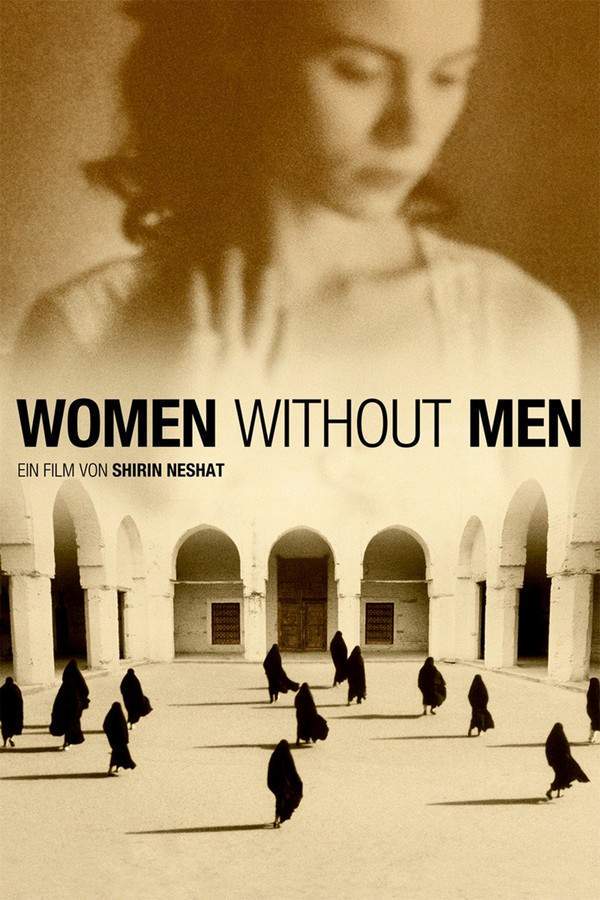
Women Without Men 2010

Directed by

Shirin Neshat
Made by

Indiepix
Where to Watch Women Without Men
See current US streaming, rental, and purchase options for Women Without Men (2010) via JustWatch.


Streaming availability powered by 
Women Without Men Plot Summary
Read the complete plot summary and ending explained for Women Without Men (2010). From turning points to emotional moments, uncover what really happened and why it matters.
The film opens with the sound of Adhaan, instantly layering the story in a cadence of ritual and constraint. A woman stands on a rooftop, suspended between fear and resolve, and the audience is drawn into Munis’s world—a place where a sister’s demands and a brother’s control collide with a city-wide undercurrent of political unrest. Munis resists her tyrannical brother Amir Khan, who insists she prepare for a visiting suitor and cook for him, and when she refuses, his anger escalates into a threat: if she leaves the house, he will break her legs. The tension between needles of obedience and the urge to be free threads through every scene, coloring domestic life with a sense of danger and defiance.
Outside, the street fills with protests, voices chanting “Durood bar Mosaddegh, marg bar Englis” as the country wrestles with colonial legacies and a shaken authority. A second woman, Faezeh, joins Munis in the garden and they trade sharp observations about the demonstrators. Faezeh privately wonders about her own future—whether the man she longs for might be the brother’s eventual fiancé—hinting at the pressures that tether women to rigid roles even as the world outside shakes with political change. The dialogue is brisk, intimate, and political, hinting at the fractures that will widen as the story unfolds.
In a stark counterpoint, a prostitute named Zarin moves through the dim rooms of a brothel. She masks her fear with makeup, only to retreat when a brothel madam calls for another client. A surreal moment reveals a client who seems “faceless” in Zarin’s perception, amplifying the sense of vulnerability hiding behind the doorways of Tehran’s margins. The scene is brief but searing, portraying a life of exploitation and invisibility that will collide with the other women’s struggles in the film’s broader weave.
Meanwhile, Fakhri, a wealthy fifty-year-old wife, arrives at a military ceremony where her husband Sadr—a general—receives honors. Their marriage is tested by a rumor of an old flame, Abbas, who has returned to Tehran and is seen speaking to Fakhri. Sadr’s insistence on fidelity—and his cruel assertion that if she cannot satisfy him sexually, he will take another wife—exposes a marriage strained by aging, desire, and power. Crying, Fakhri admits she is exhausted by the dynamic and withdraws, a moment that foreshadows her later choices.
Back in Munis’s home, Faezeh and Amir Khan confront Munis’s future again, arguing about the potential bride that may not be a virgin and about the brother’s plans. The emotional weather inside the house grows more volatile as the garden becomes a stage for whispered judgments, moral questions, and the ever-present shadow of male authority.
Zarin returns to the bathhouse, where a dallak offers help as she disrobes and reveals a gaunt, exhausted body. The act of washing herself becomes a brutal, physical ritual—one that leaves her skin raw and bleeding as she scrubs to feel clean in a world that forgets how to treat her as a person.
In a devastating turn, Faezeh and Amir Khan locate Munis, who is now presumed dead, apparently having jumped from the roof after Amir cuts off her only link to the outside world—the radio. When they find her body, Amir curses her for “disgracing” the family and Buries her in the garden, a stark image of violence that merges personal domination with fatal consequences.
A flock of women dressed in black chadors pass through the town as Zarin, wrapped in a white chador, walks with a sense of rebellion. She pauses before a group of men who are praying, standing in bold defiance until they rise and she slips away into the night. She walks toward a river at daybreak, discarding her chador and stepping into the water, an act of relinquishing anonymity and, perhaps, a retreat from a life lived in the margins.
Fakhri, the military wife, finds herself drawn to a retreat—a villa that feels both luxurious and decayed, filled with dust and cobwebs. There she encounters Zarin again, and a rescue attempt brings the two women into a shared space of vulnerability and resilience. The villa’s quiet beauty is juxtaposed with a stark sense of abandonment, a vivid symbol of a life awaiting renewal even as it remains checkered by danger.
Faezeh seeks aid from a woman with “divine powers,” hoping to tilt the odds in Amir Khan’s favor. In a magical-realist turn, Faezeh hears Munis’s voice from the ground and is pulled to dig out the sister she believes is dead. Munis steps into the garden and finally sinks into the water, the lines between life, memory, and ritual blurring into a dreamlike current.
A cafe encounter marks Munis’s next transformation as she ventures into an underground life with a communist group. She becomes enthralled with a young man who is leading a crowd in chants of freedom, and she receives a pamphlet with hope for change. The crowd’s slogans envelop her as she steps into a second life—no longer merely a daughter constrained by family rules but a participant in a larger political movement intended to reshape society.
The film shifts into dreamlike sequences in which Faezeh prays and is drawn into a field of red flowers through a series of surreal images. In this moment, a dark dreamscape where Munis’s voice calls to Faezeh surfaces, and the younger woman awakens to find herself in a vulnerable, exposed state, closer to the truth of her own desires and fears. The scene tempers religious devotion with questions of agency, desire, and danger.
In a party scene that braids culture, poetry, and politics, a Tudeh meeting discusses the British move to declare Mosaddegh’s government illegal and to stage a coup. Flyers are distributed, and the city’s protests intensify as the threat of a coup looms, reminding the characters that personal lives are inseparable from national upheaval.
Fakhri’s home becomes a crucible of conflict and complicity. Faezeh and Zarin recover, and Fakhri proposes opening the garden doors to a party, a symbolic gesture of hospitality that doubles as a display of social power. The party’s arrival—a mix of poets, musicians, and curious guests—feels festive until the state’s shadow arrives in the form of police.
A separate Tudeh marriage gathering unfolds, a space that doubles as a covert publishing room. Munis moves through back rooms where political debate breathes and where torture’s threat lingers as police raid the events on multiple fronts. A young Tudeh operative is brutalized, his fate uncertain, and a scuffle erupts among comrades and soldiers.
Back at the garden party, a sense of longing and tension grows. A soldier’s praise for his country competes with the party’s glimmer of rebellion as Fakhri’s former flame asks her to sing. Faezeh sits with Zarin, who sweats under the heat of both fever and fear. The police raid the premises, cutting through the festivities with the blunt certainty of state power. The Tudeh publishing room and wedding party are also raided, and a captured comrade returns battered and broken. Munis’s close friend kills a soldier in a fit of rage, and Munis’s face contorts with grief and guilt as she mourns the loss of life.
In the garden, Faezeh weeps as she discovers Zarin has died. Fakhri, quietly devastated, kneels beside Zarin’s lifeless form, touching her forehead with a tenderness that betrays her own longing for a gentler fate. Munis narrates a final reflection: “Death is not difficult. It is imagining it that is difficult. It seems that what we were all looking for, was finding a new shape, a new way towards freedom.” The camera lingers as Munis descends from the rooftop in slow motion, a symbolic fall that signals the end of a period of brave, dangerous experimentation. The garden party, once a beacon of possibility, becomes a last hurrah for a kind of social and political freedom that has now passed, leaving behind a sense of fragility, memory, and the costs of seeking change.
Long live Mosaddegh, Death to Britain
Long live freedom!
Not only to look, but to see. Not only to be, but to do.
Women Without Men Timeline
Follow the complete movie timeline of Women Without Men (2010) with every major event in chronological order. Great for understanding complex plots and story progression.
Opening Adhaan and rooftop jump
The film opens with the sound of the Adhaan as a woman stands on a rooftop contemplating suicide. She leaps in slow motion, triggering a flashback that frames Munis's struggle against oppression. The moment establishes a somber, ritual atmosphere that resonates throughout the story.
Munis resists an arranged marriage
Munis rejects the idea of a husband while her tyrannical brother, Amir Khan, pushes her toward a visiting suitor and orders her to cook for them. He threatens that if she leaves the house, he will break her legs. This scene establishes the control she faces within her family.
Protests erupt in the streets
Protests fill the streets with chants in support of Mosaddegh and against Britain. Munis and Faezeh discuss the demonstrations, with Faezeh sneering at the protesters yet secretly wondering about involvement. The moment connects political upheaval to the women's personal lives.
Zarin the prostitute in the brothel
Zarin, a prostitute, prepares for a client at the brothel, while the madam hounds her to take another customer. She sobs as she waits, overwhelmed by exploitation, and a "faceless" client appears in her perspective before she escapes. The scene exposes the vulnerability of women trapped in exploitation.
Fakhri confronts her marriage
Fakhri, a wealthy military wife, attends a ceremony where her husband Sadr is honored. They argue about an old flame Abbas who has returned, and she expresses fatigue and a desire to leave. The conflict outlines the strain of a loveless, traditional marriage.
Fakhri buys a mystical villa; Zarin found
After leaving the event, Fakhri travels to a secluded villa she buys, a space thick with dust and mystery. In the garden she spots Zarin unconscious by a river, and a man carries her inside. The scene juxtaposes luxury with ruin and signals new, fragile alliances.
Love-spell ritual and Munis' awakening
In Amir Khan's house, Faezeh engages with a diviner to cast a love spell on Amir Khan. Through a surreal twist, Munis' voice calls from the ground, and Faezeh digs her out before Munis steps into the water of a howz. The sequence blends magical realism with political yearning.
Munis explores a second fantasy as a revolutionary
Munis steps out into the city as part of an underground Communist scene, wearing a black chador among a crowd shouting 'Long live freedom.' She is drawn to a radical message and a pamphlet handed to her, signaling a shift from personal oppression to collective action.
Faezeh's dream and awakening at Fakhri's cottage
Faezeh prays as the gardener notices her, then a dreamlike sequence brings Munis' voice back to the surface. In the morning she awakens at Fakhri's cottage, lying next to Zarin, and walks out with a more liberated stance.
Tudeh meeting and coup news
A meeting of Tudeh members occurs as an announcement declares Mosaddegh's government illegal and a coup is looming. They distribute flyers and plan actions while protests continue in the streets. The political climate grows increasingly dangerous.
Garden party ambitions and ominous omen
Fakhri announces she wants to open the garden doors for a party, which is met with mixed feelings from Faezeh and Zarin. Later, a tree crashes through a window, foreshadowing danger and the garden's political fragility. Munis narrates the garden's turning and weight of oppression.
Protests clash; Munis sheds the chador
A clash erupts between Shah supporters and Mossadegh supporters as gunshots ring out. Munis joins the Mossadegh camp and sheds her chador, signaling a louder public role in resistance. The line between observer and participant blurs in the street conflict.
Raid and tragedy at the garden party
Gardener returns with Zarin, now ill again, to the villa. Police raid the garden party and the Tudeh publishing and wedding spaces, arresting and beating dissidents. Munis's ally kills a soldier in a scuffle, and Zarin's death casts a pall over the gathering.
Final rooftop fall and a somber farewell
As Zarin's death is mourned and crackdown intensifies, Munis meditates that death is not difficult, only its imagining. The film closes with Munis tumbling from the rooftop in slow motion, symbolizing a final, melancholic gesture of lost freedom.
Women Without Men Characters
Explore all characters from Women Without Men (2010). Get detailed profiles with their roles, arcs, and key relationships explained.
Munis
A young woman who resists an arranged marriage and defies patriarchal control. She moves from isolation within her brother’s house to engagement with underground political life and personal experiments in independence. Her choices place her at the center of a collision between intimate oppression and public protest, culminating in a haunting act that redefines her fate. She embodies both vulnerability and resolve in a society on the edge of change.
Faezeh
A woman who secretly loves Munis's brother and longs for a different life. She seeks guidance through a love spell, yet endures sexual violence, revealing the precariousness of female agency. Her experiences blur faith, desire, and power as she journeys toward awakening and despair. She seeks transformation, even as the world around her unravels.
Zarin
A prostitute who endures harassment and exploitation, her gaunt body and defiant stare symbolize marginalization. She seeks dignity through small acts of resistance, such as challenging authority or confronting the city’s gaze. Her arc moves from vulnerability to tragedy, highlighting the brutal costs faced by women in this society. Her presence exposes the fragility of social safety nets for marginalized women.
Fakhri
A wealthy military wife who uses her influence to escape an unhappy marriage. She purchases a mystical villa and begins a new life away from domestic surveillance, while confronting loneliness and longing. Her arc reveals a yearning for authenticity and respect as she navigates desire, memory, and power. She acts as a catalyst for the garden’s opening and bears witness to the era’s moral unraveling.
Amir Khan
Munis's tyrannical brother who enforces control through threats and intimidation. He embodies patriarchy, reacting with anger when his sister resists him. His authority is challenged by rising protests, testing his grip on power as the social order trembles. He represents the oppressive force at the heart of both the domestic and political storms.
Abbas
Fakhri's old flame who reappears and rekindles a romance amid the era’s social and political swirl. He embodies the intersection of personal desire and political intrigue, guiding characters toward shifting loyalties. His presence colors the interplay of memory, love, and resistance within the broader upheaval.
Sadr
Fakhri's husband, a general whose authority and sexual expectations illustrate the social pressures on women within marriage. He embodies the gendered violence of the era, and his dynamic with Fakhri drives several decisions. His role anchors the domestic sphere amid public upheaval and political maneuvering.
Young Man (Tudeh activist)
A young revolutionary who spreads messages of freedom and collective action. He represents the aspirational energy of the period and draws Munis into a broader political movement. His presence links intimate awakening with a wider struggle for democracy and social justice.
Women Without Men Settings
Learn where and when Women Without Men (2010) takes place. Explore the film’s settings, era, and how they shape the narrative.
Time period
1950s Iran, around the 1953 coup d'etat
Set during the Mosaddegh era, the film captures a society on the brink of revolution. The period is marked by mass protests, political arrests, and fear of a coup backed by foreign powers. Through its characters, the film explores how political change reshapes gender norms and social boundaries.
Location
Tehran, Iran
The story unfolds across Tehran’s urban spaces, from rooftop edges and private gardens to public baths and a secluded villa, illustrating a city of contrasts. Protests fill the streets as ordinary citizens challenge foreign influence and a shifting political order. The settings juxtapose patriarchal homes with underground movements, highlighting how public upheaval intersects with private constraint.
Women Without Men Themes
Discover the main themes in Women Without Men (2010). Analyze the deeper meanings, emotional layers, and social commentary behind the film.
👩
Female Liberation
The film centers on women who push against traditional confinement. Munis, Faezeh, Zarin, and Fakhri each challenge rules that limit female agency. Their choices intersect with political turmoil, suggesting that personal freedom and political change are intertwined. The ending implies that the struggle for autonomy remains precarious, yet persists as a memory and motivation.
🗳️
Political Upheaval
Tehran's streets become a battleground for Mossadegh's supporters and anti-Mossadegh factions. The characters move between public demonstrations and private negotiations as power shifts. The film juxtaposes democratic ideals with state violence and surveillance, showing how national politics permeate daily life.
💔
Marginalization
Zarin's exploitation exposes the vulnerability of women marginalized by poverty and sex work. Faezeh's assault reveals the brutal consequences of gendered violence, while Fakhri's loneliness highlights how wealth cannot shield women from oppression. The narrative uses intimate suffering to critique social structures that commodify women's bodies and loyalty.
🕊️
Freedom & Rebellion
The characters pursue autonomy through love, political action, and defiant acts. Spaces like the garden and the villa become sites where norms can be questioned or ruptured. The rising calls for freedom echo the historical moment, even as external pressures threaten to drown them in tradition. The film honors radical potential while acknowledging its fragility.
☠️
Mortality & Cost
Death recurs as a motif—Munis' rooftop leap, Zarin's fate, and the violence surrounding public life. The narrative treats death as both consequence and catalyst for collective memory. It suggests that choosing freedom can demand paying the ultimate price, with the final images underscoring the fragility of revolutionary hope.

Coming soon on iOS and Android
The Plot Explained Mobile App
From blockbusters to hidden gems — dive into movie stories anytime, anywhere. Save your favorites, discover plots faster, and never miss a twist again.
Sign up to be the first to know when we launch. Your email stays private — always.
Explore the mobile appWomen Without Men Spoiler-Free Summary
Discover the spoiler-free summary of Women Without Men (2010). Get a concise overview without any spoilers.
In the tense summer after World War II, Tehran swirls with the echo of prayers, street chants, and the looming threat of a foreign‑backed coup that will soon overturn a fledgling democracy. The city is a mosaic of public demonstrations and private silences, where the clatter of radios and the scent of incense mingle with a palpable sense of change. Against this historical backdrop, the film paints a portrait of a society caught between ancient ritual and the restless drive toward modernity, its mood a blend of lyrical realism and a faint, dream‑like haze.
At the heart of the story are four women whose lives reflect the varied facets of that era. Munis is a young daughter pressed by a domineering brother to conform to traditional expectations, yet she harbors a fierce desire for autonomy. Faezeh—her close friend—shares a garden where whispered observations about the protests reveal her own yearning for a future beyond prescribed roles. Zarin works in the shadowed rooms of a brothel, masking fear with makeup and navigating a world where anonymity is both protection and prison. Meanwhile, Fakhri, a mature wife of a high‑ranking military officer, grapples with the expectations of status, marriage, and the quiet discontent that simmers beneath her polished exterior.
The film’s tone is intimate yet expansive: the call to prayer sets a rhythmic pulse, while sudden bursts of political slogans puncture domestic scenes, reminding viewers that personal desires cannot be isolated from the nation’s upheaval. Visual motifs—rooftops, gardens, white and black chadors, water—float between concrete reality and symbolic reverie, creating a space where the characters’ inner lives are as vivid and contested as the streets outside. Through subtle glances, hushed conversations, and moments of surreal beauty, the narrative suggests that each woman is simultaneously bound and buoyed by the currents of history.
As the women’s paths brush against one another, the film invites contemplation of resilience, hope, and the quiet acts of defiance that bloom in oppressive times. Their intertwined stories hint at a collective search for freedom, even as the political climate grows increasingly volatile, leaving the audience to wonder how far the yearning for agency can travel before it meets the stark realities of power.
Movies with Similar Twists and Themes
Uncover films that echo the narrative beats, emotional arcs, or dramatic twists of the one you're exploring. These recommendations are handpicked based on story depth, thematic resonance, and spoiler-worthy moments — perfect for fans who crave more of the same intrigue.



Featured on this page

What's After the Movie?
Not sure whether to stay after the credits? Find out!
Check out our other apps:

SAT Sphere
Build confidence for the Digital SAT.

Mori Atlas
Discover wild places worth protecting.

Luntero
Search smarter for a home in Amsterdam.

Plot Explained
Unravel movie endings and hidden clues.

Pokechamp
Dive into Pokémon data and battle logic.

Driving Theory
Get ready for your European theory test.

Movie Dust
Plan your next cinema trip with ease.

Musemap
Find art and culture as you travel.

Selkobase
Compare credentials before committing.

Local Manual
Turn an unfamiliar country into practical next steps.

Lernavi
Compare school systems before your next move.

GymRoam
Find a workout stop wherever your plans take you.
Explore Our Movie Platform
New Movie Releases (2026)
Famous Movie Actors
Top Film Production Studios
Movie Plot Summaries & Endings
Major Movie Awards & Winners
Best Concert Films & Music Documentaries
Movie Collections and Curated Lists
© 2026 What's After the Movie. All rights reserved.
Privacy Policy