
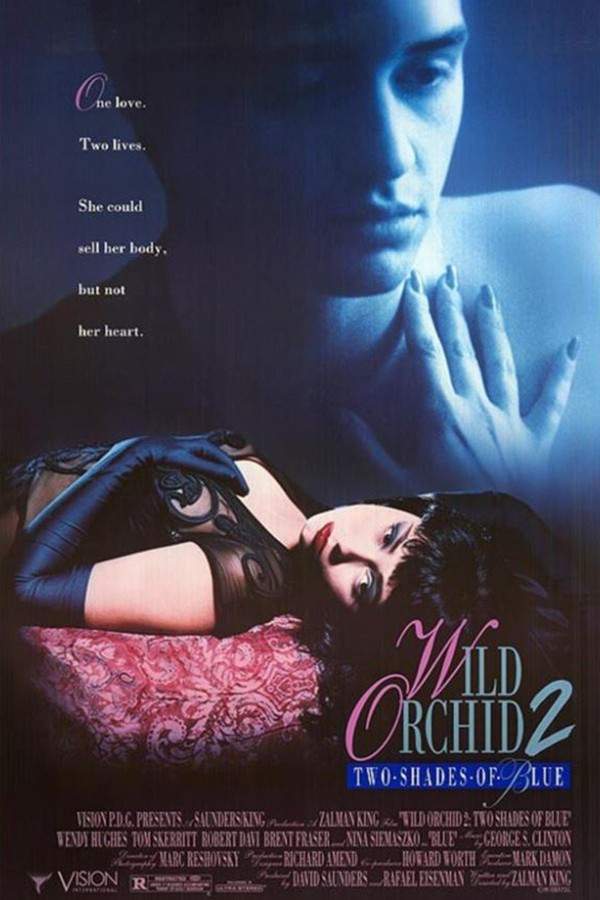
Wild Orchid II: Two Shades of Blue 1991


Directed by

Victoria Mahoney
Made by

Vision PDG
Where to Watch Wild Orchid II: Two Shades of Blue
See current US streaming, rental, and purchase options for Wild Orchid II: Two Shades of Blue (1991) via JustWatch.








Wild Orchid II: Two Shades of Blue Plot Summary
Read the complete plot summary and ending explained for Wild Orchid II: Two Shades of Blue (1991). From turning points to emotional moments, uncover what really happened and why it matters.
Set in 1958 California, 16-year-old Blue McDonald, Nina Siemaszko, travels from town to town with her father, Ham McDonald, Tom Skerritt, a drug-addicted musician. They drift through the countryside as Ham’s music meets the road, but the bond between them is strained by addiction and a shared struggle to survive. When Blue and Ham roll into a sleepy hamlet, she crosses paths with Josh Winslow, Brent David Fraser, a young man easing toward adulthood and a flirtation that hints at something deeper than casual townsfolk chatter. The moment is tense, charged with possibility, and quietly unsettled by the fragility of Blue’s world.
In Sacramento, Ham finds steady work at a local jazz club, a small beacon of routine in an unsettled life. After a late performance, he uses all the money earned to buy heroin, a desperate decision that drags the family further into a cycle they can’t escape. When Blue notices Ham’s withdrawal pains and the damage it’s causing, she confides in Jules, Joe Dallesandro, the club’s blunt owner. Jules offers heroin in exchange for sex, and Blue agrees, hoping to ease the pain for her father and perhaps stabilize their precarious life. The arrangement is brutal in its simplicity: a young girl trading her body for a temporary fix while the world around her keeps spinning. The price is steep, and the moment crystallizes a choice that will echo through Blue’s future.
The day Ham finally succumbs to the drugs and crashes his car, the film pivots from a struggle against addiction to a harsher, more intimate exploitation. In the days that follow, Elle, Wendy Hughes, a brothel madame who once knew Ham, seeks out Blue and offers her a way out of the street’s raw uncertainty—a job as a prostitute at a secluded mansion on the outskirts of town. Feeling boxed in with few options, Blue steps into Elle’s world, where she’s stripped of innocence but trained to control her nerves and her fear. Elle coaches her on technique and demeanor, teaching her how to endure clients and mask the tremor of anxiety behind a calm exterior. This is a world of performances and masks, and Blue learns to navigate them with a chilling, practiced resilience.
Blue’s new life collides with old loyalties when Josh Winslow and his father, Colonel Winslow, Stafford Morgan, arrive at the brothel. The father wants his son to lose his virginity, and he enlists a new partner in the drama of growing up. Josh does not recognize Blue at first, but Blue, ever professional in her new role, leads him into a room where the past and present blur. The encounter is clinical in its distance, a stark reminder of how far Blue has moved from the girl who once laughed at a churchyard flirtation. The moment underscores the film’s uneasy balance between affection and exploitation, love and coercion.
A few weeks pass and Blue participates in a bachelor party for a wealthy client, J.J. Clark, Don Bloomfield. The party is a sharp, unsettling microcosm of power and entitlement. Blue’s contempt for Clark surfaces when she strips and taunts him to equal her boldness, a provocation that earns Elle’s stern warning: never humiliate a client again or face consequences. The tension between resistance and submission grows more complicated as Blue’s performance becomes central to her survival—and to the control others try to exert over her.
The story’s turning point arrives when Senator Dixon, Christopher McDonald, a powerful client, invites Blue to a hotel for what begins as a routine encounter. Sully Sullivan, Robert Davi, Elle’s middle-aged driver, bodyguard, and fixer, drives Blue to the senator’s door. Inside, the scene shifts from a private session to a coercive, staged ordeal: a hood muffles her protests, a camera catches everything, and the mood shifts from fear to menace as Dixon’s authority is asserted. Sully interrupts the stag film, and Dixon’s aggression is deflected, but the damage lingers. In the ensuing panic, Sully overpowers the room’s men and escapes with Blue, sparing her from a crime that would surely derail the fragile thread she’s trying to weave toward freedom.
With Dixon exposed and the threat finally contained, Sully offers Blue a chance at a different life. He returns the stolen cash—more than $5,000—disguised as a lifeline to a fresh start. Blue fakes no bravado about the risk; she asks Sully if he would join her in leaving everything behind, and he agrees. The pair relocate to a quiet town not far from where Blue first glimpsed Josh, renting a small house where Sully imagines himself as a surrogate father while Blue reopens the doorway to a conventional life. Blue enrolls in high school, makes a few true friends, and even begins dating Josh again, who does not immediately recognize her as the same woman from the brothel days. The return to normalcy feels fragile but tangible—a chance to rewrite the past with a reliable future.
Elle reappears, not as a distant memory but as a looming threat. She crosses paths with Blue at the school, pretending to be a concerned mother, trying to recapture control by leveraging fear and manipulation. The threat of being dragged back into Sacramento grows as Elle demands Blue return, and the memory of the stag film lingers like a specter. When Blue discovers that Elle intends to force the entire cast of her workers into finishing the film, she refuses to surrender to the old life. The conflict escalates into a tense watch—one that culminates in a dramatic confrontation on a campus road where Elle and Winslow stage the projection of Blue’s past onto the present, hoping to shatter Blue’s carefully constructed new life.
Sully enters the scene once again, creating a tense standoff that tests Blue’s resolve. In the ensuing drama, Sully risks everything to protect Blue, and the two confront the complex web of coercion, secrecy, and debt that tethered their lives to Dixon and Elle. When the dust settles, the path ahead tilts toward a quieter, more honest existence. They escape together, and Blue continues to attend school, choosing a life grounded in choice rather than coercion.
In the final moment, Josh approaches Blue at the edge of a school corridor, confessing that he has always loved her and that his love endures despite the years and the secrets. The embrace that follows is a compact that signals a fragile, hopeful possibility—a chance for healing through mutual trust and affection rather than survival through exploitation. The film closes on the note of reconciliation and a quiet determination to build a life that honors Blue’s agency and the possibility of a future where love can outlast the shadows of the past.
Wild Orchid II: Two Shades of Blue Timeline
Follow the complete movie timeline of Wild Orchid II: Two Shades of Blue (1991) with every major event in chronological order. Great for understanding complex plots and story progression.
Blue and Ham travel across California
In 1958 California, 16-year-old Blue McDonald travels from town to town with her father, Ham, a drug-addicted musician. They drift along the road, with Ham's addiction souring every stop and Blue trying to survive his lapses. Their travel is a precarious prelude to the life Blue will be drawn into.
Blue meets Josh Winslow
Blue meets Josh Winslow, a young man who flirts with her as he heads to church in a small town. The encounter hints at a complicated connection between them that will echo through later events. The moment seeds tensions between innocence and the adult world Blue is entering.
Ham joins a Sacramento jazz club
Ham secures a job at a Sacramento jazz club and begins earning money from performances. After the show, he spends all the earnings on heroin, deepening his addiction. This marks the start of the drug cycle that will shape the family’s fate.
Blue helps Ham by turning to Jules for heroin
Blue discovers Ham's withdrawal and seeks help from Jules, the club owner. Jules offers heroin in exchange for sex, and Blue agrees to give up her virginity to him. She then delivers the heroin to Ham, hoping to ease his suffering, but the decision will have grave consequences.
Ham dies in a car crash after taking heroin
Having learned how Blue obtained the heroin, Ham uses it and drives away. The drug trip ends in a fatal car crash, crushing the family’s last threads of stability. The death marks a turning point that pushes Blue further into a dangerous world.
Elle the madame recruits Blue into prostitution
Days after Ham's death, Elle, a madame who once knew Ham, approaches Blue with an offer to work as a prostitute. Believing she has no options, Blue agrees and moves to Elle's mansion outside the city. The brothel becomes Blue's new, coercive home and source of income.
Blue trains at the brothel to seduce clients
Inside the brothel, Elle strips Blue naked and coaches her in seduction. Blue learns to stay calm and controlled while dealing with clients. The experience trains her for the complicated relationships and surveillance that follow.
Josh and Colonel Winslow visit the brothel
Josh Winslow and his father, Colonel Winslow, come to the brothel so Josh can lose his virginity. Blue, disguised in a wig, leads him into her room and they have sex. The encounter binds Josh to Blue's secret life without his realization.
Bachelor party for J.J. Clark
Blue participates in a bachelor party for a wealthy client, J.J. Clark. Frustrated by J.J.'s arrogance, she strips in the middle of the party and taunts him to do the same. Elle warns Blue not to humiliate clients again.
Senator Dixon's stag film attempt
Senator Dixon, one of Blue's early clients, arranges for a private stag film by bringing Blue to his hotel. Sully, Elle's driver and protector, drives Blue to the hotel. The film unfolds with a hood over Blue's head and a cameraman filming, until Sully intervenes, overpowering Dixon's men and escaping with Blue. The incident intensifies Blue's fear and dependence on Sully.
Blue and Sully start a new life in a familiar town
Sully gives Blue a bag with over $5,000 in cash that he stole from Dixon's room and proposes they run away together. The two settle in the same town where Blue first saw Josh, building a tentative new life. Blue enrolls in a high school, and Sully acts as a paternal figure as they try to establish normalcy.
Elle returns to Blue's life and threatens her
Weeks after their escape, Elle shows up at Blue's new school, pretending to be Blue's mother. She tries to force Blue to return to Sacramento and to compensate Dixon for the missing money by using three of her girls to finish the stag film. Blue resists and calls Elle's bluff, standing firm against reopening old wounds.
Campus confrontation reveals Blue's past
That evening, Blue goes to Josh's football game and consoles him as his team loses. Winslow lures Josh toward a building on campus where Elle waits with a film projector. Winslow and Elle screen the stag film for Josh, who recognizes Blue onscreen and is shaken. Blue confronts them, asking who they are to judge her.
Escape and confrontation on the road
Blue bursts in, demanding the film be stopped and asking Josh who they are to judge her. An armed standoff ensues when Elle tries to force Blue into a car to take her back to Sacramento, but Sully intervenes and they drive away. The confrontation marks a turning point as Blue and Sully escape from the old life and begin to redefine their future.
Josh confesses his love; Blue's new life begins
Blue continues living with Sully and attends high school, gradually rebuilding a sense of normal life. Josh eventually approaches Blue at her school and confesses that he has always loved her, and they share a tender embrace. The ending suggests a fragile hope that they can be together, free from the brothel's shadow.
Wild Orchid II: Two Shades of Blue Characters
Explore all characters from Wild Orchid II: Two Shades of Blue (1991). Get detailed profiles with their roles, arcs, and key relationships explained.
Blue McDonald (Nina Siemaszko)
A 16-year-old girl who travels with her drug-addicted father and becomes entangled in prostitution. She shows resilience and resourcefulness, yearning to quit and start anew, even as she negotiates danger, manipulation, and shifting affections. Her arc centers on seeking safety, love, and a sense of normalcy.
Ham McDonald (Tom Skerritt)
Blue's father, a musician battling heroin addiction. His struggles with withdrawal and dependence set off a chain of events, including his eventual death in a car crash after obtaining heroin to cope. He embodies the cycle of self-destruction and the consequences of addiction.
Jules (Joe Dallesandro)
Jazz club owner who offers heroin to Blue in exchange for sex, revealing the predatory dynamic Blue faces in the nightlife underworld. His interactions with Blue illustrate how easily exploitation can be institutionalized within entertainment venues.
Elle (Wendy Hughes)
A brothel madame who recruits Blue into prostitution and guides her into seduction. She wields control over Blue and orchestrates the stag film to blackmail or coerce, embodying the coercive forces behind the trade.
Sully Sullivan (Robert Davi)
Elle's driver, bodyguard, and unexpected protector who helps Blue escape her past. He becomes a paternal figure, offering money and support as Blue builds a new life in a small town with a hopeful future.
Senator Dixon (Christopher McDonald)
A powerful politician who engages Blue for sexual exploitation and uses influence to cover up the stag film. His downfall comes as his actions are confronted by Blue and Sully.
Joshua Winslow (Brent David Fraser)
A young man who flirts with Blue and loses his virginity to her at her first encounter. He later becomes a romantic interest who doesn't recognize her identity immediately, revealing the complexity of their evolving relationship.
Colonel Winslow (Stafford Morgan)
Josh's father who brings Josh to the brothel to lose his virginity. He represents the intersecting world of the military and the sexual politics that frame Blue's experiences.
J.J. Clark (Don Bloomfield)
Wealthy client at the bachelor party who exudes arrogance. Blue's confrontation with him in a high-society setting highlights the abuse of power and the commodification of desire.
Wild Orchid II: Two Shades of Blue Settings
Learn where and when Wild Orchid II: Two Shades of Blue (1991) takes place. Explore the film’s settings, era, and how they shape the narrative.
Time period
1958
Set in 1958 California, the film sits in a period marked by formal social mores and a burgeoning nightlife scene. Jazz clubs and street-level vice frame Blue’s experiences and the people who exploit her. The era’s attitudes toward youth, sexuality, and authority shape the actions of Jules, Elle, Dixon, and Sully as the plot unfolds.
Location
Sacramento, California, Brothel mansion outside the city, Small town California
The story unfolds across mid‑century California, with key action centered in Sacramento’s nightlife and a mansion brothel just outside town. The contrast between glamorous venues and hidden vice anchors Blue’s vulnerability and attempts to escape. Locations shift from crowded clubs to private rooms, then toward a quieter, small-town environment as her life changes.
Wild Orchid II: Two Shades of Blue Themes
Discover the main themes in Wild Orchid II: Two Shades of Blue (1991). Analyze the deeper meanings, emotional layers, and social commentary behind the film.
⚖️
Exploitation
The narrative centers on power imbalances that treat Blue as a commodity, manipulated by adults with money and influence. She is pulled into prostitution and coerced by those who control venues, clients, and the cycle of abuse. The plot exposes how institutions and individuals profit from vulnerability and control.
🌟
Redemption
Blue’s desire to quit prostitution and start over with Sully drives a hopeful arc toward redemption. Her pursuit of safety, education, and autonomy shows a struggle to reclaim agency in a world built on exploitation. The story tracks her progress toward a future that rejects the past harms.
🧭
Identity
Blue navigates shifting roles—from a naïve teenager to a sex worker to a student seeking a normal life—testing how appearances and labels shape who she is. The stag film and scrutiny from peers threaten her sense of self, while her choices push toward a clearer, self-defined identity. The journey is about finding consistency in a life full of conflicting pressures.

Coming soon on iOS and Android
The Plot Explained Mobile App
From blockbusters to hidden gems — dive into movie stories anytime, anywhere. Save your favorites, discover plots faster, and never miss a twist again.
Sign up to be the first to know when we launch. Your email stays private — always.
Explore the mobile appWild Orchid II: Two Shades of Blue Spoiler-Free Summary
Discover the spoiler-free summary of Wild Orchid II: Two Shades of Blue (1991). Get a concise overview without any spoilers.
In the sun‑baked towns of 1958 California, a fragile life drifts along the backroads of a jazz‑filled world. Blue McDonald, a sixteen‑year‑old with a quick smile and a stubborn spirit, travels with her father, Ham, a talented but troubled musician whose love of music is matched only by his battle with addiction. Their nomadic existence is a blend of smoky clubs, open highways, and the quiet desperation of a family trying to stay afloat while the notes they play fade into the night.
When the rhythm of their wandering life falters, Blue finds herself at a crossroads that could define her future. Elle, the poised headmistress of a secluded mansion that functions as a brothel, offers a fragile sanctuary: a place where shelter and money are exchanged for a role that blurs the line between survival and performance. The world inside the mansion is a polished yet shadowed stage, a place where every interaction feels like an audition for normalcy, and where Blue must learn to hide her trembling nerves behind practiced composure.
Amidst the soft glow of lanterns and the low hum of conversation, Blue also encounters Josh Winslow, a young man on the cusp of adulthood whose fleeting connection hints at something deeper than the transient encounters of their wandering lives. Their brief moments together are charged with the possibility of a life beyond the constraints that bind them, underscoring the film’s lingering question of whether love can truly flourish amid hardship.
The atmosphere of Wild Orchid II is steeped in a melancholy jazz soundtrack that underscores a coming‑of‑age tale set against a rugged, post‑war landscape. It balances the gritty reality of survival with the yearning for a brighter, more ordinary future, inviting the viewer to wonder how far Blue will go to reclaim agency over her own story.
Movies with Similar Twists and Themes
Uncover films that echo the narrative beats, emotional arcs, or dramatic twists of the one you're exploring. These recommendations are handpicked based on story depth, thematic resonance, and spoiler-worthy moments — perfect for fans who crave more of the same intrigue.


Featured on this page

What's After the Movie?
Not sure whether to stay after the credits? Find out!
Check out our other apps:

SAT Sphere
Build confidence for the Digital SAT.

Mori Atlas
Discover wild places worth protecting.

Luntero
Search smarter for a home in Amsterdam.

Plot Explained
Unravel movie endings and hidden clues.

Pokechamp
Dive into Pokémon data and battle logic.

Driving Theory
Get ready for your European theory test.

Movie Dust
Plan your next cinema trip with ease.

Musemap
Find art and culture as you travel.

Selkobase
Compare credentials before committing.

Local Manual
Turn an unfamiliar country into practical next steps.

Lernavi
Compare school systems before your next move.

GymRoam
Find a workout stop wherever your plans take you.
Explore Our Movie Platform
New Movie Releases (2026)
Famous Movie Actors
Top Film Production Studios
Movie Plot Summaries & Endings
Major Movie Awards & Winners
Best Concert Films & Music Documentaries
Movie Collections and Curated Lists
© 2026 What's After the Movie. All rights reserved.
Privacy Policy