
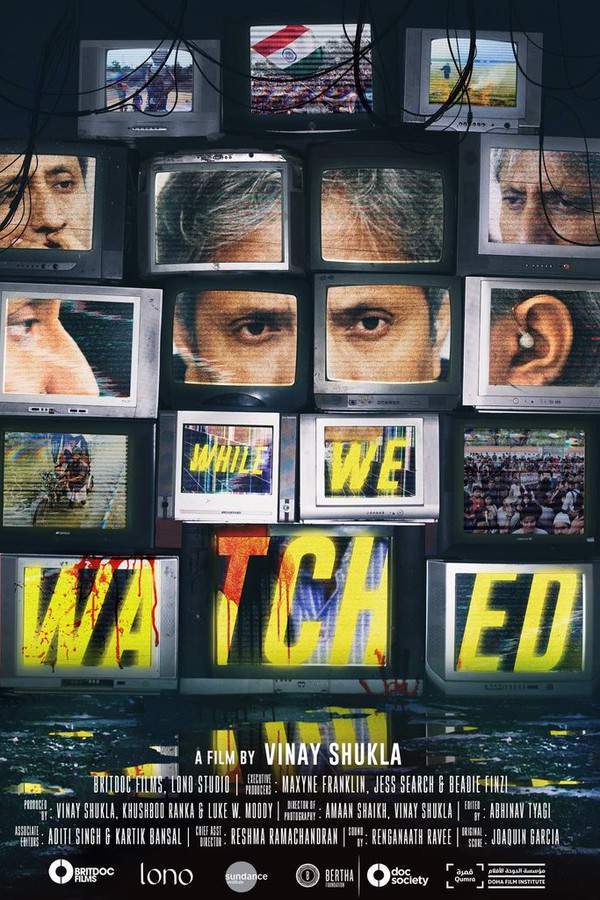
What Is While We Watched About?
The premise of While We Watched in 291 words, with nothing given away. The full story follows below.
While We Watched offers an intimate, observational glimpse into the world of contemporary Indian journalism through the work of Ravish Kumar, a veteran news editor whose calm, measured presence anchors the film. As a senior figure at a prominent newsroom, Kumar navigates the daily rhythms of producing primetime television — gathering facts, vetting sources, and shaping stories with care. The documentary sets its lens squarely inside this environment, inviting viewers into the thoughtful, often painstaking process behind a single newscast.
The world the film portrays is one in flux, where the currents of media ownership, political pressure, and shifting audience expectations have transformed the landscape of televised news. Once-reliable channels now wrestle with questions of bias and the rise of sensational, populist content, while journalists committed to factual reporting face mounting obstacles. The mood is quietly urgent, capturing the tension between a dedication to honest storytelling and the forces that make that commitment increasingly difficult to sustain.
Through Kumar and his colleagues, the documentary paints a portrait of individuals striving to hold the line on principle amid a profession under strain. The film observes the human texture of this struggle — long editorial discussions, the careful work of preparation before going on air, and the weight of responsibility that comes with speaking to millions. It is a study in resilience, focusing on the personal and professional pressures that shape those who choose to report truth in turbulent times.
Stylistically, the documentary favors a fly-on-the-wall approach, allowing the rhythms of the newsroom and the broader media environment to unfold naturally. Without sensationalism, it builds a compelling atmosphere of introspection and unease, drawing viewers into a world where the simple act of reporting the facts has become its own form of quiet defiance.
What Happens in While We Watched?
The complete story of While We Watched, from the first scene to the last, in 219 words (about 1 minute). Spoilers throughout. Names in the text link to 2 cast member pages.
Spoilers ahead
While We Watched is a poignant documentary that examines the transformation of mainstream Indian media over the last ten years. The film centers on Ravish Kumar, a senior executive editor at NDTV, profiling his professional struggle to maintain journalistic integrity in an era of post-truth and populist content. The film explores the rise of what Ravish Kumar termed “Godi media”—a phrase referring to lapdog media outlets that exhibit extreme bias toward the ruling government.
The narrative follows Ravish Kumar and his team as they engage in rigorous fact-checking and witness interviews to challenge incompetent governance and majoritarian policies. This factual approach is sharply contrasted with competing channels, where anchors often hyperbolically equate government criticism with treason. Beyond the studio, the film highlights the personal and professional toll of this environment, including financial pressures on critical media houses, tax raids, and threats of violence.
The documentary provides an intimate look at Kumar’s home life, specifically his interactions with his wife and daughter, who fears for his safety. It also captures his public reception, where he is simultaneously heckled and celebrated. Director Saurabh Shukla utilizes a recurring motif of “cake cuttings” to symbolize the constant departure of journalists fleeing the hostile climate. The story ultimately concludes on a positive note, highlighting Ravish Kumar receiving the prestigious Ramon Magsaysay Award in 2019.
While We Watched Timeline: Every Key Event in Order
13 key events in the order they happen, from “A Decade of Media Decline” to “Ramon Magsaysay Award”. 9 events name a place, across 7 locations.
- 1
A Decade of Media Decline
The film opens by surveying the transformation of Indian mainstream television news over the previous decade. Concentrated ownership, political bias and post-truth, divisive populist content have reshaped the industry. Many mainstream channels now carry the label 'Godi media', meaning lapdog media, a phrase incidentally coined by Ravish Kumar himself.
When:The previous decade Where:India
- 2
Ravish Kumar at NDTV
The documentary profiles Ravish Kumar, senior executive editor at NDTV, both at work in the studio and with his subjects. Kumar stands out as one of the few anchors still committed to factual reporting. Filmmaker Shukla follows his daily routine to explore the broader changes gripping Indian media.
Where:NDTV, New Delhi
- 3
Holding Power to Account
Kumar works to stick to factual news, criticizing the Indian government and its ecosystem whenever instances of incompetent governance and majoritarian policies emerge. This editorial stance puts him at odds with the ruling BJP. His brand of reporting stands in sharp contrast to the tone of most mainstream channels.
Where:NDTV newsroom
- 4
Planning the Day's Coverage
The film chronicles the discussions between Kumar and the NDTV team as they debate which events they need to cover. These editorial meetings reveal the tension between meaningful journalism and the sensationalism dominating Indian television. Despite mounting pressure, the team carefully selects the stories that matter.
Where:NDTV newsroom, New Delhi
- 5
Fact-Checking and Witness Interviews
Before any broadcast, extensive preparatory work takes place, including fact-checking and witness interviews. This meticulous groundwork must be completed before Kumar can go live on the primetime show he anchors. The documentary highlights this labor-intensive process as the backbone of responsible journalism.
Where:NDTV offices
- 6
Going Live at Primetime
Kumar anchors his primetime show, delivering coverage grounded in verified facts. The film captures him in the studio as he addresses viewers directly. His measured style stands in deliberate opposition to the shouting matches typical of rival channels.
When:Primetime Where:NDTV studio
- 7
Godi Media on Rival Channels
The documentary contrasts Kumar's coverage with that of competing television channels. Their anchors are shown hyperbolically conflating criticism of government policies with treason and going on diatribes against alleged internal and external enemies of India. The comparison underscores how far mainstream news has drifted from factual reporting.
- 8
Threats Against the News Team
The NDTV news team faces growing threats of violence because of their critical coverage. Journalists seen as critics of the BJP are targeted, with even threats of arrest looming over them. The film shows the personal toll that this climate of intimidation takes on the newsroom.
- 9
A Financial Squeeze
Media houses perceived as critics of the ruling BJP are plagued by financial troubles. Raids by tax authorities, dwindling government advertising revenue and banks refusing to provide loans all compound the pressure. These tactics gradually strangle news organizations that refuse to toe the government line.
Where:NDTV offices
- 10
The Cake Cuttings
NDTV staff are frequently shown cutting cakes to mark the departure of yet another colleague. Raids, revenue loss, banking troubles and threats of violence and arrest have led many journalists to leave the profession. Director Shukla observed that these 'cake cuttings' convinced him to tell the story, and they became a leitmotif of the documentary.
Where:NDTV newsroom
Show the other 3 events of While We Watched Hide the last 3 events
- 11
Family Life and Fear
Kumar is filmed at home interacting with his wife and young daughter. He has to deal with his daughter's fears for his life, a poignant consequence of the threats against him. These intimate scenes reveal the personal cost of his commitment to independent journalism.
Where:Kumar's home
- 12
Public Appearances
Kumar appears at public events where he is alternately heckled and lauded by audiences. These gatherings reflect the deeply polarized reception of his journalism in contemporary India. He endures hostility from government supporters while receiving admiration from those who value his work.
- 13
Ramon Magsaysay Award
The documentary ends on a high note with Ravish Kumar winning the Ramon Magsaysay Award in 2019. The prestigious honor recognizes his unwavering commitment to independent journalism. It serves as an uplifting conclusion after chronicling so much adversity endured by him and his team.
When:2019
Who Are the Main Characters in While We Watched?
2 characters, among them Ravish Kumar and Saurabh Shukla: who each one is and the part they play in the story. Every profile links to the actor’s page.
- RK
Ravish Kumar
Played by Ravish Kumar
Ravish Kumar is portrayed as a determined and principled journalist, serving as the senior executive editor at NDTV. He embodies the struggle for integrity in news coverage, striving to report facts in an era of increasing media bias and governmental pressure. His interactions with his family further reveal his personal challenges, especially with the safety concerns tied to his profession.
- 📰 Journalist
- 🎤 Media Figure
- SS
Saurabh Shukla
Played by Saurabh Shukla
Saurabh Shukla plays a key role as himself, providing insight and commentary on the media landscape. His observations highlight the communal bond among journalists, especially during times of change and uncertainty. He captures the struggles and emotions surrounding the departure of colleagues, making their departure a poignant theme of the documentary.
- 🎬 Filmmaker
- 🎥 Documentary
Where and When Is While We Watched Set?
While We Watched is set in India (2010s). Here is why the time and place matter to the story.
When
2010s
The movie spans the decade leading up to 2019, a tumultuous period for journalism in India characterized by rising populism and governmental pushbacks against dissent. During this time, media integrity came under threat, as issues such as political censorship and financing challenges grew significantly, changing the landscape of Indian news broadcasting.
Where
India
The documentary takes place in India, a country known for its rich cultural diversity and vibrant media landscape. In recent years, India's media has been under scrutiny for its ownership issues and biases. The film highlights the environment in which journalists operate, alongside the rising challenges they face.
- 🇮🇳 India
- 📰 Media
What Are the Themes of While We Watched?
3 ideas the story keeps returning to, among them Media Ethics, Recognition and Accountability.
-
01
Media Ethics
The theme of media ethics is central to the documentary, as it scrutinizes the integrity of journalistic practices in contemporary India. It reveals the struggles of news anchors like Ravish Kumar, who fight to maintain factual reporting amidst a sea of populist and biased media narratives. The documentary raises important questions about media responsibility and the impact of sensationalism on public discourse.
-
02
Recognition
The theme of recognition is highlighted towards the end of the film with Ravish Kumar receiving the Ramon Magsaysay Award in 2019. This accolade symbolizes acknowledgment of his commitment to truthful journalism and the challenges faced by credible news outlets. It reflects the importance of perseverance in the face of adversity for journalists dedicated to their craft.
-
03
Accountability
Accountability is a recurring theme as the documentary portrays the pressures put on journalists to represent the truth. It showcases how Kumar, despite threats and institutional pressures, strives to hold those in power responsible. This theme emphasizes the essential role of media in a democratic society, particularly regarding governmental accountability.
What Kind of Film Is While We Watched?
Dark in tone, with variable pacing and a moderate story, going by the plot summary.
- Tone
- Dark
- Pacing
- Variable
- Story
- Moderate
- Intensity
- Medium
- Ending
- Bittersweet
A sobering documentary that closely follows journalist Ravish Kumar as he navigates threats, financial pressure, and political hostility to uphold honest reporting in modern India.
- sobering
- watchful
- anxious
- somber
- contemplative
- urgent
- journalism
- media integrity
- political pressure
- free press
Content notes: threats of violence, political persecution, financial pressure, fear for personal safety, media suppression.
Quiz
How well do you remember While We Watched? Test yourself on the story.
