What Is What Remains About?
The premise of What Remains in 341 words, with nothing given away. The full story follows below.
In the muted chill of 1990s Scandinavia, a landscape of endless forests and hushed towns creates a backdrop where secrets linger like fog over frozen lakes. The visual palette is stark, the light low, and every quiet corner feels charged with an unspoken tension, suggesting that the past is never truly buried. This atmospheric world invites viewers into a psychological arena where the line between order and disorder is perpetually blurred.
Mads Lake emerges from the shadows as a figure both infamous and enigmatic. Recently convicted after confessing to a series of murders, he carries the weight of his notoriety into a prison that feels more like a crucible for the mind than a mere cell. His presence exudes a magnetic mix of charisma and menace, and the audience is left to wonder whether his confessions reveal truth, manipulation, or a deeper yearning for absolution. The film positions his inner turmoil as a central force that shapes the narrative’s tone, pulling the viewer into a contemplation of guilt, identity, and the possibility of redemption.
Anna Rudebeck, the therapist tasked with untangling his psyche, approaches the case with professional rigor tempered by a personal curiosity that borders on obsession. Her sessions become a stage where intellect and emotion clash, each encounter hinting at the fragile boundaries she must negotiate. Meanwhile, Søren Rank, the diligent investigating officer, brings a methodical perspective, driven by a need to reconcile the facts with the unsettling charisma of his subject. The three form an uneasy alliance, each drawn into the other’s orbit, creating a dynamic where professional duty, personal fascination, and the search for truth intertwine.
The film’s tone is deliberately unsettling, weaving together cold, clinical moments with flashes of raw, human vulnerability. It invites the audience to linger in the spaces between revelation and doubt, offering a meditation on how obsession can both illuminate and obscure the path to redemption. The mood remains taut, urging viewers to question how far one will go when the pursuit of understanding becomes a mirror for their own hidden desires.
What Happens in What Remains?
The complete story of What Remains, from the first scene to the last, in 519 words (about 2 minutes). Spoilers throughout. Names in the text link to 7 cast member pages.
Spoilers ahead
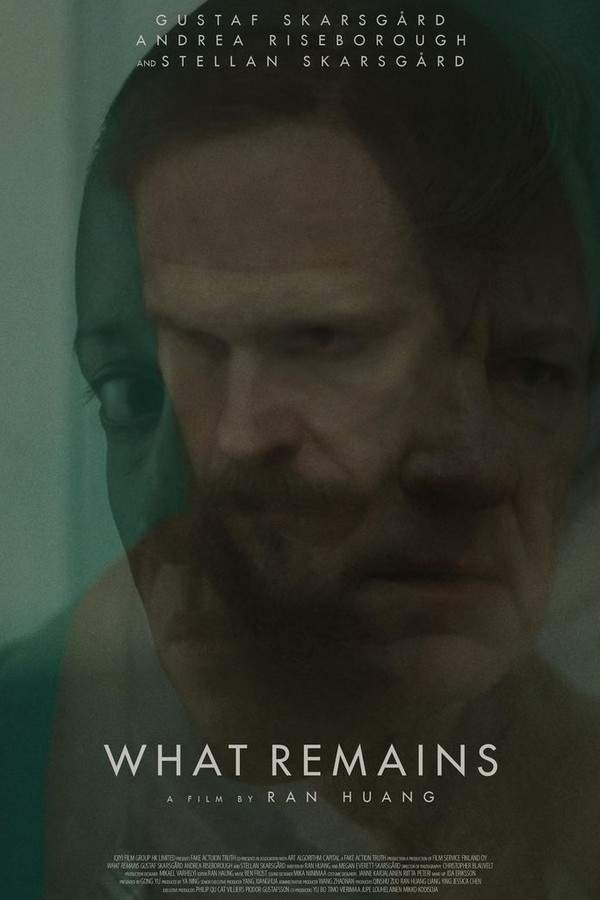
What Remains is a Scandinavian thriller set in the 1990s, loosely based on the infamous Thomas Quick case from Scandinavian history. The story centers on a dangerous, psychologically unsettled figure—Mads Lake, Gustaf Skarsgård—who is accused of a string of brutal crimes and becomes the focal point of a small-town murder inquiry. The film crafts a stark, wintry atmosphere where quiet streets feel crowded with unspoken questions and memory edges ever closer to the present.
As the investigation unfolds, the narrative threads together the lives of several damaged individuals. Soren Rank, Stellan Skarsgård, a seasoned investigator, grapples with unreliable testimonies and shifting memories as he tries to separate fact from rumor. Anna Rudebeck, Andrea Riseborough, a woman linked to the case with hidden stakes, moves through the town’s corridors with careful restraint, offering clues that invite scrutiny rather than closure. The cast expands this atmosphere of tension with Lillemor, Éva Magyar, whose presence amplifies the sense of communal fragility, and Elin, Milka Ahlroth, whose perspective introduces a different generational lens on the unfolding events. Alongside them, an Investigator, Jussi Kostamo, Dr. Jepsen, Antti Luusuaniemi, and other figures populate a web of relationships that blur the lines between witness and participant.
The plot follows Mads Lake, a Scandinavian man who previously went by Sigge Storm, as past and present collide. His history anchors the drama while the town’s focus widens to include a local pastor and an ex-convict, suggesting a deeper, interconnected web of sin and consequence. The tension builds not through constant action but through the slow drip of memory, motive, and motive’s ripple effects across a community already primed for suspicion.
What Remains aspires to a psychological deep-dive, exploring how trauma, guilt, and the malleable nature of truth shape a small society. The film emphasizes the fragility of certainty and the way personal narratives can distort or illuminate what really happened. At times it feels like an unholy triad of damaged souls—Mads Lake, Soren Rank, and Anna Rudebeck—each carrying their own burden, each pulled by forces too powerful to be fully explained by evidence alone. The attempt to weave together a quiet, introspective investigation with a broader crime story aims to offer a nuanced meditation on memory and accountability.
Despite these ambitions, some critics describe the film as unfocused or not fully engaging, leaving viewers detached from its core quartet of troubled figures. The reception underscores a tension between the movie’s desire to unfold a meticulous psychological puzzle and the perception that the drama never fully coalesces around a singular, compelling through-line. Yet the atmosphere—frigid landscapes, hushed conversations, and the weight of untold stories—continues to provoke discussion about how truth is constructed, who gets to tell it, and what remains when the noise of memory finally quiets.
In the end, What Remains presents a austere, atmospheric meditation on truth, memory, and the persistence of hidden histories. The film invites audiences to linger on unanswered questions, to consider how a community’s past can cast long shadows over its present, and to ponder what, if anything, can still be recovered from the fog of events that refuse to fully reveal themselves.
What Remains Timeline: Every Key Event in Order
12 key events in the order they happen, from “Introduction of Mads Lake in the 1990s town” to “Final impression: unresolved truth and lingering questions”. 10 events name a place, across 10 locations.
- 1
Introduction of Mads Lake in the 1990s town
In the opening sequences, the film introduces Mads Lake, a Scandinavian man whose past is tangled with the name Sigge Storm. The action is firmly rooted in the 1990s, establishing the era's mood and the stark, remote setting. This introduction sets up a character whose psychology will drive the mystery.
When:1990s Where:Scandinavian town
- 2
A brutal murder accusation shocks the town
The discovery or accusation of a psychopathic individual triggers the investigation and ignites fear in the town. Investigators pursue leads as residents react with suspicion and unease. The suspect's identity remains murky early on, heightening suspense about what really happened.
Where:Small town
- 3
The murder becomes linked to a pastor and an ex-convict
Investigators begin to connect the murder to a local pastor and an ex-convict, suggesting a web of secrets beneath the town's surface. The emerging links hint at deeper guilt and shared history among flawed characters. The town's surface calm cracks as these connections come to light.
Where:Small-town church / town
- 4
Mads Lake's past and alter ego emerge
Mads Lake's backstory as Sigge Storm surfaces, revealing a turbulent past that may inform his present actions. Hints and flashbacks show the transformation from Sigge to Mads and the complex psychology behind him. The emphasis shifts toward psychological depth rather than straightforward detective work.
Where:Past scenes and present town
- 5
Forest imagery frames the narrative
Imagery of a dark forest frames the narrative, echoing unspoken truths and hidden sins. Characters confront past shadows as the investigation deepens and the town's defenses fray. The forest becomes a motif for the blurred line between guilt and innocence.
Where:Forested outskirts
- 6
Three damaged souls form the thematic triangle
The film centers on three damaged souls—the alleged killer, the pastor, and the ex-convict—whose psyches intertwine. Each carries a private history that influences motive and perception. The dynamic is described as an 'unholy trinity' of the narrative, shaping how events unfold.
Where:Town and church
- 7
Investigation probes memory vs. truth
Memory, testimony, and truth collide as the investigation probes reliability and manipulation. The film leans into psychological intrigue rather than a linear detective plot. Viewers are invited to doubt what is real about the crime and its suspects.
- 8
Mads Lake's actions deepen the mystery
Mads Lake's current actions during the investigation complicate perceptions of guilt and innocence. His past continues to haunt him as new clues surface and old secrets resurface. The narrative maintains tension by keeping answers elusive.
Where:Town
- 9
Climactic revelations tease but don't resolve
Key revelations hint at the truth behind the murder, but the film avoids neat resolutions. The interplay between the damaged figures remains unsettled, leaving room for interpretation. Viewers are left with questions about motive, responsibility, and what remains of trust.
Where:Town/Forest
- 10
Ending leaves audience disconnected yet prompts discussion
The narrative closes with an unresolved atmosphere, reflecting the film's critics' notes about feeling uninterested or disconnected. The psychological focus lingers longer than a definitive solution. The ending invites discussion rather than closure.
- 11
Setting and historical context reaffirmed
The story is set in the 1990s and ties loosely to the infamous Thomas Quick case, grounding the drama in a controversial Scandinavian real-life tale. The mood and setting amplify a sense of small-town crisis amid larger historical echoes. The film uses these elements to frame its psychological exploration.
When:1990s Where:1990s Scandinavia
- 12
Final impression: unresolved truth and lingering questions
The ending leaves the fates of Mads Lake, the pastor, and the ex-convict ambiguous, prompting debate about guilt and truth. The trio's dynamics continue to haunt the audience after the credits roll. What remains is a mood and a set of questions rather than a resolved conclusion.
Where:Town and forest
Who Are the Main Characters in What Remains?
3 characters, among them Mads Lake (Gustaf Skarsgård), Pastor and Ex-convict: who each one is and the part they play in the story. 1 of them link to the actor’s page.
-

Mads Lake (Gustaf Skarsgård)
Played by Gustaf Skarsgård
An enigmatic Scandinavian man whose turbulent past and apparent charisma mask deeper psychological turmoil. He is portrayed as the central figure whose behavior triggers suspicion and fear in others. His volatile temperament and haunted memories drive the tension, challenging other characters' perceptions. The portrayal invites scrutiny of whether he is a victim, perpetrator, or both.
- 🧠 Complex psyche
- 🕳️ Hidden past
- 🧭 Ambiguity
- P
Pastor
A local religious figure whose connections to the town’s secrets suggest a moral center that may be more fragile than it appears. His involvement hints at how faith and community pressure intersect with guilt and accountability. The character embodies the idea that authority can complicate the pursuit of truth.
- ⛪️ Religious influence
- 🕯️ Secrets
- E
Ex-convict
A figure tied to the town’s darker history, whose return rekindles old resentments and raises questions about loyalties and justice. His presence exposes the ways past crimes continue to haunt the present and shape local dynamics. The character embodies the blurred lines between crime and punishment within a tight-knit community.
- 🚪 Criminal past
- 🌫️ Secrecy
Where and When Is What Remains Set?
What Remains is set in Small-town Scandinavia (1990s). Here is why the time and place matter to the story.
When
1990s
Set in the 1990s, the story unfolds in a pre-digital era where investigations rely more on interviews and traditional forensics. The era’s social dynamics shape trust and suspicion within the town, coloring everyone’s actions. The plot’s real-world inspiration from the Thomas Quick case anchors its psychological intrigue in a specific historical context. The time frame contributes to a sense of moral ambiguity that the film explores.
Where
Small-town Scandinavia
The film unfolds in a remote Scandinavian town surrounded by dense forests, creating a claustrophobic atmosphere. The close-knit community means secrets spread quickly and reputations are heavily scrutinized. The town’s social fabric is intertwined with religious institutions, which influence how guilt and innocence are perceived.
- 🌲 Forested setting
- 🏘️ Close-knit community
- ⛪️ Religious influence
What Are the Themes of What Remains?
3 ideas the story keeps returning to, among them Psychology, Mystery and Atmosphere.
-
01
Psychology
The film centers on a deeply damaged psyche, portraying a psychopathic figure whose actions trigger a cascade of moral ambiguity. Mads Lake's presence drives the story, pulling characters into a maze of motives and hidden traumas. The narrative leans into unreliable perceptions, inviting viewers to question what really happened. As the story unfolds, the boundaries between victim and perpetrator blur, leaving room for interpretation.
-
02
Mystery
A small-town murder becomes a hinge for broader secrets, linking a pastor and an ex-convict to the central crime. Investigation is slow, data-limited, and colored by personal histories rather than clear forensic facts. Suspicions are raised and red herrings introduced, challenging any straightforward truth. The mystery remains unsettled, reflecting the film's aim to provoke dialogue rather than deliver neat answers.
-
03
Atmosphere
The mood is thick with fog, dusk, and the oppressive stillness of a forested landscape. Sound design and pacing create a sense of unease, even when the plot stalls. This atmospheric approach underlines the film's focus on psychological rather than action-driven suspense.
What Kind of Film Is What Remains?
Dark in tone, with slow pacing and a complex story, going by the plot summary.
- Tone
- Dark
- Pacing
- Slow
- Story
- Complex
- Intensity
- High
- Ending
- Ambiguous
A slow-burning, atmospheric Scandinavian thriller that immerses the viewer in a world of stark landscapes, psychological tension, and the heavy weight of uncovering traumatic truths within a fragile community.
- atmospheric
- tense
- melancholic
- suspenseful
- oppressive
- somber
- crime investigation
- trauma
- memory
- guilt and redemption
Content notes: child molestation, child abuse, sexual assault, murder, trauma.
Quiz
How well do you remember What Remains? Test yourself on the story.