
Violent Playground 1958

Directed by
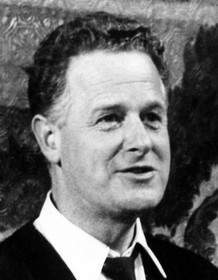
Basil Dearden
Made by

The Rank Organisation
Violent Playground Plot Summary
Read the complete plot summary and ending explained for Violent Playground (1958). From turning points to emotional moments, uncover what really happened and why it matters.
The opening moments peel back the surface of a troubled neighborhood by sketching a gallery of misfit children who will loom large in a tense, later classroom siege. Across the city, a string of arson attacks unfolds, and curious metal laundry tags appear at each scene, hinting at a coordinated, almost ritualistic pattern behind the flames. Set against this backdrop, the story centers on a Liverpool street gang led by Johnny Murphy, David McCallum in the role of Johnnie Murphy, a young man whose choices pull him deeper into trouble as the heat rises around him.
Into this combustible mix steps the community’s juvenile liaison officer, Sergeant Truman, a steady, morally complex figure who moves through the Murphy household and becomes entangled with Johnny’s sister. The intimate, fragile connection between Truman and Cathie Murphy, Anne Heywood in the part, introduces a delicate moral counterweight to the escalating menace. Truman sees echoes of a past investigation into an arsonist known as the “Firefly,” and the case begins to blur the lines between punishment, reform, and understanding. He wrestles with the sense that the same forces driving the Firefly and Johnny Murphy are part of a single, spiraling social problem—the kind that can erupt into violence when desperation becomes a language.
Meanwhile, the film presents Father Laidlaw, a local priest who embodies a quiet, humane attempt to mend a fractured community. Peter Cushing plays this figure with a steadiness that underlines the emotional weight of the narrative, as he bears witness to the pain and longing etched on the faces of families, teachers, and police officers alike. The priest’s presence is less about miracle cures and more about moral steadiness in the face of mounting chaos.
The emotional axis widens with the entry of the Chinese boy Alexander, Michael Chow, and his sister Primrose, Tsai Chin. Alexander becomes a focal point when he is knocked down and fatally injured in a high-speed incident involving Johnny Murphy. The violence erupts during a confrontation over a laundry van belonging to Alexander’s family, a safe haven turned weapon as Johnny tries to outrun the pursuing officers after attempting to set fire to a local hotel. The death of Alexander becomes a crushing, pivotal moment that anchors the film’s grim arc and foreshadows the tragedy to come.
As events hurtle toward their culmination, Murphy pivots from petty crime to a calculation that shocks everyone: he takes a classroom full of children hostage, armed with a machine gun, in a scenario that resonates with chilling contemporary resonance. The sequence unfolds with a field of anxious faces pressed against the windows and a growing crowd of anxious parents below. The police on the ground, the priest up above, and the school’s weary staff all brace for a confrontation that could shatter lives in an instant.
In the heat of the siege, Murphy’s defiance becomes a brutal test of courage and control. He taunts the authorities below as the students’ names are coaxed from them one by one, a cruel reminder of the personal stakes at the heart of the crisis. The priest confronts Johnny in a moment that seems to ask whether mercy can endure in such a volatile situation. To gain leverage, the police position a ladder at the wall, and Murphy urges young David Catlin, Christopher Cooke, to tell them to back off, a plea that heightens the tension between authority and compassion. The ladder becomes a brittle symbol, and when Johnny pushes it away, the priest is injured in the fall, a wound that adds a fatal, sacrificial dimension to the standoff.
The escalation worsens when Johnny fires at a student, leveling the room with fear and despair. Cathie’s courage comes to the forefront as she is sent in to speak to Johnny, insisting that if they do not get the wounded girl to a hospital, she will die. The exchange is a stark moral test: can a teenager’s rage be diverted through a plea for life, or is there no escape from the trap he has set? The children are gradually released, but not before a moment of painful truth: two young siblings—the Murphy twins—are left behind, their future now tied to the care of the headmaster, Evans. Clifford Evans embodies that authority, stepping in to protect and stabilize where possible.
When the dust settles, the sergeant who has walked a perilous line between enforcement and empathy drives Cathie home. He asks her out, a gesture that could signal a return to ordinary life, yet she declines, choosing instead to express her gratitude with a kiss on the hand. The resolution feels both earned and unsettling: the community remains scarred, the immediate danger is contained, but the social wounds persist, hinting at cycles that will outlast the film’s final frame.
The film closes with a quiet, unresolved note about healing and responsibility. It presents a stark, unsentimental portrait of a city under pressure, where children become both casualties and catalysts of adult failure and where the line between policeman, priest, and parent blurs in the service of a fragile hope for change. The closing images linger on the remaining children, the two siblings unseen by the crowd, and the headmaster’s steady care for them—a reminder that even in a moment of crisis, care and accountability must coexist.
In the end, What’s After the Movie offers a moral meditation on resilience, community, and the difficult path from chaos to competence. It grounds its high-stakes drama in intimate human connections—between Johnny Murphy and his sister, between Truman and Cathie, between a priest trying to mend what’s broken—and it leaves audiences with a lasting impression of how communities confront the consequences of violence and fear, and how individuals find ways to keep faith, even when the future remains uncertain.
Violent Playground Timeline
Follow the complete movie timeline of Violent Playground (1958) with every major event in chronological order. Great for understanding complex plots and story progression.
City-wide arson wave begins
A series of arson attacks sweeps the city, leaving behind metal laundry tags at each scene. The tension rises as investigators try to connect the fires and the youths behind them. The opening scenes establish the pattern of violence that drives the film.
Murphy gang takes shape
The story centers on a Liverpool street gang led by Johnny Murphy. Their bold crimes set the tone for the escalating danger in the community. The gang's presence foreshadows the violence to come.
Truman visits the Murphy household
Juvenile liaison officer Sergeant Truman visits the Murphy home and begins a romantic relationship with Johnny's sister. This budding bond blurs professional boundaries and personal loyalties. It also ties Truman emotionally to the Murphy family.
Firefly parallels emerge
Truman notes striking similarities between Johnny's acts and the arsonist known as Firefly. He begins to see a pattern behind the fires and the gang's behavior. The investigation tightens around Murphy and his circle.
Priest Cushing's interventions
Cushing plays a local priest trying to heal the social problems of the locality. He stands as a moral counterpoint to the escalating violence. His presence emphasizes the community's fragility.
Alexander's death
Chinese boy Alexander is knocked down and killed when Johnny steals and drives away the laundry van. The tragedy highlights the real-world consequences of the gang's actions. Primrose, Alexander's sister, is left to mourn.
Hotel arson attempt intensifies
Johnny and his crew attempt to set fire to a local hotel, increasing public fear. The violence escalates as authorities struggle to intervene. Alexander's death hangs over the act as the city reels.
Classroom siege begins
In a chilling final sequence, Murphy holds a classroom full of children hostage with a machine gun. He taunts the police from below as the standoff unfolds. The school's panic and fear set the film's emotional core.
Public reaction and names
A crowd of parents gathers outside, awaiting news and calling out the children's names. The siege becomes a public spectacle, amplifying the emotional pressure on all sides. The confrontation between Murphy and the authorities deepens.
Priest confronts Murphy; ladder plan
The priest confronts Johnny during the siege. Police bring a ladder to the wall, intending to reach the hostage situation. Johnny uses the moment to escalate the danger.
Cathy negotiates for hospital care
Cathy, a hostage, is tasked with persuading Johnny to allow a child to be taken to hospital. She warns that without medical care the girl will die. Her negotiation reveals the personal stakes for both sides.
Endgame and aftermath
The children are released, leaving Cathy and Johnny alone. Johnny is arrested afterward, and Cathy feels betrayed by police assurances. Two final children are not collected by the end; the headmaster takes care of them.
Ending: sergeant and Cathy
After the siege, the sergeant drives Cathy home and asks her out, but she declines. She regards his gesture with gratitude, even kissing his hand. The moment provides a quiet epilogue to the catastrophe.
Violent Playground Characters
Explore all characters from Violent Playground (1958). Get detailed profiles with their roles, arcs, and key relationships explained.
Johnny Murphy (David McCallum)
A charismatic and reckless gang leader who pushes his comrades toward escalating crimes. His actions trigger the investigation and the deadly hostage standoff that defines the film’s climax. His interactions with his sister and the priest expose his vulnerability beneath a bravado-driven exterior.
Father Laidlaw (Peter Cushing)
A local priest attempting to heal the social problems of the locality, offering moral guidance and a humane alternative to police force. He confronts Johnny during the crisis, standing as a symbol of mercy amid violence.
Jack Truman (Stanley Baker)
A dedicated juvenile liaison officer who becomes personally entangled with Johnny’s sister. He represents the law’s patient, investigative approach as he tracks the arsonist ‘Firefly’ and the gang’s activities.
Primrose (Tsai Chin)
A Chinese girl and sister of Alexander, whose presence in the gang’s world highlights cross-community tensions and the human cost of the youths’ actions.
David Catlin (Christopher Cooke)
A young student caught in the crossfire, emblematic of innocent victims affected by adults’ violence. His fate underscores the film’s critique of violence harming the most vulnerable.
Cathie Murphy (Anne Heywood)
Johnny’s partner who attempts to intervene and protect a child in danger. Her resolve and fear reflect the collateral impact of the crisis on families.
Headmaster Evans (Clifford Evans)
A school authority figure who represents the institution’s role in maintaining order and addressing the social problems fueling the unrest.
Violent Playground Settings
Learn where and when Violent Playground (1958) takes place. Explore the film’s settings, era, and how they shape the narrative.
Location
Liverpool, United Kingdom
Set in a Liverpool neighborhood, the film uses dense urban streets, schools, and local buildings as a backdrop for youth crime and social strain. The city’s close-knit communities amplify tensions between residents, police, and authorities. The setting shows how deprivation and lack of opportunity feed cycles of violence among the young.
Violent Playground Themes
Discover the main themes in Violent Playground (1958). Analyze the deeper meanings, emotional layers, and social commentary behind the film.
🧩
Delinquency
The film centers on a gang-led youth culture that escalates petty crimes into a deadly hostage crisis. It examines how mischief and aggression are learned behaviors within a social environment that fails to contain them. The narrative shows the consequences of unchecked juvenile delinquency on families and the wider community.
🕊️
Moral Dilemma
A priest tries to mediate and heal social ills, highlighting faith-based attempts to redeem troubled youth. The opposing forces of law, punishment, and forgiveness collide during the showdown. The story questions whether violence can ever be a justified means to protect others.
🔥
Violence and Trauma
The arson terror and the classroom siege culminate in a brutal display of violence that leaves emotional scars on families and witnesses. The film portrays trauma as a shared burden that tests the limits of police restraint and parental protection. It also shows the community grappling with sudden, devastating losses.

Coming soon on iOS and Android
The Plot Explained Mobile App
From blockbusters to hidden gems — dive into movie stories anytime, anywhere. Save your favorites, discover plots faster, and never miss a twist again.
Sign up to be the first to know when we launch. Your email stays private — always.
Explore the mobile appViolent Playground Spoiler-Free Summary
Discover the spoiler-free summary of Violent Playground (1958). Get a concise overview without any spoilers.
In a city that constantly hums with ambition yet hides a restless undercurrent, the film strips away the glossy veneer of a sprawling metropolis to reveal the stark, combustible reality of its streets. The cinematography feels almost forensic, pulling the viewer into alleys and council estates where every cracked window and rust‑ed metal tag hints at a deeper, unspoken danger. The tone is unflinching and atmospheric, balancing moments of explosive tension with a quiet, lingering melancholy that suggests the city itself is a character bruised by neglect.
The narrative centers on Sergeant Truman, a Liverpool juvenile liaison officer whose job forces him to walk the fragile line between authority and empathy. He becomes entangled in a tense, cat‑and‑mouse pursuit with Johnny Murphy, a volatile young man whose restless energy and fascination with fire threaten to ignite the fragile peace of the neighborhood. Their uneasy dance is less a chase than a probing of how far one can push a troubled youth before society must confront the result, and it places the officer’s own moral compass under relentless scrutiny.
Around them, a network of fragile connections offers both support and further complication. Cathie Murphy, Johnny’s sister, provides an intimate counterpoint, revealing how family ties can both anchor and destabilize a young life caught in the city’s grip. Father Laidlaw, a local priest, embodies a quiet, humane attempt to mend the community’s fractures, offering counsel that feels more like a steadying hand than a miracle cure. The presence of school staff and other community figures hints at a broader social tapestry, each thread pulling at the same frayed edge.
Together, these characters inhabit a world where the line between protector and predator blurs, and every interaction feels charged with the possibility of both redemption and disaster. The film’s relentless focus on atmosphere, moral ambiguity, and the everyday violence that simmers beneath the surface invites the audience to contemplate how a city’s “playground” can become a battlefield, and what it takes for anyone—official or ordinary—to step into that fire.
Movies with Similar Twists and Themes
Uncover films that echo the narrative beats, emotional arcs, or dramatic twists of the one you're exploring. These recommendations are handpicked based on story depth, thematic resonance, and spoiler-worthy moments — perfect for fans who crave more of the same intrigue.



Featured on this page

What's After the Movie?
Not sure whether to stay after the credits? Find out!
Check out our other apps:

SAT Sphere
Build confidence for the Digital SAT.

Mori Atlas
Discover wild places worth protecting.

Luntero
Search smarter for a home in Amsterdam.

Plot Explained
Unravel movie endings and hidden clues.

Pokechamp
Dive into Pokémon data and battle logic.

Driving Theory
Get ready for your European theory test.

Movie Dust
Plan your next cinema trip with ease.

Musemap
Find art and culture as you travel.

Selkobase
Compare credentials before committing.

Local Manual
Turn an unfamiliar country into practical next steps.

Lernavi
Compare school systems before your next move.

GymRoam
Find a workout stop wherever your plans take you.
Explore Our Movie Platform
New Movie Releases (2026)
Famous Movie Actors
Top Film Production Studios
Movie Plot Summaries & Endings
Major Movie Awards & Winners
Best Concert Films & Music Documentaries
Movie Collections and Curated Lists
© 2026 What's After the Movie. All rights reserved.
Privacy Policy