
Vertical Features Remake 1978

Directed by
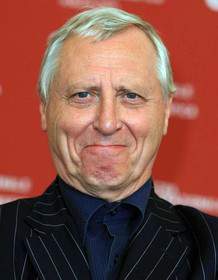
Peter Greenaway
Made by

Arts Council of Great Britain
Vertical Features Remake Plot Summary
Read the complete plot summary and ending explained for Vertical Features Remake (1978). From turning points to emotional moments, uncover what really happened and why it matters.
Presented as a mockumentary, the film follows an institute that has done its best to understand Luper’s project and reconstruct his work according to his specifications, using rediscovered film and notes as the source material. The narration is guided by the voice of Colin Cantlie as the Narrator, who threads through a careful, documentary-style examination of the material and its implications, inviting viewers to consider how much of what is shown is faithful to Luper’s original intent and how much is the institute’s interpretation.
VFR1 unfolds with a deliberate ritual: a narrator counts from 1 to 11 in steadily-slower increments, and with each number a new film shot appears. The sequence feels meticulously structured, yet there is no obvious narrative thread linking the images beyond the counting framework and the institute’s attempts to align them with Luper’s supposed specifications. The effect is contemplative, inviting viewers to notice the texture of each shot while questioning whether a hidden logic holds the pieces together.
As the film moves into its critique, new material is introduced and academic voices weigh in on the nature of the work. There is a pervasive sense that the project might be less formal than the counting-driven sequence of VFR1 suggests, and that the institute’s reconstruction may be operating within its own interpretive framework rather than a transparent, original blueprint.
VFR2 plays next, with a noticeable shift toward thematic unity. The shots are arranged more thematically—fence posts are juxtaposed with other fence posts, edges and boundaries recur as motifs, and the overall montage seems to be building a mood or concept rather than a straightforward story. The accompanying piano is extremely sparse, which accentuates pauses and the textures of silence as much as the images themselves. The result is a quieter, more inward kind of viewing, where meaning emerges from repetition, rhythm, and the relationships between seemingly isolated glimpses.
New criticism of VF2 is explained, raising provocative questions about the existence of Luper himself. Some skeptics wonder whether Luper is a real figure or a constructed persona invented by the institute to embark on an experimental film project. Others suggest that more modern, non-landscape footage was inserted into the sequence, allegedly by another hand, and not in keeping with what Luper had envisioned. The academics contend that if Luper was working toward a central idea, that idea would likely be located at the middle of the square described before VFR1, rather than at the final shot of VFR, implying a hidden center that the current ordering may be moving away from.
VFR3 arrives with a new dynamic, as shots change in a call-and-response pattern set to a basic piano score. The cadence shifts, and viewers are invited to listen for dialogue between shots as if they were responding to one another in a choreographed conversation. This segment invites closer attention to how the images converse over time, rather than how they tell a conventional story.
The critique of VFR3 deepens, with critics speculating that Luper may have been cautioning against a societal reshaping project, or perhaps documenting the landscape as it existed before such a vast undertaking. The project itself is hinted to be well known within the film’s world, but concrete information remains scarce, reinforcing the sense of mystery surrounding Luper’s intentions and the institute’s reconstruction.
VFR4 closes the piece with an acceleration in rhythm. The shots move more briskly and professionally, riding a livelier piano score that injects momentum into the concluding sequence. The cadence returns a sense of completion, yet the film leaves behind more questions than answers, underscoring the enigmatic nature of Luper’s project and the institute’s attempt to capture it on film.
Throughout, the film remains attentive to how reconstruction and interpretation shape our understanding of art. It raises questions about authorship, provenance, and the boundaries between documentary observation and artistic inference, all while maintaining a measured, analytical voice. The result is a thoughtful, intricate meditation on process, perception, and the elusive center of a long-sought project that may or may not exist in the form the institute imagines.
Vertical Features Remake Timeline
Follow the complete movie timeline of Vertical Features Remake (1978) with every major event in chronological order. Great for understanding complex plots and story progression.
Institute's attempt to understand Luper's project
The Institute undertakes an effort to understand and reconstruct Luper's project according to his specifications. They rely on rediscovered film and notes as the primary source guiding the reconstruction. This archival reconstruction frames the documentary's mock-analytic approach from the outset.
Rediscovered film and notes used for reconstruction
Rediscovered film and notes serve as the backbone for the reconstruction. Researchers insist these materials reflect Luper's stated specifications, guiding how the project is presented. The process converts raw archives into a cohesive, though contested, core for subsequent screenings.
VFR1 begins; narrator counts from 1 to 11
VFR1 is shown, and a narrator counts from 1 to 11 in steadily-slower increments. With each new number, a fresh film shot appears on screen, creating a segmented montage. There is no apparent relationship between the shots, according to the account.
The shots in VFR1 appear unconnected
The shots in VFR1 are presented as a collage without an obvious through-line. The counting guides the tempo, but it does not reveal a narrative logic. Scholars later interpret this as adherence to a non-traditional, possibly speculative method.
Academic criticism of VFR1 is revealed
The narrator reveals academic criticisms of VFR1. Scholars articulate questions about form and intent, challenging conventional documentary practices. The intervention frames the film as a meta-commentary on authenticity and reconstruction.
Discovery of new material; debates on Luper's formality
New material is discovered, expanding the discussion around Luper's project. Some observers claim Luper's project was less formal than VFR1, inviting alternative interpretations. The discovery broadens the debate about what counts as authentic Luper material.
VFR2 plays; thematic organization emerges
VFR2 plays, and shots are organized more thematically. Images such as fence posts are paired with other fence posts, creating pattern-based sequencing. A very sparse piano accompaniment underlines the analytic, almost archival tone of the sequence.
New criticism of VF2 and questions about Luper's existence
New criticism of VF2 is explained. Some doubt whether Luper exists or was invented by the Institute. The implication is that the archival project itself may be a crafted scholarly exercise.
Alleged insertion of modern/non-landscape footage; possible attribution
There are claims that more modern or non-landscape footage was inserted contrary to Luper's vision. It is alleged that such footage was shot by another person, not Luper. The allegations heighten debates about authorship and authenticity in the reconstruction.
Academics argue where Luper's culmination should lie
Academics argue that if Luper was building toward something, it would be at the middle of the square described before VFR1. They contend the final shot of VFR is not the intended culmination. This stance reframes how viewers interpret the sequence's later imagery.
VFR3 plays; call-and-response visual structure
VFR3 plays, with shots changing in a call-and-response pattern to a basic piano score. The sequence emphasizes rhythmic dialogue between visuals and music. Critics note this as a distinct structural shift from the earlier montage.
VFR3 criticism; landscapes and pre-project framing
VFR3 is criticized as potentially documenting the landscape before the societal reshaping project, or as cautioning against such a project. The film hints at a well-known project but offers little concrete information, fueling debate. Critics discuss how much the footage reveals about Luper's intent.
VFR4 concludes; rhythmic momentum and livelier piano
VFR4 plays, and the shots move more rhythmically with a livelier piano score. This final sequence marks a tonal shift from the earlier sparse moments. The conclusion remains ambiguous, offering momentum without clear resolution.
Vertical Features Remake Characters
Explore all characters from Vertical Features Remake (1978). Get detailed profiles with their roles, arcs, and key relationships explained.
Narrator (Colin Cantlie)
The narrator guides the mockumentary, counting through the VFR sequences and delivering academic criticism. He frames the discourse around Luper's project, the Institute's reconstruction, and the evolving interpretations of the footage. His voice maintains a documentary cadence that foregrounds interpretation as part of the film's rhythm.
Vertical Features Remake Settings
Learn where and when Vertical Features Remake (1978) takes place. Explore the film’s settings, era, and how they shape the narrative.
Location
The Institute, The Square
The Institute serves as the scholarly hub where Luper's project is analyzed and reconstructed. Rediscovered film and notes populate its archives, guiding ongoing critique and reassembly. The Square is referenced within the project as a landscape element, suggesting a location tied to the broader public work described by the VFR sequences.
Vertical Features Remake Themes
Discover the main themes in Vertical Features Remake (1978). Analyze the deeper meanings, emotional layers, and social commentary behind the film.
🎭
Authorship
Authorship is placed under scrutiny as the Institute reconstructs Luper's work, raising questions about who truly created the project. The sequence of VFR shots is treated as a possible realization of specifications or an interpretive reconstruction by others. Critics debate whether Luper ever existed or was invented by the Institute to propel an experimental film project. The tension between original notes and reconstructed material challenges the notion of a single author.
🧭
Reality vs Perception
The film's shots have no apparent relationship, and the mockumentary format highlights how presentation shapes meaning. The numbered progression of VFR1, VFR2, VFR3, and VFR4 carves a rhythm that can mislead about a cohesive narrative. Critics question what is real and what is constructed, blurring lines between documentary and fabrication. The Institute's commentary further complicates viewers' sense of truth.
🗂️
Archive & Reconstruction
Rediscovered film and notes become raw material for reassembly, showing how archives can be shaped to fit a modern thesis. The Institute imposes a framework, ordering footage into thematic or sequence-driven patterns that may reflect its own critique of Luper's intentions. The process reveals tensions between preservation and reinterpretation. The film itself becomes a study of documentary practice and the power of archival authority.

Coming soon on iOS and Android
The Plot Explained Mobile App
From blockbusters to hidden gems — dive into movie stories anytime, anywhere. Save your favorites, discover plots faster, and never miss a twist again.
Sign up to be the first to know when we launch. Your email stays private — always.
Explore the mobile appVertical Features Remake Spoiler-Free Summary
Discover the spoiler-free summary of Vertical Features Remake (1978). Get a concise overview without any spoilers.
In a world where the English countryside is catalogued not for its scenery but for its verticality, an enigmatic Institute of Reclamation and Restoration has undertaken the formidable task of piecing together a lost body of film. The source material—meticulously recorded raw footage of trees, fence‑posts, and other upright forms—was originally compiled by the elusive ornithologist Tulse Luper. The institute’s scholars treat the reels as both artifact and puzzle, believing that the very act of reconstruction can reveal hidden structures within the seemingly ordinary landscape.
Guiding the viewer through this laboratory of memory is The Narrator, whose measured voice, supplied by Colin Cantlie, reads like a scholarly commentary turned poetic meditation. The narration adopts a mock‑documentary stance, inviting the audience to consider not only what Luper may have intended, but also how the institute’s own interpretive lenses shape the final work. Structuralist film theory bubbles beneath every explanation, turning each frame into a clue and each pause into an invitation to contemplate the limits of authorship.
The film’s style is deliberately austere, punctuated by rhythms that range from a slow, counted countdown to a brisk, piano‑driven cadence. Shots linger just long enough to let texture surface, while the sparse score accentuates the space between images, turning silence into a character of its own. This measured aesthetic cultivates an atmosphere of quiet curiosity, where questions of provenance, reconstruction, and perception hover just beyond the frame, promising an intellectual journey as much about the act of viewing as about the vistas themselves.
Featured on this page

What's After the Movie?
Not sure whether to stay after the credits? Find out!
Check out our other apps:

SAT Sphere
Build confidence for the Digital SAT.

Mori Atlas
Discover wild places worth protecting.

Luntero
Search smarter for a home in Amsterdam.

Plot Explained
Unravel movie endings and hidden clues.

Pokechamp
Dive into Pokémon data and battle logic.

Driving Theory
Get ready for your European theory test.

Movie Dust
Plan your next cinema trip with ease.

Musemap
Find art and culture as you travel.

Selkobase
Compare credentials before committing.

Local Manual
Turn an unfamiliar country into practical next steps.

Lernavi
Compare school systems before your next move.

GymRoam
Find a workout stop wherever your plans take you.
Explore Our Movie Platform
New Movie Releases (2026)
Famous Movie Actors
Top Film Production Studios
Movie Plot Summaries & Endings
Major Movie Awards & Winners
Best Concert Films & Music Documentaries
Movie Collections and Curated Lists
© 2026 What's After the Movie. All rights reserved.
Privacy Policy