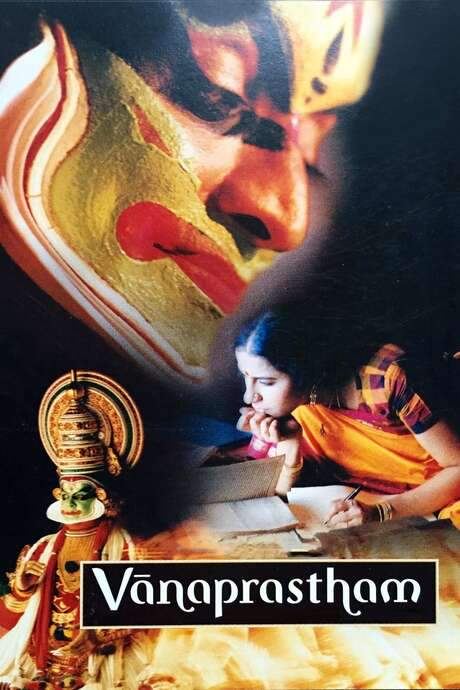
Vanaprastham 1999

Directed by

Shaji N. Karun
Made by

Pranavam Arts International
Vanaprastham Plot Summary
Read the complete plot summary and ending explained for Vanaprastham (1999). From turning points to emotional moments, uncover what really happened and why it matters.
Kunhikuttan, Mohanlal, is a celebrated Kathakali artiste who earns respect even though he comes from a lower caste, a social divide that casts a long shadow over his life. He is poor, deeply unhappy, and trapped in an arranged marriage that offers little solace, yet he endures for the sake of his daughter.
One night, while performing as Putana from Poothanamoksham—a dramatic moment drawn from the Mahabharata—Subhadra, Suhasini Maniratnam, an educated and married upper-caste woman who is the niece of the Dewan and an aspiring composer, witnesses his skill on stage. Her eyes light up with possibility, and she invites him to take on the role of Arjuna in her own adaptation of Subhadraharanam. This meeting sparks a forbidden romance that defies the rigid caste norms of the time, and it leads to the birth of a son.
As the affair unfolds, Subhadra’s heart seems to be captured more by the archetype of Arjuna—the noble, valiant hero of the Mahabharata—than by Kunhikuttan himself, the man who embodies the dancer’s art. She refuses to let Kunhikuttan meet their child, deepening his sense of betrayal and isolation. Denied access to his son and rejected by his father, Kunhikuttan retreats from the hero roles that once defined him and returns to the stage, where he begins to inhabit demonic characters. This shift sends him spiraling toward darker emotions, swelling with resentment and anger as he confronts the loss of recognition, lineage, and love.
The narrative follows his turbulent inner journey as he navigates a social world stacked against him, a world that alternately honors spectacle and shuns humanity. His art becomes a battleground, drawing him into increasingly intense, shadowed performances. The film builds toward a climactic, expressive last dance that encapsulates the pain, longing, and stoic endurance of a man who has been torn between duty, desire, and dignity. In the end, this final, haunting dance delivers a striking resolution that lingers with the audience, leaving questions about identity, belonging, and the cost of breaking tradition.
Vanaprastham Timeline
Follow the complete movie timeline of Vanaprastham (1999) with every major event in chronological order. Great for understanding complex plots and story progression.
Kunjikuttan's humble, lower-caste life
Kunjikuttan is a respected Kathakali artiste despite belonging to a lower caste. He endures rejection from his upper-caste father who denies his paternity. Poor and unhappy, he remains trapped in an arranged marriage and strives to provide for his daughter.
A troubled marriage and daughter
He lives a life of hardship within an arranged marriage that offers little happiness. He continues to get by for the sake of his daughter. The bond with his daughter gives him some purpose amid his struggles.
Putana from Poothanamoksham on stage
One night, he performs as Putana from Poothanamoksham and earns the audience's attention. His powerful portrayal captures Subhadra's eye, who is educated, married, and an aspiring composer. Her reaction sets off a chain of events that will redefine his life.
Invitation to play Arjuna in Subhadraharanam
Impressed by his performance, Subhadra invites him to star as Arjuna in her adaptation Subhadraharanam. This marks the first bridge between their worlds and foreshadows a risky collaboration across caste lines. The invitation places him at the center of a new artistic project.
The affair defies caste norms
Against the social norms of India’s rigid caste system, Kunhikuttan and Subhadra begin an affair. Their secret liaison deepens the bond between the two, even as it threatens their standing. The illicit relationship shifts the power dynamics in his life.
Birth of their son
From their affair, a son is born, anchoring their complicated relationship. Subhadra's life remains divided between her loyalty to her husband and her connection to Kunhikuttan. The existence of the child intensifies the sense of conflict surrounding their choices.
Subhadra's love for Arjuna, not Kunhikuttan
Subhadra becomes more in love with the heroic Arjuna than with Kunhikuttan as a person. She cherishes the noble persona on stage more than the man who embodies it offstage. This emotional mismatch drives further estrangement between them.
Denied access to his son
Subhadra refuses to let Kunhikuttan see their son. Stripped of contact with his child, he faces rejection and heartache. The denial propels him to retreat further into his art and inner turmoil.
Return to the stage, shifting roles
Disillusioned, Kunhikuttan returns to the stage but abandons heroic roles. He begins to inhabit demonic characters, exploring darker corners of his mind. This shift marks a dramatic transformation in his artistic life and inner state.
Rising anger and inner turmoil
As the performances continue, his resentment intensifies. The line between his onstage persona and real life blurs, driving him toward a volatile edge. His mind spirals as he confronts rejection and injustice.
One last dance
The narrative crescendos with a final dance that encapsulates his struggle. The onstage performance becomes a culmination of his anger, longing, and resilience. The dance ends in a stunning, unforgettable moment that signals the story's close.
Aftermath and final image
In the aftermath of the last dance, Kunhikuttan's fate remains marked by isolation and unresolved longing. The film closes on a note that the cycle of rejection and artistic struggle continues. His son and his world remain separated, leaving an open-ended emotional resonance.
Vanaprastham Characters
Explore all characters from Vanaprastham (1999). Get detailed profiles with their roles, arcs, and key relationships explained.
Kunhikuttan (Mohanlal)
A celebrated Kathakali artist from a lower caste, Kunhikuttan bears the weight of social stigma and paternal rejection by an upper-caste father. He endures an unhappy arranged marriage and risks everything for his daughter, finding meaning in performance while yearning for recognition as a father.
Subhadra (Suhasini Maniratnam)
An educated, married woman of upper caste who is drawn to Kunhikuttan’s stage presence. She values the heroic archetype more than the man himself, shaping a relationship that ignites both artistic collaboration and personal heartbreak.
Bhageerathi (Bindu Panicker)
Kunhikuttan’s partner in life, caught in an arranged marriage that fails to provide respite or happiness. Her presence highlights the social constraints faced by women tied to rigid family structures.
Thirumeni (Kalamandalam Kesavan)
A senior Kathakali master who embodies tradition and discipline. He represents the older generation of artists whose authority and expectations shape Kunhikuttan’s path in the theatre.
Kunju Nair (Kalamandalam Gopi)
A veteran performer within the troupe, offering mentorship and companionship in the demanding world of Kathakali. His presence anchors the artistry and the backstage dynamics of the performances.
Raman (Mattannoor Sankarankutty)
A fellow artist whose role within the Kathakali canvas provides contrast to Kunhikuttan’s ascent and crisis. Raman participates in the theatre world that shapes the protagonist’s fate.
Vanaprastham Settings
Learn where and when Vanaprastham (1999) takes place. Explore the film’s settings, era, and how they shape the narrative.
Location
Kerala, India
The story unfolds within the cultural heartland of Kerala, where Kathakali is performed on traditional stages. The region's social order, rooted in caste distinctions, frames the life of a celebrated but stigmatized artist. The setting blends ritual aesthetics with contemporary social pressures, highlighting art as both public spectacle and private struggle.
Vanaprastham Themes
Discover the main themes in Vanaprastham (1999). Analyze the deeper meanings, emotional layers, and social commentary behind the film.
⚖️
Caste Struggle
The protagonist is a renowned Kathakali artist from a lower caste, highlighting how social hierarchy shapes opportunities and recognition. His father’s rejection and the arranged marriage that confines him expose the personal cost of caste norms. The narrative uses stage personas to critique a society that values birthright over merit. Caste becomes both a barrier and a lens through which art and identity are forged.
🎭
Art and Identity
Kunhikuttan’s on-stage roles contrast with his real life, showing how performance can empower yet alienate. His shift from heroic roles to demonic characters mirrors an inner conflict and societal misperceptions. Subhadra’s fixation on the archetype hero, not the man, deepens the divide between art's ideal and reality. The film explores how art both reveals and conceals the self.
💔
Love and Rejection
Subhadra’s affection for the epic hero Arjuna rather than Kunhikuttan creates a painful emotional gap. The denial of access to his son embodies social rejection and personal loss. The romance is tempered by caste, marriage, and ambition, illustrating how love can be sacrificed to larger social narratives. The heartbreak drives the character toward artistic and emotional crisis.
🌑
Descent into Darkness
Unable to reconcile status, rejection, and artistic identity, Kunhikuttan returns to darker stage roles. The onstage demonics become a channel for anger, reflecting an unsettled mind. The final dance functions as a stark confrontation between the public spectacle and private anguish. The ending leaves a haunting impression of what the denial of fatherhood costs a person.

Coming soon on iOS and Android
The Plot Explained Mobile App
From blockbusters to hidden gems — dive into movie stories anytime, anywhere. Save your favorites, discover plots faster, and never miss a twist again.
Sign up to be the first to know when we launch. Your email stays private — always.
Explore the mobile appVanaprastham Spoiler-Free Summary
Discover the spoiler-free summary of Vanaprastham (1999). Get a concise overview without any spoilers.
In the sweltering heat of a Kerala town where tradition drums through every alley, the ancient art of Kathakali rises like a living tapestry. The stage is a sanctum where myth and flesh intertwine, and the rigid caste hierarchy casts long shadows over the lives of those who perform. Amid the fragrant incense and thundering drums, the town pulses with a quiet tension between reverence for the past and the yearning for something more personal.
Kunhikuttan is the town’s most celebrated Kathakali virtuoso, his face painted with the fierce colors of gods and demons alike. Though his mastery earns him accolades, his humble origins place him on the margins of the very society that applauds his art. He bears the weight of an estranged father, a daughter whose future he strives to protect, and a marriage arranged more for duty than affection. Yet each night, when he steps into the spotlight, his skill transports him beyond the confines of caste, allowing a brief escape into the heroic realms he embodies.
Subhadra arrives from an upper‑caste family, a cultured woman with a keen musical sense and a mind attuned to the subtleties of performance. Drawn to a particular night when Kunhikuttan’s portrayal of a mythic figure leaves her breathless, she sees not merely an actor but the living echo of a legendary hero. Her fascination with the character he summons onstage blossoms into a connection that defies the social codes that keep their worlds apart.
Their encounter sets in motion a delicate dance between illusion and reality. As they navigate the fragile line between the roles they play onstage and the identities they carry in everyday life, the film glimmers with the bittersweet beauty of love that is both exalted and constrained. The atmosphere shimmers with colour, music, and an undercurrent of yearning, inviting the audience to contemplate how art can both elevate and imprison the hearts of those who create it.
Movies with Similar Twists and Themes
Uncover films that echo the narrative beats, emotional arcs, or dramatic twists of the one you're exploring. These recommendations are handpicked based on story depth, thematic resonance, and spoiler-worthy moments — perfect for fans who crave more of the same intrigue.




Featured on this page

What's After the Movie?
Not sure whether to stay after the credits? Find out!
Check out our other apps:

SAT Sphere
Build confidence for the Digital SAT.

Mori Atlas
Discover wild places worth protecting.

Luntero
Search smarter for a home in Amsterdam.

Plot Explained
Unravel movie endings and hidden clues.

Pokechamp
Dive into Pokémon data and battle logic.

Driving Theory
Get ready for your European theory test.

Movie Dust
Plan your next cinema trip with ease.

Musemap
Find art and culture as you travel.

Selkobase
Compare credentials before committing.

Local Manual
Turn an unfamiliar country into practical next steps.

Lernavi
Compare school systems before your next move.

GymRoam
Find a workout stop wherever your plans take you.
Explore Our Movie Platform
New Movie Releases (2026)
Famous Movie Actors
Top Film Production Studios
Movie Plot Summaries & Endings
Major Movie Awards & Winners
Best Concert Films & Music Documentaries
Movie Collections and Curated Lists
© 2026 What's After the Movie. All rights reserved.
Privacy Policy