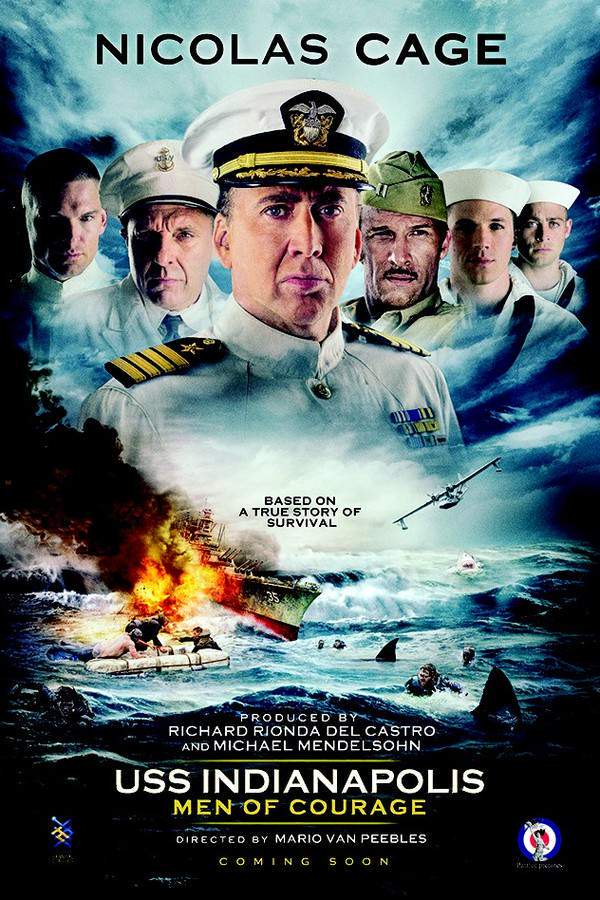
USS Indianapolis: Men of Courage 2016


Made by

Saban Films
Where to Watch USS Indianapolis: Men of Courage
See current US streaming, rental, and purchase options for USS Indianapolis: Men of Courage (2016) via JustWatch.

Amazon Prime Video
HD
Amazon Prime Video with Ads
HD
Howdy Amazon Channel
HD
Lionsgate+ Amazon Channels
HD
Fawesome
HD
Hoopla
SD
Kanopy
HD
Amazon Prime Video Free with Ads
HD
Fandango at Home Free
HD
The CW
SD
The Roku Channel
HD
VIX
HD
Xumo Play
HD
Amazon Video
HD
Apple TV Store
HD Fandango At Home
HD
Google Play Movies
SD
YouTube
SD Streaming availability powered by 
USS Indianapolis: Men of Courage Plot Summary
Read the complete plot summary and ending explained for USS Indianapolis: Men of Courage (2016). From turning points to emotional moments, uncover what really happened and why it matters.
In 1945, the United States faced significant challenges in dislodging the Japanese forces entrenched in Okinawa, a crucial gateway to the Japanese main islands. US troops attempting to approach Okinawa were met with fierce resistance from both aerial dive bombers and heavily armed ground troops.
In light of the steep human costs associated with a ground invasion of Japan, a high-stakes plan emerged: an atomic bomb would be delivered to Japan. However, the aircraft capable of carrying it lacked the necessary range, necessitating transport to the Philippines. The decision was made to send the bomb aboard a single, unprotected military ship, designed to evade detection by the Japanese fleet.
The chosen vessel for this perilous mission was the USS Indianapolis, commanded by Captain Charles McVay. Tasked with delivering components that would ultimately be used to devastate Hiroshima, McVay realized the gravity of the situation—he was embarking on what could be perceived as a suicidal mission. While the USS Indianapolis was a formidable heavy cruiser against ships and aircraft, it was highly vulnerable to submarine attacks. Unlike typical operations where heavy cruisers traveled with an escort of destroyers to fend off submarines, in this instance, McVay was ordered to proceed without any protective measures. In the event of a torpedo strike, the crew would have merely four minutes to evacuate. Although the ship could maneuver to evade enemy subs, it could not outrun the deadly Kaitens, manned torpedoes launched from Japanese submarines.
Under the direction of Rear Admiral William S. Parnell, McVay was pushed to undertake this mission despite the inexperience of many in his crew, which included Lieutenant Adrian Marks and Chief Petty Officer Brian “Bama” Smithwick. To make matters worse, the ship was still undergoing repairs from a prior kamikaze attack. After delivering the bomb’s components to Tinian Island on July 26, 1945, the USS Indianapolis was ordered to leave without an escort to maintain the secrecy of the operation.
As it sailed back with 1,197 men on board, disaster struck on July 30, when a Japanese submarine I-58—commanded by a captain who sensed his own impending curse due to a lack of confirmed kills—spotted the heavy cruiser and launched a Kaiten. The submarine’s torpedo struck, leading to the rapid sinking of the USS Indianapolis. Of the crew, 300 men perished in the depths of the Philippine Sea, while the remaining sailors found themselves stranded for five harrowing days in treacherous waters, bereft of food or drink in an environment teeming with sharks.
Suffering intense thirst and hunger, many of the survivors succumbed to the unforgiving sea, either eaten by sharks or dying from saltwater poisoning. By the end of the third day, only 500 men were left, dwindling further to 350 by the fourth day. Hope appeared lost until a pilot fortuitously spotted the remaining survivors on the fifth day and initiated a rescue operation, leading to the recovery of just 317 crew members.
In the aftermath, the US Navy faced scrutiny over its failure to provide an escort or respond adequately to the distress calls sent by the Indianapolis prior to its sinking. This negligence was swept under the rug, with the Navy courts-martialing Captain McVay for supposedly endangering his ship by not zigzagging to avoid enemy fire. Despite testimonies, including one from the former captain of the IJN I-58 submarine who sought to prove McVay’s innocence, the blame was unfairly placed on him.
As the years passed, McVay became a target for vilification by the media and harassed by the families of those lost in the tragedy, which ultimately led him to take his own life. Meanwhile, the commander of the Japanese submarine returned to Japan, eventually participating in the exoneration of Captain McVay years later. In 2000, President Bill Clinton formally cleared McVay of all charges, recognizing the grave injustices surrounding this historical maritime disaster.
USS Indianapolis: Men of Courage Timeline
Follow the complete movie timeline of USS Indianapolis: Men of Courage (2016) with every major event in chronological order. Great for understanding complex plots and story progression.
Challenges in Okinawa
In 1945, the United States faced fierce resistance from Japanese forces entrenched in Okinawa. This struggle was critical as Okinawa served as a gateway to the Japanese main islands.
Decision for an atomic bomb
Due to the high human cost anticipated from a ground invasion of Japan, the U.S. decided to pursue an atomic bomb as a means of ending the war. This high-stakes mission required transporting bomb components to the Philippines.
The USS Indianapolis
The USS Indianapolis was chosen to undertake the perilous mission of delivering the bomb's components. Commanded by Captain Charles McVay, the ship set sail with no protective escorts, making it highly vulnerable to enemy attacks.
Suicidal Mission Realization
Captain McVay understood the dire implications of his mission and recognized it as potentially suicidal. The absence of protective destroyers left the cruiser susceptible to submarine assaults while it maneuvered its way through hostile waters.
Departure from Tinian Island
On July 26, 1945, the USS Indianapolis made a crucial stop at Tinian Island to deliver the atomic bomb components. After completing the mission, the ship was ordered to leave without an escort to maintain operational secrecy.
Sinking of the USS Indianapolis
On July 30, 1945, disaster struck when a Japanese submarine I-58 launched a Kaiten torpedo at the USS Indianapolis. The torpedo hit the ship, leading to its rapid sinking and causing a loss of 300 men in the Philippine Sea.
Survival Struggles
After the sinking, 897 men were stranded in the ocean for five days without food or water. Battling starvation and dehydration, many succumbed, while others were hunted by sharks.
Rescue Operation
Hope was restored on the fifth day when a pilot spotted the survivors from the USS Indianapolis. This led to a rescue operation that saved 317 crew members, but the ordeal highlighted the tragedy of the situation.
Scrutiny of the US Navy
Following the sinking, the US Navy faced severe criticism for failing to provide an escort for the Indianapolis. Inadequate responses to distress calls raised questions about Navy's operational protocols.
Captain McVay's Courts-Martial
Captain McVay was courts-martialed for allegedly endangering his ship by not taking evasive actions to dodge enemy fire. Despite the lack of evidence, he was unfairly blamed for the tragedy that befell his crew.
Media Vilification
In the following years, McVay became a victim of media vilification and was harassed by the families of lost sailors. This relentless pressure profoundly affected his mental state and led to a tragic outcome.
Japanese Submarine Commander's Role
In a twist of fate, the commander of the Japanese submarine that sank the Indianapolis returned to Japan. Years later, he took part in efforts to clear McVay's name, acknowledging the injustice suffered by the captain.
Exoneration of Captain McVay
In 2000, President Bill Clinton formally pardoned Captain McVay, acknowledging the wrongful blame placed on him during the aftermath of the Indianapolis disaster. This act brought a measure of justice to a long-standing controversy.
USS Indianapolis: Men of Courage Characters
Explore all characters from USS Indianapolis: Men of Courage (2016). Get detailed profiles with their roles, arcs, and key relationships explained.
Captain Charles McVay
Captain Charles McVay was the commanding officer of the USS Indianapolis, who faced an impossible mission and the weight of responsibility for his crew's safety. He was portrayed as a dedicated leader, grappling with the knowledge that he was undertaking a high-risk operation, which would ultimately lead to tragedy. Despite facing blame for his command decisions, he maintained his honor amid an unfair scapegoating by military authorities.
Rear Admiral William S. Parnell
Rear Admiral William S. Parnell was a key figure in the decision-making process that led to the USS Indianapolis's ill-fated mission. His insistence on sending the ship without an escort highlighted the pressures faced by military leadership during wartime. The ramifications of his decisions contributed significantly to the tragedy that unfolded.
Lieutenant Adrian Marks
Lieutenant Adrian Marks served on the USS Indianapolis and represented the bravery of its crew under dire conditions. As a young and inexperienced officer, he was thrust into a chaotic situation that tested his mettle. His character symbolizes the dedication and sacrifice of those who served during this tumultuous period.
Chief Petty Officer Brian 'Bama' Smithwick
Chief Petty Officer Brian 'Bama' Smithwick was a member of the USS Indianapolis crew who faced the harrowing experience of survival after the ship was sunk. Like his fellow sailors, he battled the elements and the psychological toll of their situation. His character reflects the camaraderie and determination that existed among the crew during their darkest hours.
USS Indianapolis: Men of Courage Settings
Learn where and when USS Indianapolis: Men of Courage (2016) takes place. Explore the film’s settings, era, and how they shape the narrative.
Time period
1945
In 1945, World War II was reaching its climax in the Pacific theater, with intense battles as Allied forces sought to undermine Japanese defenses. The year also marked a significant technological advancement with the development and planned use of atomic weaponry against Japan. This period was defined by high stakes, strategic military planning, and the profound human costs of warfare.
Location
Okinawa, Philippines, Tinian Island, Philippine Sea
Okinawa, a pivotal battleground in the Pacific during World War II, was known for its fierce combat and strategic significance. The Philippines served as a critical location for military operations and logistics, particularly during the latter part of the war. Tinian Island played a crucial role in military history as a launching point for the atomic bomb mission. The Philippine Sea witnessed the tragic sinking of the USS Indianapolis, marking one of the Navy's most significant maritime disasters.
USS Indianapolis: Men of Courage Themes
Discover the main themes in USS Indianapolis: Men of Courage (2016). Analyze the deeper meanings, emotional layers, and social commentary behind the film.
⚓
Courage
The theme of courage is central to the narrative, showcasing the bravery of the USS Indianapolis crew as they undertook a perilous mission. Despite the overwhelming odds and the eventual sinking of their ship, the surviving sailors demonstrated remarkable resilience in the face of despair. This theme also highlights the moral complexities faced by military leaders during times of war.
⚖️
Injustice
The aftermath of the USS Indianapolis sinking embodies the theme of injustice, particularly the scapegoating of Captain McVay. Despite being a victim of the circumstances beyond his control, he was unfairly blamed for the catastrophe. The eventual exoneration reflects the long-lasting impact of such injustice and the need for accountability.
🦈
Survival
Survival is a harrowing theme illustrated through the experiences of the crew stranded in the Philippine Sea. Forced to endure extreme conditions without food or water, they faced both the elements and predators like sharks. This ordeal underscores the fragility of life and the human instinct to survive against all odds.

Coming soon on iOS and Android
The Plot Explained Mobile App
From blockbusters to hidden gems — dive into movie stories anytime, anywhere. Save your favorites, discover plots faster, and never miss a twist again.
Sign up to be the first to know when we launch. Your email stays private — always.
Explore the mobile appUSS Indianapolis: Men of Courage Spoiler-Free Summary
Discover the spoiler-free summary of USS Indianapolis: Men of Courage (2016). Get a concise overview without any spoilers.
In the waning months of World War II, a vast ocean becomes the silent stage for a secretive operation that could alter the course of history. The United States Navy dispatches a lone heavy cruiser across the Philippine Sea, tasked with delivering a critical payload destined for a distant island where a new weapon is being assembled. The mission’s quiet urgency is matched only by the looming threat of unseen enemies prowling the deep, casting a pall of tension over every ripple of the water.
At the helm of this precarious voyage is Captain Charles McVay, a seasoned officer burdened with the weight of command and the moral calculus of a potentially sacrificial undertaking. Beside him, Lieutenant Adrian Marks represents the youthful drive and technical expertise essential for navigating the ship’s complex responsibilities, while Chief Petty Officer Brian “Bama” Smithwick embodies the gritty, down‑to‑earth experience of the enlisted men who keep the vessel alive. Together, they form a micro‑society where duty, camaraderie, and the lingering fear of the unknown intermingle, setting the tone for a story that balances the grand sweep of wartime strategy with intimate human drama.
The film paints the Pacific as a vast, indifferent expanse where the clash of metal and the whisper of torpedoes loom just beyond sight. Its atmosphere is a blend of relentless tension and quiet resolve, punctuated by moments of levity that illuminate the crew’s humanity amid the looming storm. As the ship cuts through dark waters, viewers are invited to feel the weight of a mission that carries the fate of nations on its decks, while the characters grapple with personal honor, looming peril, and the fragile hope that their bravery might tip the balance in a world on the brink of change.
Movies with Similar Twists and Themes
Uncover films that echo the narrative beats, emotional arcs, or dramatic twists of the one you're exploring. These recommendations are handpicked based on story depth, thematic resonance, and spoiler-worthy moments — perfect for fans who crave more of the same intrigue.


Featured on this page

What's After the Movie?
Not sure whether to stay after the credits? Find out!
Check out our other apps:

SAT Sphere
Build confidence for the Digital SAT.

Mori Atlas
Discover wild places worth protecting.

Luntero
Search smarter for a home in Amsterdam.

Plot Explained
Unravel movie endings and hidden clues.

Pokechamp
Dive into Pokémon data and battle logic.

Driving Theory
Get ready for your European theory test.

Movie Dust
Plan your next cinema trip with ease.

Musemap
Find art and culture as you travel.

Selkobase
Compare credentials before committing.

Local Manual
Turn an unfamiliar country into practical next steps.

Lernavi
Compare school systems before your next move.

GymRoam
Find a workout stop wherever your plans take you.
Explore Our Movie Platform
New Movie Releases (2026)
Famous Movie Actors
Top Film Production Studios
Movie Plot Summaries & Endings
Major Movie Awards & Winners
Best Concert Films & Music Documentaries
Movie Collections and Curated Lists
© 2026 What's After the Movie. All rights reserved.
Privacy Policy