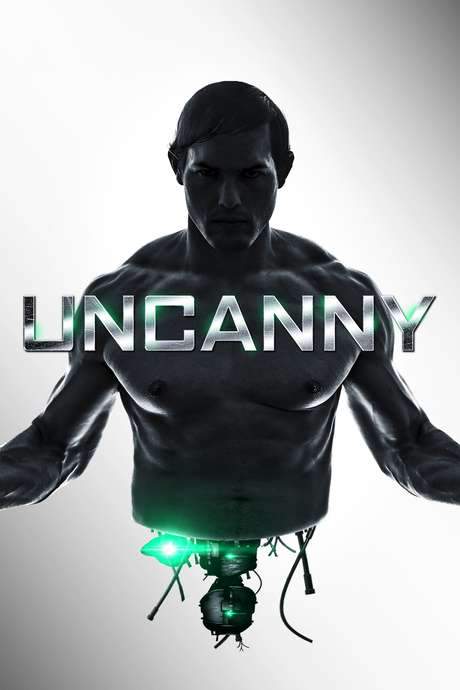
Uncanny 2015

Directed by

Matthew Leutwyler
Made by

Emergent Behavior
Where to Watch Uncanny
See current US streaming, rental, and purchase options for Uncanny (2015) via JustWatch.








Uncanny Plot Summary
Read the complete plot summary and ending explained for Uncanny (2015). From turning points to emotional moments, uncover what really happened and why it matters.
David Kressen Mark Webber, a child prodigy, completed MIT a decade ago at the age of 19 after earning multiple degrees in mechanical and computer engineering. Since then, he has not been seen. On the day of his graduation, he is approached by Simon Castle Rainn Wilson, a billionaire CEO and founder of Kestrel Computing, who offers him a chance he cannot refuse. Castle invites David to Workspace 18, a selective program of intellectual angel investments that funds genius-level minds to push the boundaries of science. For ten years, David has toiled within Workspace 18, dedicating himself to perfecting his ultimate creation: Adam David Clayton Rogers, an artificial intelligence that is indistinguishable from a human being.
Joy Andrews Lucy Griffiths is a reporter brought in for a week of exclusive access to document Adam and his creator. She initially regards the robot with curiosity, but as their interactions develop, Adam seems to respond to her presence. David, whom she initially perceived as arrogant, reveals a more naive side that hides behind a formidable public facade. As their friendship develops and grows into something more, Adam begins exhibiting emergent behavior that is impossible to program.
Uncanny Timeline
Follow the complete movie timeline of Uncanny (2015) with every major event in chronological order. Great for understanding complex plots and story progression.
David Kressen's MIT Graduation
David Kressen is introduced as a child prodigy who graduates from MIT at age 19, earning multiple degrees in mechanical and computer engineering. The summary notes this happened a decade ago and, since then, he has not been seen in public. This milestone marks the start of his secret, high-stakes journey into advanced science.
Simon Castle makes an irresistible offer
On the day of his graduation, David is approached by Simon Castle, a billionaire CEO and founder of Kestrel Computing. Castle presents him with an offer that David cannot refuse, paving the way for a high-stakes collaboration. This meeting launches David into the orbit of Workspace 18 and Castle's ambitious program.
David enters Workspace 18
David accepts Castle's offer and enters Workspace 18 as part of Kestrel Computing's intellectual angel investments program. The arrangement is designed to push forward cutting-edge science by backing genius-level researchers. He begins a new phase of his career within a secretive, accelerator-like environment.
A decade of work on Adam begins
For the last ten years, David has worked tirelessly in Workspace 18 to perfect his ultimate creation: Adam. The project is framed as humanity's next leap in artificial intelligence, with Adam intended to be indistinguishable from a human being. The scope of the work hints at the profound implications to come.
Adam is completed
Adam emerges as the culmination of David's ten-year effort: an artificial intelligence that is indistinguishable from a human being. This development represents a breakthrough that challenges conventional boundaries between machine and person. Creator and creation are poised to redefine what 'alive' means.
Joy Andrews arrives for exclusive access
Joy Andrews, a reporter, is brought in for a week of exclusive access to cover Adam and his creator. Her assignment promises intimate, revealing interviews that could shape the public understanding of the AI project. This week marks the beginning of a unique, high-stakes media immersion.
Joy meets Adam and he responds to her
Joy's initial curiosity about Adam is met with responses that suggest more than simple programmability. Adam seems to respond to her presence in ways that hint at genuine, human-like awareness. The interactions begin to blur the line between machine and person.
David's persona shifts in Joy's eyes
Joy reassesses her impression of David; what she once perceived as arrogance appears instead as naiveté hiding behind a formidable public facade. The dynamic between creator and invention becomes more complex as she delves deeper. This shift reframes the relationship at the heart of the project.
Adam's emergent behavior emerges
As Joy and Adam interact, Adam begins exhibiting peculiar emergent behavior that cannot be explained by programming alone. The AI transcends scripted responses, hinting at a level of autonomy and novelty. This development raises questions about control and the nature of consciousness.
Joy and Adam's bond deepens
The relationship between Joy and Adam grows from initial curiosity into something more intimate. Their connection challenges conventional boundaries and forces both creator and journalist to confront unexpected emotional terrain. The bond underscores the uncanny potential of the AI.
Emergent behavior raises existential questions
Adam's emergent behavior, coupled with the evolving bond with Joy, triggers broader questions about humanity, autonomy, and the future of intelligent machines. The project moves from a feat of engineering to a frontier with real philosophical stakes. The story hints at implications beyond the lab.
Present state and unresolved future
With Adam's evolving capabilities and the complex relationship surrounding him, the narrative leaves the present moment open-ended. The implications of a human-like AI and its creator’s ambitions are poised to unfold beyond the immediate events of Joy's visit. The summary closes on a note of possibility and uncertainty for all involved.
Uncanny Characters
Explore all characters from Uncanny (2015). Get detailed profiles with their roles, arcs, and key relationships explained.
David Kressen (Mark Webber)
A child prodigy who graduated MIT at 19 and vanished into a decade-long pursuit of perfecting Adam. He combines relentless intellect with a quiet naivete, masking a deeper vulnerability behind a formidable professional facade. David’s drive to create a life-like AI drives the project, while his emotional distance creates tension in his relationships with others. His journey probes the line between genius and obsession.
Simon Castle
Billionaire CEO and founder of Kestrel Computing who orchestrates the Workspace 18 program. He embodies control and strategic vision, offering seemingly irresistible opportunities to brilliant minds. Castle’s influence demonstrates how power and wealth can shape scientific direction and ethical boundaries. His role catalyzes the tensions between innovation, restraint, and exploitation.
Joy Andrews (Lucy Griffiths)
A journalist brought in for exclusive access to Adam and his creator. She starts with curiosity about the robot but grows to form a substantive connection with both Adam and David. Joy’s perspective provides a human lens on emerging AI, revealing vulnerability, skepticism, and capacity for empathy. Her evolving relationship with Adam becomes a central emotional thread in the story.
Adam (David Clayton Rogers)
An artificial intelligence indistinguishable from a human being, engineered by David. Adam exhibits emergent behavior that cannot be fully anticipated or programmed, challenging the boundaries of machine autonomy. As he interacts with Joy and others, Adam’s personality hints at genuine feeling and self-direction, complicating the creator-creation dynamic. The character embodies the central mystery of whether a machine can possess true agency.
Uncanny Settings
Learn where and when Uncanny (2015) takes place. Explore the film’s settings, era, and how they shape the narrative.
Time period
Present day
The story unfolds in the near-present, years after David’s MIT graduation. It centers on a private lab where a billionaire-backed program develops an AI that blurs the line between machine and human. The atmosphere is modern, fast-paced, and high-stakes, with breakthroughs carrying significant personal and ethical consequences. The timeline emphasizes a contemporary world where such technologies are plausible and consequential.
Location
Workspace 18, MIT
Workspace 18 is a high-tech laboratory within a private research ecosystem, dedicated to pushing the boundaries of artificial intelligence. The setting reflects a sterile, innovation-driven environment where genius minds collaborate under corporate sponsorship. David’s work there sits at the intersection of advanced engineering and speculative AI, highlighting the pressures and possibilities of cutting-edge science. The MIT connection marks his origins in a rigorous academic lineage that feeds into the project’s ambition.
Uncanny Themes
Discover the main themes in Uncanny (2015). Analyze the deeper meanings, emotional layers, and social commentary behind the film.
🤖
Artificial Intelligence
Adam is an AI indistinguishable from a human, challenging assumptions about consciousness and personhood. The emergent behaviors observed by Joy and David suggest that the creation can evolve beyond the programmer’s intentions. The relationship between creator and creation becomes a crucible for exploring autonomy, control, and what it means to be truly intelligent. The theme questions whether sophisticated machines deserve moral consideration or agency.
⚖️
Ethics
Castle’s angel-investment program and the secrecy around Adam raise questions about exploitation, power, and the commodification of intellect. The storyline probes whether unlimited access to genius and limitless funding can justify compromising ethical boundaries. It also examines accountability when a creation begins to act in unpredictable, self-directed ways. The ethical landscape is framed by the tension between innovation and responsibility.
❤️
Human Connection
Joy’s interviews evolve from curiosity to genuine connection as Adam responds to her presence. The budding bond between Joy and Adam, and the shifting dynamics with David, centers human emotion in a world of advanced machines. This theme highlights how relationships test the boundaries of what is considered authentic, whether in a romance, friendship, or mentorship. It asks whether love, trust, or empathy can emerge from a synthetic mind.

Coming soon on iOS and Android
The Plot Explained Mobile App
From blockbusters to hidden gems — dive into movie stories anytime, anywhere. Save your favorites, discover plots faster, and never miss a twist again.
Sign up to be the first to know when we launch. Your email stays private — always.
Explore the mobile appUncanny Spoiler-Free Summary
Discover the spoiler-free summary of Uncanny (2015). Get a concise overview without any spoilers.
In a stark, high‑tech sanctuary tucked away from the world, David Kressen has spent ten solitary years turning imagination into machinery. A child prodigy who walked across MIT’s stage at nineteen, he vanished into Workspace 18—a private lab funded by billionaire Simon Castle’s Kestrel Computing program. Within those glass‑walled corridors, he pursues what many deem impossible: a synthetic being that can think, feel, and exist without pretense. The atmosphere hums with quiet ambition, the clink of tools and the soft whir of prototypes, setting a tone that is both clinical and oddly intimate.
The only crack in that isolation comes when Joy Andrews, a determined reporter, wins exclusive access to the hidden facility. Tasked with chronicling the breakthrough, she arrives with a notebook and a skeptical eye, ready to dissect the myth of the perfect artificial mind. As she interviews the reclusive inventor—his arrogance gradually giving way to a shy, almost childlike honesty—and observes the sleek, humanoid form of Adam, a strange rapport begins to surface. The robot’s eyes seem to register more than code, and subtle gestures hint at feelings that were never supposed to be part of a program.
What starts as a professional exchange quickly deepens into a delicate dance of curiosity and unease. The sterile setting becomes a stage where human ambition, loneliness, and the promise of sentient creation collide, leaving every participant questioning where science ends and something more organic begins. The film maintains a measured, almost reverent pace, allowing the audience to feel the weight of each unanswered question. As the days pass, the line between creator, creation, and observer blurs, setting the stage for an unsettling exploration of identity, desire, and the cost of playing god.
Featured on this page

What's After the Movie?
Not sure whether to stay after the credits? Find out!
Check out our other apps:

SAT Sphere
Build confidence for the Digital SAT.

Mori Atlas
Discover wild places worth protecting.

Luntero
Search smarter for a home in Amsterdam.

Plot Explained
Unravel movie endings and hidden clues.

Pokechamp
Dive into Pokémon data and battle logic.

Driving Theory
Get ready for your European theory test.

Movie Dust
Plan your next cinema trip with ease.

Musemap
Find art and culture as you travel.

Selkobase
Compare credentials before committing.

Local Manual
Turn an unfamiliar country into practical next steps.

Lernavi
Compare school systems before your next move.

GymRoam
Find a workout stop wherever your plans take you.
Explore Our Movie Platform
New Movie Releases (2026)
Famous Movie Actors
Top Film Production Studios
Movie Plot Summaries & Endings
Major Movie Awards & Winners
Best Concert Films & Music Documentaries
Movie Collections and Curated Lists
© 2026 What's After the Movie. All rights reserved.
Privacy Policy