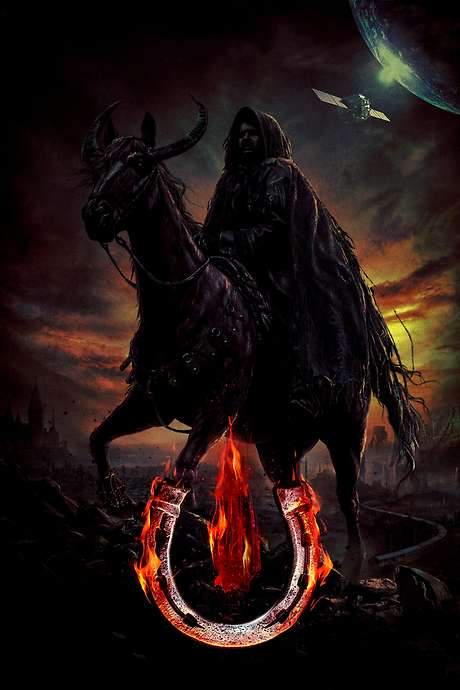
UI 2024

Directed by

Guruprasad
Made by

Lahari Films
UI Plot Summary
Read the complete plot summary and ending explained for UI (2024). From turning points to emotional moments, uncover what really happened and why it matters.
Actor-filmmaker Upendra Rao unveils his intriguing film UI, which controversially secures a “UI (Universal Intelligence)” certificate from the CBFC. The film’s release sparks a wave of protests and celebrations across various segments of society. Enter film analyst Kiran Adarsh, who is approached to review this polarizing film. However, he decides to postpone his analysis, expressing the need to first comprehend the deeper implications behind Upendra’s work.
Kiran embarks on a journey to a secluded house that holds significance for Upendra, a place where he once dedicated time to scriptwriting. There, a maid shares a captivating secret: Upendra had penned a script for two weeks a year prior, only to later incinerate it. Yet, she had discreetly preserved the manuscript and entrusts it to Kiran. The film transitions to reveal the story embedded within this script.
This script begins with a mythological prelude that sets the tone: despite divine warnings, Eve consumes the forbidden fruit, laying the groundwork for civilization, organized religion, economic systems, societal disparities, conflicts, and divisions—ultimately framing the philosophical backdrop of the narrative.
In the contemporary scene, we meet Seena, portrayed by Katri Seena, a habitual pickpocket who ascends through the treacherous waters of deceitful politics, adopting the name Vamana and subsequently rising to become Raja Vamana Rao. Alongside, charlatans masquerading as godmen exploit the public, representing the moral decay of Kali Yuga.
Amidst this turmoil, a noble figure named Satya emerges, devoted to truth and righteousness. He garners a loyal following by redistributing wealth looted from the affluent, alongside his father, Shastri. This act of defiance draws the ire of Vamana. Satya remains steadfast in the face of violence, becoming a beacon of moral integrity for the masses. A prophecy hints at Satya’s birth occurring five minutes before midnight, suggesting he narrowly escaped being born as Kalki, the foretold savior.
The plot thickens with the revelation of a nefarious gangster who turns out to be Kalki, Satya’s younger twin, born precisely at midnight. Abducted at birth and nurtured in a violent environment, Kalki harbors a nihilistic worldview. He embraces his identity as Kalki, proclaiming his intent to annihilate Kali Yuga, with the public hailing him as the chosen one.
In a dramatic twist, Kalki imprisons Satya in a clandestine “inner world,” a psychological facility where humans are manipulated as test subjects. To Kalki, humanity is a blight deserving of extermination, while Satya counters that society should not be destroyed for the transgressions of a few.
As Satya breaks free from captivity, he confronts the brutal suffering inflicted upon humanity. Meanwhile, Kalki, wielding the powers of fear, religious indoctrination, resource control, caste divisions, and grand displays, plunges society into chaos and communal strife. Initially venerated as a savior, Kalki’s reign spirals into tyranny and mass annihilation.
As Satya begins emerging as the true moral compass amid the turmoil, Kalki’s grip on power starts to falter. Satya boldly denounces the notions of caste and religion. However, he is met with violence from those he aims to uplift, exposing the underlying hypocrisy within society.
The narrative unexpectedly shifts to Upendra, who candidly shares that the ending he envisioned deviates from what unfolded. An imagined Kalki asserts that humanity only comprehends harsh realities rather than idealistic visions. Resisting this outlook, Upendra decides to burn the script, maintaining faith that the audience is astute enough to grasp the essence of truth.
Returning to the present day, Kiran deduces that the released film UI is not merely the burned script but a reflection of society’s realities. Despite multiple viewings, he struggles to fully encapsulate its message and concludes by stating to the media that he must revisit the film once more. Ultimately, he discovers that the essence of UI transcends fiction, capturing the intricate reality of human behavior.
UI Timeline
Follow the complete movie timeline of UI (2024) with every major event in chronological order. Great for understanding complex plots and story progression.
Film Release
Actor-filmmaker Upendra Rao releases his film, UI, which sparks significant public attention due to its controversial 'UI (Universal Intelligence)' certificate from the CBFC. This unexpected certification leads to widespread protests and celebrations across various sectors of society.
Kiran's Review Delay
Film analyst Kiran Adarsh is asked to review UI but hesitates, suggesting that he needs to grasp the film's deeper intent first. This creates an air of suspense around the movie as Kiran prepares to dive into its complex themes.
Discovery of the Script
Kiran visits a remote house where Upendra once worked on scripts in solitude. There, a maid discloses that Upendra had written a script for two weeks a year earlier and had subsequently burned it, but she preserved it and hands it to Kiran, igniting a quest for understanding the film's origin.
Mythological Prologue
The script begins with a mythological prologue that recounts Eve's disobedience in eating the forbidden fruit. This pivotal moment is portrayed as the catalyst for civilization's complex evolution, ultimately leading to religion, inequality, and conflict in society.
Rise of Vamana
In the present narrative, a pickpocket named Seena capitalizes on deceitful politics, renaming himself Vamana. His rise to power symbolizes the corruption pervasive in Kali Yuga, where fake god men and spiritual leaders manipulate the vulnerable masses.
Satya's Moral Awakening
Satya, a selfless man devoted to truth, garners support by redistributing wealth from the rich alongside his father Shastri. His actions to uplift the underprivileged draw the ire of Vamana, highlighting the struggle between righteousness and corrupt power.
The Prophecy of Satya
According to a prophecy, Satya was born just five minutes before midnight, narrowly avoiding the fate of being Kalki, the foretold savior. This detail sets the stage for the impending conflict between Satya and his twin brother, who would embody the darker aspects of the prophecy.
Kalki Emerges
The narrative introduces Kalki, Satya's younger twin brother, born exactly at midnight and raised in violence. As he declares himself Kalki, he vows to eradicate Kali Yuga, elevating his status as a celebrated figure among the people.
Kalki's Imprisonment of Satya
Kalki captures Satya and locks him away in a psychological laboratory dubbed the 'inner world.' Here, Kalki conducts experiments on humanity, convinced of their inherent worthlessness, while Satya advocates for morality and the collective fate of society.
Societal Chaos and Manipulation
As Kalki exploits fear and societal divisions to maintain control, he incites chaos and communal violence. Initially seen as a savior, his reign begins to resemble a dictatorship, leading to increasing public outcry against his brutal methods.
Awakening of the Masses
Public sentiment shifts as individuals begin to recognize Satya as the genuine moral compass amidst the turmoil. Despite his efforts, Satya faces violence from those he aims to uplift, revealing the deep-seated hypocrisy in societal values.
Upendra's Introspection
The script abruptly transitions to Upendra himself, who reflects on the unintended ending of the narrative, portraying a dialogue with an imagined Kalki. This confrontation highlights the dissonance between harsh reality and idealism in human understanding.
Final Decision
Ultimately, Upendra rejects the nihilistic view presented by Kalki, opting instead to burn the script and affirming his belief in humanity's capacity for intelligence and comprehension of truth. This act serves as a powerful statement regarding the nature of storytelling and message.
Kiran's Conclusion
Returning to the present, Kiran deduces that the released UI film reflects society instead of the burned script. He continues his analysis, recognizing that the film serves as a mirror to human behavior, confronting viewers with their own realities.
Kiran's Ongoing Reflection
Despite multiple viewings, Kiran admits to the media that he needs to watch the film again to fully grasp its message. This admission emphasizes the complexity of the film and the challenge of comprehending its deeper philosophical implications.
UI Characters
Explore all characters from UI (2024). Get detailed profiles with their roles, arcs, and key relationships explained.
Kiran Adarsh (Murali Sharma)
Kiran is a film analyst tasked with reviewing Upendra's controversial film. Initially hesitant, he embarks on a journey to understand the deeper meanings of the script, struggling to grasp the complex themes presented. His character represents the audience's quest for understanding in a convoluted narrative.
Vamana (Seena)
Initially a petty thief, Vamana transforms into a powerful, deceptive leader who manipulates societal norms for personal gain. His rise reflects the darker side of ambition and the potential for corruption inherent in positions of power. Vamana's character serves as a commentary on the dangers of false prophets in society.
Satya
Satya embodies the ideal of selflessness and truth, raising awareness and inspiring the masses through acts of righteousness. He struggles against the oppressive forces of his corrupt brother, Kalki, and represents the hope for a better society. His journey symbolizes the conflict between good and evil.
Kalki
Kalki, Satya's twin brother, represents the destructive potential of power and manipulation. Once a victim, he emerges as a dictator who uses fear to control society. His character arc reflects the dualities of savior and destroyer, challenging perceptions of heroism and villainy.
UI Settings
Learn where and when UI (2024) takes place. Explore the film’s settings, era, and how they shape the narrative.
Time period
The narrative traverses various timelines, with flashbacks to mythological events and present-day scenarios that critique the societal concepts of morality, power, and manipulation. It represents a contemporary struggle against the backdrop of modern societal issues influenced by ancient beliefs and prophecies, highlighting the perennial nature of the battle between good and evil.
Location
Remote House, Society
The movie unfolds primarily in a remote house where the protagonist Kiran discovers a script written by Upendra, the filmmaker. This secluded location serves as a hidden sanctuary of creativity but also as a place of revelation regarding the societal issues highlighted in the film. The broader setting reflects a diverse society grappling with deep philosophical and moral dilemmas.
UI Themes
Discover the main themes in UI (2024). Analyze the deeper meanings, emotional layers, and social commentary behind the film.
⚔️
Conflict
The film explores the intense conflict between deceptive politics and selfless righteousness. Characters embody these themes, igniting a confrontation that reflects societal hypocrisy and moral decay. It questions whether true justice can prevail in a world driven by greed and fear.
🌌
Existence
Existential themes are central to the narrative as it grapples with concepts of morality, free will, and human behavior. The characters' journeys reflect the struggle for meaning in a chaotic society, ultimately suggesting a philosophical commentary on humanity's quest for truth amidst deception.

Coming soon on iOS and Android
The Plot Explained Mobile App
From blockbusters to hidden gems — dive into movie stories anytime, anywhere. Save your favorites, discover plots faster, and never miss a twist again.
Sign up to be the first to know when we launch. Your email stays private — always.
Explore the mobile appUI Spoiler-Free Summary
Discover the spoiler-free summary of UI (2024). Get a concise overview without any spoilers.
markdown Set in a world where mythology bleeds into modern chaos, UI unfolds as a layered allegory about power, conscience, and the dangerous allure of belief. The film carries an unmistakable philosophical weight, weaving ancient mythological echoes with biting commentary on contemporary society — exploring how ambition, faith, and deception shape the rise of those who seek to rule.
At the heart of the story stand two opposing forces whose lives are bound by fate. One is a man of unshakable moral conviction, devoted to truth and the welfare of others, whose quiet selflessness draws a devoted following. The other, shaped by a harsher world, embraces a darker philosophy — believing that humanity must be forced into awakening through fear and spectacle. Their clash becomes a battle not just of personalities, but of worldviews, raising the question of whether idealism or harsh reality truly governs the hearts of the masses.
Around them, the world itself becomes a character — a society manipulated by charismatic leaders, hollow spiritual figures, and the seductive promise of a savior. The tone is grand and theatrical, marked by dramatic confrontations, symbolic imagery, and moments of dark satire. There is a constant tension between the sincere and the performative, the genuine and the manufactured, creating an atmosphere where nothing — not religion, not politics, not even heroism — can be taken at face value.
Presented through a story-within-a-story structure that blurs the lines between creator and creation, UI invites viewers into a vivid, unsettling mirror of human nature. Rich with ambition and consequence, it challenges its audience to consider what truth means in a world hungry for easy answers, and what becomes of those who dare to live by principle in an age that rewards spectacle.
Featured on this page

What's After the Movie?
Not sure whether to stay after the credits? Find out!
Check out our other apps:

SAT Sphere
Build confidence for the Digital SAT.

Mori Atlas
Discover wild places worth protecting.

Luntero
Search smarter for a home in Amsterdam.

Plot Explained
Unravel movie endings and hidden clues.

Pokechamp
Dive into Pokémon data and battle logic.

Driving Theory
Get ready for your European theory test.

Movie Dust
Plan your next cinema trip with ease.

Musemap
Find art and culture as you travel.

Selkobase
Compare credentials before committing.

Local Manual
Turn an unfamiliar country into practical next steps.

Lernavi
Compare school systems before your next move.

GymRoam
Find a workout stop wherever your plans take you.
Explore Our Movie Platform
New Movie Releases (2026)
Famous Movie Actors
Top Film Production Studios
Movie Plot Summaries & Endings
Major Movie Awards & Winners
Best Concert Films & Music Documentaries
Movie Collections and Curated Lists
© 2026 What's After the Movie. All rights reserved.
Privacy Policy