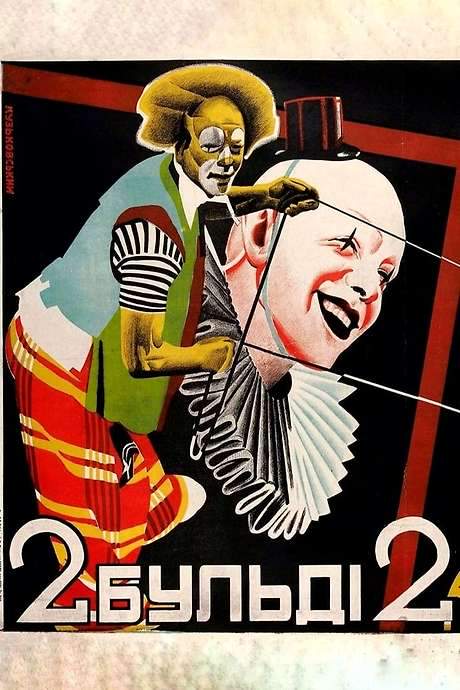


Two-Buldi-Two Plot Summary
Read the complete plot summary and ending explained for Two-Buldi-Two (1929). From turning points to emotional moments, uncover what really happened and why it matters.
In 1919, amid the Russian Civil War, a small town teeters on the edge of capture by White Guard forces. The Bolsheviks call on the population to defend their home, and an unlikely militia forms from the town’s own circus troupe. Buldi Jr., Vladimir Kochetov as Buldi-son, leads this improvised defense, with his father, the aging clown Buldi-father, Sergei Komarov guiding him and sharing a dream that has started as a pastime on stage and now takes on a political purpose. The troupe’s acrobatic precision and streetwise courage become a weapon, as the town’s fate hinges on timing, trust, and the spectacle of resilience.
Behind the lines, leadership is anchored by the town’s revolution committee, headed by the Chairman, Mikhail Zharov. The committee’s Secretary, Vera Maretskaya, helps coordinate the defense and the political will that keeps the townspeople fighting.
Despite their courage and the unique skills of the circus squad, the White forces prove brutally effective. The town falls into days of terror, and Buldi Jr. is arrested and faced with execution. In a moment that fuses fear with longing, the old clown pleads with the White Colonel to spare his son, clinging to the dream of their life-long joint act, the dream they call Two-Buldi-Two. The act would symbolize their bond between art and revolt, a beacon amid the chaos.
On the day of the supposed performance, Buldi Sr. steps into the ring alone, unaware that the execution order has already been given. Then Buldi Jr. bursts into the circus, chased by soldiers. The son’s agility and strength—honed in the ring—allow him to dodge capture and escape through the circus dome, while Buldi Sr. cheers him on with renewed pride.
The day’s events push the father to a new understanding. Through the peril and perseverance of their shared ordeal, Buldi Sr. comes to grasp the meaning and goals of the revolutionary struggle, finding a place for the circus within the Red Army’s broader cause. The film closes on a note of reconciliation, with art and politics intertwined in a way that reshapes both men’s lives.
Two-Buldi-Two Timeline
Follow the complete movie timeline of Two-Buldi-Two (1929) with every major event in chronological order. Great for understanding complex plots and story progression.
Civil War grips a small town
In 1919, during the Russian Civil War, a small town braces for attack as White Guard forces advance. The Bolsheviks call on the population to defend the town, organizing local resistance. Ordinary residents must decide whether to stand and fight or flee the upheaval sweeping the region.
Circus militia forms
Buldi Jr., the son of an old circus clown, leads a militia formed from circus performers to defend the town. They train under difficult conditions, using their stage skills to improvise combat maneuvers. The unlikely group becomes a symbol of resistance for the locals.
White forces capture the town
Despite fierce fighting, the better-armed White forces overrun the town and establish control. The capture brings days of White terror, coercion, and reprisals against the population. The Bolsheviks' call to defend the town has come to a brutal standstill.
Buldi Jr. arrested
Buldi Jr. is arrested by White troops and faces imminent execution. The threat of death hangs over him as his fellow townsfolk look on in fear. The arrest galvanizes the remaining defenders and sets a deadline for a possible last-minute reprieve.
Father pleads for mercy
Buldi Sr. pleads with the White Colonel to spare his son, appealing to any sense of mercy. The dramatic scene unfolds as they are about to perform their long-awaited act, 'Two-Buldi-Two,' a dream of the old clown's life. The act becomes a backdrop to the life-and-death moment.
Two-Buldi-Two planned
The plan to perform their joint act, 'Two-Buldi-Two,' heightens the tension as the execution looms. The old clown clings to the dream of sharing the stage with his son. The looming deadline makes the circus ring a flashpoint between art, loyalty, and death.
The old clown enters the ring
The old clown steps into the ring alone, waiting for his son and the crowd to witness their planned routine. He performs with the same showmanship that defined his life, trying to steady the audience's nerves. The moment becomes charged with danger as the execution order still looms.
Buldi Jr. bursts in
Buldi Jr. bursts into the circus, pursued by soldiers, disrupting the envisioned duet. He uses his circus agility to outmaneuver his pursuers and duck through the chaos. The moment blends spectacle with peril as the escape unfolds in front of the crowd.
Escape through the dome window
Buldi Jr. escapes through a circus dome window, sprinting into the night with soldiers in pursuit. The old clown watches with a proud, astonished grin, and he claps as his son vanishes into the darkness. The escape marks a turning point in their fates.
Father reflects on revolution
In the aftermath, Buldi Sr. begins to understand the meaning and goals of the revolutionary struggle. He finds renewed purpose among the Red Army. The family’s bond survives the turmoil as the political winds shift.
Buldi Sr. joins the Red Army
The old clown publicly aligns with the Red Army and embraces the revolutionary cause. He joins the ranks and trains alongside other soldiers, embracing the new mission alongside his son. The film signals a shift in loyalties and the family’s role in the conflict.
Reunion in the Red Army
Buldi Jr. reconnects with his father, who has now joined the Red Army and embraced the revolutionary goals. Their renewed bond strengthens their resolve to defend the town. The circus backdrop remains a symbol of resilience amid upheaval.
Two-Buldi-Two Characters
Explore all characters from Two-Buldi-Two (1929). Get detailed profiles with their roles, arcs, and key relationships explained.
Buldi-father (Sergei Komarov)
An aging clown whose lifelong dream is to perform a shared act with his son. He embodies tenderness, endurance, and a belief that art can steady people amid violence. His plea to spare his son reveals a compassionate, hopeful heart even as war rages around them.
Buldi-son (Vladimir Kochetov)
A young circus performer who becomes a militia leader in the town's defense. He is agile, brave, and quick-thinking, using his talent to outmaneuver pursuers. His escape during the act marks a pivotal moment of loyalty to family and to the revolutionary cause.
Chairman of the revolution committee (Mikhail Zharov)
A pragmatic revolutionary figure who mobilizes the town for defense. He represents the political backbone of the Red effort, balancing urgency with mercy and guiding civilians through dangerous times.
Two-Buldi-Two Settings
Learn where and when Two-Buldi-Two (1929) takes place. Explore the film’s settings, era, and how they shape the narrative.
Time period
1919
The events unfold during the Russian Civil War, when the Bolsheviks fight to hold territory against advancing White Guard forces. The period is marked by social upheaval, reprisals, and the mobilization of civilians into conflict. The urgency of survival shapes choices and loyalties for those in the town.
Location
Small Russian town
A small town in Russia sits at the crossroads of the Civil War. It is besieged by White Guard forces, placing the civilian population in danger. The local community bands together to defend the town, even as frontline violence encroaches on daily life. The atmosphere blends military pressure with a sense of shared resolve.
Two-Buldi-Two Themes
Discover the main themes in Two-Buldi-Two (1929). Analyze the deeper meanings, emotional layers, and social commentary behind the film.
⚔️
Revolution
Civil war drives people to choose sides and redefine loyalties. The town's defense against White forces highlights the clash between old oppressions and new revolutionary ideals. The conflict tests personal courage and collective resolve.
👨👦
Family
A father and son navigate danger, duty, and forgiveness under the pressures of war. Their bond becomes a lens on sacrifice, mercy, and the shadows of violence. The circus setting amplifies both warmth and peril in their relationship.
🎪
Circus
The circus is both a literal stage and a metaphor for performance under threat. The act Two-Buldi-Two embodies a dream of unity and showmanship that stands against the encroaching violence. The performers' resilience mirrors the town's resilience.
🪖
War
The brutality and unpredictability of combat shape daily life. The White terror and the Red defense create a tense backdrop where every action has high stakes. Survival and moral choices are tested in this chaotic time.

Coming soon on iOS and Android
The Plot Explained Mobile App
From blockbusters to hidden gems — dive into movie stories anytime, anywhere. Save your favorites, discover plots faster, and never miss a twist again.
Sign up to be the first to know when we launch. Your email stays private — always.
Explore the mobile appTwo-Buldi-Two Spoiler-Free Summary
Discover the spoiler-free summary of Two-Buldi-Two (1929). Get a concise overview without any spoilers.
Amid the upheaval of the Russian Civil War, a small town finds itself balanced on a knife’s edge as White Guard forces approach. When the Bolsheviks issue a desperate call for defense, an unlikely band steps forward—the town’s own circus troupe, transforming acrobats and performers into an improvised militia. The spectacle of the ring gives way to something far more urgent, as lives and livelihoods hang in precarious balance.
At the center of this unusual resistance stand two clowns: Buldi Jr., a young performer whose agility and presence command attention, and his father Buldi Sr., an aging artist who carries both the weight of experience and a long-held dream. For years, they have worked toward a joint debut—a shared act they call “Two-Buldi-Two”—a performance meant to celebrate their bond and their art. Now, that dream sits alongside the growing pressures of survival, political allegiance, and the demands of a world at war.
Behind the scenes, the town’s revolutionary committee, anchored by its Chairman and coordinated by his Secretary, struggles to maintain order and morale among the townspeople. As the circus troupe prepares to defend their home using the only weapons they know—timing, trust, and acrobatic precision—the line between performance and combat begins to blur. The atmosphere carries both absurdity and tension, as artists confront the reality that their skills may be tested in ways no rehearsal could anticipate.
The film weaves together themes of family, artistry, and political awakening, capturing a moment when ordinary people are thrust into extraordinary circumstances. With the threat of violence looming and loyalties being tested, the question of what truly matters—and what is worth fighting for—becomes as vital as any maneuver in the ring.
Movies with Similar Twists and Themes
Uncover films that echo the narrative beats, emotional arcs, or dramatic twists of the one you're exploring. These recommendations are handpicked based on story depth, thematic resonance, and spoiler-worthy moments — perfect for fans who crave more of the same intrigue.


Featured on this page

What's After the Movie?
Not sure whether to stay after the credits? Find out!
Check out our other apps:

SAT Sphere
Build confidence for the Digital SAT.

Mori Atlas
Discover wild places worth protecting.

Luntero
Search smarter for a home in Amsterdam.

Plot Explained
Unravel movie endings and hidden clues.

Pokechamp
Dive into Pokémon data and battle logic.

Driving Theory
Get ready for your European theory test.

Movie Dust
Plan your next cinema trip with ease.

Musemap
Find art and culture as you travel.

Selkobase
Compare credentials before committing.

Local Manual
Turn an unfamiliar country into practical next steps.

Lernavi
Compare school systems before your next move.

GymRoam
Find a workout stop wherever your plans take you.
Explore Our Movie Platform
New Movie Releases (2026)
Famous Movie Actors
Top Film Production Studios
Movie Plot Summaries & Endings
Major Movie Awards & Winners
Best Concert Films & Music Documentaries
Movie Collections and Curated Lists
© 2026 What's After the Movie. All rights reserved.
Privacy Policy