What Is Truth About?
The premise of Truth in 315 words, with nothing given away. The full story follows below.
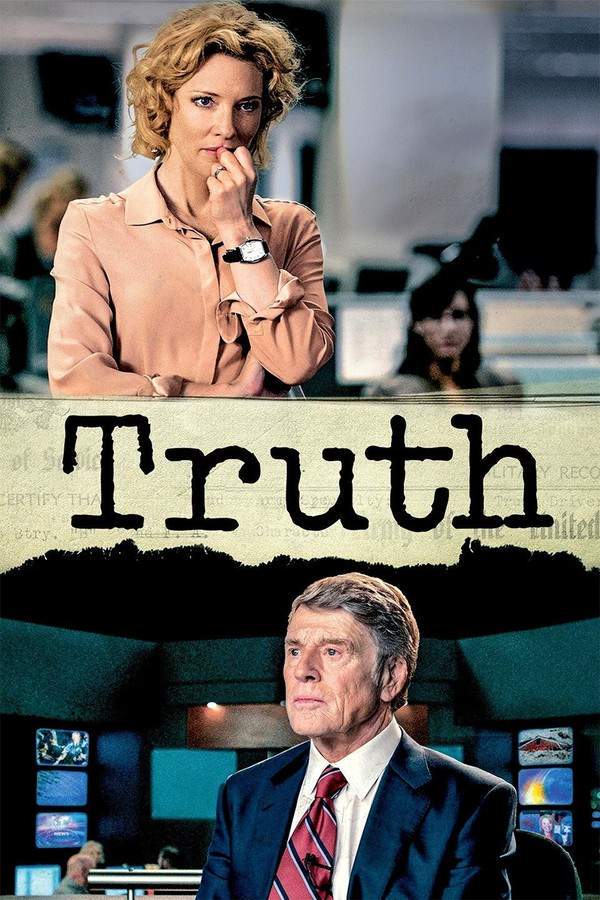
In the fever‑pitch of a presidential race, the newsroom becomes a pressure cooker where ambition, integrity, and the relentless chase for a story intersect. The film immerses the audience in the fast‑paced world of televised journalism, where every lead carries the weight of national consequence and the slightest misstep can reverberate across the country. A muted, almost claustrophobic tone pervades the corridors of the network, underscoring the razor‑thin line between relentless investigation and the allure of a sensational scoop.
At the heart of this storm is Mary Mapes, a seasoned producer whose determination fuels a small, tightly knit team. She is joined by Mike Smith, the meticulous fact‑checker, Lucy Scott whose editorial instincts keep the coverage sharp, and Colonel Roger Charles whose military background adds a layer of credibility to the inquiry. Their collective drive is matched only by the urgency of the story they are chasing—a narrative that could reshape public perception of a candidate’s past.
The team’s pursuit leads them to a controversial cache of documents said to expose preferential treatment and a mysterious year‑long absence from service. Their primary source, Bill Burkett, offers memos and letters that suggest a hidden truth, while former state official Ben Barnes hints at political maneuvering that may have smoothed the candidate’s path into the National Guard. These leads pull the journalists deeper into a maze of claims, counterclaims, and the ever‑present question of authenticity.
When the findings coalesce into a broadcast segment, the network’s flagship program presents the story to a nation already primed for intrigue. The air‑date marks a pivotal moment, as the revelation ignites a cascade of public debate, media scrutiny, and internal reflection on journalistic responsibility. The film lingers on the tension between uncovering truth and navigating the shadowy realms of doubt, leaving the audience to wonder how far the pursuit of a story can go before it begins to consume its seekers.
What Happens in Truth?
The complete story of Truth, from the first scene to the last, in 449 words (about 2 minutes). Spoilers throughout.
Spoilers ahead
Months before the 2004 US presidential election, Mary Mapes, a producer for 60 Minutes Wednesday, spearheads a small, tightly wound team—Mike Smith, Lucy Scott, and Colonel Roger Charles—in a steadfast quest to verify claims about George W. Bush’s military record. They pursue leads that challenge the idea of a flawless service, chasing down indications that Bush may have received preferential treatment and that crucial records could have been lost or altered. In their search, they turn to Bill Burkett, who asserts that a set of memos and letters suggests Bush enjoyed special treatment and that he went AWOL for a year in 1972. The investigation also takes them to former Texan Lieutenant Governor Ben Barnes, who concedes that he pulled strings to help Bush join the National Guard. Mapes then brings these findings to life on air, with Dan Rather presenting the report on 60 Minutes.
Once the segment airs, questions about its accuracy begin to swirl. The controversy is fueled by radio hosts and bloggers and amplified by mainstream outlets, including The Washington Post and CBS itself. A closer look at the memos reveals stylistic clues, such as font and letter spacing, that point to computer production with Microsoft Word rather than typing from the 1970s. Burkett admits that he lied about where he obtained the documents, casting further doubt on the reporting.
The story’s investigation is complicated by the absence of the primary source: Jerry Killian, Bush’s commanding officer in 1972, had already passed away by the time the CBS piece aired. Robert “Bobby” Hodges, Killian’s supervising officer, retracts an earlier statement that the Killian documents were authentic, though he refuses to dwell on whether there is any “truth” in the documents themselves. Dan Rather issues an apology for presenting the material as fact, and Mapes, Rather, and the entire team face internal scrutiny aimed at uncovering political bias rather than the substance of the claims. The internal review centers on the authenticity of the Killian documents and what that means for the reporting.
As the panel proceedings unfold, Smith, Scott, and Charles are ultimately barred from their work and fired, with Smith erupting in a loud office tirade as he is escorted out. Rather decides to retire from broadcasting after the hearings, while Mapes delivers a pointed response to her opponents during the proceedings. In the end, Mapes is fired, and Rather presents his final sign-off, underscoring the courage of those who stuck with the story through the most difficult moments. The closing titles reveal that Mapes was terminated and four CBS executives were asked to resign, while also noting that CBS later won a Peabody Award for Mapes’ earlier documentary exposing atrocities at Abu Ghraib.
Truth Timeline: Every Key Event in Order
14 key events in the order they happen, from “Investigation kicks off for Bush National Guard records” to “CBS wins a Peabody Award for Abu Ghraib documentary”. 14 events name a place, across 12 locations.
- 1
Investigation kicks off for Bush National Guard records
Months before the 2004 US election, Mapes and her team seek evidence to verify Bush's military record. They pursue leads and begin assembling documents and testimonies to support a potential story. The effort sets the stage for a high-stakes investigative report.
When:Months before the 2004 US presidential election Where:CBS News HQ / New York
- 2
Burkett introduces documents suggesting Bush did not serve normally
Bill Burkett tells Mapes he possesses memos and letters about Bush's National Guard service. The team weighs the possibility that these documents could substantiate a breach of duty. They start vetting the materials and looking for corroboration.
When:Months before the election Where:CBS News / Burkett interview
- 3
Ben Barnes provides a separate lead on access to the Guard
Former Texas Lieutenant Governor Ben Barnes confirms he used influence to help Bush join the Guard. The claim adds political intrigue and potential leverage for the story. Mapes and crew consider this lead alongside Burkett's documents.
When:Months before the election Where:Texas / Barnes interview
- 4
60 Minutes airs the story on Bush's National Guard
Mapes produces the story and Dan Rather reports it on 60 Minutes. The segment presents the memos as supporting evidence and frames the allegations as significant questions about Bush's service. The broadcast triggers immediate attention and public debate.
When:Air date before the election Where:CBS News / 60 Minutes
- 5
Aftermath questions cast doubt on the segment's accuracy
After the airing, questions about the segment's accuracy begin to surface. The authenticity of the documents is challenged by critics and media outlets. CBS faces pressure to defend or retract the report.
When:Immediately after air Where:CBS News / public reaction
- 6
Experts flag the memos as inconsistent with 1970s typewriters
Analysts point out that the memos' font and spacing resemble Microsoft Word rather than early 1970s typewriters. The discrepancy fuels doubts about when and how the documents were created. The credibility of the central evidence is cast into serious doubt.
When:Following initial scrutiny Where:Investigation office
- 7
Burkett confesses he lied about the source
Burkett admits he lied about where he obtained the documents. The admission undermines the foundation of the story and raises questions about the team's sourcing. The episode shifts from investigative reporting to a crisis of credibility and ethics.
When:After authenticity doubts Where:Newsroom / press conference
- 8
Killian documents are challenged by Hodges
Killian's supposed documents come under renewed scrutiny when Bobby Hodges recants earlier statements claiming authenticity. Hodges refuses to discuss the truth behind the documents. The investigation pivots to the process and whether procedures were properly followed.
When:During internal review Where:CBS News / interview
- 9
Dan Rather apologizes for presenting material as fact
Rather publicly apologizes for presenting the material as fact rather than as unverified material. The apology signals accountability and a turning point in the crisis. Viewers see a veteran anchor acknowledge the error and the toll of the controversy.
When:During investigation Where:CBS News / on-air
- 10
Internal review panel initiates a bias and authenticity inquiry
An internal review panel is convened to examine potential political bias and the authenticity of the Killian documents. Staff are questioned, and the episode's vetting process is scrutinized. The focus centers on whether proper verification was performed before airing.
When:After air and ongoing Where:CBS News Center
Show the other 4 events of Truth Hide the last 4 events
- 11
Crew members are disciplined and removed from their posts
Mike Smith, Lucy Scott, and Colonel Roger Charles are banned from their work and fired. Smith rants in the office before being escorted out, illustrating the emotional toll of the scandal. The newsroom faces structural consequences as a result of the inquiry.
When:Following internal review sessions Where:CBS News / newsroom
- 12
Rather retires and Mapes is fired
Dan Rather retires from broadcasting after the hearings, and Mary Mapes is fired. The central figures of the story exit the scene as the network grapples with credibility. The consequence underscores the personal cost of the investigative effort.
When:After the hearings Where:CBS News / newsroom
- 13
End credits note resignations and firings
The end credits state that Mapes was fired and four executives resigned in the wake of the controversy. The film emphasizes the organizational fallout and the price of journalistic risk. It frames accountability as part of a larger corporate response.
When:End of film timeline Where:End credits
- 14
CBS wins a Peabody Award for Abu Ghraib documentary
The closing frames note that CBS won a Peabody Award for Mapes' earlier Abu Ghraib documentary, underscoring that strong journalism persists despite scandal. The contrast highlights the complexity of evaluating truth and ethics across different reports. The film ends by reflecting on the network's broader legacy.
When:End credits Where:End credits
Who Are the Main Characters in Truth?
9 characters, among them Mary Mapes, Dan Rather and Bill Burkett: who each one is and the part they play in the story.
- MM
Mary Mapes
A driven CBS News producer who relentlessly pursues corroboration for a loaded political story. Her conviction to expose the truth clashes with charges of editorial bias and institutional pushback, leading to significant professional consequences.
- 🧭 Integrity
- 🗞️ Journalist
- 🕊️ Determination
- DR
Dan Rather
A veteran anchor who fronts the segment and then confronts intense scrutiny over the segment's accuracy. He defends the reporting while navigating the pressures of the newsroom and public backlash.
- 🎤 Anchor
- 🕵️ Investigator
- ⏳ Veteran
- BB
Bill Burkett
A key source who claims the existence of memos indicating Bush received preferential treatment, becoming a central and controversial figure in the narrative.
- 💼 Source
- 🧩 Controversy
- 🧭 Misinformation
- BB
Ben Barnes
Former Texan Lieutenant Governor who admits to using influence to help Bush join the National Guard, highlighting political leverage behind the allegations.
- 🗳️ Politics
- 🚪 Access
- 🧭 Influence
- JK
Jerry Killian
Bush's commanding officer in 1972, whose memos become central to the controversy and whose posthumous authenticity is debated.
- 🛰️ Military
- 🧩 Documentation
- 🧭 Legacy
- RH
Robert Hodges
Killian's former supervisor who recants the claim that the Killian documents were authentic, amplifying the doubt surrounding the evidence.
- 🏛️ Authority
- 🧩 Doubt
- 🗣️ Testimony
- MS
Mike Smith
A member of Mapes's team who participates in the investigation and faces the turmoil and consequences that follow the broadcast.
- 🧭 Team
- 🗞️ Reporter
- 🧨 Tension
- LS
Lucy Scott
A CBS journalist working with Mapes, pressed by deadlines and scrutiny while striving to deliver a definitive, accurate story.
- 🗞️ Journalist
- 🧭 Integrity
- 🕊️ Tenacity
- CR
Colonel Roger Charles
A member of the investigative team who contributes to the pursuit of corroboration and context surrounding the Bush National Guard allegations.
- 🧭 Investigator
- 🪖 Military context
- 🗣️ Perspective
Where and When Is Truth Set?
Truth is set in CBS News Headquarters and New York City (2004, with flashbacks to 1972). Here is why the time and place matter to the story.
When
2004, with flashbacks to 1972
The main action takes place in early 2004 as the network weighs a controversial report about Bush's National Guard service. Interwoven are 1970s sequences that provide historical context to the disputed documents. The timeline underscores the tension between current reporting pressures and long-dormant records resurfacing in the present.
Where
CBS News Headquarters, New York City
The story largely unfolds inside the CBS News newsroom in New York, a high-pressure hub where editors and producers chase a groundbreaking scoop. It emphasizes the environment of televised journalism, where every document and source is scrutinized under tight deadlines. The setting reflects the power and risk of corporate-backed media in shaping national conversations.
- 🗽 News hub
- 🗞️ Investigative journalism
- 🏙️ New York
What Are the Themes of Truth?
3 ideas the story keeps returning to, among them Ethics, Investigation and Power & Consequences.
-
01
Ethics
The film centers on the moral responsibilities of journalists when sourcing and presenting potentially explosive claims. It examines whether pursuing a powerful story compromises fairness or fuels bias. The narrative scrutinizes the balance between securing a truth and maintaining credibility.
-
02
Investigation
A meticulous examination of how evidence is gathered, vetted, and challenged drives the plot. It shows the strain of corroboration, source reliability, and the consequences of publishing before all doubts are resolved. The memos become a focal point around which the investigation spirals.
-
03
Power & Consequences
The film reveals how media power intersects with political influence and institutional scrutiny. It follows the personal and professional fallout for Mapes, Rather, and their colleagues as they face internal reviews and career costs. It highlights the high-stakes environment where truth, reputation, and power collide.
What Kind of Film Is Truth?
Tense in tone, with fast pacing and a complex story, going by the plot summary.
- Tone
- Tense
- Pacing
- Fast
- Story
- Complex
- Intensity
- High
- Ending
- Sad
A fast-paced and highly tense political thriller that creates an anxious, high-stakes atmosphere as it follows journalists racing against time and powerful forces, ultimately ending in a sobering defeat.
- tense
- anxious
- high-stakes
- journalistic
- urgent
- unraveling
- political corruption
- journalism ethics
- media scandal
- truth and power
Content notes: professional downfall, political pressure.
Quiz
How well do you remember Truth? Test yourself on the story.
Where to Watch Truth
Stream it on Filmzie and Hoopla, or rent or buy it from Apple TV Store and Google Play Movies. US availability and prices from JustWatch.
Stream 3
 Filmzie
  Hoopla
  Tubi TV


Streaming availability in the US, powered by