What Is Troll About?
The premise of Troll in 325 words, with nothing given away. The full story and the ending follow below.
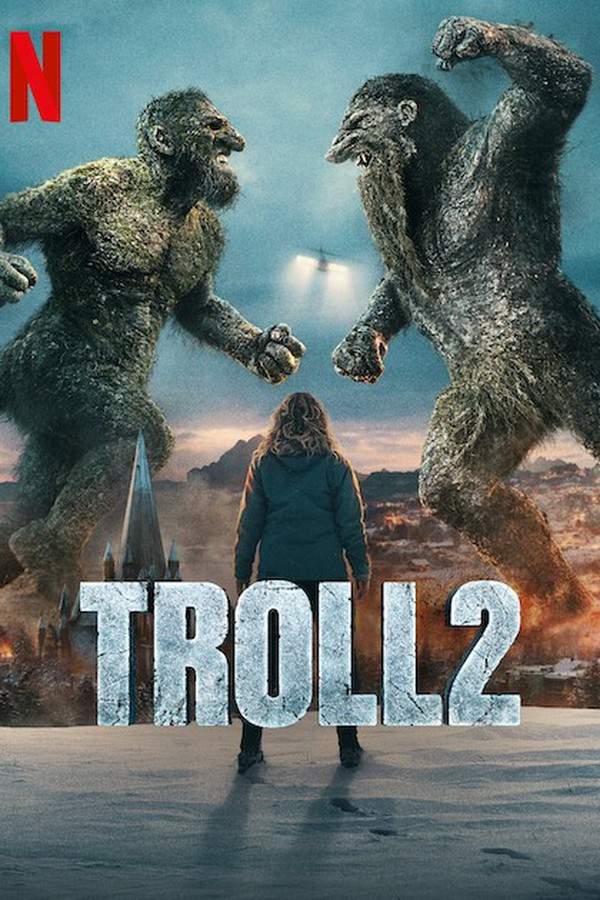
Deep in the stark, wind‑blown peaks of the Dovre range, an ancient presence that has long been the stuff of bedtime stories stirs from a millennial slumber. The enormity of the creature, hinted at only in folklore and stone‑capped legends, begins to move toward the heart of modern Norway, casting a shadow that blurs the line between myth and reality. The country’s rugged beauty becomes a backdrop for an uneasy tension, where the quiet of the mountains clashes with the humming pulse of contemporary life.
Nora Tidemann is a young paleontologist whose childhood was steeped in her father’s tales of trolls and stone‑bound weddings. Now an accomplished scientist, she carries that childhood wonder into a career built on evidence and curiosity, yet she cannot shake the feeling that the old stories may hide a truth that modern science has yet to uncover. Her passion places her at the center of a reluctant partnership between academia and the state, forcing her to navigate bureaucracy while staying true to the intuition that guided her as a child.
The response to the awakening is a convergence of unlikely allies: a seasoned government minister, a pragmatic chief of defense, the reclusive Tobias—her father—who has long grappled with the world’s disbelief, Captain Kris Holm with his military pragmatism, and Andreas Isaksen, a political adviser whose curiosity mirrors Nora’s. Their differing worldviews create a fragile coalition, each bringing expertise that hints at a possible solution while underscoring the cultural divide between the ancient and the modern.
As the colossal figure looms ever closer to Oslo, the atmosphere grows heavy with foreboding and awe. The film balances sweeping natural vistas with the sterile corridors of power, cultivating a tone that is both suspenseful and reverent. The journey ahead promises a clash of old superstitions and new technologies, inviting the audience to wonder whether humanity can reconcile its rational advancements with the untamed forces that still linger in the shadows of the mountains.
What Happens in Troll?
The complete story of Troll, from the first scene to the last, in 601 words (about 3 minutes). Spoilers throughout. Names in the text link to 9 cast member pages.
Spoilers ahead
As a young child, Nora Tidemann (Ine Marie Wilmann) is captivated by stories told by her father, Tobias (Gard B. Eidsvold), who introduces her to the fascinating mythology of trolls. One story leaves a lasting impression as he recounts a particular troll wedding where 13 drunken trolls lost track of time and turned to stone, becoming the formidable mountains that now loom over Dovre. Years pass, and a tragic incident occurs when a drilling operation for a railway project leads to an explosion, resulting in the deaths of numerous workers and protestors.
In a bid to uncover the truth, the Norwegian government, led by Minister of Defense Frederick Markussen (Fridtjov Såheim) and Chief of Defense General Sverre Lunde (Dennis Storhøi), enlists a team of scientists, including the now-grown Nora, who has become a paleontologist eager to make her mark. As the team investigates the eruption, they initially blame it on a methane pocket, but only Nora and the Prime Minister’s advisor, Andreas Isaksen (Kim Falck), observe the large footprints surrounding the site. This prompts Prime Minister Berit Moberg (Anneke von der Lippe) to authorize further exploration with the aid of military soldier Captain Kris Holm (Mads Sjøgård Pettersen).
Nora, driven by a deep intuition that something truly mythical might be awakening, seeks the expertise of her father, Tobias, who has retreated into seclusion after suffering the consequences of his beliefs regarding the existence of trolls. Despite his past struggles, he examines the findings and footage from the eruption site and proposes a radical theory—that trolls once roamed the earth before their extinction due to the spread of Christianity in Norway. Tobias shows evidence that suggests the emergence of a troll, and the four of them inadvertently rouse the sleeping giant, capturing irrefutable video proof of its existence.
As the governmental attempts to subdue the creature fry into chaos, conventional weapons prove ineffective, and tragically, Tobias meets his end while trying to empathize with the troll. During this turmoil, Nora recalls tales of trolls repelled by church bells and recommends a sonic attack; however, this only angers the troll further, wreaking havoc across the countryside. With the media broadcasting the unfolding crisis, the Prime Minister reluctantly decides to evacuate Oslo to prevent greater calamity.
Nora discovers plans for a nuclear strike against the creature, leading her and Andreas to attempt to halt the operation based on revelations from Tobias’ research. They learn from Chief of Court Rikard Sinding (Bjarne Hjelde) that the history of trolls has been suppressed and that the Royal Palace sits atop the ruins of the Troll King’s palace where his family met their demise. Realizing the creature’s intentions align with returning to its true home in Oslo, she develops a plan to utilize the sun’s destructive rays against it—a vulnerability confirmed from their research.
As emotions run high and the stakes grow, Nora and Kris work together to create a trap using UV light from tanning beds while Andreas coordinates with Sigrid (Karoline Viktoria Sletteng Garvang) to delay the nuclear strike. The duo lures the troll with a skull into their trap, but at the crucial moment, Nora hesitates, seeking to preserve the troll’s life. Nevertheless, the rising sun signals an inevitable fate for the massive creature. With the devastation left in the wake of its passing, a sense of wonder fills the air—what else may be lurking within the mountains of Norway?
As silence blankets Oslo, a rumble echoes from the depths of the Dovre Mountains, leaving the audience to ponder if trolls might still be hidden away, waiting for the right moment to emerge once more.
Troll Timeline: Every Key Event in Order
14 key events in the order they happen, from “Nora's Childhood Fascination” to “Aftermath and Reflection”. 5 events name a place, across 4 locations.
- 1
Nora's Childhood Fascination
As a young child, Nora is introduced to the captivating mythology of trolls by her father, Tobias. His tales about a troll wedding and the transformation of drunken trolls into mountains spark her lifelong intrigue with these mythical creatures.
- 2
Workplace Tragedy
Years later, a catastrophic drilling operation for a railway project leads to a devastating explosion. The incident claims the lives of numerous workers and protestors, highlighting the ongoing dangers of industrial projects in Norway.
Where:Dovre
- 3
Government Investigation
In response to the explosion, the Norwegian government, led by Minister of Defense Frederick Markussen, assembles a team of scientists, including Nora. Their initial hypothesis blames the disaster on a methane pocket, steering them toward an unexpected revelation.
- 4
Discovery of Footprints
While investigating, Nora and Prime Minister's advisor Andreas Isaksen discover large footprints around the explosion site. This alarming find leads Prime Minister Berit Moberg to authorize a more extensive exploration of the area with military support.
- 5
Seeking Tobias' Expertise
Convinced that something mythical is awakening, Nora seeks out her father, Tobias, who has become reclusive. Despite his past struggles, he examines evidence from the eruption and proposes that trolls once roamed the earth.
- 6
Awakening the Troll
After analyzing the findings, Tobias and the team inadvertently rouse a sleeping troll. They capture irrefutable video proof of its existence, escalating the situation and prompting urgent government action.
- 7
Tobias' Sacrifice
As attempts to contain the troll spiral into chaos, Tobias tragically loses his life while trying to empathize with the creature. His death marks a pivotal moment, deeply impacting Nora and changing the course of the team's efforts.
- 8
Sonic Attack Plan
Remembering tales of trolls being repelled by church bells, Nora proposes a sonic attack. Unfortunately, this strategy backfires, making the troll even angrier and prompting widespread destruction across the countryside.
Where:Norwegian Countryside
- 9
Evacuation of Oslo
With the media covering the escalating crisis, Prime Minister Moberg makes the difficult decision to evacuate Oslo to prevent greater disaster. This shows the dire consequences of their evolving situation with the troll.
Where:Oslo
- 10
Nuclear Strike Plans Uncovered
Nora discovers plans for a nuclear strike against the troll, which sends her and Andreas scrambling to halt the operation. They learn about the Kingdom's suppressed history of trolls, adding urgency to their efforts.
Show the other 4 events of Troll Hide the last 4 events
- 11
Planning the Final Trap
Nora and military soldier Kris formulate a plan using UV light from tanning beds to trap the troll. They coordinate with Andreas to delay the nuclear strike, stressing the importance of finding a non-lethal way to address the threat.
- 12
The Lure with the Skull
As part of their plan, they lure the troll with a skull, hoping to guide it into their trap. However, at the critical moment, Nora hesitates, torn between her desire to save the creature and the looming catastrophe.
- 13
The Troll's Fate
With the sun rising, the trap's mechanism is triggered, leading to the troll's devastating end. This moment leaves a heavy toll on Nora, who struggles with the repercussions of their actions against the mythical being.
Where:Oslo
- 14
Aftermath and Reflection
In the wake of the troll's passing, silence envelops Oslo, but a deep rumble is heard from the Dovre Mountains. This rumble leaves the characters and the audience with questions about the possibility of other trolls still lurking in the shadows.
Where:Dovre Mountains
Who Are the Main Characters in Troll?
5 characters, among them Nora Tidemann, Tobias Tidemann and Berit Moberg: who each one is and the part they play in the story. Every profile links to the actor’s page.
- NT
Nora Tidemann
Played by Ine Marie Wilmann
Nora is a driven paleontologist whose passion for uncovering the truth about trolls reflects her deep connection to her father's stories. She evolves from a curious child into a determined adult willing to confront the unknown. Her empathy and quick thinking play significant roles in the narrative as she balances science with her belief in ancient lore.
- 🔍 Paleontologist
- 🌱 Curious
- 🦸♀️ Brave
-

Tobias Tidemann
Played by Gard B. Eidsvold
As Nora's father, Tobias is a complex character marked by his early enthusiasm for troll mythology and later disillusionment. His scientific curiosity is shaped by personal tragedy, leading him to seclusion. His insights drive much of the plot, as he grapples with the societal abandonment of ancient beliefs while desperately trying to prove the existence of trolls.
- 📚 Storyteller
- 🤔 Intelligent
- 🏞️ Mythical
-

Berit Moberg
Played by Anneke von der Lippe
The Prime Minister, Berit, represents governmental authority and the burdens of leadership during crisis. Tasked with making crucial decisions for the safety of Norway, she is pragmatic yet conflicted. Her character embodies the friction between political responsibilities and the mythical chaos unfolding in her country.
- 👩⚖️ Leader
- 🏛️ Authority
- ⚖️ Responsible
- AI
Andreas Isaksen
Played by Kim Falck
As the Prime Minister's advisor, Andreas is resourceful and intelligent, navigating the complexities of the crisis with pragmatism. His loyalty to Nora and willingness to challenge authority highlight his moral compass in a time of chaos. He plays a critical role in organizing efforts to confront the troll while facing internal conflicts about the governmental actions.
- 🧭 Advisor
- 💡 Resourceful
- 🤝 Loyal
- KH
Kris Holm
Played by Mads Sjøgård Pettersen
Captain Kris Holm is a military soldier who embodies courage and resilience in the face of the extraordinary challenge of dealing with the troll. His role is pivotal in protecting civilians and assisting in the efforts to control the situation. His pragmatic approach to warfare contrasts with the mythical elements of the story.
- ⚔️ Soldier
- 🛡️ Protector
- 💪 Resilient
Where and When Is Troll Set?
Troll is set in Dovre, Oslo and Norway (Contemporary). Here is why the time and place matter to the story.
When
Contemporary
The events unfold in modern times, highlighting current governmental structures and scientific advancements. The contemporary setting contrasts the ancient tales of trolls, serving to bridge folklore with modern-day dilemmas regarding environmental and mythical awakenings.
Where
Dovre, Oslo, Norway
The movie takes place in the majestic Dovre Mountains, known for their dramatic peaks and rich folklore, especially surrounding trolls. Additionally, the capital city of Oslo serves as a critical backdrop, where important governmental decisions are made amid the unfolding crisis. Both locations are deeply intertwined with Norway's cultural history and mythology.
- 🗻 Mountains
- 🌆 City
What Are the Themes of Troll?
3 ideas the story keeps returning to, among them Mythology, Conflict and Tragedy.
-
01
Mythology
The film explores themes of mythology and the intersection of ancient beliefs with contemporary society. It delves into the legacy of trolls in Norwegian culture, illustrating how these myths can impact present realities. Characters grapple with the balance of scientific inquiry and reverence for traditional folklore.
-
02
Conflict
Conflict arises not only between humans and the troll but also within individuals as they reconcile personal beliefs with scientific evidence. The chaos of government decisions and public reactions highlights the interplay between crisis management and historical truths. Characters face moral dilemmas regarding the preservation of life versus the necessity of defense.
-
03
Tragedy
Tragic moments underscore the narrative, particularly with the loss of Tobias and the collateral damage caused by the troll's awakening. The personal losses experienced by characters amplify their motivations and illustrate how their pasts are irrevocably tied to the unfolding events. The emotional weight of these tragedies lends depth to the story.
How Does Troll End?
The last act of Troll and what it means, in 824 words. The ending lands as bittersweet. Big spoilers: read the plot summary first if you have not seen it.
The final act, in full
The ending of “Troll” reveals that the creature isn’t inherently evil but rather a misunderstood force of nature, driven by pain and loneliness. Nora, having learned the truth about the Troll, recognizes that it’s not a mindless monster but a creature in need of compassion. She persuades the military and her colleagues to turn off the artificial UV lights that harm the Troll and instead communicate with it, echoing her father’s earlier advice about believing with her heart. As she pleads for the Troll to be left alone and shown mercy, the creature begins to disintegrate under the sunlight, transforming into a colossal boulder in the heart of Oslo.
This act of mercy underscores the film’s message that humans often destroy what they don’t understand—a reflection of environmental destruction and the arrogance of technological hubris. Nora’s empathy highlights the importance of respecting nature’s unknown forces rather than fearing or destroying them. By allowing the Troll to return to its natural state, she effectively prevents a catastrophe and preserves a piece of Norway’s ancient folklore and wilderness. The mid-credit scene hints at the possibility of more trolls hiding in the mountains, suggesting that this encounter was just the beginning and leaving the door open for a potential sequel. Ultimately, the film urges viewers to “let the mountains live,” embracing coexistence with the natural world instead of domination or destruction.
The ending of “Troll” shows us that the creature isn’t truly malicious but rather a lonely, misunderstood part of nature. Nora, having come to understand the Troll’s pain and innocence, chooses compassion over violence. She persuades the military and her colleagues to stop using artificial UV light, which is hurting the creature, and instead appeals to its sense of mercy, just as her father once advised. As the sun rises, the Troll begins to burn and disintegrate into a huge boulder, signifying its return to the natural world. This act of mercy emphasizes the movie’s message about respecting nature’s mysteries instead of exploiting or destroying them out of fear or hubris.
The story underscores the importance of empathy and coexistence, illustrating that fear often leads to destruction, whereas understanding can lead to harmony. The mid-credits scene hints at more hidden trolls in the mountains, leaving the possibility that this is only the beginning of a larger story. Overall, the film ends on a note of hope, urging us to “let the mountains live,” embracing a deeper respect for the natural world and its ancient mythologies.
The ending of “Troll” reveals that the creature isn’t inherently evil but a lonely force of nature seeking its home. Nora, understanding the Troll’s pain and innocence, chooses compassion over fight, turning off the artificial UV lights that harm it. She then convinces the military to leave the creature alone and communicate with it from her heart. As she does, the Troll begins to burn away in the rising sunlight, transforming into a massive boulder in the middle of Oslo. This act reflects the movie’s core message: humans often destroy what they don’t understand, but kindness and empathy can help preserve the natural world.
The film closes with a hint of more trolls lurking in the mountains, suggesting this encounter was only the beginning. The final scene leaves viewers with a reminder to “let the mountains live,” advocating for respect and coexistence with nature rather than exploitation. The story ultimately emphasizes that understanding and compassion can turn fearsome monsters into part of the world’s natural beauty and mythology, with the possibility of future confrontations hinted at in the scene after the credits.
The ending of “Troll” shows that the creature is not a malicious monster, but a misunderstood part of nature driven by loneliness and pain. Nora, having learned the truth about the Troll, recognizes its innocence and chooses empathy over destruction. She convinces the military to turn off the harmful artificial UV lights and appeals to the Troll to leave the city and return to its home. As the sunlight finally reaches the creature, it begins to disintegrate, transforming into a giant boulder in the middle of Oslo. This peaceful end highlights the film’s message that humans often destroy what they don’t understand out of fear; instead, compassion and understanding can save both nature and ourselves.
The final scenes hint that more trolls could be hidden in the mountains, implying this was only a partial victory and leaving open the possibility of further encounters. The movie urges viewers to “let the mountains live”—to respect and coexist with the natural world, recognizing that sometimes, the greatest monsters are made by human arrogance and ignorance. The ending promotes a hopeful reminder that kindness and belief in the unknown can transform fear into harmony, hinting that nature’s mysteries are best preserved with empathy rather than violence. The scene after the credits teases that the story might not be over, leading viewers to wonder if more trolls remain in hiding, waiting to be rediscovered.
What Kind of Film Is Troll?
Tense in tone, with fast pacing and a straightforward story, going by the plot summary.
- Tone
- Tense
- Pacing
- Fast
- Story
- Straightforward
- Intensity
- High
- Ending
- Bittersweet
A high-stakes, fast-paced Nordic creature feature that maintains constant tension as a modern city confronts an ancient mythical threat, blending scientific inquiry with personal loss.
- tense
- destructive
- mysterious
- urgent
- epic
- anxious
- father daughter relationship
- mythology vs science
- survival
- good versus evil
Content notes: death of a parent, mass destruction, military violence, potential nuclear strike.
Quiz
How well do you remember Troll? Test yourself on the story.